8 min read
With just a few days to go until the end of the year, the economic calendar is quiet. However, there are a few points to watch for that could create opportunities in the market over the coming week.
Santa Rally
The Santa Rally is one of the most-watched seasonal patterns of the year. According to Reuters, since 1950, the S&P 500 has risen on average 1.3% during the last 5 trading days of the year and the first two trading days of the next year. Given that Christmas fell midweek, the Santa rally technically started on Wednesday, 24th December, and runs until January 5.
Investors will be looking to see if US stocks end 2025 on a high note this week, with equities at record levels and close to key bullish milestones. The S&P 500 posted a record high on Wednesday and was 1% away from the key 7000 level. The benchmark index was on track for its eighth straight monthly gain, which would mark the longest winning streak since 2017-18.
Momentum is certainly on the bulls’ side, but volumes will be light, which can lead to outsized moves even on modest headlines.

FOMC minutes (Tuesday)
The minutes for the December FOMC meeting will be released on Tuesday, December 30th. In the meeting, the Fed cut rates by 25 basis points in line with expectations, but the decision split was nine to three, perhaps more dovish than expected, with Goolsbee and Schmidt voting to keep rates on hold, but Miran voting for a 50 basis point rate cut once again. The dot plot showed the medium expectations by policymakers, is only one rate cut in 2026, which is below the two rate cuts the market is pricing in.
Federal Reserve Chair Jerome Powell appeared more concerned about the employment mandate than about inflation, noting that most expect tariff inflation to be one-time price increases. Powell acknowledged that the labour market was weakening and that there were further risks. However, policymakers have different views on how to weigh those risks. The markets will scrutinise the minutes for further clues about the outlook for inflation, the labour market, and interest rates. A dovish-sounding Federal Reserve could pull the U.S. dollar lower.
However, it’s worth noting that US CPI and non-farm payrolls were released after the FOMC meeting, so the minutes may be considered outdated. Dovish minutes could pull USD lower, boosting EUR/USD.

China PMI data (Wednesday)
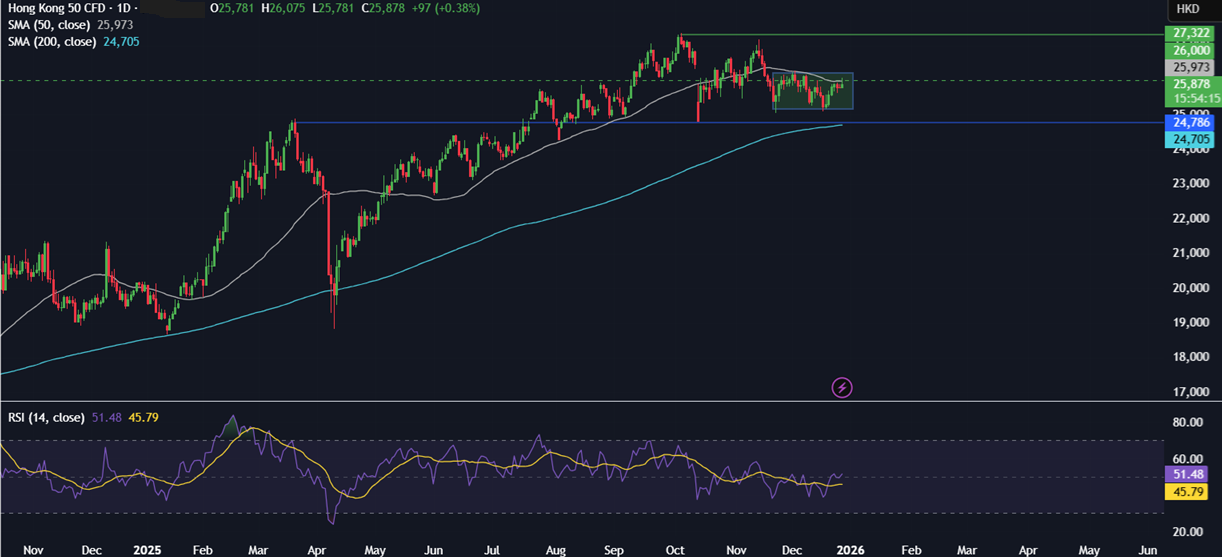
The RatingDog China Manufacturing PMI dropped into contraction in November for the first time since July. The PMI fell to 49.9 in November from 50.6 in October, indicating softer factory activity. While manufacturing hasn’t collapsed, new orders stalled even as demand from abroad picked up.
Export activity improved after recent trade stabilization with the US, yet weak domestic demand offset those gains. The market will be watching to see if the downward trajectory in manufacturing PMI continues. The NBS manufacturing PMI will be released on the same day and is expected to show an ongoing contraction at 49.2. Weak data could prompt caution towards Chinese equities, such as the Hang Seng and commodities such as oil.
Gold & Silver shine
Gold surged 4.5% last week, putting the precious metal on track to book gains of 7% in December, marking its fifth straight month of gains. The precious metal has pushed above $4500, up 70% in 2025, marking its strongest rally since 1979.
Meanwhile, silver rallied 17% last week, bringing December gains to 40%, the eighth consecutive monthly rise. Silver has rallied 130% in 2025. Both metals have rallied sharply this year as the Fed cut rates, on concerns about an AI bubble, central bank buying, and amid bets that the next Fed Chair will adopt a more dovish stance.
In addition, these metals are safe havens as US–Venezuela tensions rise and are part of the debasement trade amid concerns about rising global debt. Should these factors remain in play, the precious metals could continue to climb. Goldman Sachs sees Gold climbing to $4900 next year and silver to hold above $70 into 2026.


Indian Markets – consolidation ahead of manufacturing data
Indian markets are entering the new week in consolidation, with the Nifty 50 holding around the 25,700-26,250 range amid low post-holiday volumes.
Foreign Institutional Investor positioning remains bearish, while steady domestic flows provide support. The weak Rupee and uncertainty surrounding a US-Indian trade deal are key headwinds. RBI bond purchases, seasonality, and the FOMC minutes will drive the week ahead.
FIIs vs DIIs
FIIs have sold shares worth R23,830 crore so far in December, marking the highest monthly selloff since September. Year to date, foreign investors have sold R2.9 lakh crore, reflecting a cautious stance on Indian equities. In contrast, domestic institutional investors have bought shares worth R64,000 crore in December and R7.72 lakh crore so far this year. The significant divergence indicates that domestic demand is providing stabilising support.

Key Indian market drivers will be liquidity conditions, manufacturing activity signals, and the Reserve Bank of India’s ongoing government bond purchases and USD/INR swap operations, which are part of a larger plan to inject liquidity. Manufacturing production data will be released on Monday (expected +4.6% YoY), and the final Indian manufacturing PMI will be released on Friday (expected 55.7).
Pakistan Markets – Fresh record highs to come?
The KSE 100 surpassed 172,000 for the first time last week, rising to a record high. The markets received a boost from the privatization of Pakistan International Airlines and calls for broader divestment of loss-making state-owned firms, which could catalyse reform-driven growth in the future. The State Bank of Pakistan’s 50 bps rate cut earlier in the month added to bullish sentiment, as did the IMF approval of
Foreign investors showed increased interest amid improving relations between Pakistan and key international partners, including the US and Saudi Arabia. The Pakistan Rupee rose 0.03% versus the USD.
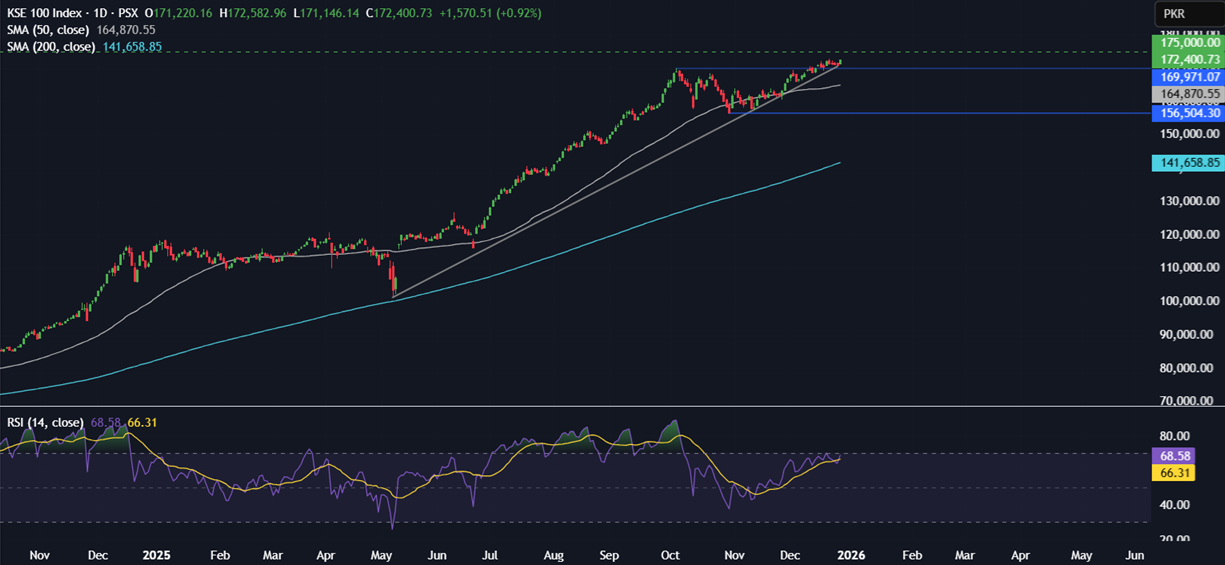
Key Pakistan market drivers this week: Momentum could continue, boosted by factors such as monetary easing, improved investor sentiment, and an increasingly stable macroeconomic environment. Foreign portfolio inflows could continue rising, and attractive valuations could continue to drive demand. Currently, the KSE 100 trades at an 8x multiple and offers a 6.5% dividend yield, making it appealing to investors seeking value.
Author



 Risk Disclaimer
The content provided here is for informational purposes only. It is not intended as personal investment advice and does not constitute a solicitation or invitation to engage in any financial transactions, investments, or related activities. Past performance is not a reliable indicator of future results.
The financial products offered by the Company are complex and come with a high risk of losing money rapidly due to leverage. These products may not be suitable for all investors. Before engaging, you should consider whether you understand how these leveraged products work and whether you can afford the high risk of losing your money.
The Company does not accept clients from the Restricted Jurisdictions as indicated in our website/ T&C. Some services or products may not be available in your jurisdiction.
The applicable legal entity and its respective products and services depend on the client’s country of residence and the entity with which the client has established a contractual relationship during registration.