9 min read
Weekly recap:
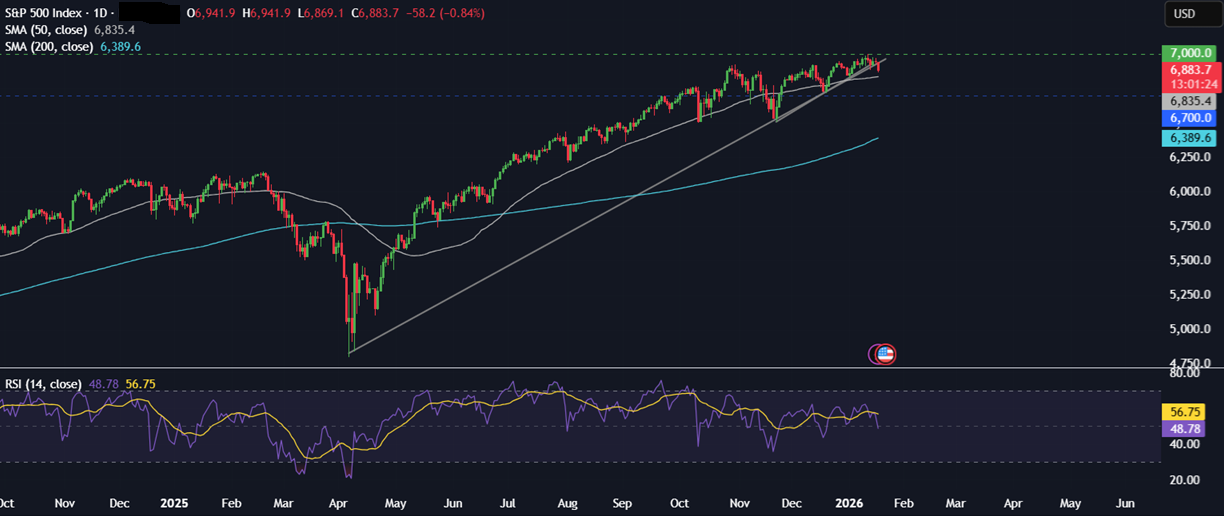
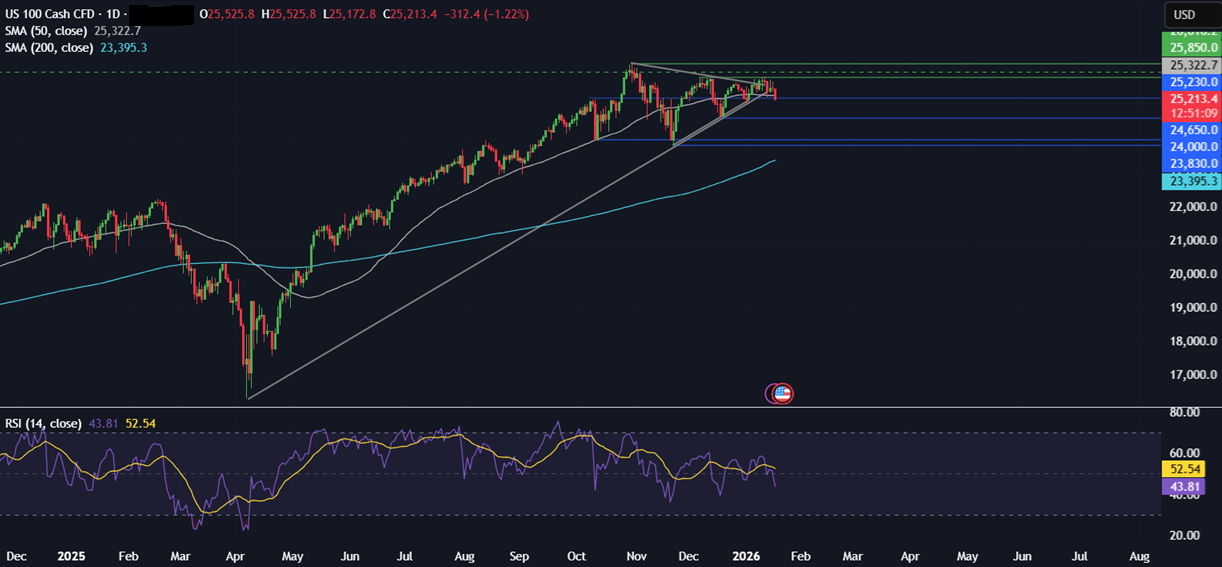
After reaching record highs, the S&P 500 and the Dow Jones Industrial Average declined slightly last week as stocks failed to maintain the previous week’s upward move. The S&P 500 traded in a narrow range as the earnings season opened and geopolitical tensions lingered. Small caps and value stocks outpaced large caps and growth stocks.
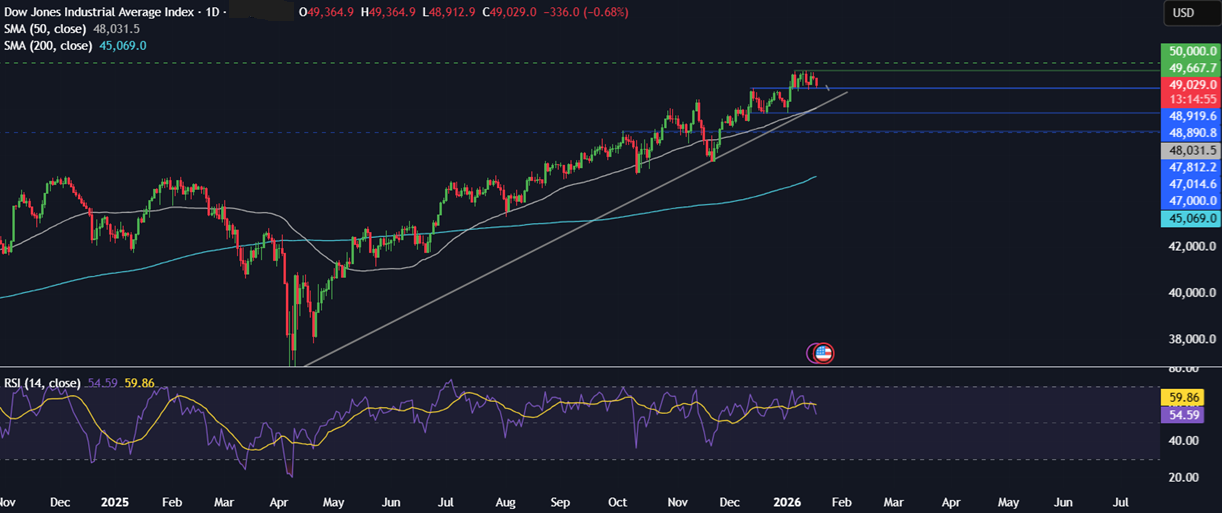
Banks kicked off earnings season with a mixed performance. JP Morgan and Citi fell post-earnings, while Morgan Stanley and Goldman Sachs impressed. Taiwan Semiconductor Manufacturing jumped after Q4 earnings, boosting sentiment around AI.
A slew of political and trade-related headlines drew attention last week. These included Trump proposing a 10% interest rate limit on credit card purchases and a 25% tariff on countries doing business with Iran. Separately, the DoJ said it was investigating Fed Chair Powell, raising concerns over Fed independence.
US Core CPI was slightly weaker than expected at 2.6%. Other U.S. data last week was strong, with retail sales and jobless claims coming in stronger than expected. The market has reined in expectations of a Fed rate cut, with the probability now at 67% that the Fed will leave rates unchanged in April.
Monday is a public holiday in the US.
Geopolitical tensions
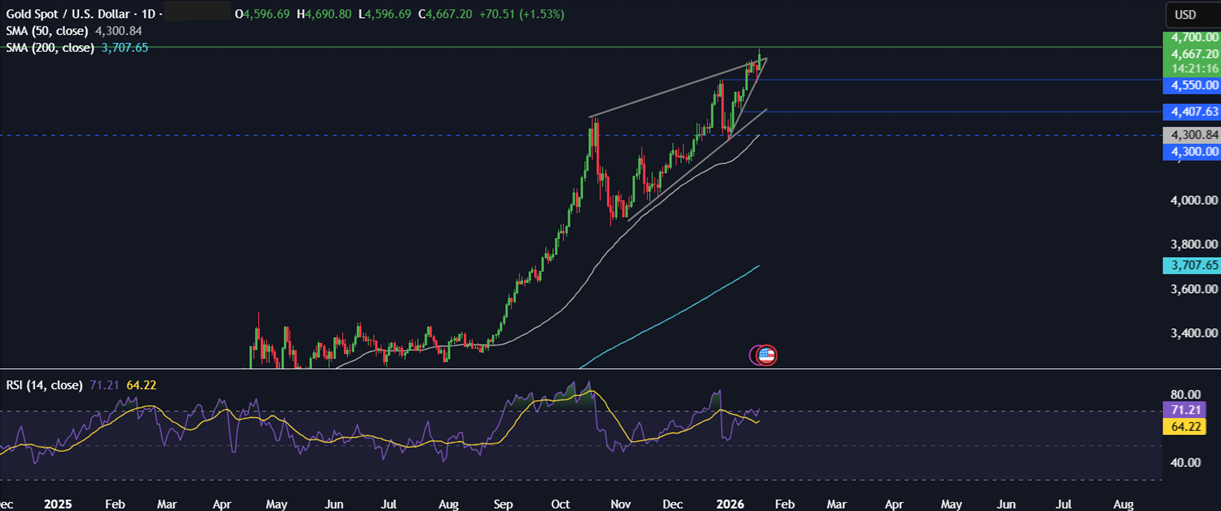
Geopolitical tensions remained a key focus last week amid protests in Iran on a scale not seen for decades. Trump had threatened military action in Iran; however, these fears calmed at the end of last week. Attention is now firmly on Greenland after Trump threatened 10% tariffs on Europe until a Greenland deal is done. He said that levies against eight nations would rise to 25% unless they support his acquisition of the island.
These countries include France, Germany, the UK, the Netherlands, Denmark, Norway, Sweden, and Finland. The EU has threatened to impose €93 billion in trade tariffs on the US in retaliation, raising concerns of a trade war. Gold has surged to a record high.
World Economic Forum
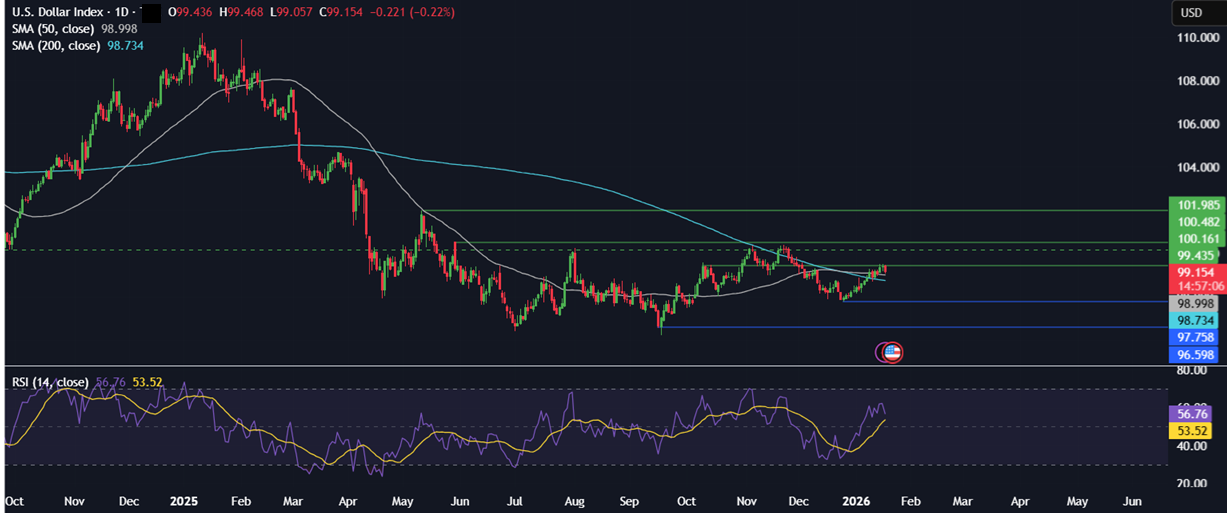
The World Economic Forum is taking place in Davos this week, with at least 60 heads of state in attendance, including President Trump. This event isn’t usually market-moving. However, attention will be on Trump’s speech on Wednesday, whose comments on trade policy, tariffs, and global growth could influence market sentiment and the USD.
US earnings season
Big banks opened earnings season with mixed results. Analysts predicted financial sector earnings of 6.6% in Q4, slightly below the 8.2% average gain forecast across all 11 sectors of the S&P 500. Technology is expected to post the strongest earnings growth, while consumer discretionary is expected to deliver the weakest results. This week’s earnings season moves into full swing with investors’ attention to updates from companies including 3M, Netflix, J&J, Visa, GE, and P&G, among others. Strong earnings could help boost the S&P 500.
Canada CPI (Monday)
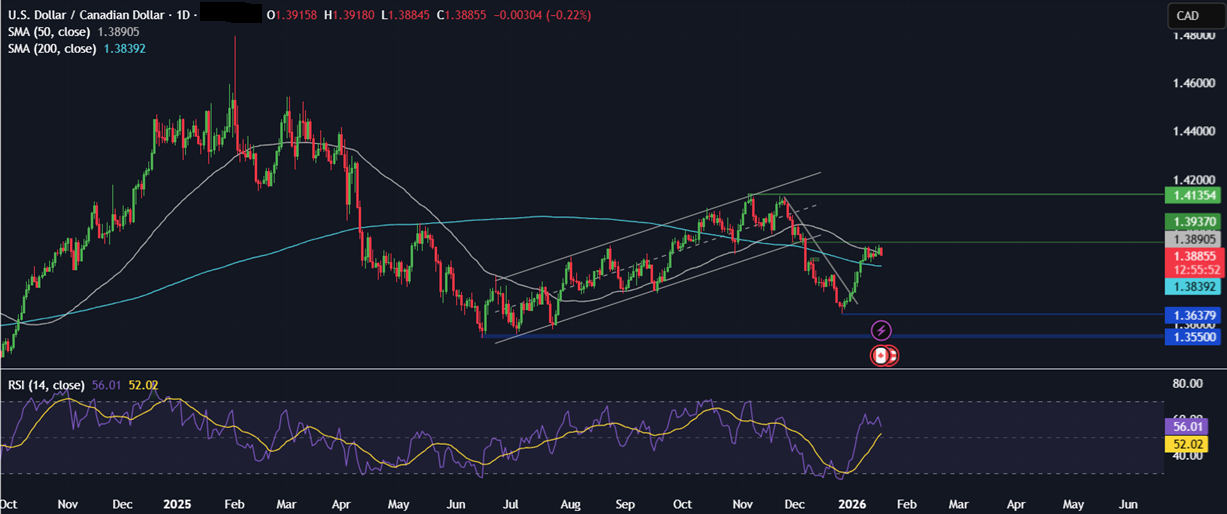
The Bank of Canada has rates at the lower end of its neutral rate and is expected to keep rates on hold for the foreseeable future. This means that the CPI data may not spark a strong move in the loonie. Around 12% of hikes are currently priced in for year-end, implying a 48% probability of a rate hike this year. Inflation isn’t showing any worrying signs and is expected to be 2.2%, and the labour market could loosen further.
In addition to Canadian CPI, the market will also be watching the USD/CAD’s ongoing reaction after Prime Minister Mark Carney announced a deal with China, which signals a serious shift in trade away from the US.
UK CPI (Wednesday)
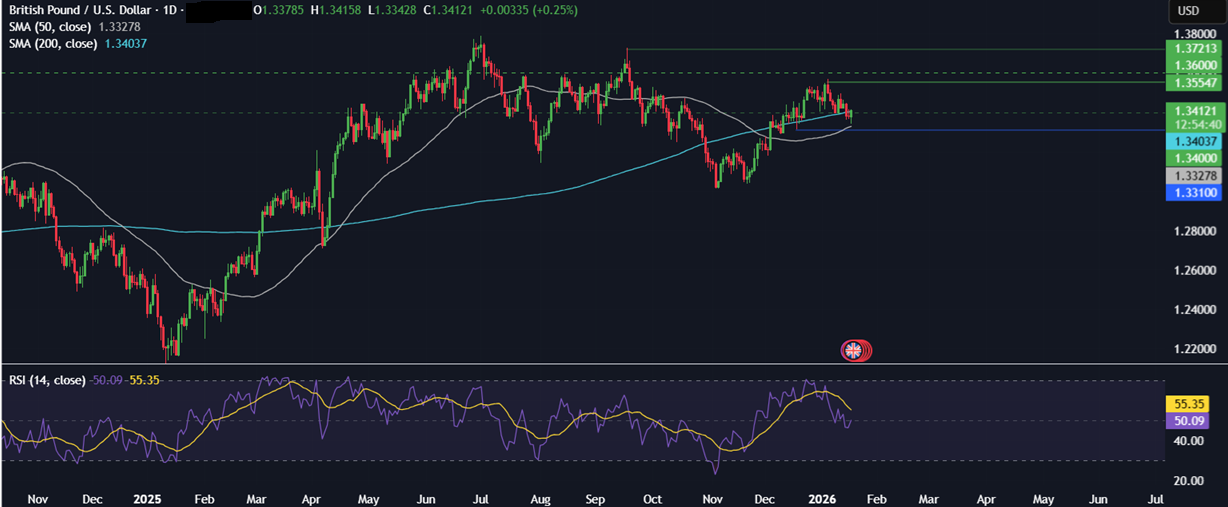
CPI for December is expected to rise to 3.3% year on year, up from 3.2%, whilst the monthly figure is expected to increase to 0.4%, up from 0.2% decline. The increase is expected to be driven by measures in the autumn budget, particularly tobacco duties. The data comes as the BoE noted that budget measures could modestly lower CPI in April 2026, before increasing it by 0.1% in 2027 and 2028.
December PMIs saw a strengthening of inflationary pressures. Input prices rose the most in seven months. At the same time, CPI could be hotter than expected in the near term, particularly given the impact of tobacco duties. However, the BoE sees inflation getting to the target in mid-2026. Any sense of cooling inflation could see GBP/USD come under further pressure. The market is currently fully pricing in the next rate cut in June.
ECB minutes (Thursday) and EZ PMIs (Friday)
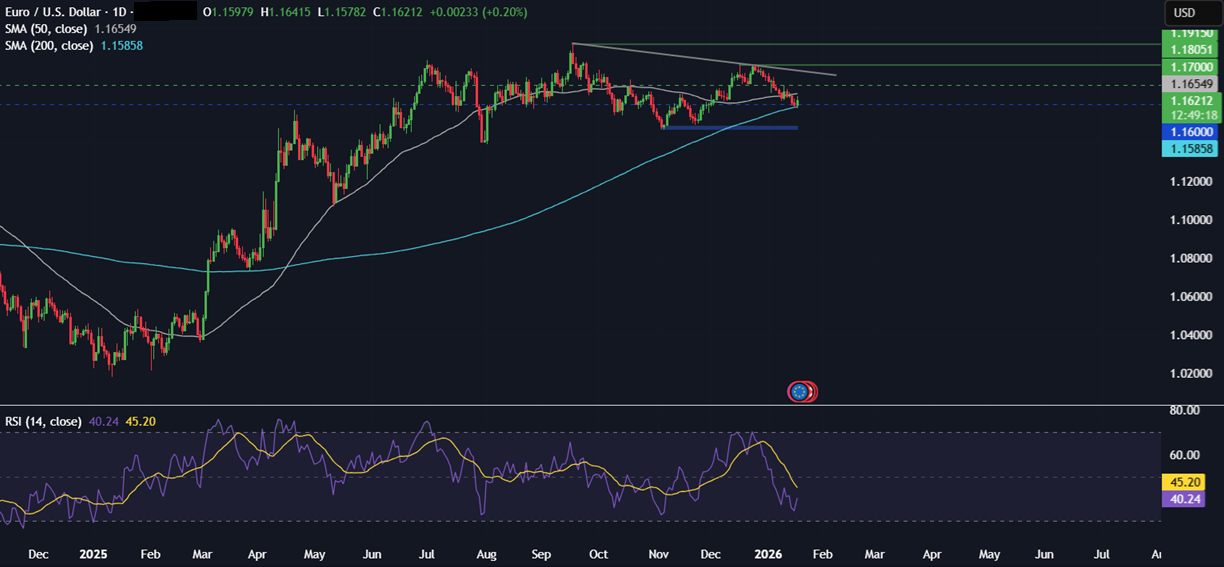
In December, the ECB left its interest rate unchanged for a fourth straight month as expected. Forward guidance stuck to a meeting-by-meeting and data-dependent approach. Inflation projections for 2026 were higher, while the 2027 view was lowered. The broad view is that the ECB’s 2% deposit rate is the end of the rate-cutting cycle.
Recent comments from ECB policymakers have made clear that policy is in a good place. There are differing views on whether the next move will be a cut or a hike, but the ECB is not looking to move rates anytime soon, which should offer support to EUR/USD.
December PMI data showed an ongoing contraction in the manufacturing sector, down to 48.8, whilst the service sector remained solid at 52.4, bringing the composite PMI to 51.5. This signalled modest growth in the fourth quarter, although it’s slowing. The data shows that growth is stable but lacks momentum. The data is unlikely to drive any moves at the ECB, with inflation at the 2% target, policy makers are keeping rates unchanged, and the attention is on growth.
US PCE and Q3 GDP (Thursday)
US PCE data for October and November will be released on Thursday. The government shutdown delayed the release of the Fed’s preferred inflation gauge due to missing data, and it will be approximated using CPI averages. This means that the cooler-than-expected November CPI could disproportionately influence the data. The data comes after December CPI data showed headline inflation at 2.7% and core inflation at 2.6%; however, the underlying components point to upside risk for PCE as food prices rose 0.7% month over month, marking the most significant increase since October 22, which widens the gap between CPI and PCE.
The latest trends are unlikely to alter the Fed’s wait-and-see stance, as policymakers wait for further evidence of either a weakening jobs market or fading price pressures in the coming months before considering another rate cut. Q3 GP data will also be released. However, this is the final reading and is considered less timely than the PMI data. Weaker data could boost rate-cut optimism and lift stocks such as the Nasdaq.
BoJ rate decision (Friday)
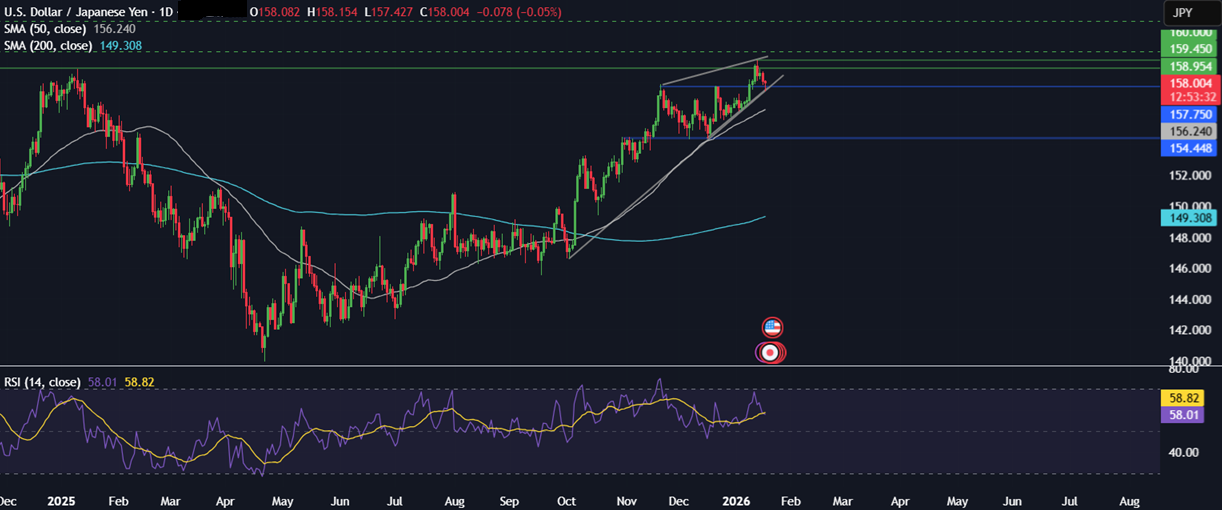
At the last meeting in December, the central bank raised its interest rate by 25 basis points to 0.75%, marking the highest level since 1995. The move was anticipated by markets and was sealed by a unanimous vote, marking a shift from the more divided votes in previous meetings. This also marked the first rate increase since January 2025 and points to a move towards normalisation after decades of ultra-loose monetary policy.
In this week’s meeting, the BoJ is widely expected to leave interest rates unchanged at 0.75%, with no rate change expected until June, depending on wage inflation developments and movements in the yen. Yen weakness is under the spotlight amid expectations of an aggressively expansionary fiscal policy from PM Takachi, who is expected to call a snap election imminently. A hawkish BoJ could pull USD/JPY.
Trading involves risk.
Author



 Risk Disclaimer
The content provided here is for informational purposes only. It is not intended as personal investment advice and does not constitute a solicitation or invitation to engage in any financial transactions, investments, or related activities. Past performance is not a reliable indicator of future results.
The financial products offered by the Company are complex and come with a high risk of losing money rapidly due to leverage. These products may not be suitable for all investors. Before engaging, you should consider whether you understand how these leveraged products work and whether you can afford the high risk of losing your money.
The Company does not accept clients from the Restricted Jurisdictions as indicated in our website/ T&C. Some services or products may not be available in your jurisdiction.
The applicable legal entity and its respective products and services depend on the client’s country of residence and the entity with which the client has established a contractual relationship during registration.