11 min read
Recent weeks recap:
US global stocks recap
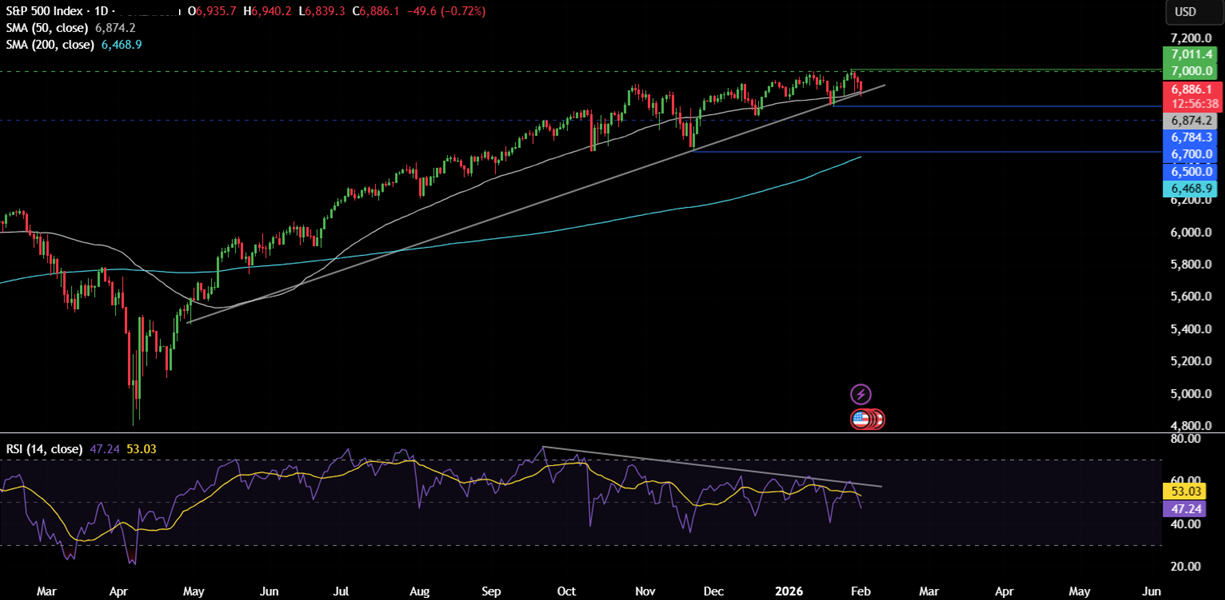
US stocks posted a weekly gain despite heightened volatility as investors digested the latest Federal Reserve interest rate decision, the appointment of the new Fed Chair, the start of mega-cap earnings, and intense volatility in the precious metals market. The USD recovered from a four-year low but still booked losses for the week.
Major US data/themes
As expected, the Federal Reserve left interest rates on hold at 3.5% to 3.75%, noting a solid growth outlook and signs of stabilisation in the labour market, suggesting rates will likely remain on hold for longer.
Reports and the confirmation of Kevin Warsh as Federal Reserve chair triggered volatility across the USD, stocks, and precious metals. The announcement eased concerns about the Fed’s independence, helping the USD recover from a 4-year low, but also raised concerns about a tighter Fed balance sheet, which would reduce liquidity in the financial system and could weigh on stocks and precious metals. A partial US government shutdown adds to market nervousness. However, this is expected to be resolved this week.
Big tech kicked off earnings last week, with Microsoft dropping 10% after its results, as investors fretted over significant capital expenditures in the AI build-out without seeing meaningful returns on that spend. Cloud growth slowed.
Gold / Silver moves
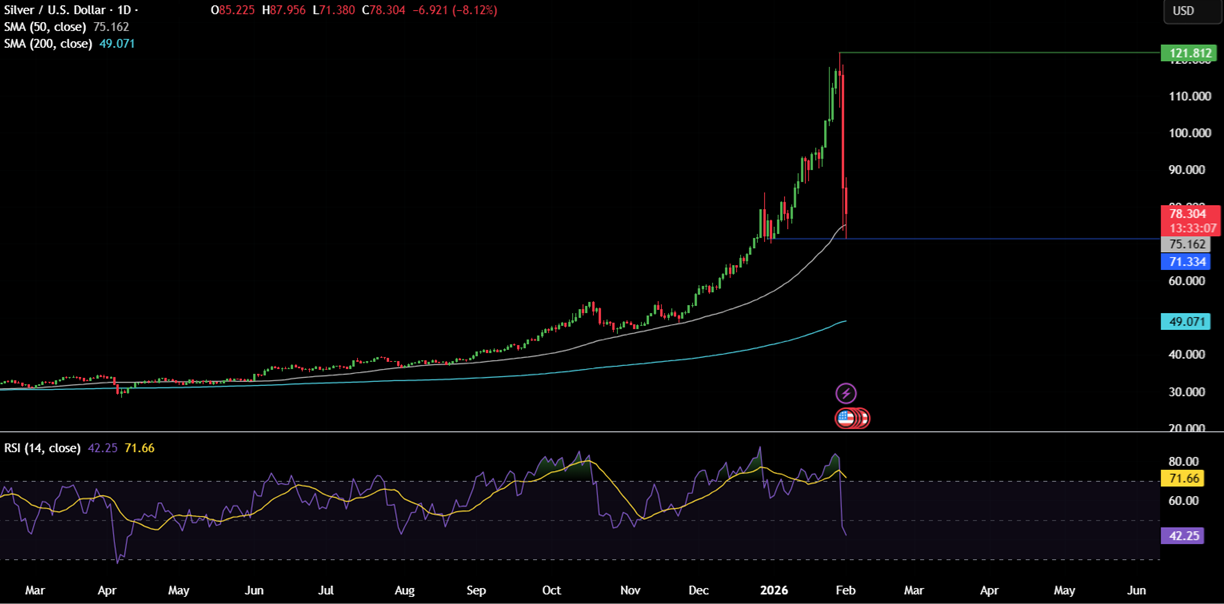
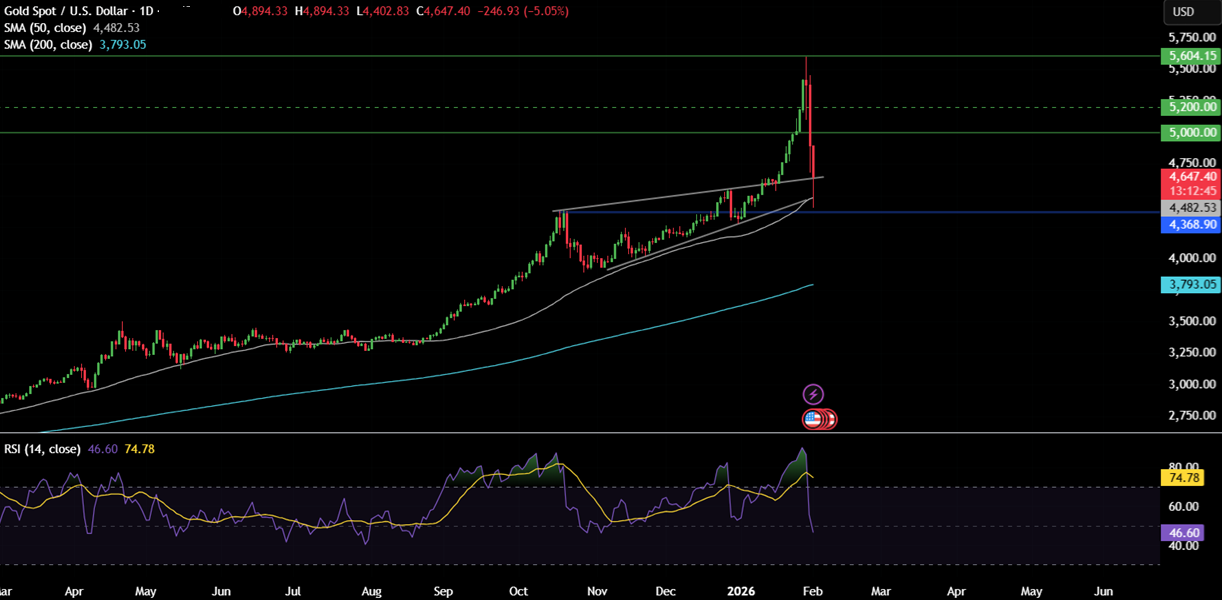
Precious metals were a main focus, with Gold and Silver rising to multiple record highs of $5,600 and $121, respectively, before falling sharply at the end of the week. Silver plunged 30% to settle at $78.53, marking its worst day since March 1980. Gold shed 9% to trade at $4,865 as the recent rally, fueled by safe-haven demand and a weaker USD, reversed.
The catalyst was news that Kevin Warsh would become the next Federal Reserve Chair, which sent the USD higher and weighed on gold. Warsh was the least dovish of the possible candidates and is not expected to push aggressively for rate cuts, and is expected to tighten liquidity. The huge decline suggests the market was excessively overbought and could see investors adopt a more cautious stance toward precious metals. Precious metals are falling further at the start of the new week, with Gold now down $1000 from its record high and Silver down 35% in two days.
Looking ahead, volatility could persist this week, especially if Chinese investors sell ahead of the Chinese New Year in mid-February. US economic data, particularly NFP, along with any escalation or de-escalation of geopolitical tensions, could drive Gold price moves this week.
Oil moves
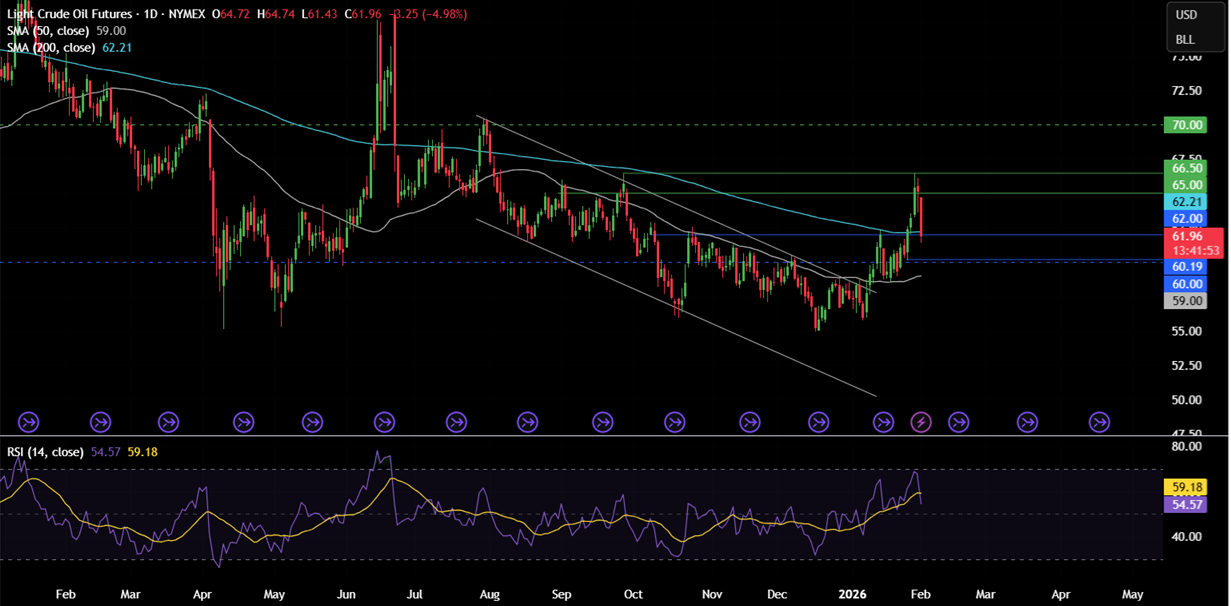
Oil prices rose 6.5% last week in the largest weekly jump since October. The price rallied to an almost 6-month high after Trump sent warships to the Middle East and warned Iran that time was running out to agree on a nuclear deal. Fears that military action in the region would disrupt supply increased the risk premium on oil lifting prices. The market will continue to monitor geopolitical tensions between the US and Iran after talks between the two sides ramped up, pulling oil prices lower on Monday.
Over the weekend, OPEC+ agreed to keep its oil output unchanged for March amid expectations of a supply glut this year. The group made no mention of what would come beyond March. Looking ahead, the market will monitor talks between the US and Iran, Chinese PMI data, US manufacturing PMIs, and NFP, which could influence oil prices.
Indian markets
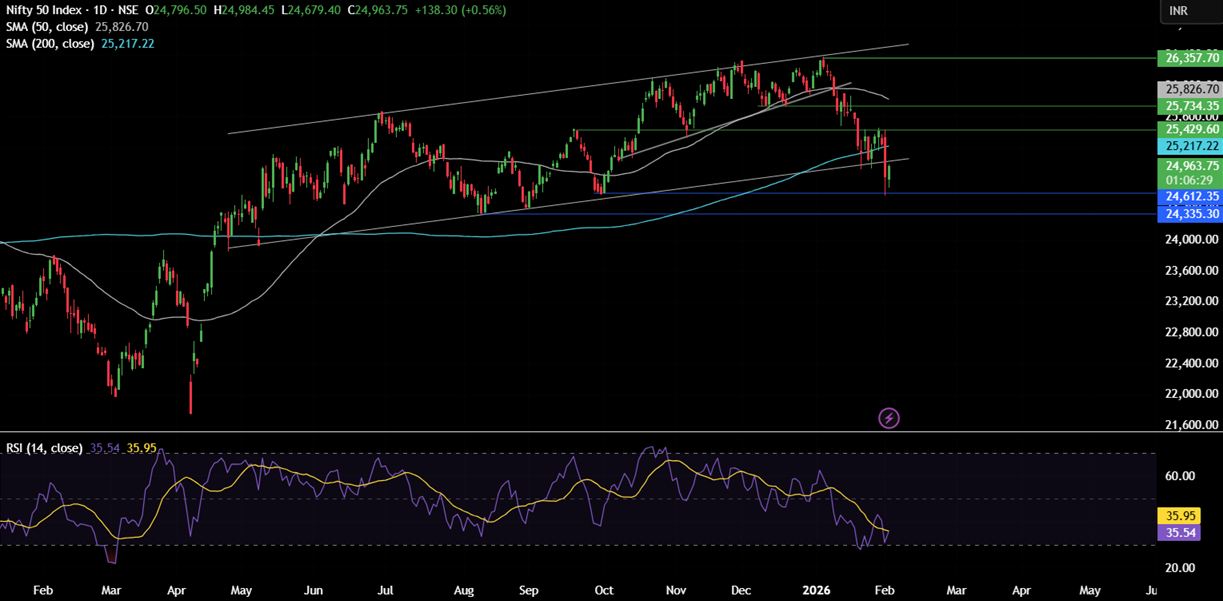
Indian markets rose last week. The Nifty 50 and the Sensex rose 1% and 0.9%, respectively, amid a bullish mood following the announcement of a historic EU-India free trade deal. The landmark trade deal will see tariffs cut across a range of goods and services. The deal will make access to European markets easier for India’s farmers and small businesses.
Foreign Institutional Investors (FIIs) have sold almost R38,000 crore in January, after selling nearly R1.6 lakh crore in 2025.
Meanwhile, domestic investors (DII) remained net buyers, adding over ₹14,000 crore into the Indian equity market last week.
On the data front, India’s Economic Survey forecasts GDP growth of 6.8% to 7.2% for FY 2027, driven by strong domestic demand and despite global uncertainties and trade tariffs. However, this represents a slowdown from the projected 7.4% growth this fiscal year.
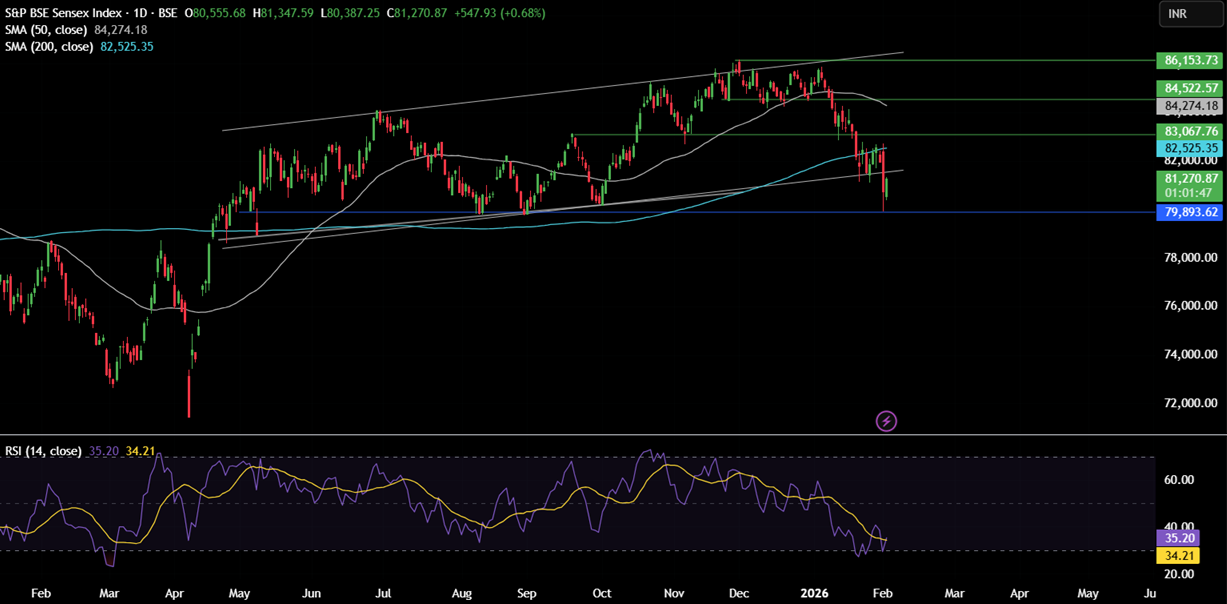
Key Indian market drivers this week include ongoing reactions to Sunday’s Union Budget and the RBI rate decision on Friday. In addition to these market-moving events, investors will also watch PMI data and a packed earnings calendar.
Union Budget
Indian stocks fell substantially during Sunday’s special trading session after the Union Budget 2026. The announced STT hike will increase costs of doing business for traders and market makers, dampening risk appetite and triggering sentiment-driven selling and profit-booking. The measure raises concerns over near-term liquidity and foreign flows, despite positive long-term structural measures being announced in the Budget. Brokers, exchanges, and F&O-heavy financials were the biggest losers due to the STT hike, while IT, tourism, and a few defensive sectors emerged as relative winners on supportive Budget measures.
USD/INR rose 0.02% last week after reaching a record low of 92.2 before recovering slightly to end the week at 91.69 as the RBI remains a key backstop to a move beyond the psychological 92.00 level. Persistent FII selling and concerns over a US-India trade deal keep the Rupee under pressure amid its worst monthly performance since September 2022.
Pakistan markets
The Pakistan Stock Exchange (PSX) ended the first month of the year on a firm footing, reaching fresh record highs. However, the index saw a sharp selloff, dropping 2.6% in the final week as investors booked profits amid mounting geopolitical tensions and after the State Bank of Pakistan unexpectedly left rates unchanged at 10.50% last week, defying expectations of a 50-75 basis point rate cut.
Looking out this week, sentiment could improve, supported by the upcoming inflation data and ongoing corporate earnings releases. Geopolitical developments could also influence sentiment.
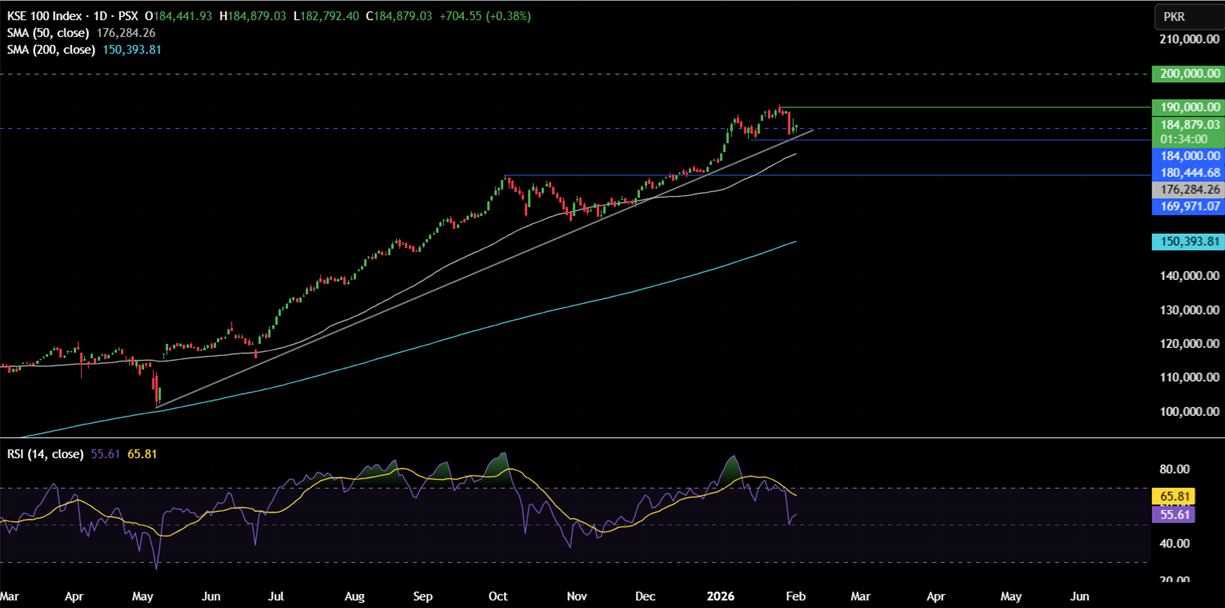
USD/PKR declined 0.07% last week, closing Friday at 279.80 amid a weaker USD. The pair is rising at the start of the week.
Week ahead (US & Asia)
Pakistan inflation (Tuesday)
Pakistan inflation data will be released on Tuesday and is expected to hold steady at 5.6% YoY in January, in line with December. On a monthly basis, CPI is expected to rebound by 0.2%, recovering from a -0.4% decline in December. The data comes as the State Bank of Pakistan left rates unchanged in its latest meeting but signalled easing inflation and a gradual recovery in economic growth. The outlook that coincided with the Finance Division’s monthly economic outlook.
US ISM manufacturing (Monday)
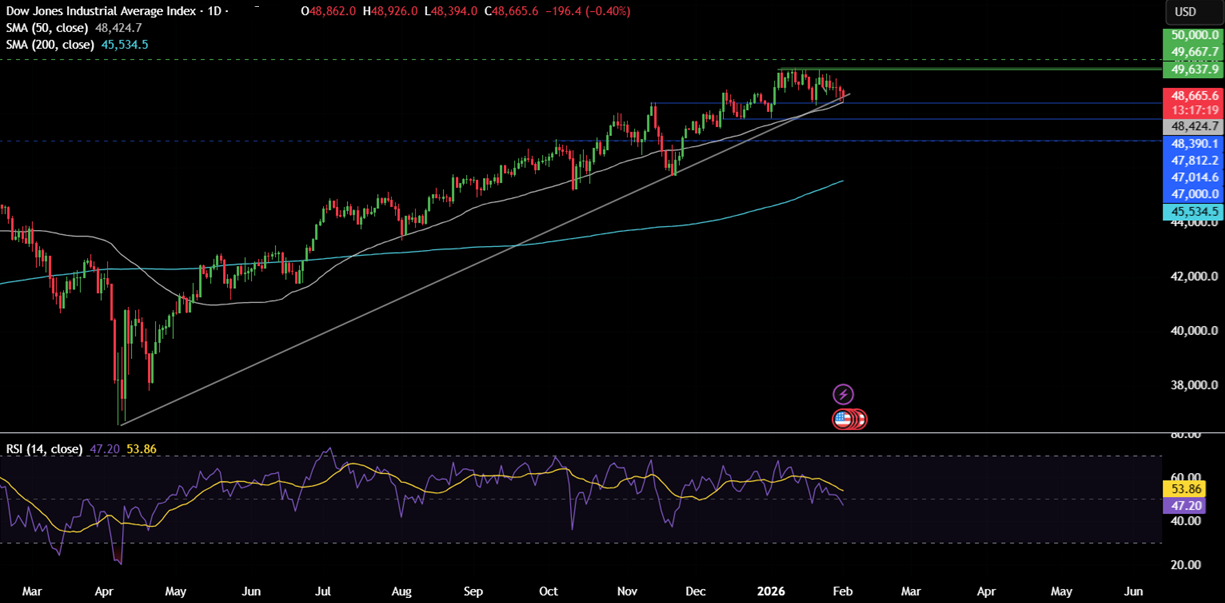
Expectations are for ISM manufacturing PMI to contract at a slower pace of 48.3 in January, up from 47.9 in December. Using the S&P Global US manufacturing PMI as a benchmark, it rose to a two-month high of 51.9 in January, with manufacturing output growth accelerating to a 5-month high. New orders recovered from December’s decline, but only slightly, pointing to still-soft underlying demand.
Meanwhile, attention will also be on input and factory gate costs, which rose sharply in the S&P Global Flash PMI data, and could point to rising inflationary pressures. Investors will be looking to see whether this trend continues and shows up in the ISM data. Stronger data could support the U.S. dollar and cyclical stocks within the Dow Jones.
US services (Wednesday) PMIs
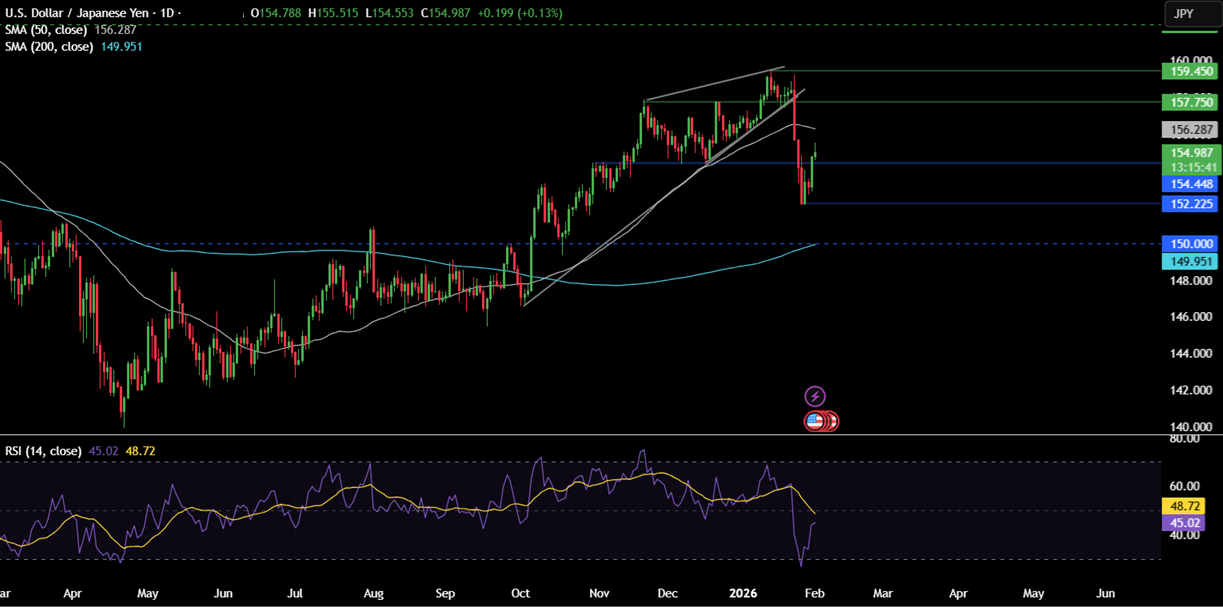
The services PMI is expected to show that activity expanded at a slightly slower pace in January at 53.8, down from 54.4 in December, which marked the fastest pace of expansion in over a year, fueled by solid demand growth and a pickup in hiring. The December figure exceeded expectations, and new orders expanded by the most since 2024.
This pickup in demand helped spark the healthiest growth in services employment since February. Again, the market will be watching closely to see whether this trend continues into 2026. Strong data could help revive demand for the US dollar, lifting USD/JPY.
RBA rate decision (Wednesday)
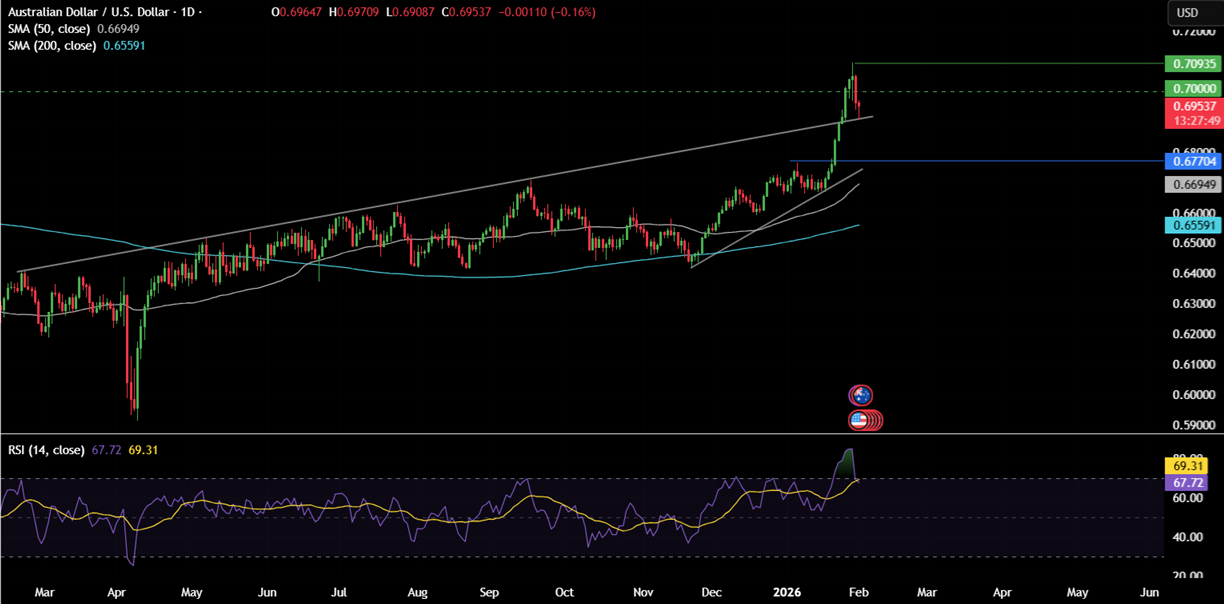
In the December meeting, the RBA left rates unchanged at 3.6% in line with expectations and a third consecutive hold. This was despite October’s CPI report showing a rise in both headline and underlying inflation. During the press conference, Governor Bullock confirmed that the RBA did not consider a rate cut but did consider scenarios for a rate hike.
Since the December meeting, key data points have come in stronger than expected, with the unemployment rate falling to 4.1% and inflation rising 3.4%, ahead of the RBA 3.2% forecast. The market is pricing in a 75% probability of a rate hike at the upcoming RBA meeting, taking rates to 3.85%. A hawkish RBA could lift AUD/USD.
RBI rate decision (Friday)
The RBI is expected to leave rates unchanged at 5.25% after cutting rates by 25 basis points at the December meeting, in a unanimous decision that was in line with expectations. At the December meeting, the MPC maintained a neutral stance, with one dovish dissent calling for a shift to an accommodative policy.
Governor Sanjay Malhotra noted that the economy had seen rapid disinflation and described conditions as “Goldilocks,” although he cautioned that geopolitical and trade uncertainties could weigh on the outlook. Growth is expected to soften, and the language suggested that further policy action remains a possibility, even after 150 basis points of cuts last year.
Inflation remained subdued in December, with CPI at 1.33%, below the 1.5% forecast but up from 0.71%. While inflation has recovered from the record low of 0.25% in October, it remains below the RBI’s tolerance band of 2% to 6%. A dovish-sounding RBI could lift stocks, including the Sensex.
Non-farm payroll report (Friday)
In December, the US economy added just 50,000 jobs, well short of expectations of a gain of 60,000 and below November’s downwardly revised figure of 56,000. However, the unemployment rate also edged lower to 4.4% from 4.5% in in in November. The market looked past the softer job creation figures and focused on the lower unemployment rate as evidence of labour market stabilisation.
This was also highlighted by Federal Reserve chair Jerome Powell, who said the labour market is showing signs of stabilisation. With expectations for 70,000 jobs to be added in January, the unemployment rate is expected to tick up to 4.5%. Stronger-than-expected jobs data could add to signs of a stabilisation, meaning rates could remain on pause for longer. This could pull Gold and stocks lower.
US earnings season
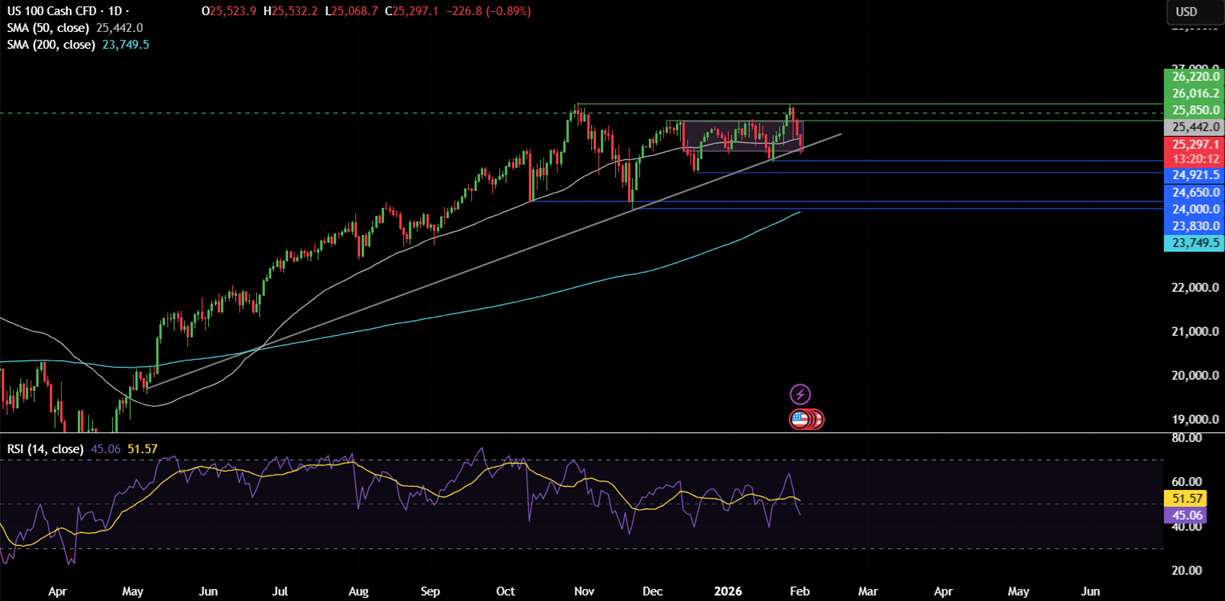
After Microsoft and Meta spiked volatility last week, attention turns to earnings from Alphabet and Amazon. Concerns over capital expenditure are running high. While Microsoft spooked the market, Meta was cheered as its huge capex spend translated into impressive revenue growth forecasts. Other big names such as Disney, Palantir, AMD, Uber, Qualcomm, Snap, and Under Armour are also set to report this week. Revived concerns over the AI trade could fuel a rotation away from tech stocks, pulling the Nasdaq lower.
Trading involves risk.
Author



 Risk Disclaimer
The content provided here is for informational purposes only. It is not intended as personal investment advice and does not constitute a solicitation or invitation to engage in any financial transactions, investments, or related activities. Past performance is not a reliable indicator of future results.
The financial products offered by the Company are complex and come with a high risk of losing money rapidly due to leverage. These products may not be suitable for all investors. Before engaging, you should consider whether you understand how these leveraged products work and whether you can afford the high risk of losing your money.
The Company does not accept clients from the Restricted Jurisdictions as indicated in our website/ T&C. Some services or products may not be available in your jurisdiction.
The applicable legal entity and its respective products and services depend on the client’s country of residence and the entity with which the client has established a contractual relationship during registration.