8 min read
Weekly recap:
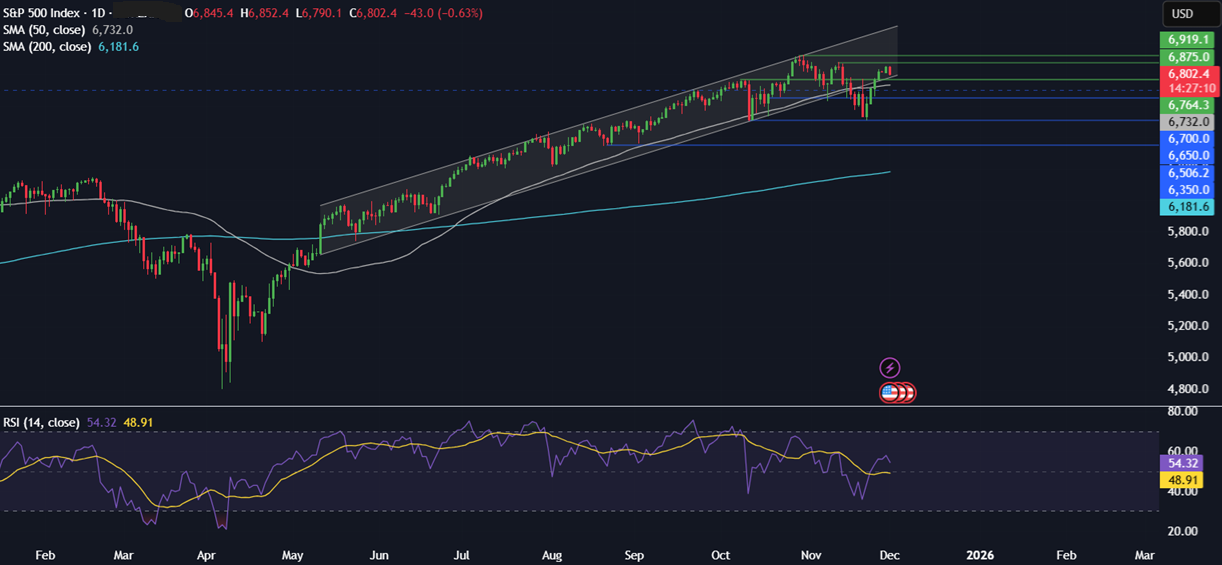
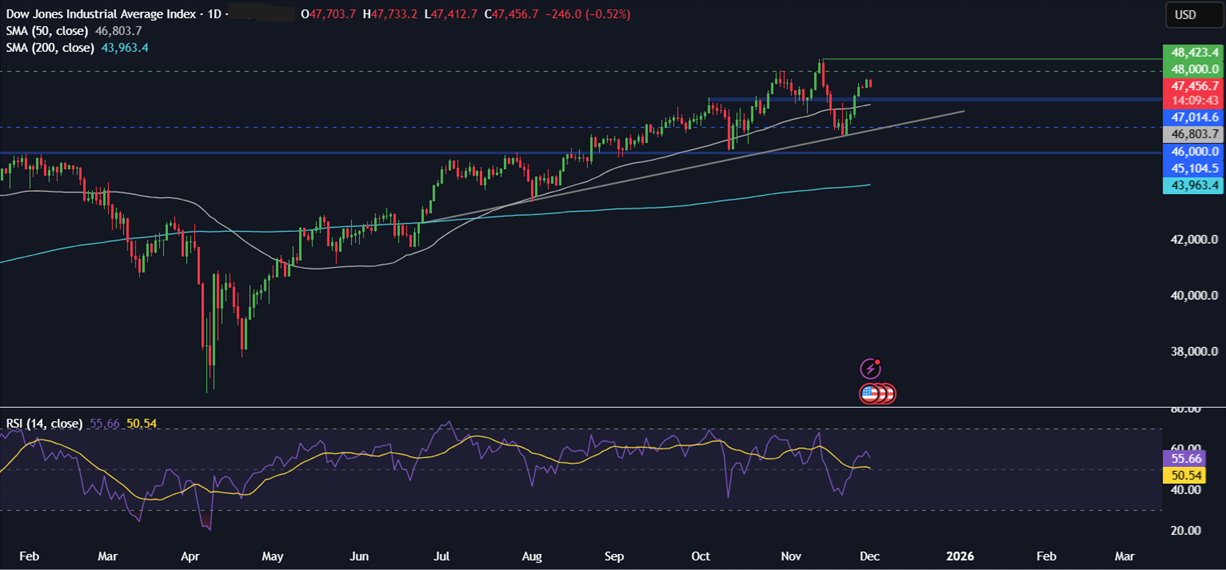
Risk sentiment recovered in the holiday-shortened week, with U.S. stocks pushing higher. The S&P gained 3.7%, its strongest weekly performance since mid-June. Tech stocks led the charge with the tech-heavy Nasdaq 100 rising 4.9% across the week compared to a 3.1% rise in the Dow Jones. Meanwhile, the US dollar fell 0.72% marking its sharpest weekly decline since mid-October.
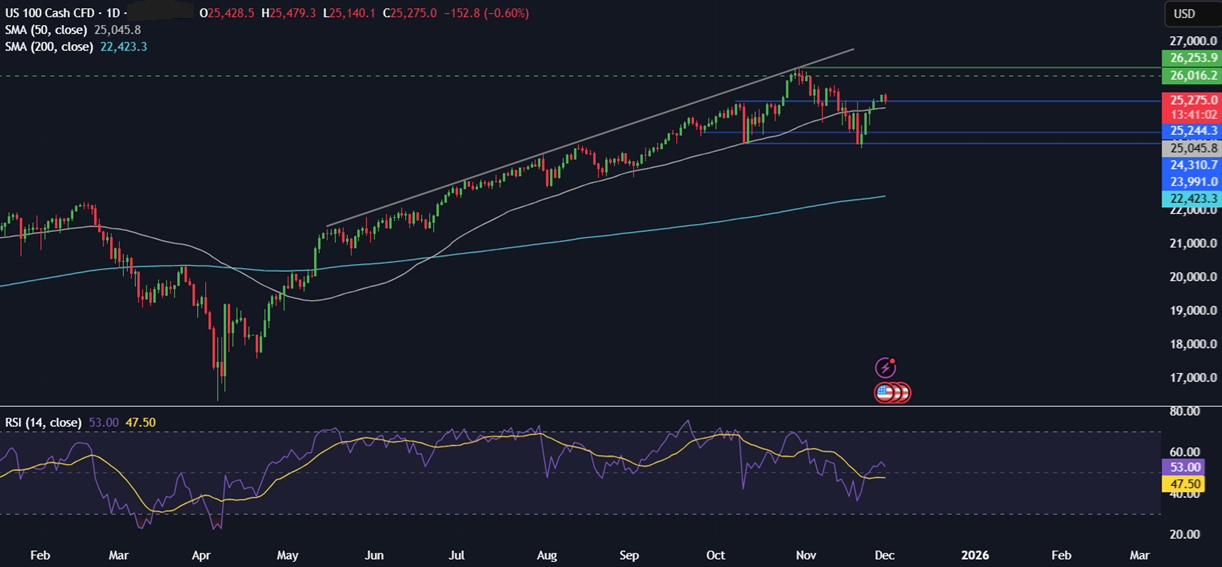
Rising expectations of a December Fed rate cut boosted sentiment, lifting stocks and putting downward pressure on the US dollar. Several pieces of weaker-than-expected data, including softer retail sales and a slump in consumer confidence to the lowest level since April, added to expectations that the central bank will reduce rates by 25 basis points next month.
Meanwhile, the prior week’s concerns over the AI trade took a back seat as Alphabet, Google’s parent, hit $4 trillion in market capitalisation after seeing surging demand for its new Gemini 3 AI model.
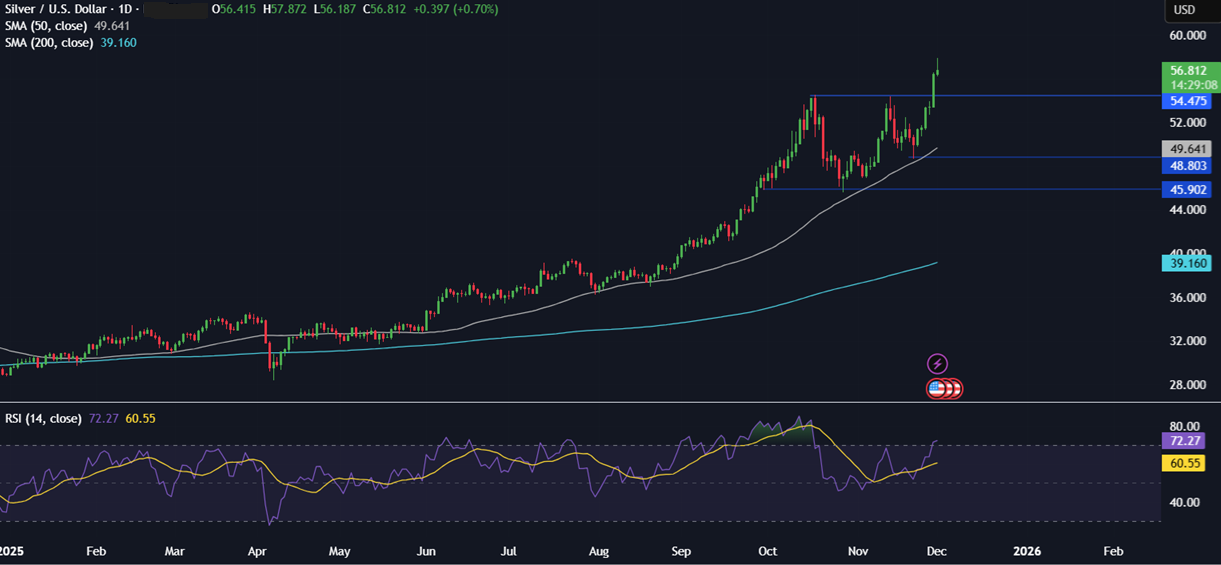
In the precious metal space, Silver stole the spotlight from Gold, rising to a record high of $54.38. Meanwhile, Gold rose 4% across the week. While Silver undoubtedly benefits from Gold’s momentum, its bullish narrative also hinges on a potent mix of booming industrial demand and constrained supply.
The OPEC meeting on Sunday was uneventful, with the group of oil producers agreeing to leave oil output unchanged in January and across the first quarter of 2026. The decision comes as the group slows down its push to regain market share amid fears of a looming supply glut in the coming year.
Looking ahead, Monday will be the first full trading day since Wednesday as traders return to their desks following the Thanksgiving Holiday, so volumes and liquidity should ramp up again.
Seasonality
This week is the first week of December, typically a strong month for stocks. On average, the S&P500 has gained 1.5% in December since 1945. Seasonality is usually supportive in November, and the S&P 500 only just managed to book gains across the month, up 0.15%. What is important here is that seasonality is a trader’s friend, but it is by no means an absolute.
Fed Chair pick this week?
Treasury Secretary Besson has been interviewing candidates to replace Federal Reserve Chair Jerome Powell, whose term ends in May next year. The short list includes White House economic adviser Kevin Hassett, former Fed Governor Warsh, BlackRock CEO Rider, and current Fed governors Waller and Bowman.
According to reports, Hassett is viewed as the frontrunner. He is considered a close ally of President Trump and shares his stance on a more accommodative monetary policy. Should Hasset be appointed, this could raise expectations surrounding further rate cuts next year, pulling the USD lower.

US ISM manufacturing PMI (Monday)
The manufacturing activity index attracts attention, given Trump’s desire to bring manufacturing back to the US. However, recent data suggests that activity is slowing. Expectations are for the contraction to deepen to 48.6 from 48.7. Looking to the S&P manufacturing PMI for comparison, this fell to a four-month low of 51.9 in November, down from 52.5 in October, as the report noted a marked decline in new orders and a fifth straight monthly fall in export orders, putting downward pressure on output. Inventories of finished goods increased at the fastest pace in the survey’s 18-year history, suggesting a buildup of unsold stock.
However, input price inflation cooled to the lowest level since February, although it remained above recent averages. Weaker data could add to expectations of a Fed rate cut, lifting stocks such as the Dow Jones.
Eurozone CPI (Tuesday)
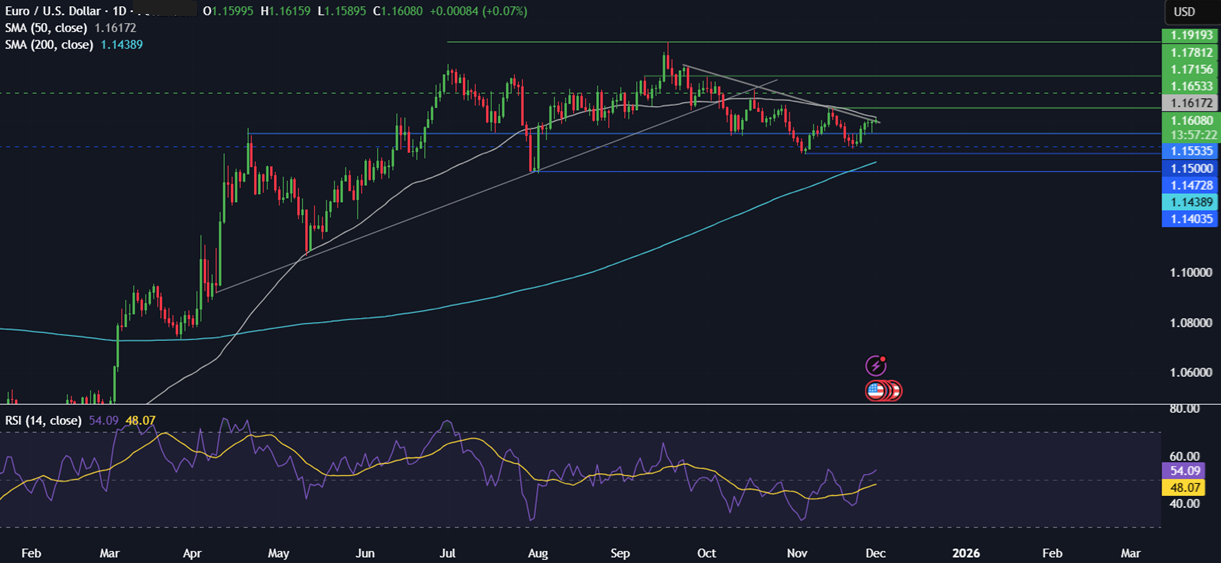
Eurozone inflation is expected to rise 2.2% YoY in November, while core inflation is expected to remain at 2.4%. These readings are the final inflation numbers before the ECB’s 18 December meeting and could harden policymakers’ resolve to keep borrowing costs unchanged for a fourth straight meeting. This would leave the central bank able to focus instead on the pivotal quarterly forecasts and the first outlook searching as far as 2028. With inflation around the 2% target, officials are in a holding pattern, with no clear agreement on the next move for rates.
National reports on Friday showed a mixed bag after stronger-than-expected inflation in Germany and Spain, but weaker-than-anticipated numbers from France and Italy. ECB President Christine Lagarde has repeatedly highlighted the good position that policy is currently at and is expected to speak on Wednesday. Hotter inflation data could lift the EUR/USD modestly.
US ISM services PMI (Wednesday)
The service sector is the largest contributor to the US economy. Therefore, the ISM services PMI carries weight with the markets. As a basis of comparison, the S&P services PMI for November showed the index rising to 55, up from 54.8, marking a four-month high and posting the largest rise in new business so far this year. Given the focus on US inflation and the health of the jobs market, the report’s input prices and jobs subcomponents will be closely watched.
In October, import prices rose at the fastest pace since January 2023, driven largely by tariffs and higher wages. Service-sector job creation is expected to remain modest and slower than in October. Stronger-than-expected data could boost the USD, lifting USD/JPY.

US core PCE (Friday)
Following the US government reopening, the missed September core PCE and personal income spending report has been delayed until December 5th. Core PCE is the Federal Reserve’s preferred inflation gauge and therefore has the potential to move markets. As a point of comparison, September CPI showed inflation was 0.3% MoM, down from 0.4% while core CPI rose 0.2% weaker than the 0.3% expected. PPI data showed a 0.3% MoM increase, lifting the annual rates to 2.7% from 2.6%.
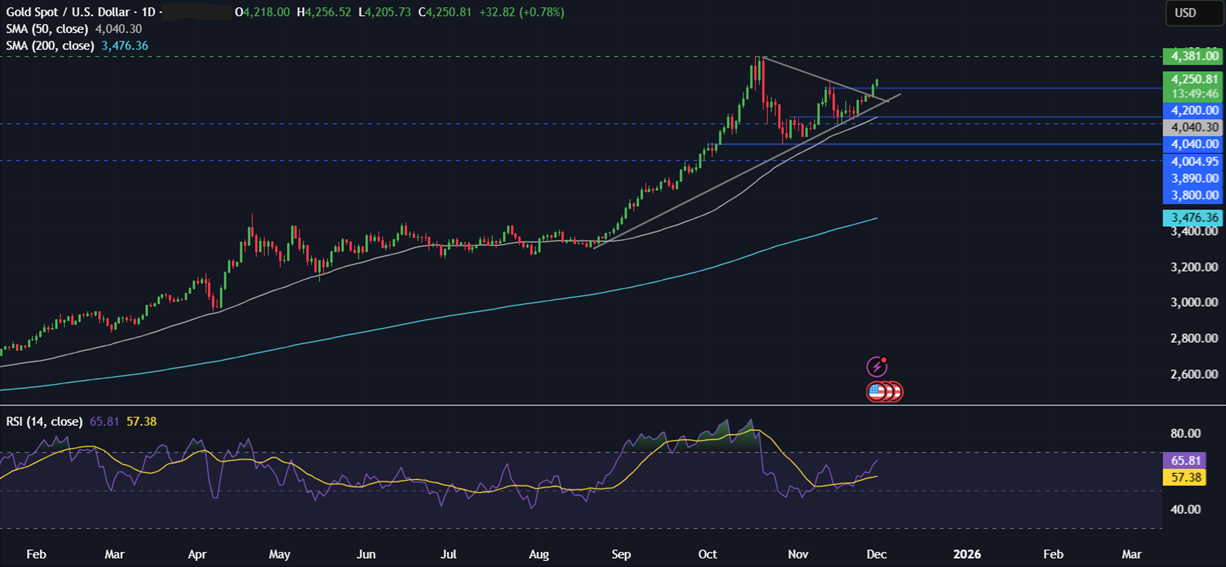
Overall, the relevant CPI and PPI components feeding into the PCE report point to a rather subdued monthly PCE rise. The data comes ahead of the FOMC meeting on 10-11 December, where the Fed is expected to cut rates by 25 basis points and is expected to continue cutting rates next year. Recent expectations of a rate cut have been boosted by dovish Fed commentary. Cooler-than-forecast core PCE could help drive stocks and Gold higher and the USD lower.
Canadian jobs report (Friday)
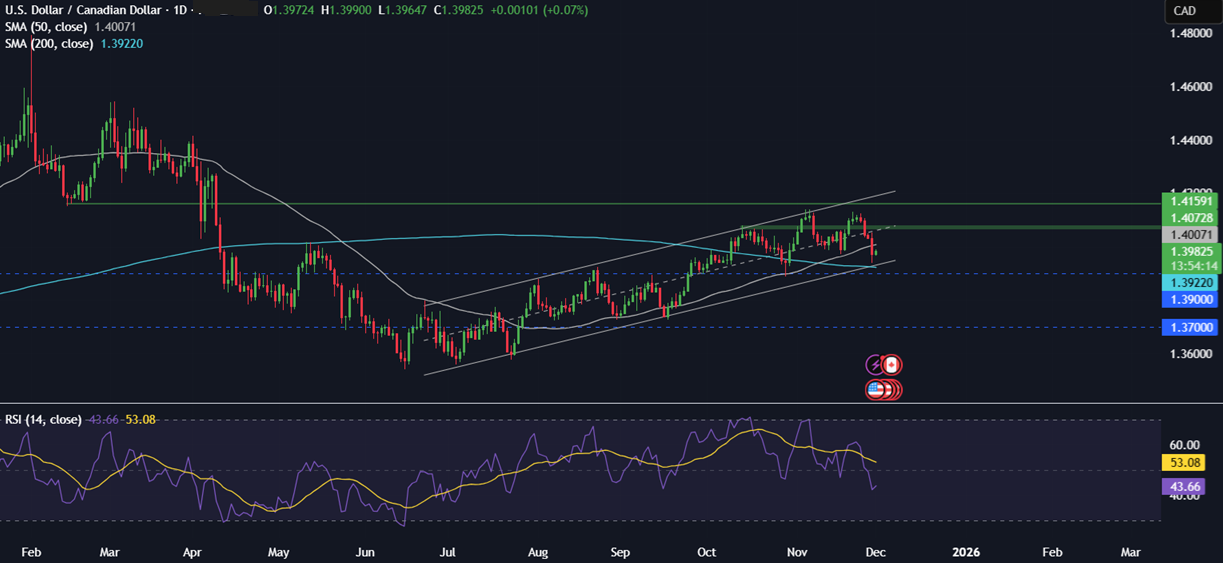
While the US non-farm payroll won’t be released on Friday, the Canadian jobs report will be. The market will be watching to see whether November delivers a repeat of October’s strong numbers. Headline employment rose 66.6K from 60.4K, well above forecasts of a 2.5K decline. This was driven by an 85K increase in part-time roles, while full-time employment fell by 18.5k. Even so, the unemployment rate dropped to 6.9% from 7.1%, defying expectations that it would remain unchanged. However, the strong report had little impact on BoC rate-cut expectations.
The central bank is at the lower end of its neutral rate and has said the policy is about appropriate, with further rate cuts unlikely unless the economy weakens further. A sustained labour market deterioration due to US trade tensions could likely force the BoC to act again, provided inflation remains near the target level. The market is pricing in just 15 basis points of easing in July 2026, implying a 60% chance for another 25 basis point rate cut by mid next year. Weak jobs data could boost USD/CAD.
Trading involves risk.
Author



 Risk Disclaimer
The content provided here is for informational purposes only. It is not intended as personal investment advice and does not constitute a solicitation or invitation to engage in any financial transactions, investments, or related activities. Past performance is not a reliable indicator of future results.
The financial products offered by the Company are complex and come with a high risk of losing money rapidly due to leverage. These products may not be suitable for all investors. Before engaging, you should consider whether you understand how these leveraged products work and whether you can afford the high risk of losing your money.
The Company does not accept clients from the Restricted Jurisdictions as indicated in our website/ T&C. Some services or products may not be available in your jurisdiction.
The applicable legal entity and its respective products and services depend on the client’s country of residence and the entity with which the client has established a contractual relationship during registration.