8 min read
Weekly recap:
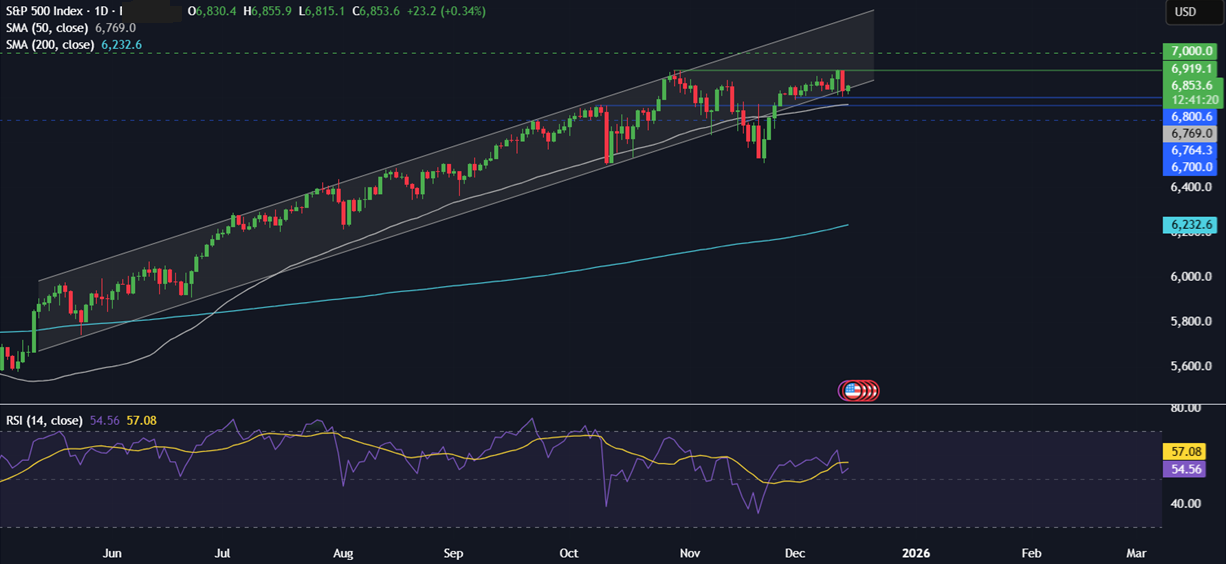
U.S. stocks climbed last week, with the S&P 500 and the Dow Jones reaching record levels on Thursday, but both indices retreated on Friday to close out a mixed week. The Dow settled 1.1% higher, while the S&P 500 fell 0.6% and the Nasdaq 100 closed 1.6% lower across the week. Meanwhile, the USD fell 0.6% over the week, marking its third consecutive weekly decline.
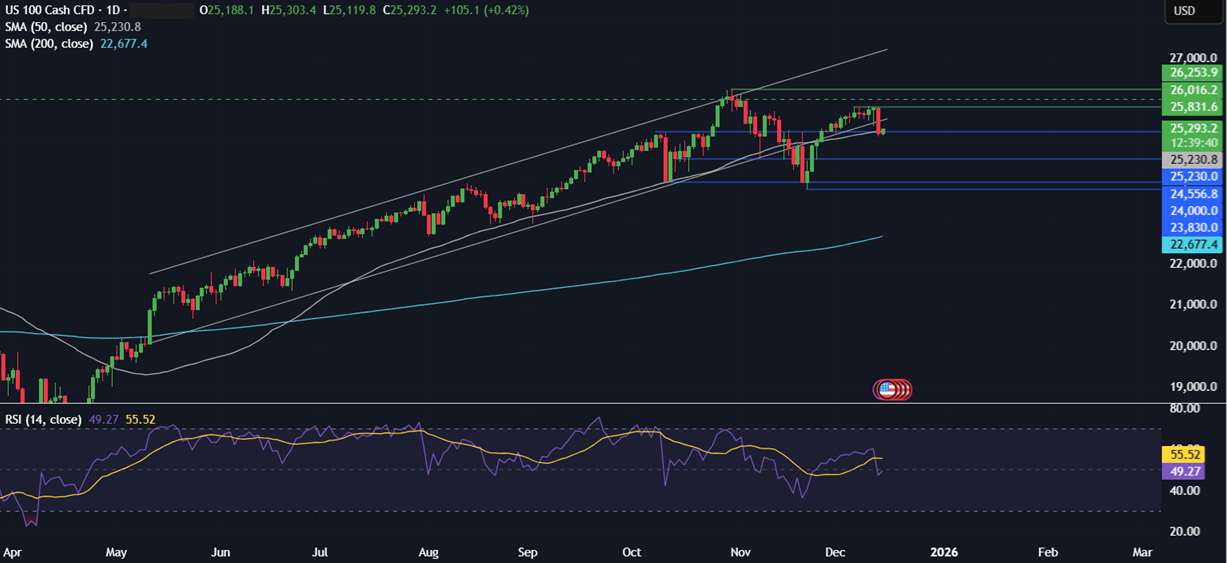
For the third straight meeting, the US Federal Reserve met market expectations by cutting interest rates by 25 basis points. The vote had three dissenters, the most since 2019, adding to uncertainty about whether further cuts may be forthcoming in 2026.
After three rate cuts in 2025, markets are pricing in approximately a 70% probability that the Fed will implement two further rate cuts in 2026; however, the Fed dot plot indicates one.
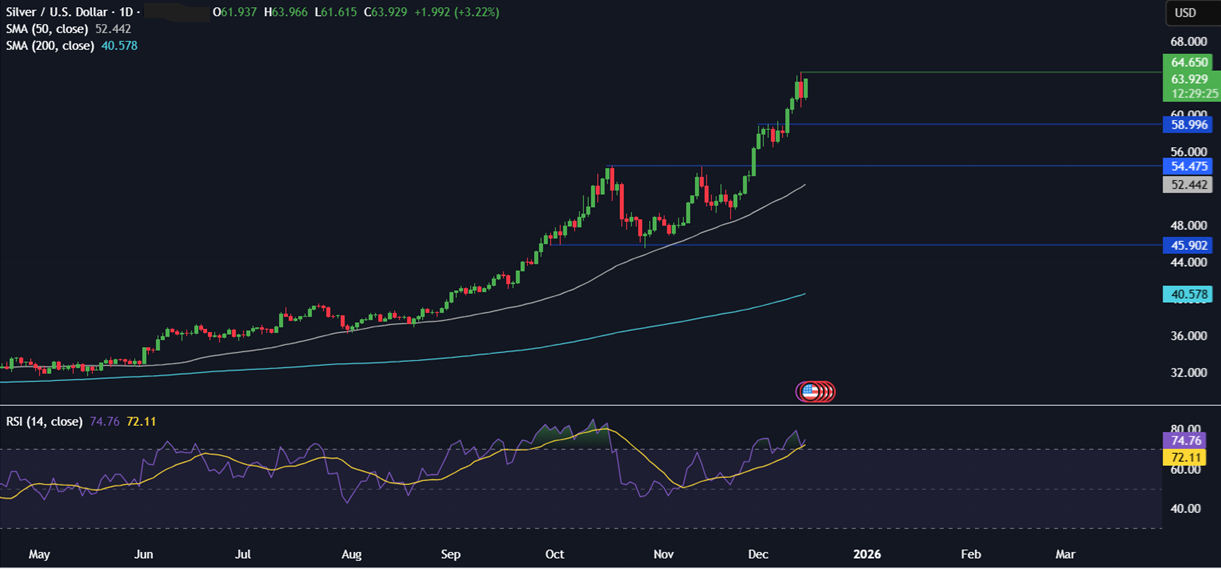
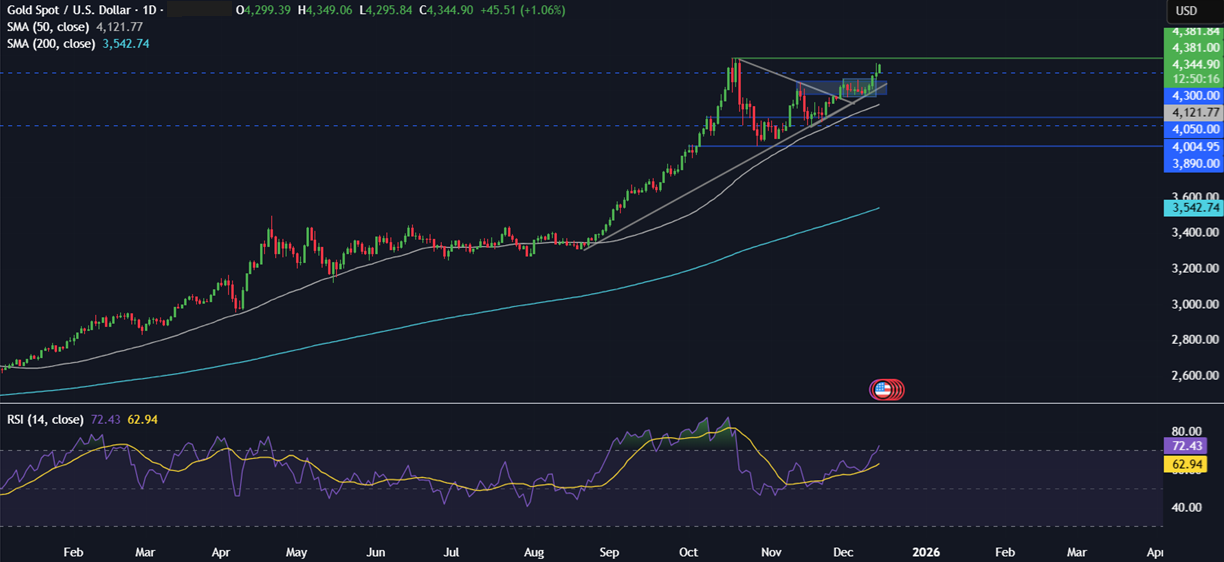
Gold rallied throughout the week, and silver has seen far greater gains, with prices briefly climbing to a record $65 per oz, putting silver’s year-to-date gain at 115%.
US non-farm payroll (Tuesday)
The November NFP is expected to show 35,000 jobs added, whilst the unemployment rate is expected to remain at 4.4%. The delayed November report will also include October’s payroll, although the unemployment rate will be omitted due to the government shutdown. The last official rate for September was a four-year high of 4.4%, while Chicago Fed’s real-time estimates rose to 4.44% in November, pointing to an ongoing softening in labour conditions. High-frequency data points have been mixed with initial jobless claims falling, suggesting a modest reduction in layoff activity.
However, the ADP payroll report showed a 32,000-job decline, the largest fall in 18 months. The report also flagged a continued slowdown in pay growth. The Fed’s concern over the weakening labour market has been the reason behind its recent rate cuts. Weak data could reinforce the market view that the Fed will cut twice more in 2026 than it projects, one cut. This could lift Gold and stocks, including the S&P 500, higher, while pulling USD lower.
BoE rate decision (Thursday)
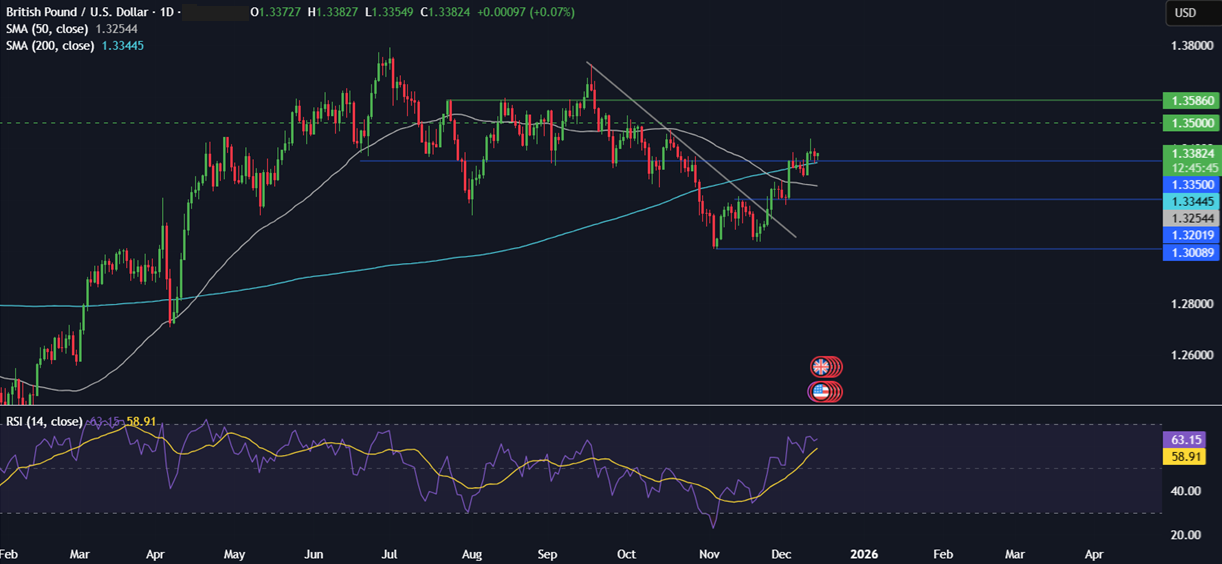
The BoE is expected to cut rates by 25 basis points to 3.75% on Thursday. The markets are pricing in a 90% probability that the central bank will reduce rates at the final meeting of the year. Looking ahead, analysts expect rates to fall further to 3.5% by the end of March. The vote split in the previous meeting, when the BoE left rates unchanged, was narrow at 5-4, with Bank of England governor Andrew Bailey casting the deciding vote. However, in this meeting, the vote is expected to be 5 to 4 in favour of a cut, with Bailey joining the dovish camp, and the decision once again hinging on him.
Looking at data since the last meeting, the October inflation report was in line with expectations and appears to confirm the central bank’s view that inflation peaked at 3.8% in September. September’s labour market report was also weak, with employment falling and the jobless rate rising by more than forecast. UK GDP for September fell 0.1% and the Q3 reading was also weaker than expected, boosting the case for the MPC doves.
However, recent speeches by policymakers have highlighted divisions among them, as inflation remains well above the 2% target. Given that the rate cut is priced in, much attention will be on the statement, as well as UK job data, flash PMIs, and inflation figures due to be released in the lead-up to the meeting. The vote split and the BoE’s tone could influence GBP, with a more dovish vote split and statement pulling GBP/USD lower.
ECB right decision (Thursday)
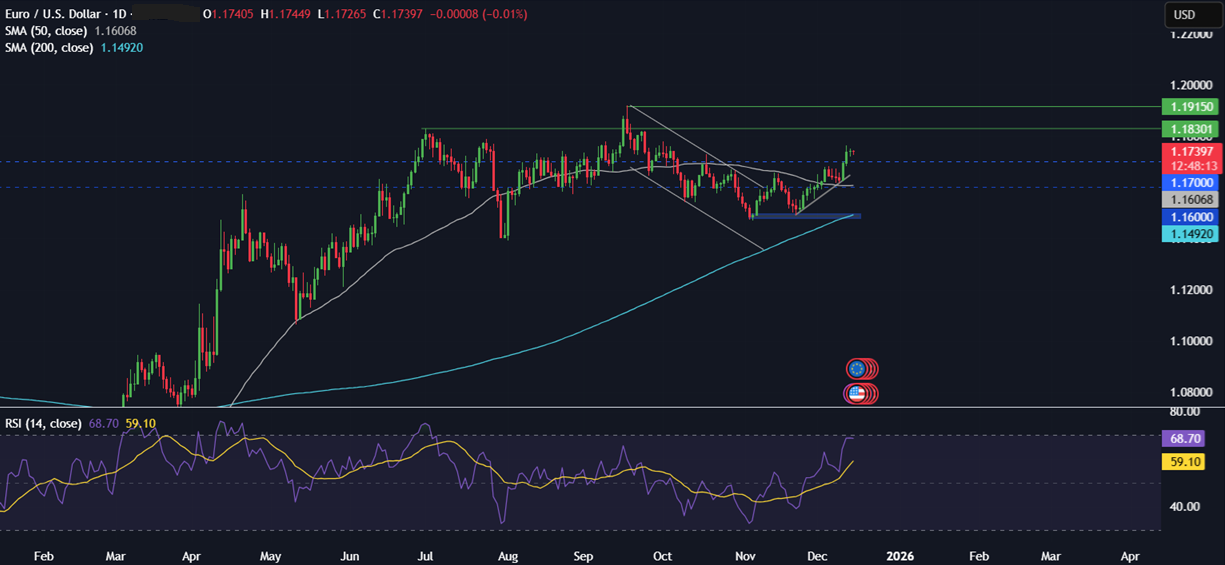
The ECB is widely expected to leave interest rates unchanged at 2%, a view supported by numerous members of the governing council in recent speeches. Euro area data have come in stronger than what was expected in the September staff projections, with stronger real GDP growth, resilient labour market conditions, and wage growth running above expectations. Meanwhile, inflation is holding around the 2% target area with only limited changes expected over the medium term.
Against this backdrop, the bar for further rate cuts has risen, reinforcing expectations that the ECB will remain on hold and data-dependent, with no additional rate cuts priced in. ECB president Christine Lagarde is expected to reiterate that policy is in a good place and on no fixed path. Recent hawkish ECB members have said they are comfortable with the central bank’s next move being a rate hike. A hawkish-sounding ECB could support EUR/USD higher.
US CPI (Thursday)
The US CPI release follows the cancellation of October’s report due to the government shutdown. October’s figures are to be incorporated into November’s data where possible. Recent Fed commentary pointed to easing concerns about price pressures and continued disinflation in services. Tariff-driven goods inflation is expected to peak in early 2026, then ease in the second half of next year. In his post-FOMC press conference last week, Fed chair Powell reiterated that long-term inflation expectations remain anchored and that tariff impacts are expected to be one-offs.
Policymakers believe they’ve done enough for now and are well-positioned to decide on next steps as the tariff impact fades in 2026. Cooler-than-expected inflation could raise rate-cut expectations, pulling the USD lower and lifting stocks and Gold.
BoJ rate decision (Friday)
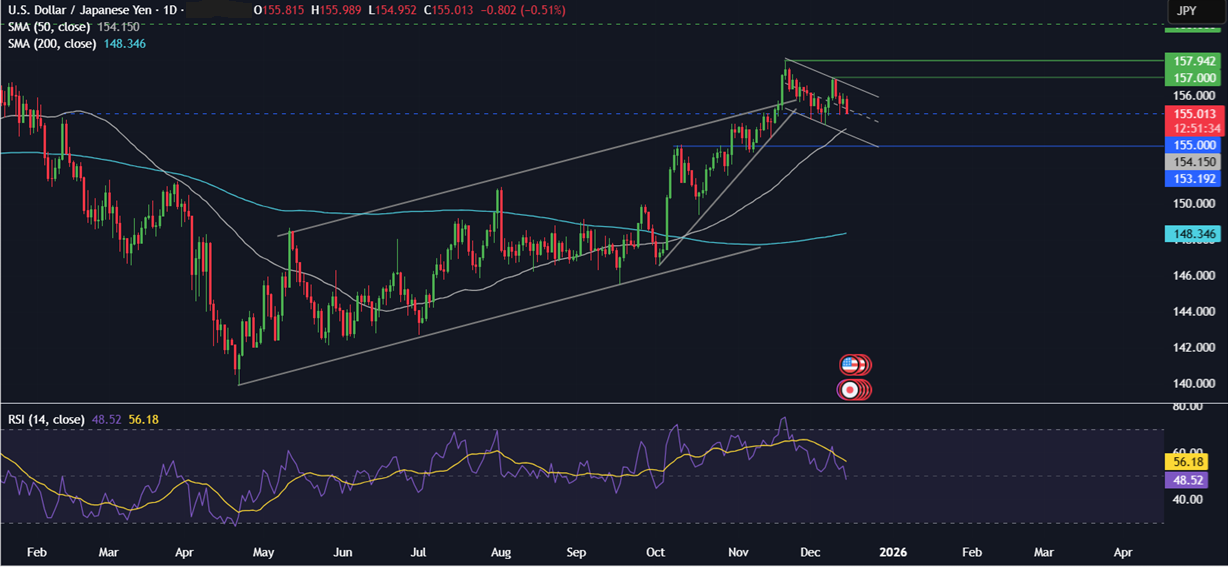
The BoJ will hold a 2-day policy meeting this week, at which it’s widely expected to raise interest rates by 25 basis points, from 0.5% to 0.75%. The market is pricing in an 86% probability of this move, following the BoJ’s decision to leave policy unchanged for most of the year after the January rate hike. Expectations for tightening have risen sharply following a series of hawkish comments from BoJ policymakers, suggesting the bank is preparing for a possible rate increase as early as December.
This was reinforced by Governor Ueda, who said the BoJ would examine the pros and cons of raising rates at the December meeting to achieve the price stability target. These comments sparked a sharp repricing of expectations for rate hikes, with key members of PM Takaichi’s government unlikely to oppose them.
The big question is whether this will be a one-and-done move by the BoJ or whether the central bank will leave the door open for further increases. In addition to the rate decision, the market will also scrutinise the policy statement for guidance on the pace of future normalisation, with a recent poll of economists showing the 69% expect rates to be lifted by a further 25 basis points to 1% by September next year. A hawkish BoJ could drive the yen higher, pushing USD/JPY lower and raising fears of unwinding the yen carry trade, which could hurt risk assets.
Trading involves risk.
Author



 Risk Disclaimer
The content provided here is for informational purposes only. It is not intended as personal investment advice and does not constitute a solicitation or invitation to engage in any financial transactions, investments, or related activities. Past performance is not a reliable indicator of future results.
The financial products offered by the Company are complex and come with a high risk of losing money rapidly due to leverage. These products may not be suitable for all investors. Before engaging, you should consider whether you understand how these leveraged products work and whether you can afford the high risk of losing your money.
The Company does not accept clients from the Restricted Jurisdictions as indicated in our website/ T&C. Some services or products may not be available in your jurisdiction.
The applicable legal entity and its respective products and services depend on the client’s country of residence and the entity with which the client has established a contractual relationship during registration.