10 min read
Weekly recap:
US global stocks recap
US major indices fell for a third straight week, with the S&P 500 declining 1.6% amid geopolitical tensions and elevated oil prices, which continued to weigh on stocks and bonds. Meanwhile, the USD rose 1.4%, marking the second straight week of gains.
The USD has risen to its highest level since May last year, benefiting from safe-haven flows and its status as a net energy exporter, even as data painted a mixed picture for the US economy.
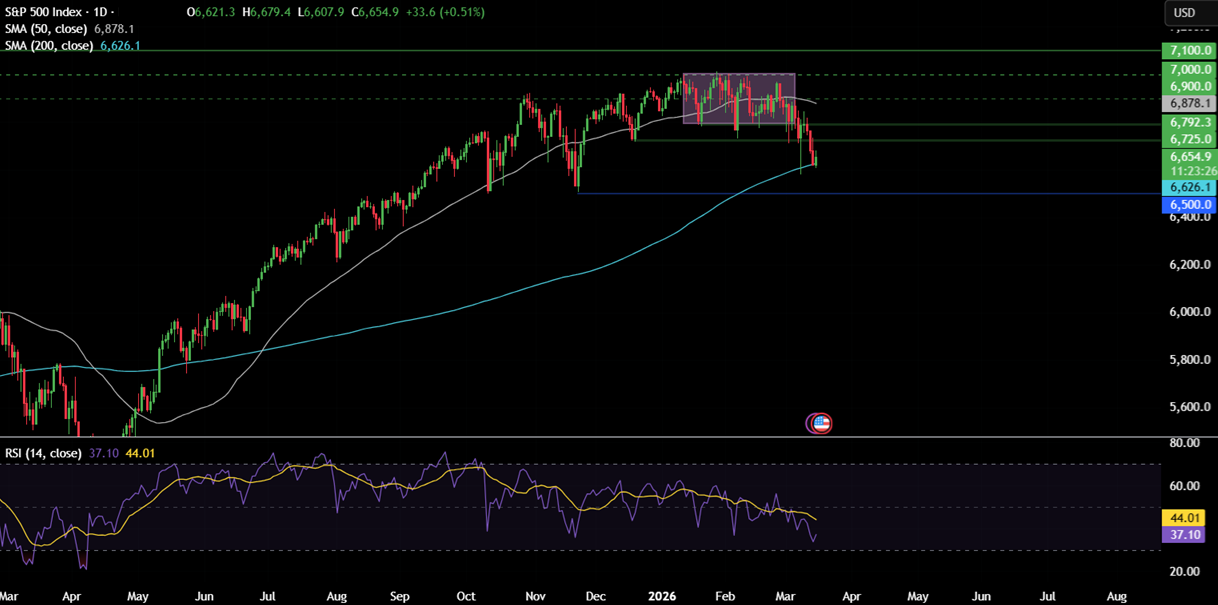
Major US data/themes
Headlines from the Middle East conflict were the main driver of market moves. Soaring oil prices raised inflationary worries.
US data showed that the core PCE, the Fed’s preferred inflation gauge, rose to 3.1% YoY, up from 3%, while CPI remained unchanged at 2.4%, as expected. However, this data is already outdated, given that it doesn’t account for the recent rise in oil prices. US GDP was revised lower to 0.7% from 1.4%.
Gold moves
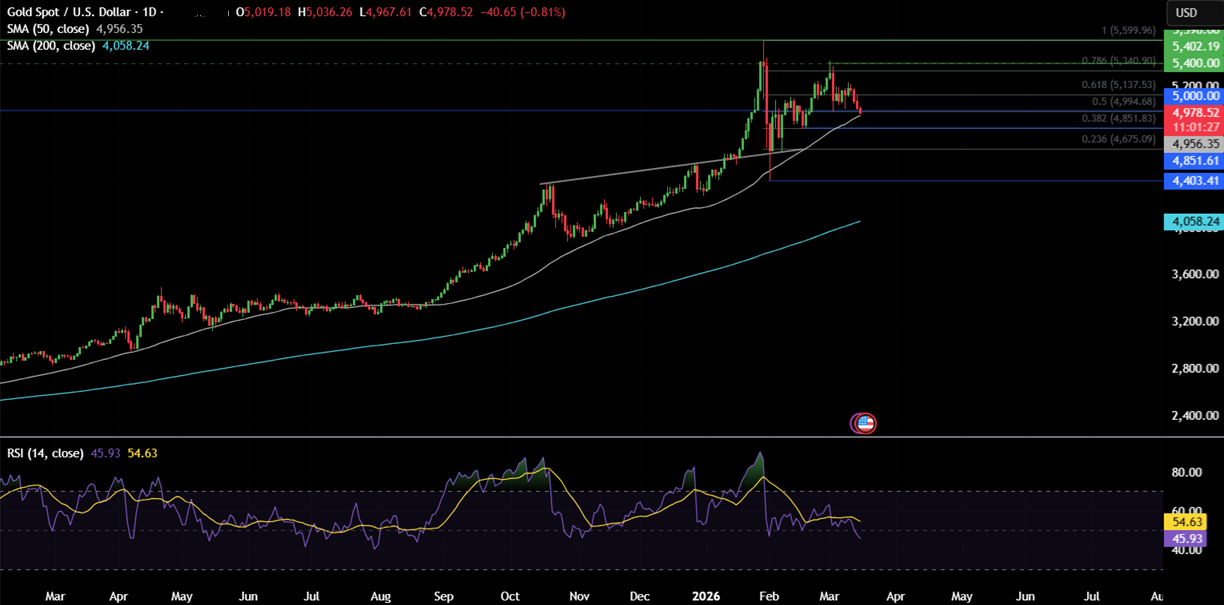
Gold fell a further 3% last week, marking the second straight weekly decline. Gold has fallen almost 5% since the start of the Middle East conflict. Rather than benefit from safe-haven flows, Gold has struggled on USD strength, making the precious metal expensive for buyers with foreign currencies.
Expectations of inflationary pressures, rising treasury yields, and a less dovish Federal Reserve have also weighed on non-yielding Gold, which tends to perform well in lower interest-rate environments.
The move lower comes after Gold surged 60% in 2025. Headlines from the Middle East, together with the FOMC rate decision, will likely drive USD moves and therefore the direction for Gold.
Oil moves
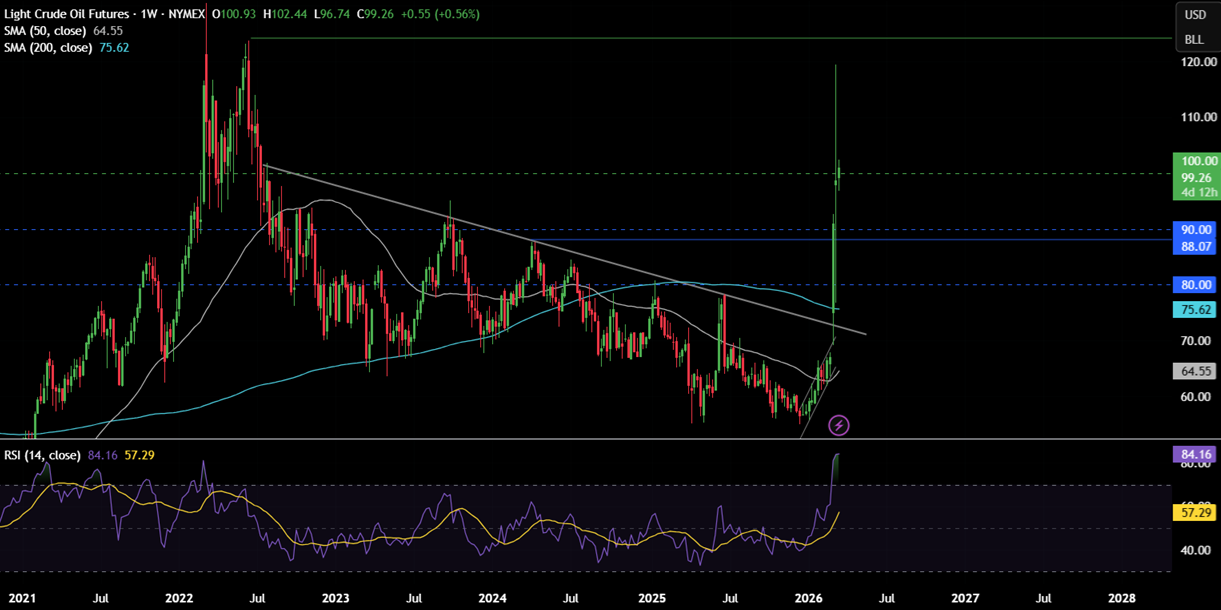
Oil rose 8.5% last week, adding to gains of 35% the previous week. Headlines surrounding the Middle East conflict sparked high levels of volatility in the oil market, which saw its largest weekly range on record. The price rallied to $120, fell to $77, and ended the week over $100 per barrel.
Oil prices could gain further as the US-Israeli war against Iran enters a third week, putting oil infrastructure at risk, while keeping the Strait of Hormuz shut. The IEA will release 400 million barrels from reserves, which will begin flowing into the market soon, and sanctions on Russian oil have been waived for 30 days.
Attention will remain on Iran headlines, the Strait of Hormuz, and Iran’s Kharg Island oil export hub, which Trump threatened as the conflict escalates.
Indian markets
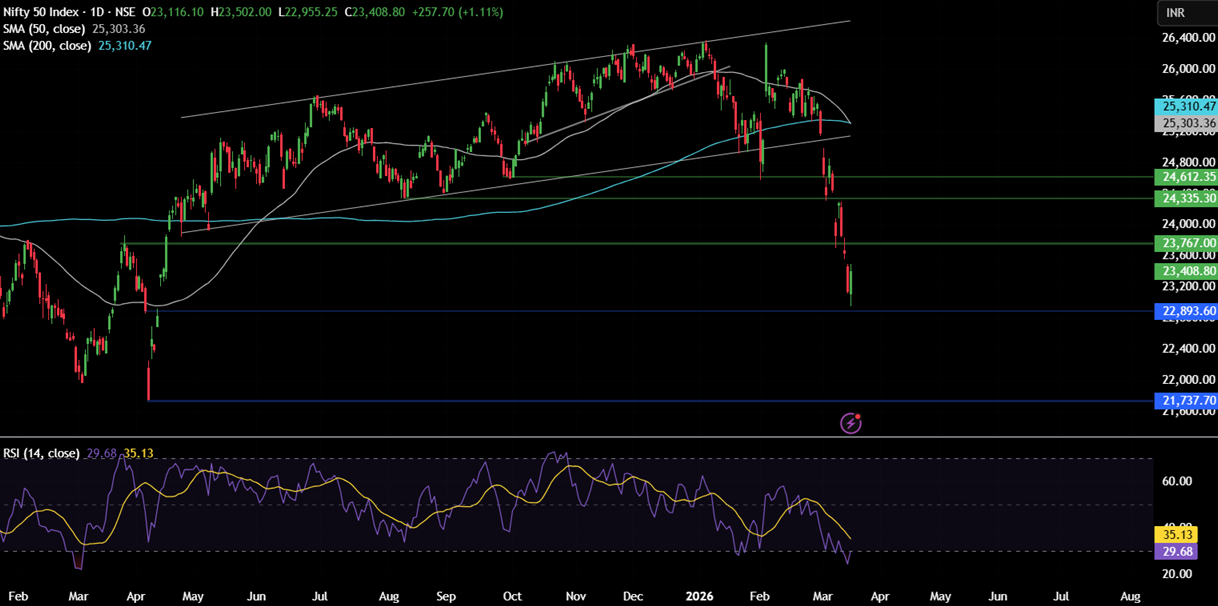
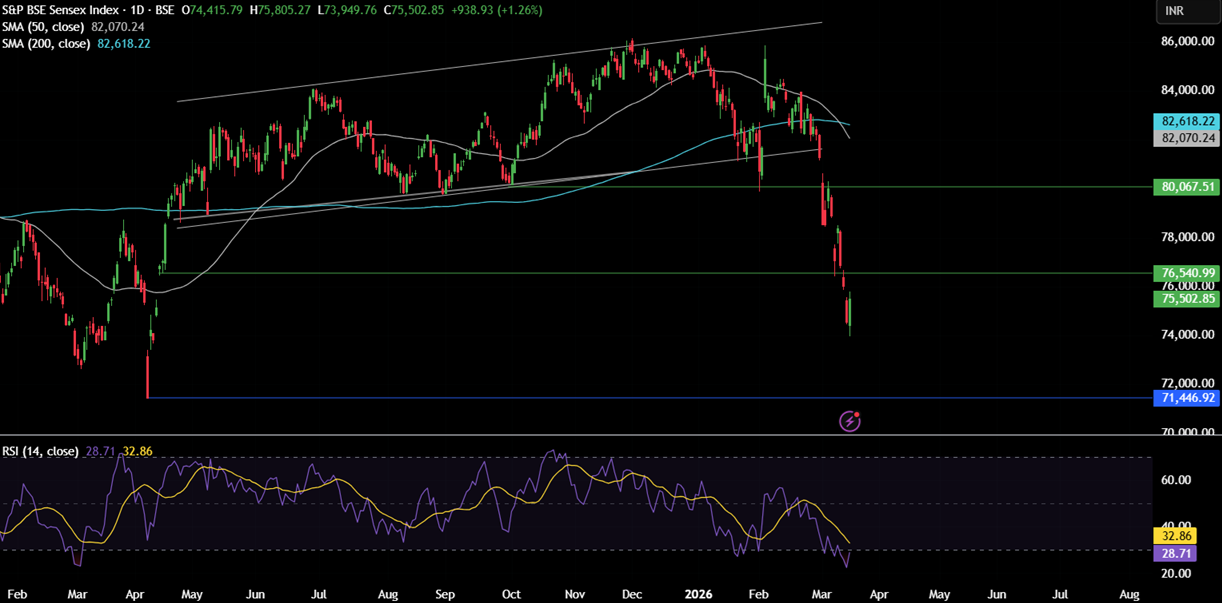
Indian equities saw one of the steepest weekly declines in almost 4 years as the Iran conflict sparked a widespread selloff. The Nifty50 and Sensex fell by over 5%. The conflict sent oil prices higher, amplifying fears of inflationary pressures in oil-importing economies like India.
The combination of rising oil prices, a weaker Rupee that fell to a record low, and persistent foreign institutional outflows created a fragile backdrop for domestic equities. All sectors ended in the red.
Foreign institutional investors (FIIs) have continued to offload equities worth ₹56,883 crore so far in March.
Meanwhile, domestic institutional investors (DIIs) continue to support the market as net buyers.
Indian consumer inflation rose 3.1% YoY in February as food costs climbed, although the inflation gauge remained below the Reserve Bank of India’s 45 target rate, giving the central bank some wiggle room to support growth. The second month of using the new revamped CPI series saw inflation rise from 2.74% in January.
Key Indian market drivers: Headlines from the Middle East and oil prices will remain key drivers for the Indian markets this week, together with Indian wholesale data and the Federal Reserve rate decision.
USD/INR rose to a record high of 92.90 last week amid USD strength, and the Rupee weakened amid rising energy prices, as foreign investors continue pulling funds from local stocks. The Rupee has fallen to fresh record lows on Monday.
Pakistan markets
The Pakistan Stock Exchange fell for a sixth straight week, dropping 2.3%, putting its losses since the start of the Iran war at 8.45%. The selloff came amid escalating tensions in the Middle East and as oil prices surged following the closure of the Strait of Hormuz. Pakistan imports 85% of its energy needs.
The delay in reaching a Staff Level Agreement (SLA) with the IMF on the third review of the EFF and RSF also contributed to market volatility. The drivers are likely to remain in focus in the coming week.
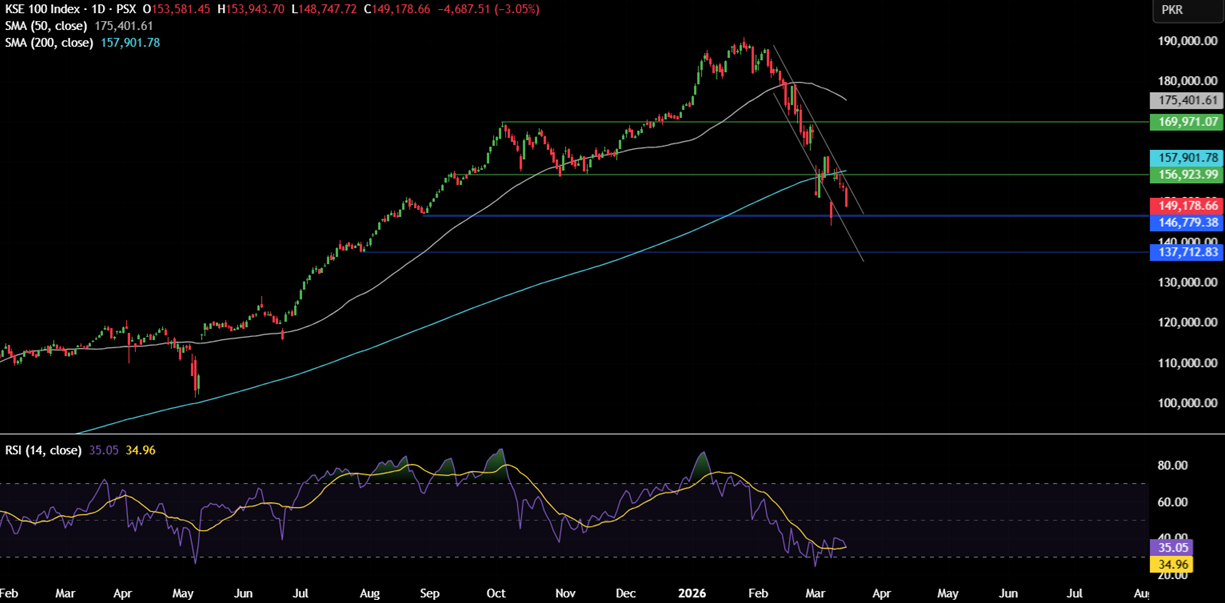
USD/PKR was broadly unchanged at -0.05% last week, settling at 279.29.
Week ahead (US & Asia)
Indian wholesale inflation (Monday)
India’s wholesale inflation rose 2.13% YoY in February, accelerating from 1.81% in January and exceeding economists’ expectations of a 2% gain. This marked the fastest rise since February last year, boosted by a pickup in inflation for primary articles due to higher food costs and a sharp acceleration in non-food items.
Meanwhile, prices for manufacturing products also increased, led by tobacco. The data comes after the Indian CPI or retail inflation was recorded at 3.21% last week. The figures saw a muted move in the markets with stocks and the S&P 500 responding to broader global macro drivers such as developments in the Middle East.
Nvidia GTC (Mon – Thu)
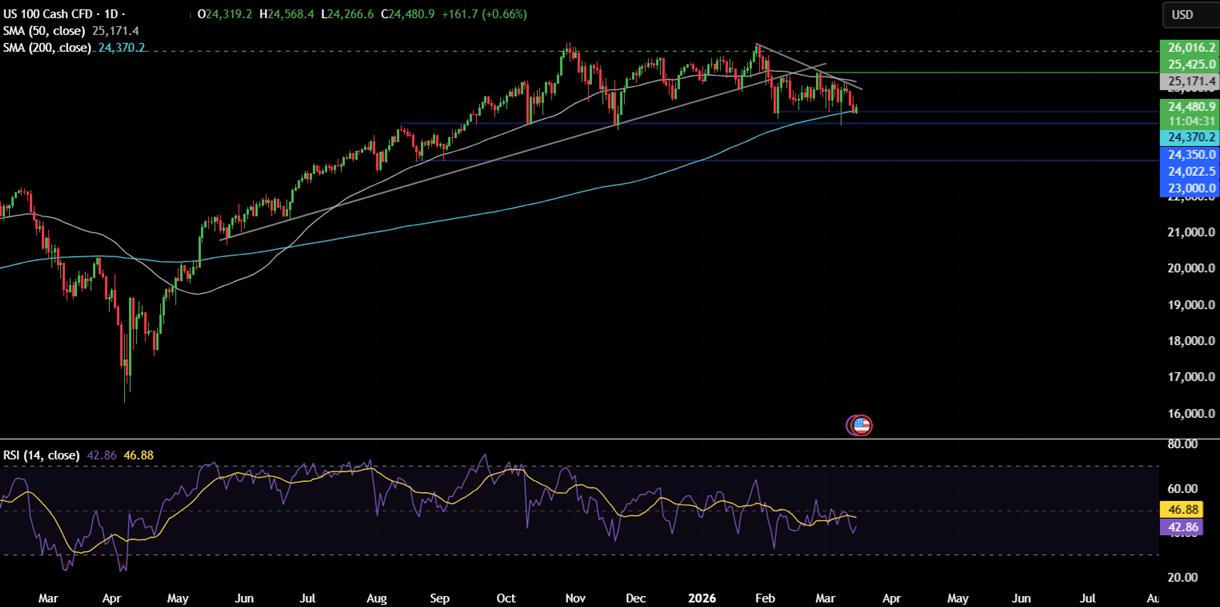
NVIDIA GTC 2026 is scheduled for March 16-19 in San Jose, CA. The event will kick off with a keynote from NVIDIA co-founder and CEO Jensen Huang ON Monday. Analysts anticipate that the event will delve deeper into Nvidia’s business strategies, chip and software roadmaps, and preview upcoming products and services.
This occasion has become Huang’s primary platform for showcasing the company’s innovations. This year, the event holds extra significance as investors look for reassurance that Nvidia’s strategy of reinvesting profits into AI is yielding results, especially amid a flurry of recent deals.
Market observers will also be attentive to discussions on how geopolitical tensions, including the recent Middle East conflict, might influence energy costs and demand. Huang’s speech can often impact the broader mood towards AI and tech stocks in general, such as the Nasdaq.
RBA rate decision (Tuesday)
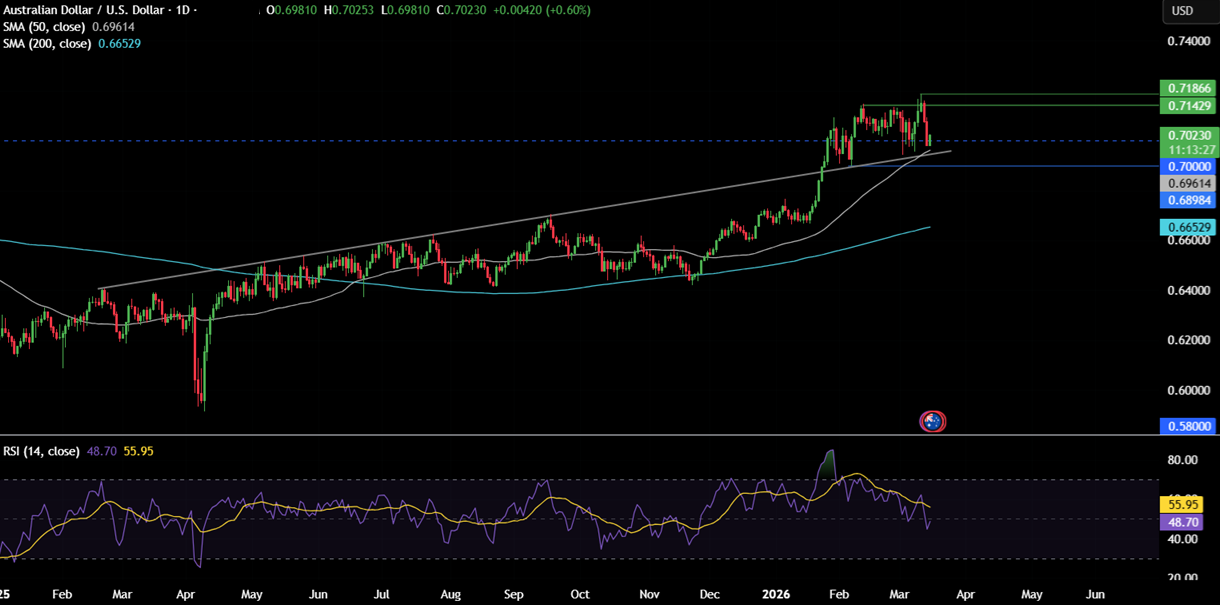
The Reserve Bank of Australia meets this week amid rising expectations that it could hike rates by 25 basis points to 4.1%. Financial markets had previously considered May the most likely date for the next rate hikes, but expectations have shifted.
Inflation was already rising ahead of the Middle East war, which is expected to further increase inflationary pressures due to rising oil and energy prices. The market is pricing in a 70% chance of a rate hike on Tuesday, up from about 30% just a few weeks ago. A rate hike on Monday, hawkish commentary could push AUD/USD higher.
FOMC rate decision (Wednesday)
The Federal Reserve rate decision comes on March 18th, and the central bank is widely expected to leave interest rates unchanged at 3.5% to 3.75%, which is priced in with a 99% probability. However, the market will be more interested in the outlook for rates, which the Fed could signal through updated projections and the dot plot. Stagflation risks have risen sharply since the FOMC last met in January.
Higher inflation, combined with a weaker labour market, is the central worst-case scenario, as it creates tensions between the dual mandate and opposing policy responses. The conflict in Iran keeps the outlook uncertain, with oil prices gyrating as the markets attempt to price in the risks.
Meanwhile, the latest nonfarm payroll report was significantly weaker than expected, falling by 92,000, while unemployment rose to 4.4%.
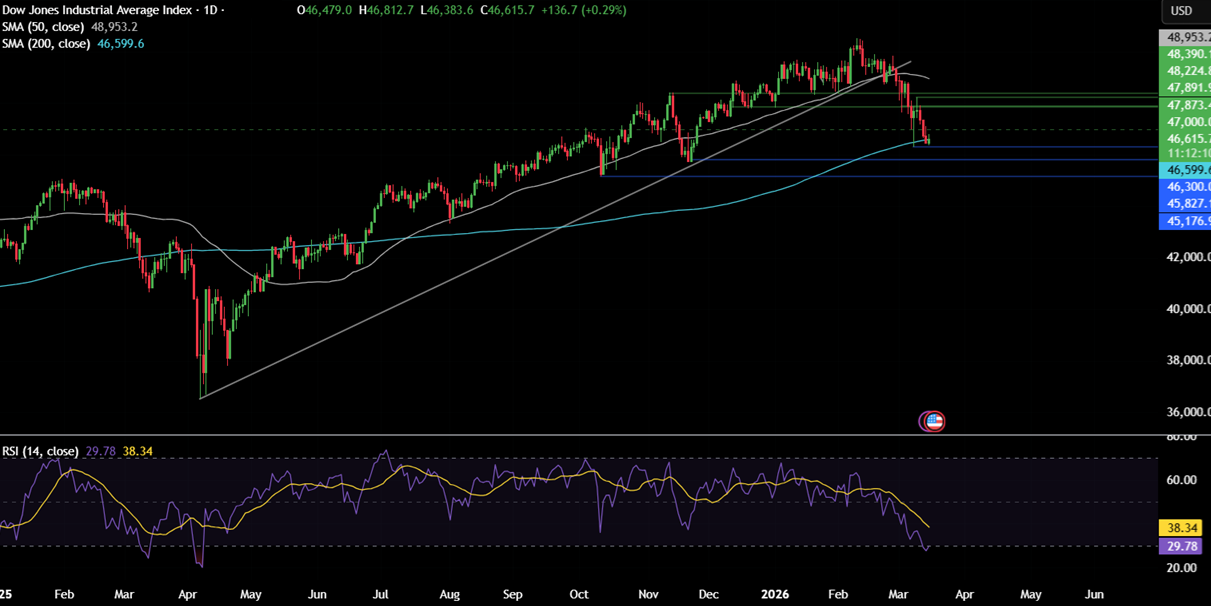
The Fed will most likely highlight additional uncertainty in the outlook due to the Iran conflict, and updated projections will likely shift in a stagflationary direction. The market is no longer pricing in a rate cut in June, with the next rate cut not expected until December. A hawkish-sounding FOMC could help lift the US dollar higher and pull stocks such as the Dow Jones lower.
BoJ rate decision (Thursday)
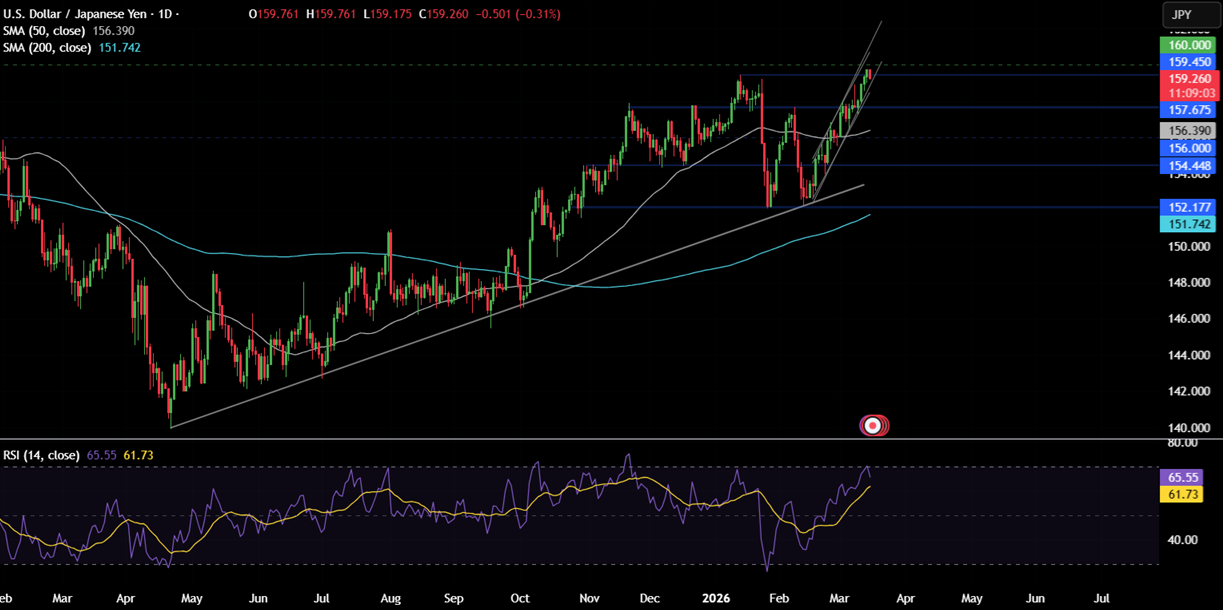
The Bank of Japan is expected to leave interest rates unchanged at 0.75%, but it is expected to announce another 25 bps rate hike in the next quarter. Inflation was already proving sticky, and rising inflationary pressures from higher oil prices and a weaker yen could mean the BoJ is more likely to raise rates in the near future.
The Japanese yen has weakened significantly due to concerns about the impact of higher oil prices on the economy. The meeting comes as the BoJ faces pressure from Japanese Prime Minister Sanae Takeichi to keep rates unchanged, but the BoJ may be unable to delay the pace of rate hikes much to avoid further weakening of the yen.
Japanese authorities stand ready to support the currency as the USD/JPY trades close to the 160 threshold for intervention.
Trading involves risk.
Author



 Risk Disclaimer
The content provided here is for informational purposes only. It is not intended as personal investment advice and does not constitute a solicitation or invitation to engage in any financial transactions, investments, or related activities. Past performance is not a reliable indicator of future results.
The financial products offered by the Company are complex and come with a high risk of losing money rapidly due to leverage. These products may not be suitable for all investors. Before engaging, you should consider whether you understand how these leveraged products work and whether you can afford the high risk of losing your money.
The Company does not accept clients from the Restricted Jurisdictions as indicated in our website/ T&C. Some services or products may not be available in your jurisdiction.
The applicable legal entity and its respective products and services depend on the client’s country of residence and the entity with which the client has established a contractual relationship during registration.