9 min read
Recent weeks recap:
US global stocks recap
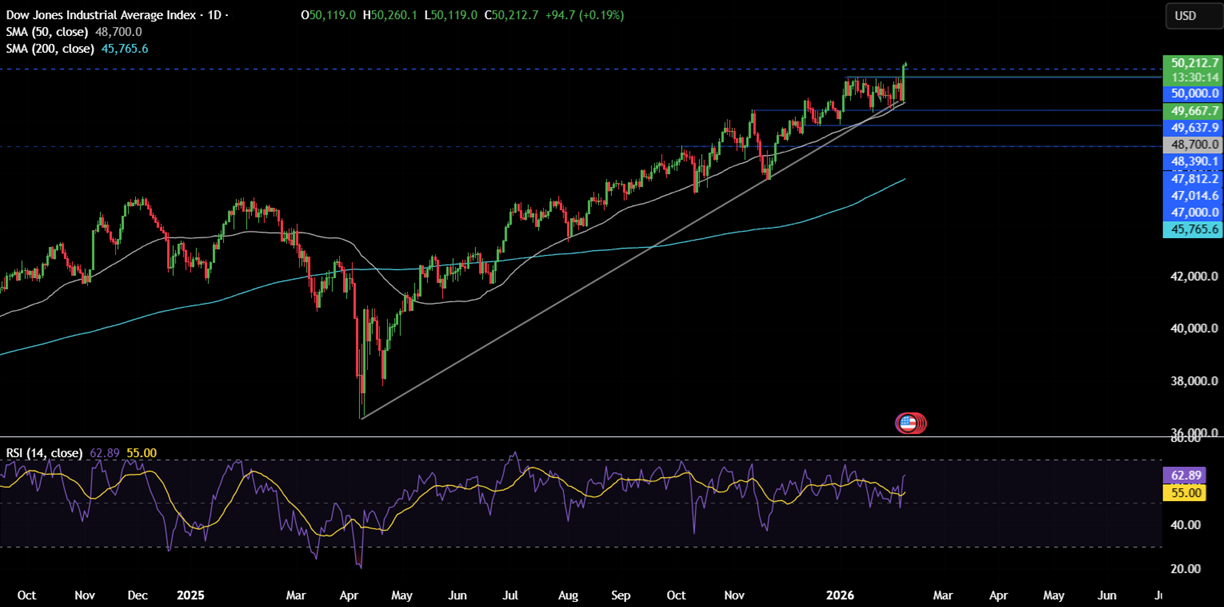
U.S. stocks finished another volatile week mixed, as a rotation out of tech and growth stocks led to the Nasdaq’s worst weekly performance since November, while small-cap and value stocks gained, and the Dow Jones hit another record high.
Concerns about AI’s impact on software companies and worries about substantial capital expenditure on AI hurt tech stocks, although dip buying on Friday returned, fueling a strong rally. Despite the late rally, the Nasdaq still lost 1.9% for the week, while the Dow gained 2.6% and rose above 50,000.
Major US data/themes
U.S. data also raised concerns over the labour market, with job openings falling by 386,000 in December, the lowest level since September 2022, and well below market expectations. Initial jobless claims also jumped to 231,000, an eight-week high.
Gold / Silver moves
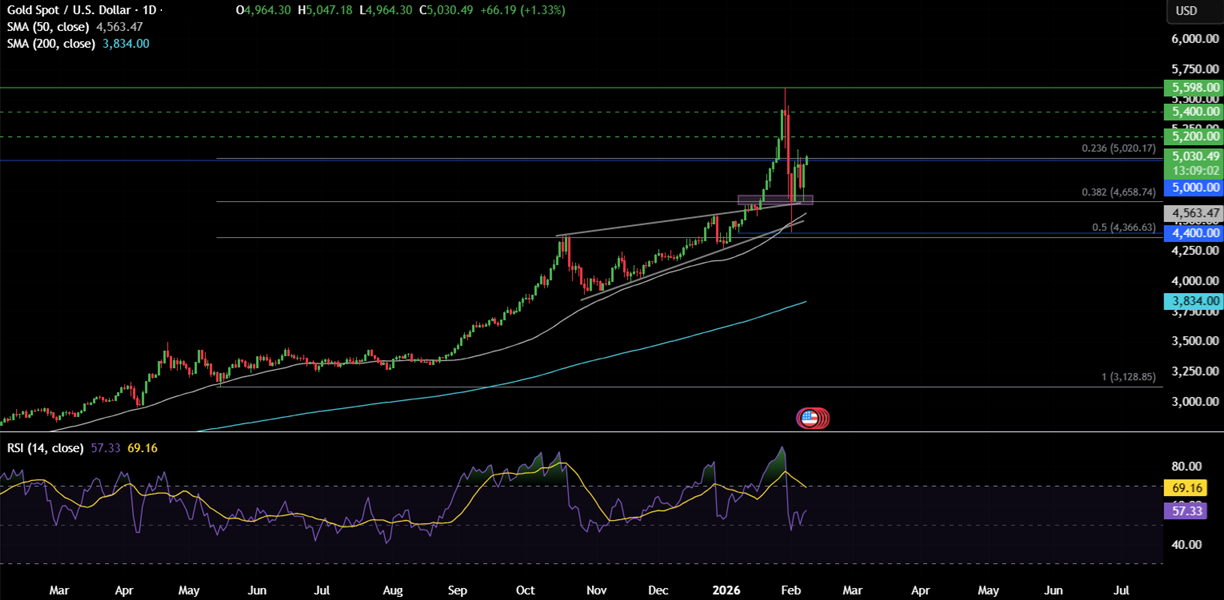
Volatility in the precious metal markets remained last week. Despite some wild swings again this week, Gold finished 2% higher, while Silver plunged 19% on Thursday and bounced 9% on Friday, ending the week 7% lower. The so-called safe havens are trading more like risk assets. The moves came after US jobs data softened and amid lingering geopolitical uncertainty.
Data show the Chinese central bank purchased Gold for the 15th consecutive month, underscoring resilient demand. Looking ahead US NFP and CPI data could influence Gold prices together with any escalation or de-escalation of geopolitical tensions. Chinese regulators have also advised institutions to rein in their holdings of US treasuries, citing concerns over concentration risks and market volatility. This, combined with ongoing US policy uncertainty, could support Gold prices in the longer term.
Oil moves
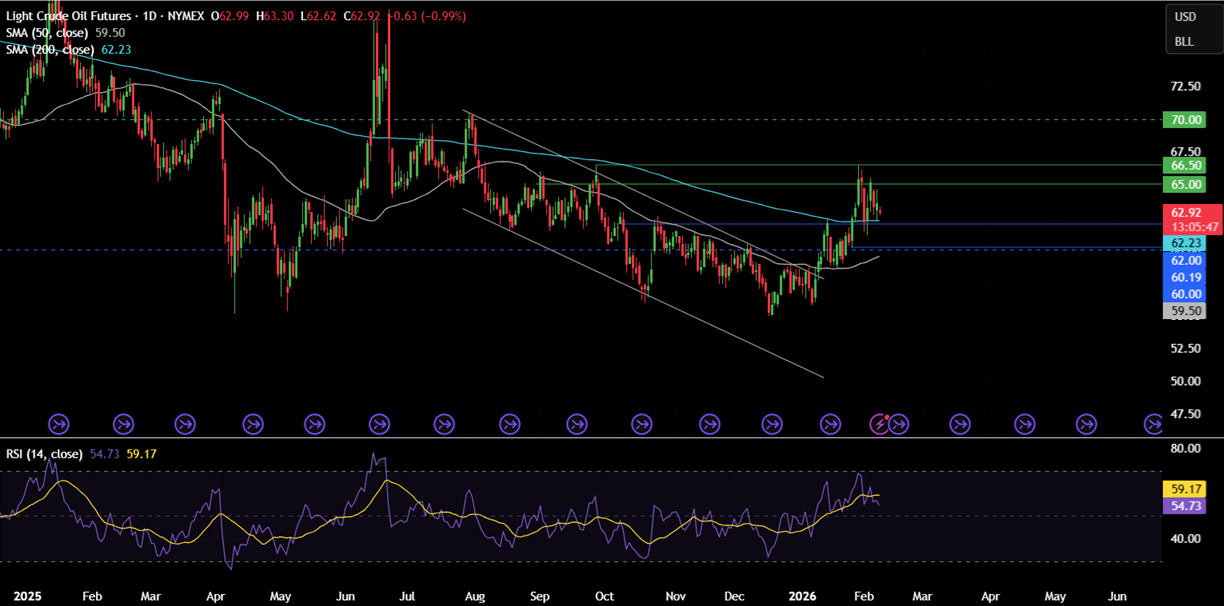
Oil prices fell 2.5% last week, ending a six-week winning run. Oil prices ended lower after US – Iran nuclear talks concluded with the two sides agreeing to further discussions. This has eased fears of any immediate military action in Iran, OPEC’s fourth-largest oil-producing country, despite a buildup of US military in the region.
This means some of the risk premium has evaporated. Near-term traders will remain laser-focused on US Iranian relations. US and Chinese data could also influence oil prices. Stronger data could boost the demand outlook from the two largest oil users.
Indian markets
Indian stocks extended their recovery for a second straight week, rebounding from Budget Day lows after the US-India trade deal improved sentiment. Indices saw above-average volatility, dropping 2% after the Budget. However, the US is slashing tariffs on India from 50% to 18%, after removing 25% tariffs on Russian oil and reducing reciprocal tariffs. The RBI also left rates unchanged as expected. The Nifty 50 traded in a 50% range, settling up 1.4%, while the Sensex rose 1.5%.
Foreign Institutional Investors (FIIs) have switched to net buyers in February so far, purchasing ₹694 crore, marking a break from relentless selling over the past seven months.
Meanwhile, domestic investors (DII) were muted with net purchases of ₹2,892 crore during the same period.
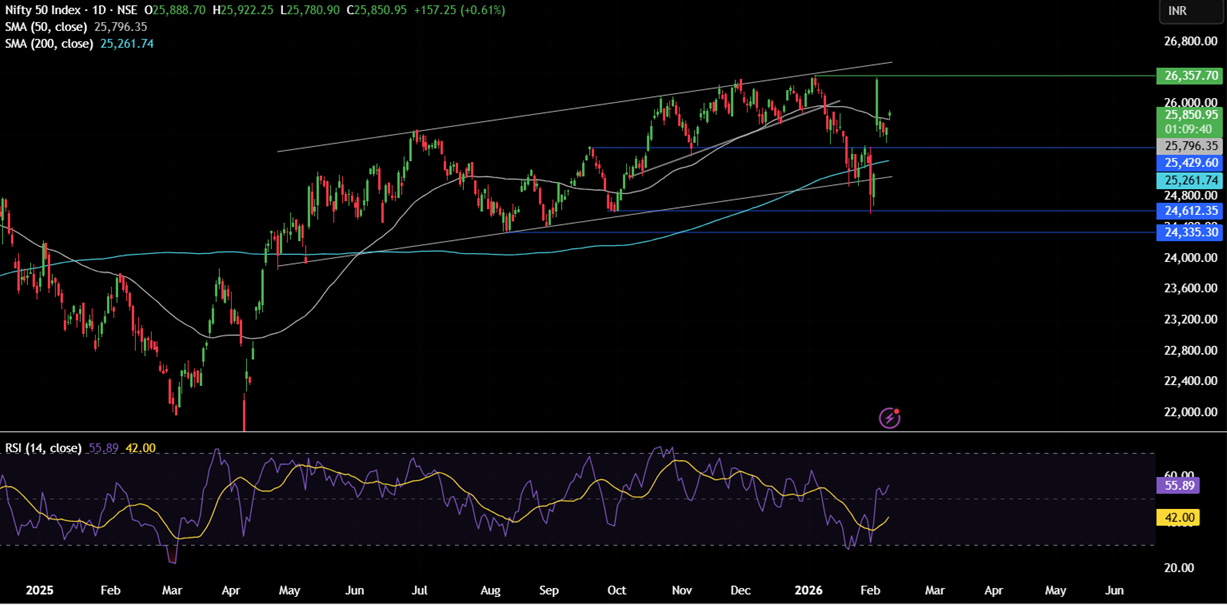
The RBI left rates unchanged at 5.25% on Friday, in line with expectations amid strong growth and reduced tariff pressure following the trade deal. The central bank also slightly raised its inflation projection for this year and the next two quarters, but the “neutral stance” indicated that rates will remain low for some time.
Key Indian market drivers this week include ongoing reactions to the US-India trade deal, Indian WPI, US NFP and CPI data, and the end of the Indian Q3 earnings season. IPO activity is also picking up after a lull, with Aye Financial and Fractal Analytics in focus.
USD/INR fell 1.20% last week, closing Friday at 90.59 as the Rupee strengthened amid increased FII demand for Indian equities, following the US-India trade deal announcement.
Pakistan markets
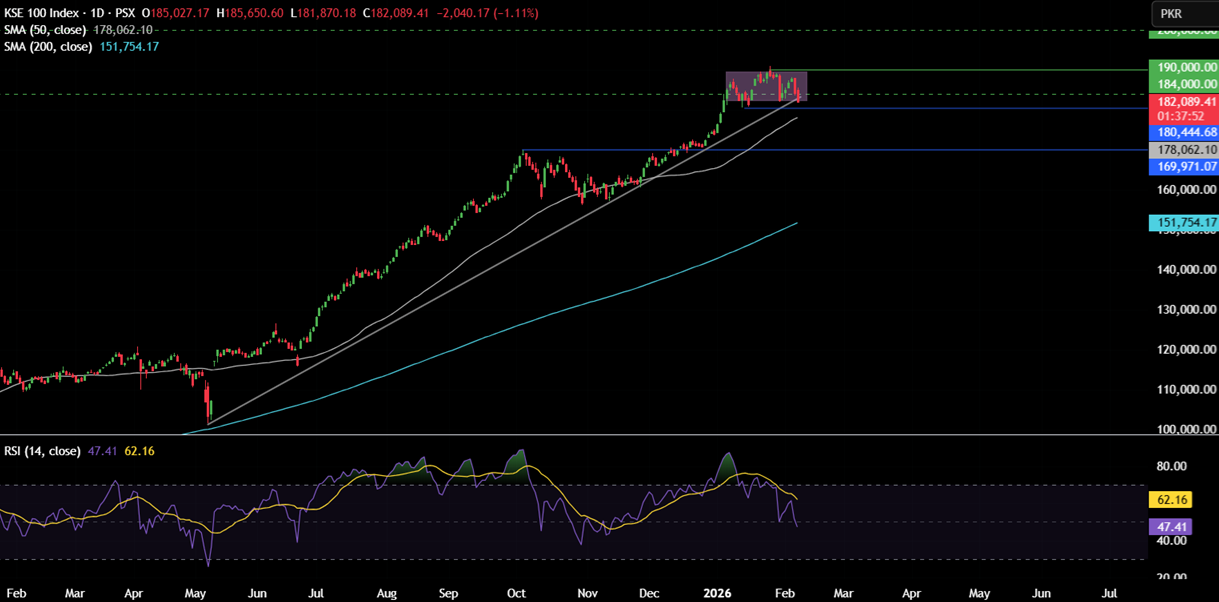
The Pakistan Stock Exchange (PSX) ended the holiday-shortened week on a subdued note, amid the absence of positive signals and rising security and economic concerns. As a result, the KSE 100 closed the week almost unchanged at 184,130 despite remaining in positive territory at the start of the week.
Data showed a mixed picture with CPI rising to 5.8% YoY in January, up from 5.61% in December. Meanwhile, exports rebounded firmly.
Looking out this week, geopolitical and domestic challenges remain in focus. Sentiment would hinge over the coming weeks on the upcoming MSCI review and ongoing corporate earnings.
USD/PKR remained broadly stable, declining 0.02% last week, closing Friday at 279.71. The State Bank of Pakistan’s foreign exchange reserves rose by $56 million to $16.15 billion.
Week Ahead (US & Asia)
Japanese election (Sunday)
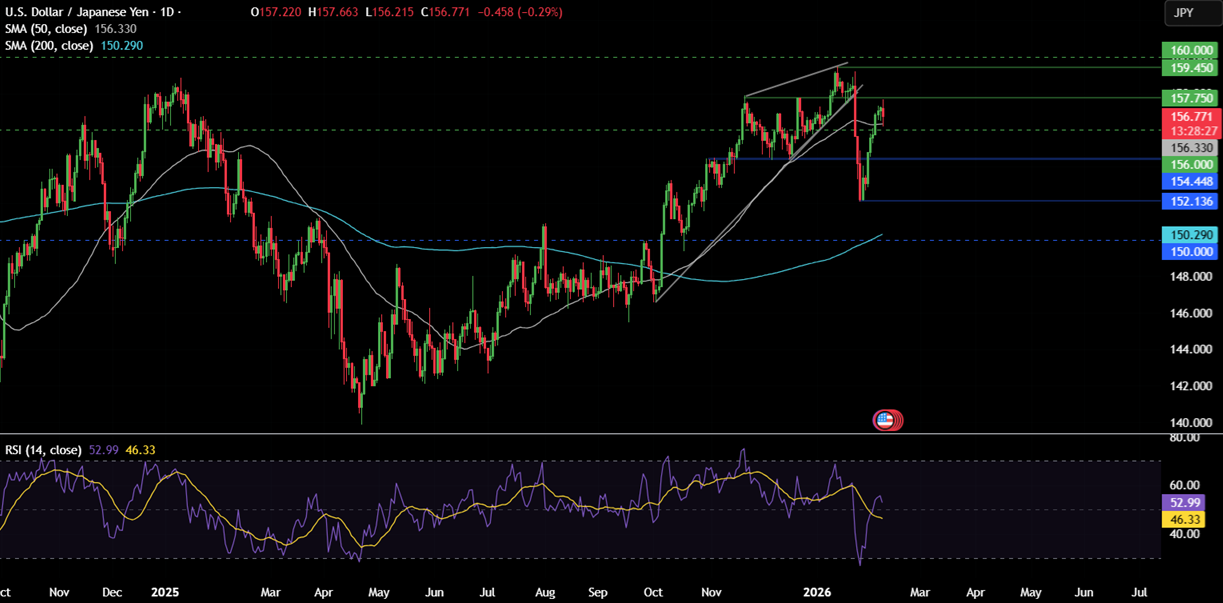
Japan’s Prime Minister Sanae Takaichi, the leader of the Liberal Democratic Party, is on course to win a landslide victory in the weekend’s snap election. The LDP are set to win over 315 of 465 seats, more than a two-thirds majority, which will give the party control of the lower house and the ability to override Japan’s less powerful upper house.
In short, the landslide victory gives Takaichi a stronger mandate to implement her substantial stimulus spending and expansionist fiscal policies. The Nikkei is extending its rally on Monday, and the Japanese yen is rising after recent declines, pulling away from the 160 intervention level. However, the yen is vulnerable to further volatility.
Non-farm payroll (Wednesday)
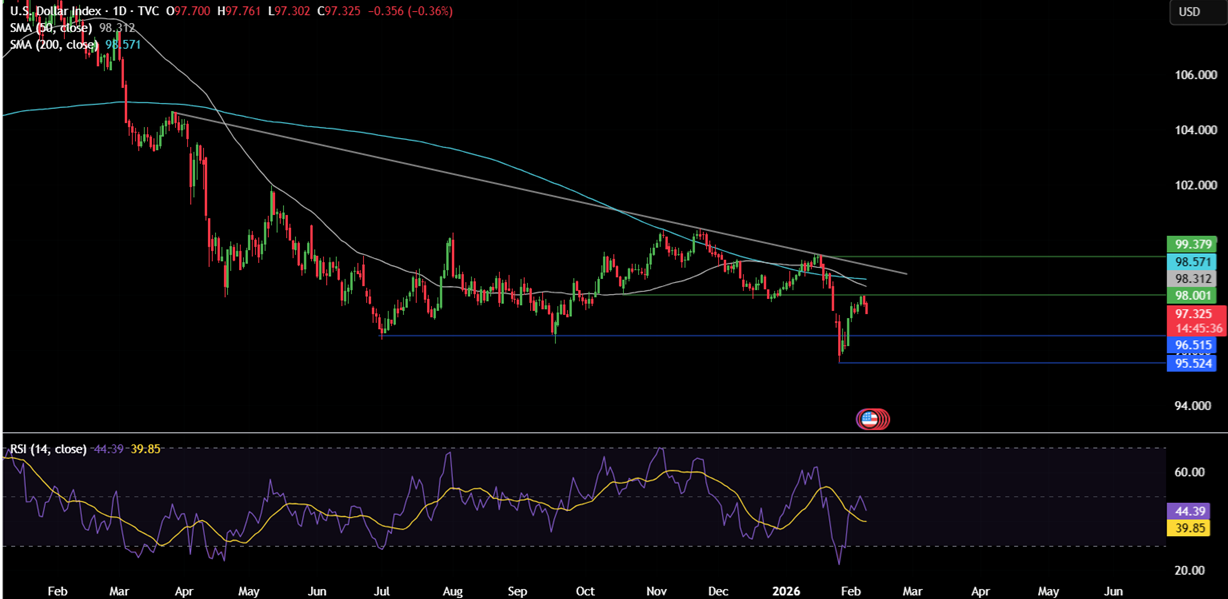
The NFP report was initially scheduled for Friday, February 6, but was postponed to Wednesday 11th, owing to the partial US government shutdown. In December, the US economy added just 50,000 jobs, well short of expectations of a gain of 60,000 and below November’s downwardly revised figure of 56,000. However, the unemployment rate also edged lower to 4.4% from 4.5% in in in November. The market looked past the softer job creation figures and focused on the lower unemployment rate as evidence of labour market stabilisation.
This was also highlighted by Federal Reserve chair Jerome Powell, who said the labour market is showing signs of stabilisation. Expectations are for 70,000 jobs to be added in January, with the unemployment rate expected to rise to 4.5%. Stronger-than-expected jobs data could add to signs of a stabilisation, meaning rates could remain on pause for longer. However, following the weak jobs data last week, any signs of a slower labour market could worry the market, pulling USD lower and boosting Gold.
China CPI (Wednesday)
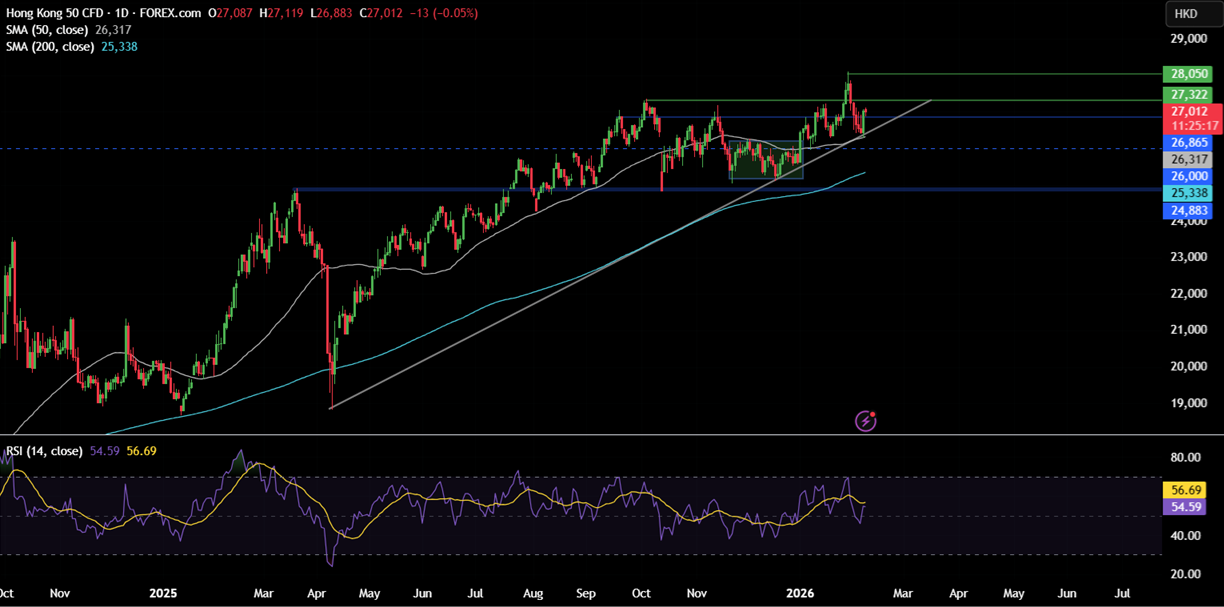
China’s CPI inflation ticked higher to 0.8% year on year in December, up from 0.7%, marking the strongest reading since February 2023. Food prices have been a key driver, increasing 1.1% and posting the biggest monthly gain in 14 months. Meanwhile, core CPI, which excludes food and fuel, remained at 1.2%, a 20-month high. For January, expectations for headline CPI are to ease to 0.5%, amid the effects of the Chinese Lunar New Year.
PPI is expected to show that factory-gate inflation remained negative for the 40th consecutive month, but is projected to improve to around -1.5% YoY from -1.9% amid firmer commodity prices. However, the data are unlikely to alter expectations regarding further policy support this year. Signs of improving inflation could help support the Hang Seng higher.
India CPI (Thursday)
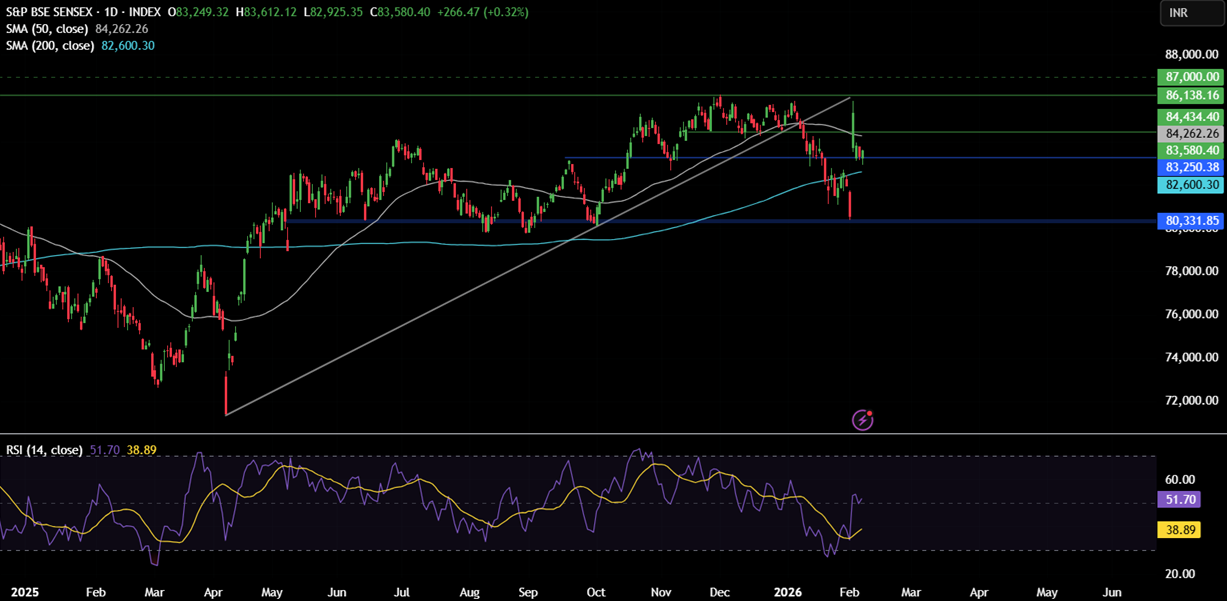
The new CPI-based inflation series, with a base year of 2024, will be released on Thursday. The base year serves as the benchmark for assessing how economic indicators change over time. It determines the weights of goods and services in the basket, which form the basis for CPI inflation. India currently uses 2012 as the base year for CPI, which no longer accurately reflects the economy’s structure.
Expectations are for CPI to rise to 2% YoY in January, up from 1.33%. On a monthly basis, CPI is expected to fall 0.3% MoM, down from 0.05% previously. Weaker inflation could support optimism for rate cuts and lift stocks such as the Sensex.
US CPI (Friday)
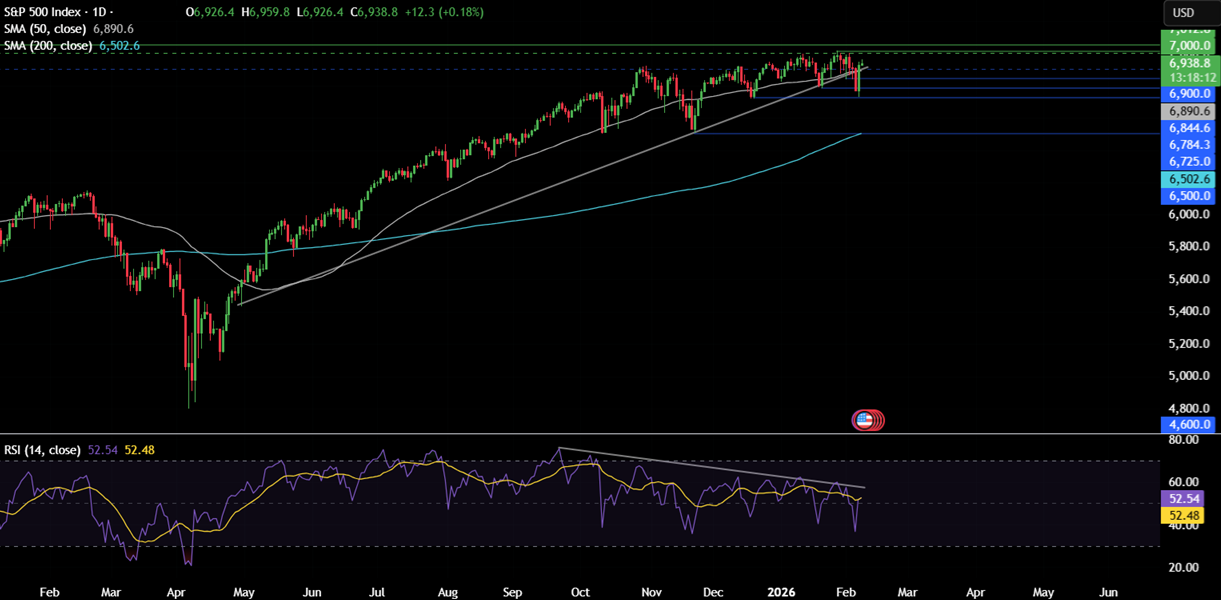
The January CPI report, initially scheduled for 11 February, was postponed to 13 February due to the partial U.S. government shutdown. In its January statement, the Federal Reserve upgraded its economic assessment and noted that inflation remains somewhat elevated. Powell said that core PCE has shown little improvement, mainly due to goods prices, which he considers to be 1-offs rather than a demand-led effect.
Fed Chair Powell also noted that tariff price increases had already passed through the economy and expects tariff-related inflation to peak around mid-year. Expectations are for CPI to ease to 2.5% YoY in January, down from 2.7% in December. On a monthly basis, CPI is expected to rise 0.3%, up from 0.2% in December. Cooler-than-forecast inflation could boost expectations of Federal Reserve rate cuts and lift stock indices such as the S&P 500, while pulling the U.S. dollar lower.
Trading involves risk.
Author



 Risk Disclaimer
The content provided here is for informational purposes only. It is not intended as personal investment advice and does not constitute a solicitation or invitation to engage in any financial transactions, investments, or related activities. Past performance is not a reliable indicator of future results.
The financial products offered by the Company are complex and come with a high risk of losing money rapidly due to leverage. These products may not be suitable for all investors. Before engaging, you should consider whether you understand how these leveraged products work and whether you can afford the high risk of losing your money.
The Company does not accept clients from the Restricted Jurisdictions as indicated in our website/ T&C. Some services or products may not be available in your jurisdiction.
The applicable legal entity and its respective products and services depend on the client’s country of residence and the entity with which the client has established a contractual relationship during registration.