8 min read
Weekly recap:
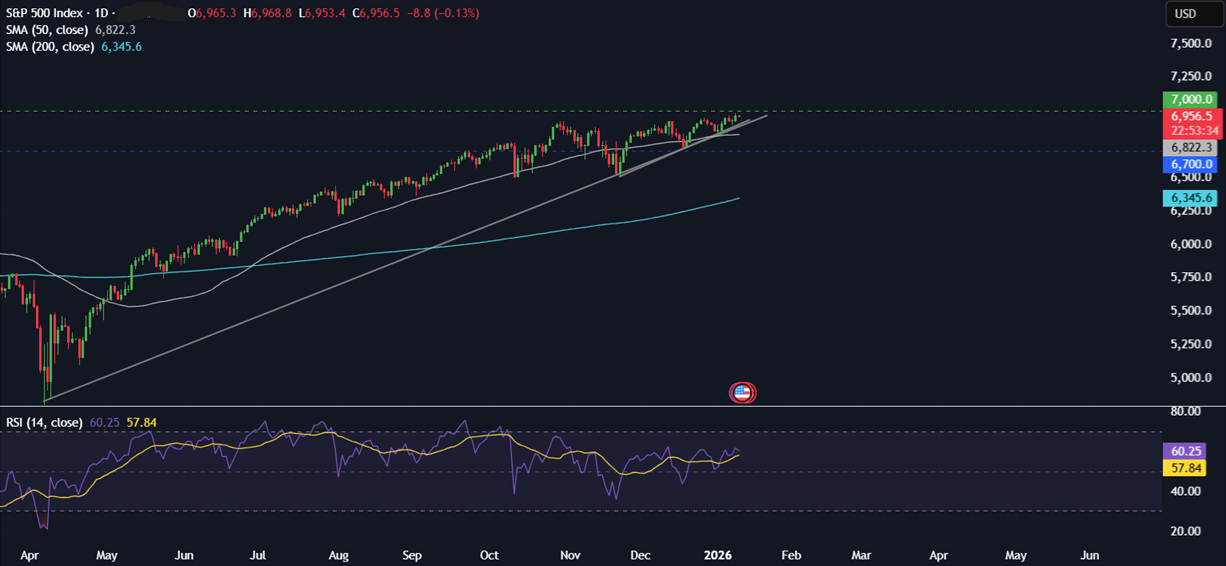
US stocks rallied across the first week of 2026 as investors largely looked past mounting geopolitical tensions following the US intervention in Venezuela. Major indices, the Dow Jones and the S&P 500, reached record highs. The U.S. dollar also gained around 0.7% in the first week of January, marking its strongest weekly performance since mid-November.
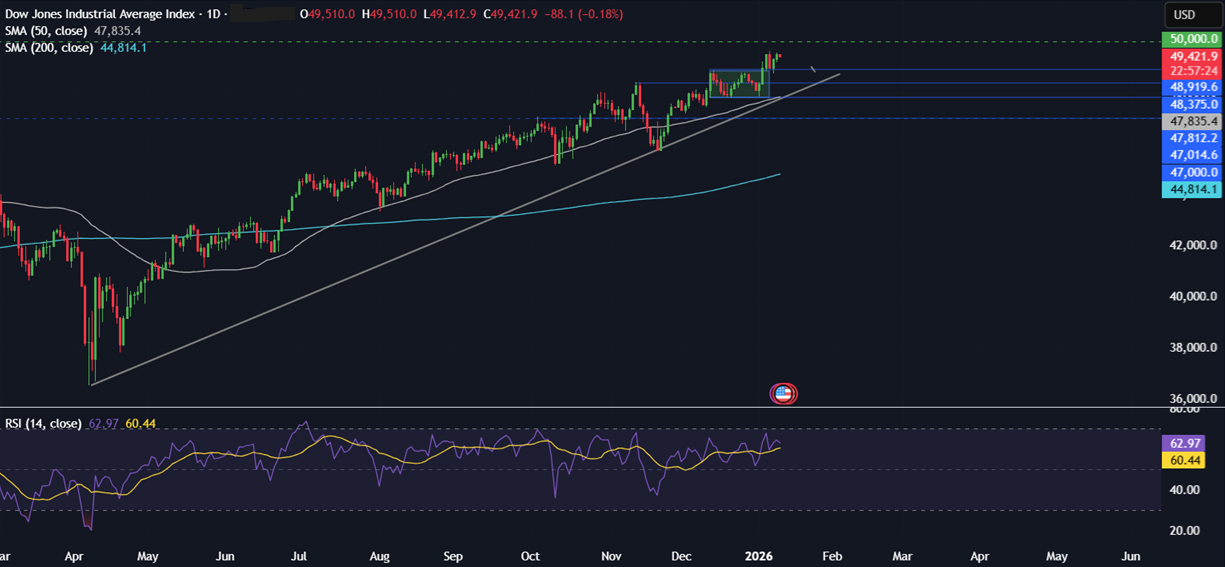
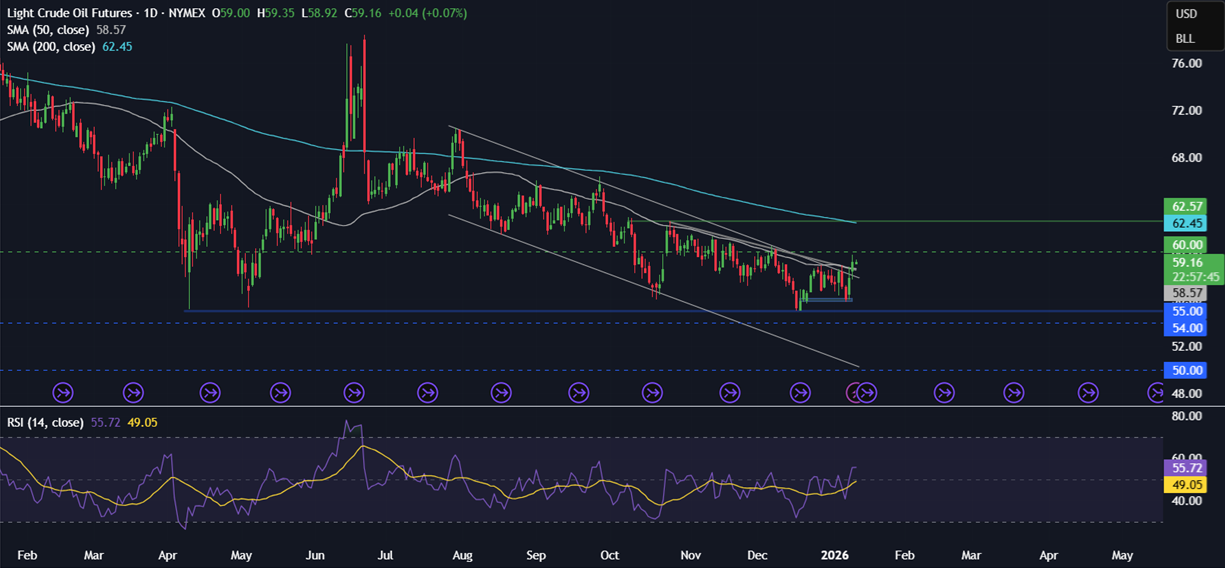
There were several sector-specific developments, with energy stocks seeing volatility as Trump opened the door to Venezuelan oil. Oil prices also jumped at the end of the week amid escalating protests in Iran. Meanwhile, defence stocks also jumped on the prospect of higher US military spending.
On the data front, there was a heavy dose of economic data, including several labour market reports. The key release was the US nonfarm payrolls report, which showed 50,000 jobs added in December, although November and October’s readings were revised lower by 76,000. However, the unemployment rate ticked lower to 4.4%. ISM data showed that economic activity in the US manufacturing sector contracted for the 10th consecutive month; however, service activity expanded for the 10th consecutive month, reaching a 14-month high.
Geopolitics
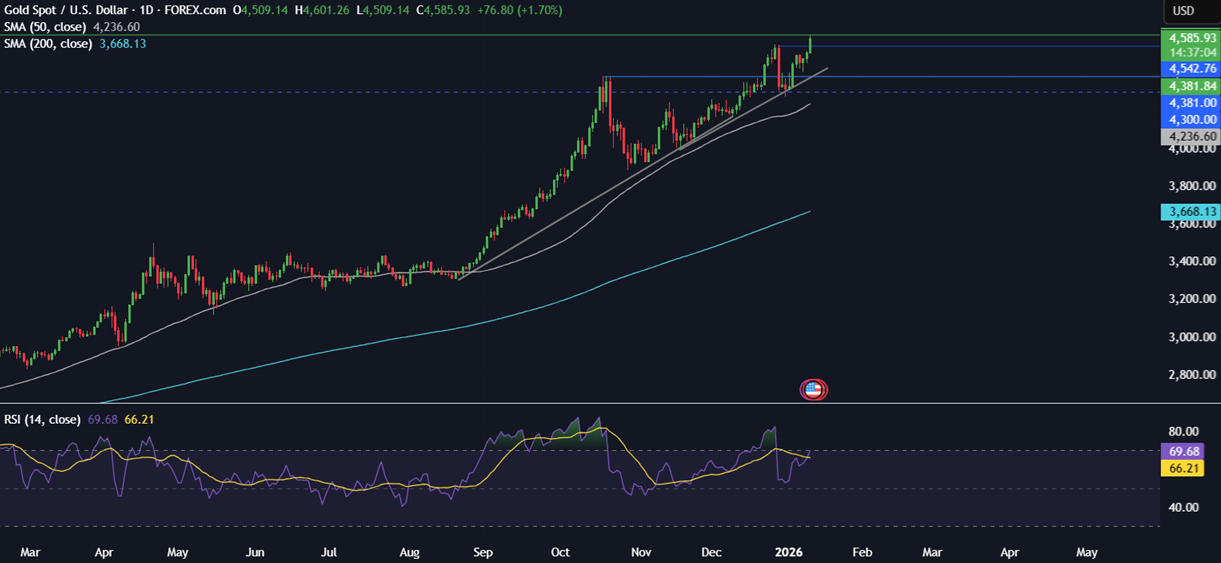
Marco Rubio is due to meet Danish officials this week to discuss Greenland after refusing to rule out military action to seize the territory. Donald Trump has doubled down on his threats to take over the strategic mineral-rich Arctic island, which is a self-governing territory of Denmark and also a NATO country. Any sense that the US could move ahead with military action to take Greenland or, indeed, even a diplomatic solution to seize the territory, which seems unlikely, could weigh on the euro and also the Danish kroner and could lift safe-haven gold.
Iran is also front and central as protests gather momentum, and Trump said Iran wants to negotiate with Washington after he made renewed threats to intervene. Gold trades at a fresh record high as the new week begins.
The situation in Iran will also be monitored closely. Ongoing protests could raise concerns over oil supply and lift oil prices higher. Any sense of the situation calming could help oil prices ease.
US Q4 earnings season
According to FactSet, the Q4 earnings season is expected to show slowing growth. S&P 500 earnings are forecast to rise 8.3% year on year, marking a tenth consecutive quarter of expansion, and revenue is expected to grow 7.6% year on year, the strongest growth since 2022. Estimates have been revised higher throughout the quarter amid firmer demand and more positive corporate guidance.
Technology is expected to drive earnings and revenue growth, led by semiconductors and software, and materials are also among the strong performers. In contrast, consumer discretionary is expected to deliver the weakest earnings performers amid declines in automakers and household durables. Energy revenues are also expected to fall due to lower oil prices. Financials will be a key focus this week, with earnings growth expected to have improved modestly. Upbeat results could boost stocks and the S&P 500.
UK unemployment (Tuesday)
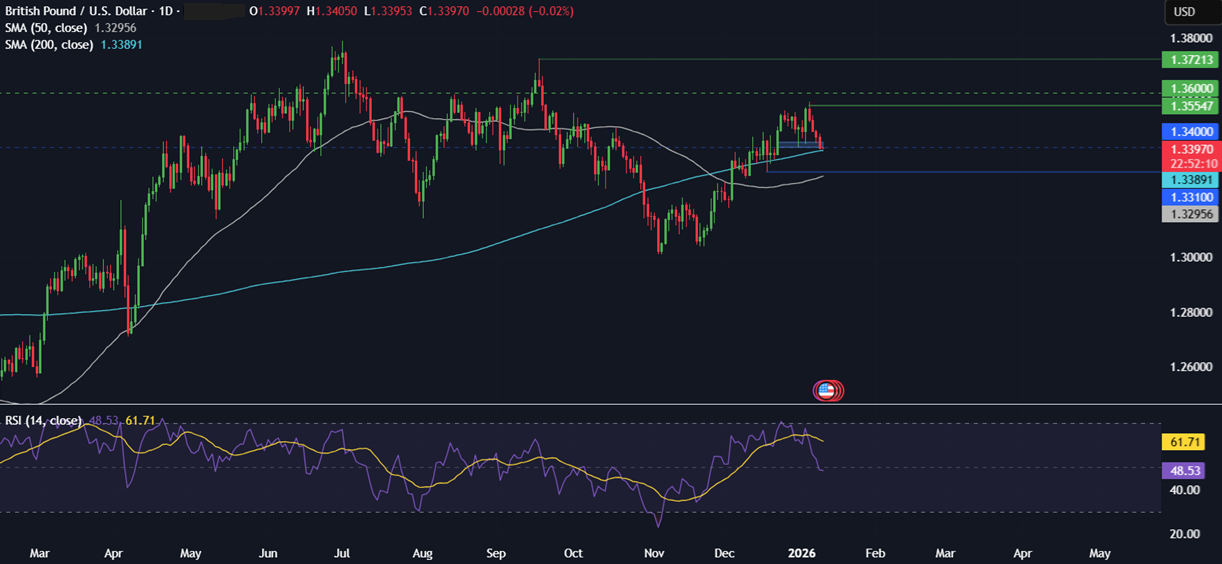
UK Unemployment unexpectedly ticked higher to 5.1% year on year, the highest level since the pandemic, and is expected to rise further in 2026 as more companies come under sustained financial pressure, due to high interest rates, energy costs, and increases in the minimum wage. Unemployment, which could reach as high as 5.5% this year, according to the Bank of England, could prompt the central bank to cut interest rates faster than initially expected.
While the latest BoE meeting showed a narrow vote, Governor Andrew Bailey warned of a more cautious stance towards rate cuts. However, the fact that inflation has cooled more than expected, along with signs of weakness in the labour market, could mean more rate cuts ahead. Weak data could be bearish for GBP/USD. UK GDP data is also due on Wednesday.
US CPI (Tuesday)
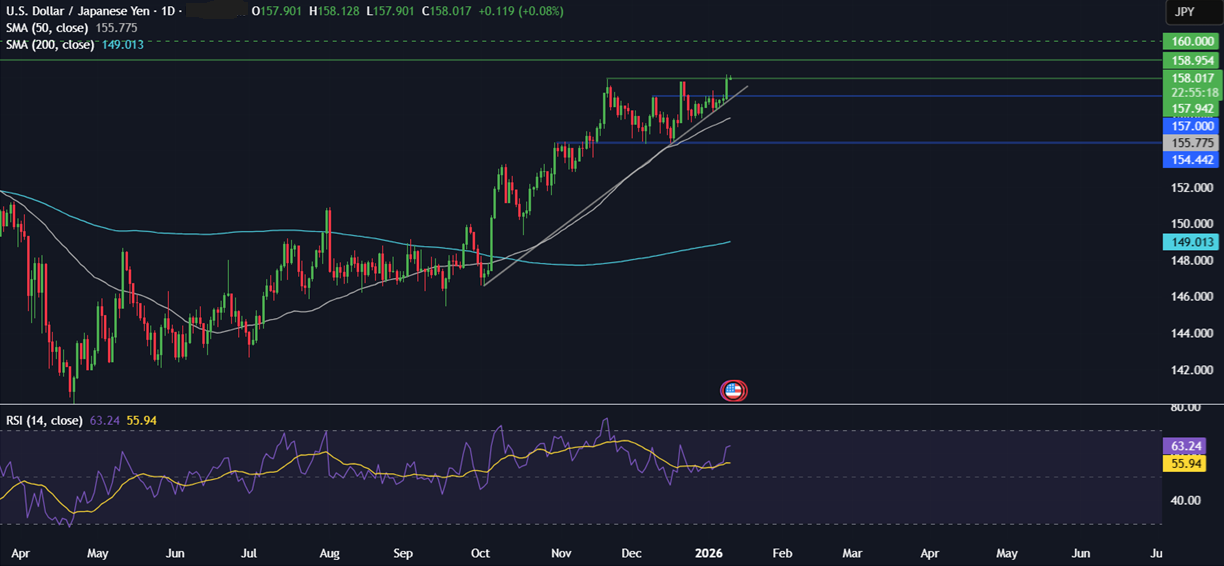
Data collection issues following the longest government shutdown led to a surprisingly cool November CPI report. Given that the sampling took place in the second half of November, this likely amplified the slowdown in price growth or, in some cases, price decline, which typically occurs around the start of the holiday season and Black Friday sales. Most of these distortions are expected to be unwound in the December report, which could result in the December CPI ticking slightly higher relative to November’s cooler reading.
However, while a rebound is in store, the broad trend is expected to be lower. Recent PMIs have also been showing a tempering in prices paid and received since the middle of the year. Overall expectations are for headline CPI at 2.7% year-on-year and core CPI at 2.7%, up from 2.6%. The data comes as Federal Reserve policymakers remain divided on the outlook for rates as they assess the risks of sticky inflation and a weakening labour market. Higher-than-forecast data could lift USD/JPY.
Chinese trade balance (Wednesday)
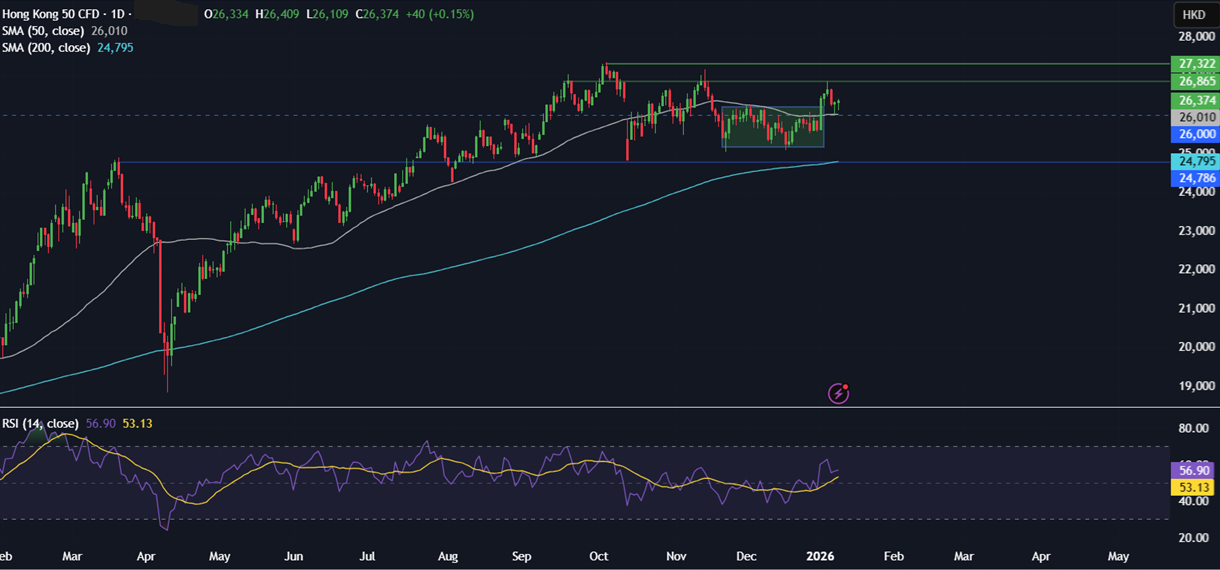
China’s December trade data are expected to cap a particularly strong year, with the trade surplus surpassing $1 trillion by November, supported by resilient exports and softer imports. Expectations are for export growth to slow modestly to 3% year on year in December, down from 5.9% in November, reflecting earlier front-loading. Meanwhile, imports are expected to rise 1.6% annually, down from 1.9% in November.
The December surplus of around $118.9 billion would bring the full-year 2025 surplus to nearly $1.2 trillion. Strong data could boost sentiment and stock indices such as the Hang Seng.
Chinese industrial production, retail sales data, and Q4 GDP figures are also due on Thursday and Friday.
US retail sales (Wednesday)
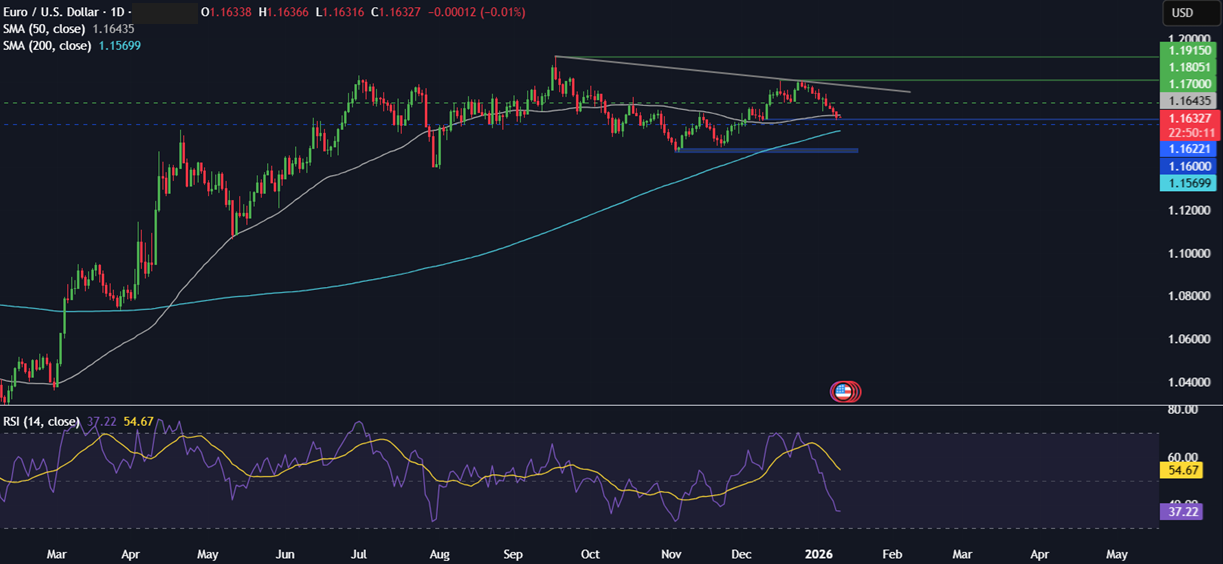
November retail sales data will be released on Wednesday. Retail sales are expected to rise 0.4% MoM, up from 0% in October. This would indicate a significant increase in sales during the holiday period. Using Bank of America’s monthly consumer data, seasonally adjusted holiday spending was strong in October and November. Still, it slowed around Black Friday and Cyber Monday, showing that consumers were shopping early for deals.
Broadly speaking, consumer finances appear healthy, although there are significant gaps between higher- and lower-income households, as well as in spending. The market will be watching these figures closely to see whether any softening in the labour market shows through in consumer spending. Solid data could boost the USD, pulling EUR/USD lower.
Trading involves risk.
Author



 Risk Disclaimer
The content provided here is for informational purposes only. It is not intended as personal investment advice and does not constitute a solicitation or invitation to engage in any financial transactions, investments, or related activities. Past performance is not a reliable indicator of future results.
The financial products offered by the Company are complex and come with a high risk of losing money rapidly due to leverage. These products may not be suitable for all investors. Before engaging, you should consider whether you understand how these leveraged products work and whether you can afford the high risk of losing your money.
The Company does not accept clients from the Restricted Jurisdictions as indicated in our website/ T&C. Some services or products may not be available in your jurisdiction.
The applicable legal entity and its respective products and services depend on the client’s country of residence and the entity with which the client has established a contractual relationship during registration.