11 min read
Weekly recap:
US Global stocks recap
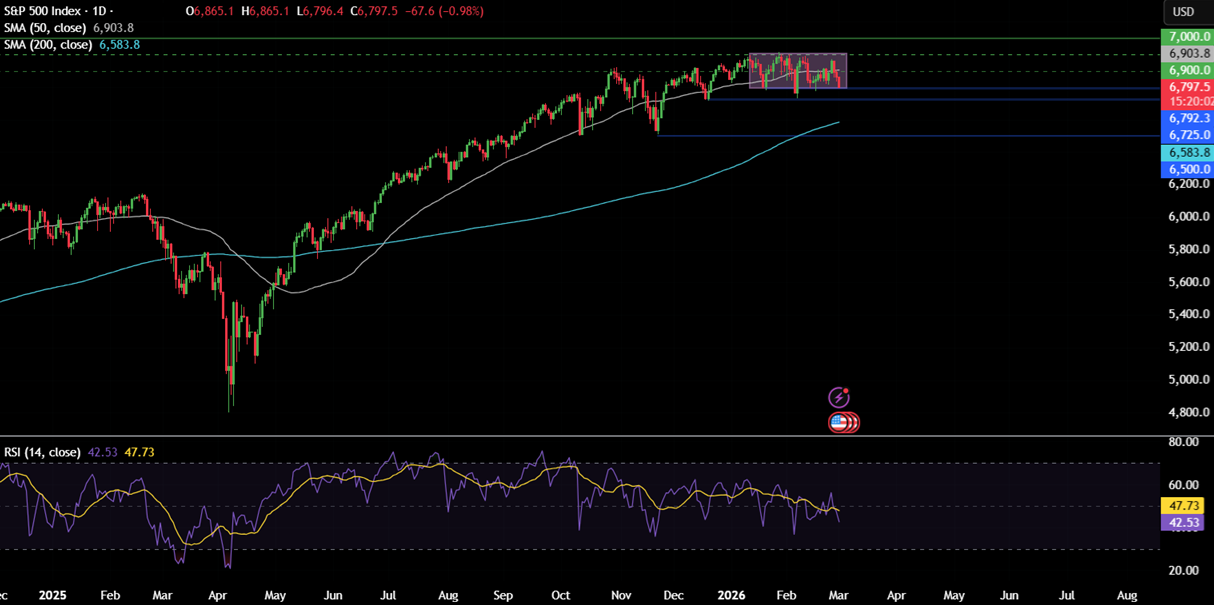
U.S. stocks booked declines across the week after investors reacted to uncertainty surrounding Trump’s global trade tariffs at the start of the week, whilst renewed AI jitters struck at the end of the week, even after Nvidia beat earnings and revenue forecasts for the 14th straight quarter.
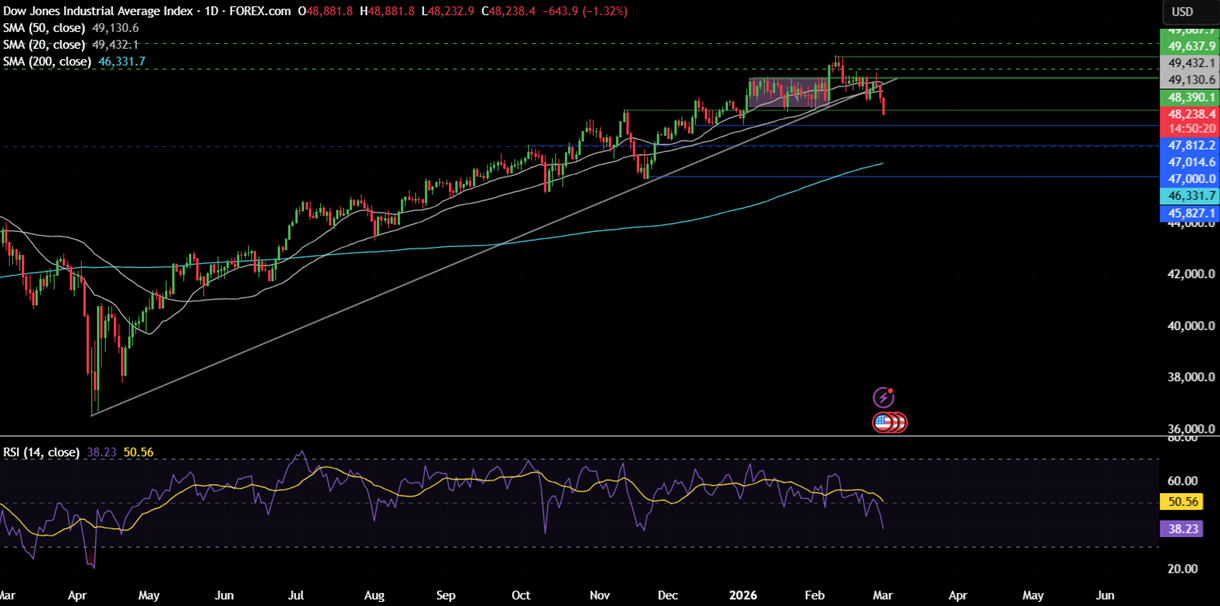
The Dow Jones fell 1.3% last week while the S&P 500 fell 0.44%. The risk-off time supported US Treasuries, and 10-year Treasury yields fell below 4% for the first time since November.
Major US data/themes
The US economic calendar was relatively quiet last week. Producer Price Inflation was hotter than expected on Friday, rising 0.5% MoM, supporting the view that the Federal Reserve will keep interest rates on hold for longer.
Separately, consumer confidence improved in February, primarily due to less pessimistic expectations about labour market conditions.
Gold moves
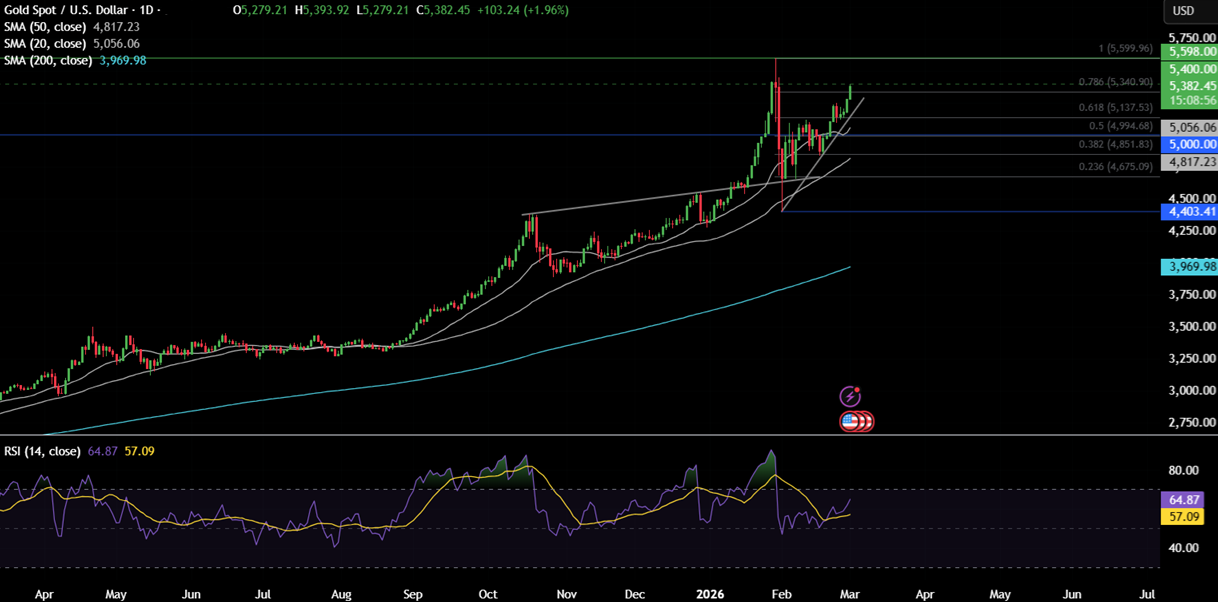
Gold prices have soared 2.5% at the start of the new week, above $5400, boosted by renewed safe haven demand after US and Israeli attacks on Iran escalated tensions in the Middle East. In response, Iran closed a key chokepoint for oil and natural gas and launched attacks on neighbouring states, including the United Arab Emirates, Bahrain, Kuwait, Qatar, Saudi Arabia, Jordan, Iraq and Syria.
Gold rose to a 1-month high of $5278 last week as investors anticipated the attack and weighed US trade policies against persistent high inflation. US-Iran tensions will drive safe haven flows this week. US economic data, including the non-farm payroll, will likely play second fiddle.
Oil moves
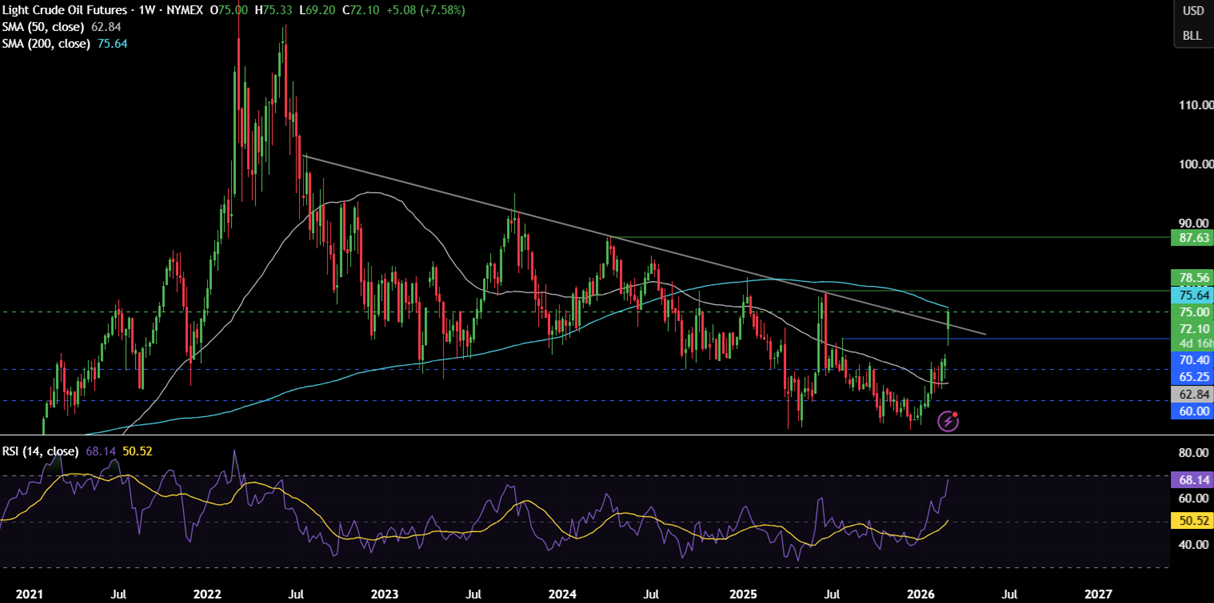
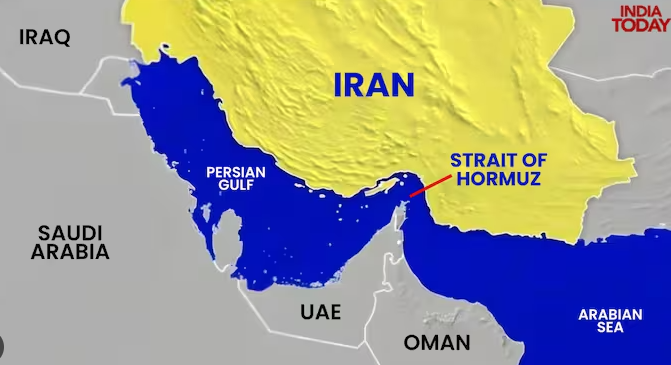
Oil prices have jumped 8% on Monday as the US-Israel war on Iran, and the effective closure of the Strait of Hormuz, rattles investors, despite OPEC+ agreeing to increase oil output. The Middle East is the largest oil-producing region, and Iran is the third-largest supplier in OPEC. Military action in Iran raises concern of supply disruption, lifting the risk premium on oil.
Furthermore, Iran’s Revolutionary Guard reportedly told ships on Saturday that the passage through the Strait of Hormuz was prohibited, effectively shutting the chokepoint, which sees 20% of global oil pass through it, raising supply concerns further.
Should these conditions persist, oil prices could rise towards $80 a barrel in the event of a material supply disruption, and $100 a barrel isn’t inconceivable.
Indian markets
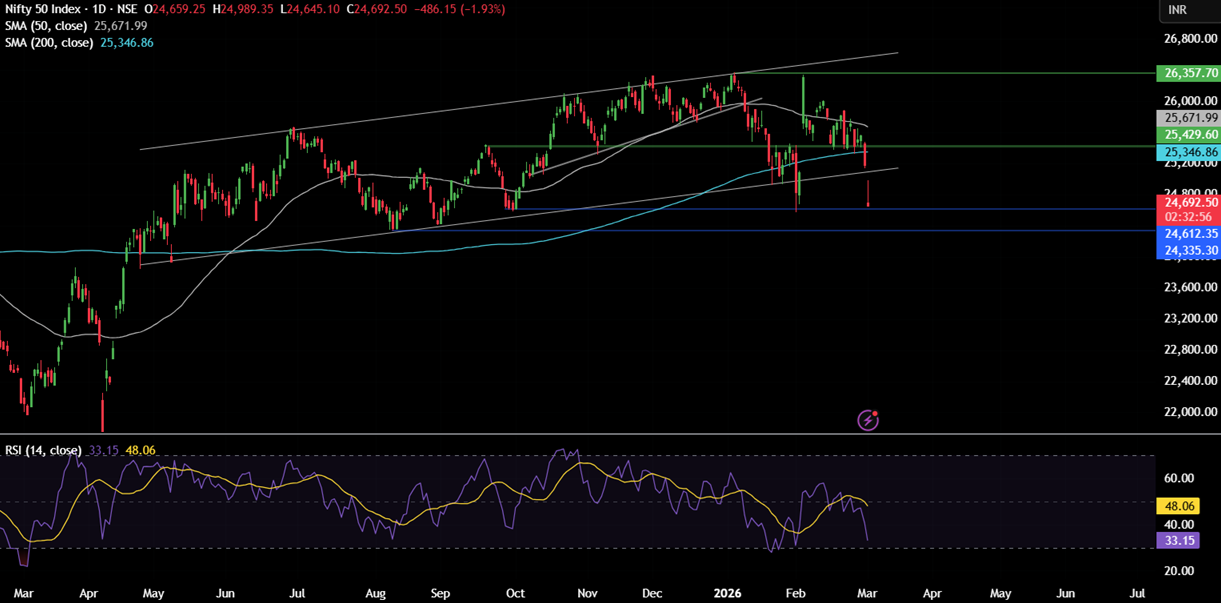
Indian markets ended last week on a low note, dragged down by renewed global risk-off mood and sector-specific headwinds. The Nifty 50 ended the week 1% lower at 25,178 amid broad-based selling across sectors. IT stocks were underperformers as fears of AI disruption persisted. The Nifty IT index fell 4%, its worst monthly performance in years.
At the start of the week, the US Supreme Court ruling on tariff measures lifted financials and banks, but the bounce proved short-lived. Indian stocks are falling sharply on Monday in risk off trade.
Foreign institutional investors (FIIs) continued their recent selling spree for an eighth consecutive month, selling shares worth Rs 6640 crore in Indian equities.
Meanwhile, domestic institutional investors (DIIs) supported the market, purchasing shares worth Rs 14111 crore.
India’s GDP growth was revised higher using the new GDP series (with base year 2022-23), with FY26 projected at 7.6% compared to earlier estimates of 7.4% using the previous method.
The updated data also showed that the economy expanded by 7.8% in the October to December period, amid resilience in manufacturing and services despite global uncertainties.
Key Indian market drivers this week include geopolitical uncertainties and risks that will dominate the week ahead. This will impact commodity prices, risk sentiment, and safe-haven flows.
India imports around 80% of its oil, so a jump in oil prices will affect the economy. The Indian economic calendar is quiet, so attention will be on US data, especially non-farm payrolls, on Friday.
USD/INR rose 0.38% last week, settling on Friday at 91.07, amid Rupee weakness for a second week, as the Indian stock market failed to attract foreign investors.
Pakistan markets
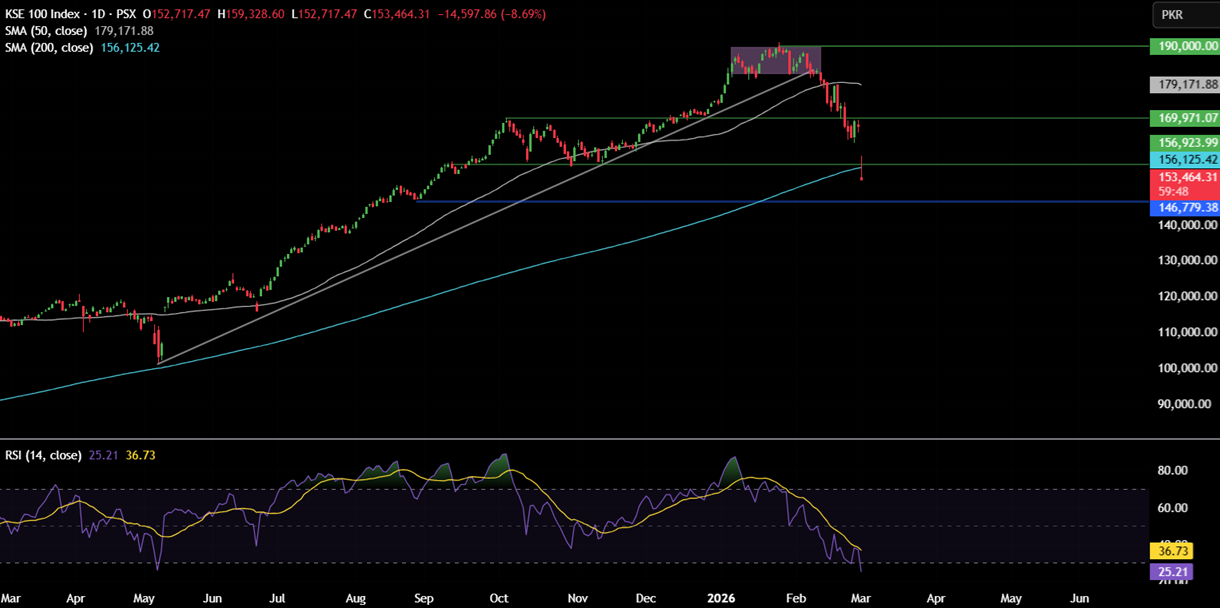
The Pakistan Stock Exchange (PSX) finished in the red for the fifth consecutive week, with the KSE 100 index falling 2.9% and settling at 168,062 on Friday. The sharp selloff came amid persistent foreign selling and geopolitical uncertainties. Foreign corporates were net sellers of equities, $13 million.
Regional tensions with Afghanistan and Pakistan, carrying out airstrikes across the border, dampened investor confidence. Meanwhile, the IMF will start policy talks with the federal and provincial authorities on Monday as part of the third review of the $7 billion Extended Fund Facility and the second review of the Resilience and Sustainability Facility. Pakistan stocks have tumbled on Monday as investors sell out of riskier assets.
Oil prices, geopolitical tensions (US-Iran, Afghan–Pakistan), and IMF talks will drive sentiment this week.
USD/PKR was broadly unchanged at -0.02% last week, settling at 279.55, as the State Bank of Pakistan saw reserves rise marginally to $16.2 billion from $16 billion.
Week ahead (US & Asia)
Geopolitical tensions
The US and Israel launched the fiercest attacks on Iran in decades on Saturday in an operation that killed the Supreme Leader Ayatollah Ali Khamenei. One reason the US and Israel attacked Iran was that they said Iran was close to producing a nuclear weapon.
The attack came after nuclear talks in Geneva last week and ahead of planned talks in Vienna this week. Iran has already retaliated with drones and missiles. Hostilities in the region threaten to upend the energy market and send shock waves through the global economy.
All markets are reacting to these developments, but the main focus will be on the oil markets. However, sharply rising oil prices have implications way beyond the energy markets, with knock-on effects for monetary policy and inflation. Developments in the Middle East will likely overshadow economic data this week.
OPEC+ (Sunday)
On Sunday, OPEC+ agreed to a modest 206,000-barrel-per-day output increase for April, just as the US-Israel war on Iran and Tehran’s retaliation raised the risk premium on oil prices. The news is unlikely to have much impact on the oil price, which will be driven by worries of supply disruption.
However, it’s worth noting that the group has little spare capacity to add to supply, except Saudi Arabia and the United Arab Emirates, which could struggle to increase output until navigation in the Gulf returns to normal.
US ISM manufacturing (Monday)
Manufacturing PMIs remain in focus amid Trump’s drive to bring manufacturing back to the US. Using the S&P manufacturing PMI as a comparison point, this fell to 51.2 in February, down from 52.4 in January, marking a 7-month low and pointing to softening demand despite continued sectoral expansion.
Input costs remained elevated, though output price inflation cooled to a 14-month low as firms discounted to support sales. Investors will be watching to see whether this same trend occurs in the IMN manufacturing PMI. Expectations are for the PMI to ease to 52.3 from 52.6. Weak data could pull US equities, such as the Dow Jones, lower.
Pakistan CPI (Tuesday)
Pakistan inflation data will be released this week and is expected to show that price pressures increased on an annual basis in February but cooled on a monthly basis. Expectations are for Pakistan inflation to ease to 0.3% MoM in February, down from 0.4%.
On an annual basis, inflation is expected to rise to 6.2%, up from 5.8%, but could rise as much as 7.4%, which would mark the highest level in 18 months, reflecting rising electricity prices and higher gold prices. The food index is expected to ease 0.4% MoM, offsetting some pressure. Core inflation is likely to rise to 7.9% YoY, reversing from a recent low of 7.2%.
Australian GDP (Wednesday)
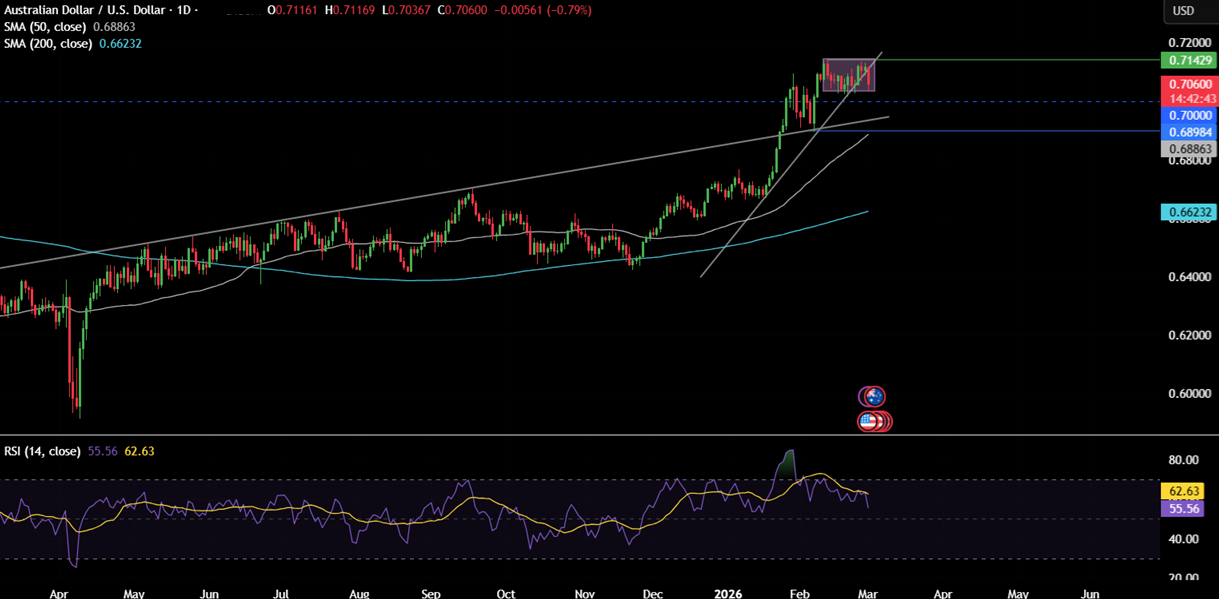
Expectations are for economic growth to rebound strongly in Q4 2025, with 0.9% quarter-on-quarter growth, taking annual growth to 2.4%. This comes after Q3 saw softer growth of 0.4%.
High-frequency indicators, including household spending and credit growth, strengthened in the December quarter, suggesting solid momentum into the year-end. Strong growth could help support the AUD/USD higher, which has rebounded strongly as inflation points to the RBA hiking rates again.
Chinese PMIs (Wednesday)
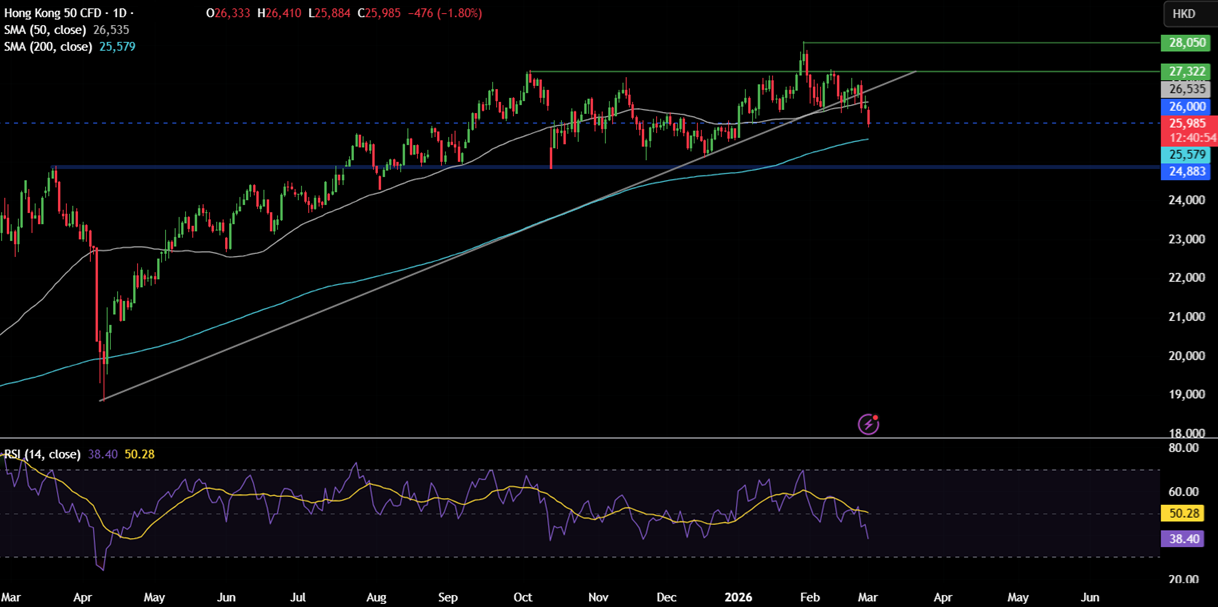
The Chinese official NBS manufacturing PMI for February is expected to remain close to 50, the level that separates expansion from contraction, as Lunar New Year distortions weigh on activity due to factory closures and survey timing. January’s data showed manufacturing at 49.3 and non-manufacturing at 49.4, both in contraction territory amid weak domestic demand.
Meanwhile, the Caixin manufacturing PMI remained in expansion at 50.3, highlighting the divergence between large state-linked firms and smaller export-oriented businesses. The markets will be monitoring whether holiday travel provided support for services. Strong data could support Chinese equities such as the Hang Seng.
ISM services PMI (Wednesday)
Services are the largest contributor to the US economy, and therefore, the PMI data provides timely insight into the health of the US economy. Using S&P services PMI as a comparison, the index fell to 52.3 in February from 52.7 in January, marking a 10-month low but still in expansion territory.
Growth in new business was softer, and employment rose only marginally due to subdued demand and elevated costs. Input inflation remained high with service prices rising to a seven-month peak, although business expectations also improved to a 13-month high.
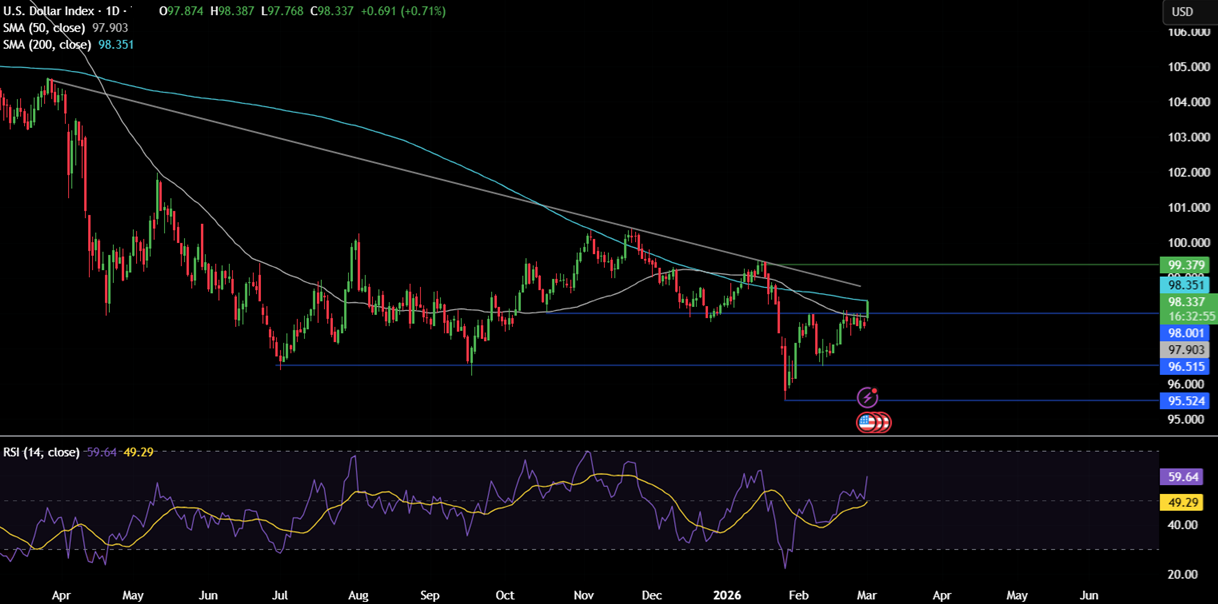
The services ISM PMI is expected to rise modestly to 54 from 53.8 in January, which could lift the USD and stocks.
US non-farm payroll (Friday)
The market will be watching whether the February jobs report is as strong as the January report, which added 130,000 jobs and saw an unexpected fall in unemployment to 4.3%. The question here was whether this was a one-off or a turning point for the labour market.
Expectations are for payroll growth of 70 to 90,000, and unemployment could potentially edge higher. Weekly initial jobless claims were steady over the comparable survey period. Whilst continuing claims rose very slightly.
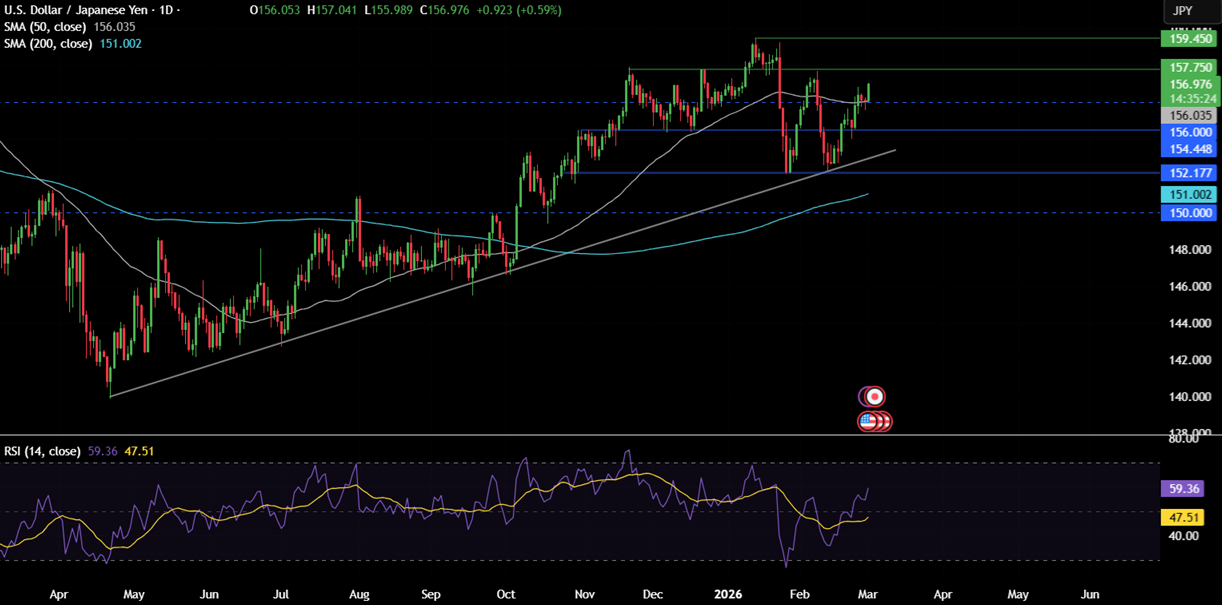
On the policy front, Fed officials view the labour market as stabilising after a period of cooling, which has shifted some officials’ stance towards slightly more cautious rate hikes. Stronger-than-forecast data could lift the USD, boosting USD crosses such as USD/JPY, although safe-haven flows will also influence this pair.
Trading involves risk.
Author



 Risk Disclaimer
The content provided here is for informational purposes only. It is not intended as personal investment advice and does not constitute a solicitation or invitation to engage in any financial transactions, investments, or related activities. Past performance is not a reliable indicator of future results.
The financial products offered by the Company are complex and come with a high risk of losing money rapidly due to leverage. These products may not be suitable for all investors. Before engaging, you should consider whether you understand how these leveraged products work and whether you can afford the high risk of losing your money.
The Company does not accept clients from the Restricted Jurisdictions as indicated in our website/ T&C. Some services or products may not be available in your jurisdiction.
The applicable legal entity and its respective products and services depend on the client’s country of residence and the entity with which the client has established a contractual relationship during registration.