7 min read
Weekly recap:
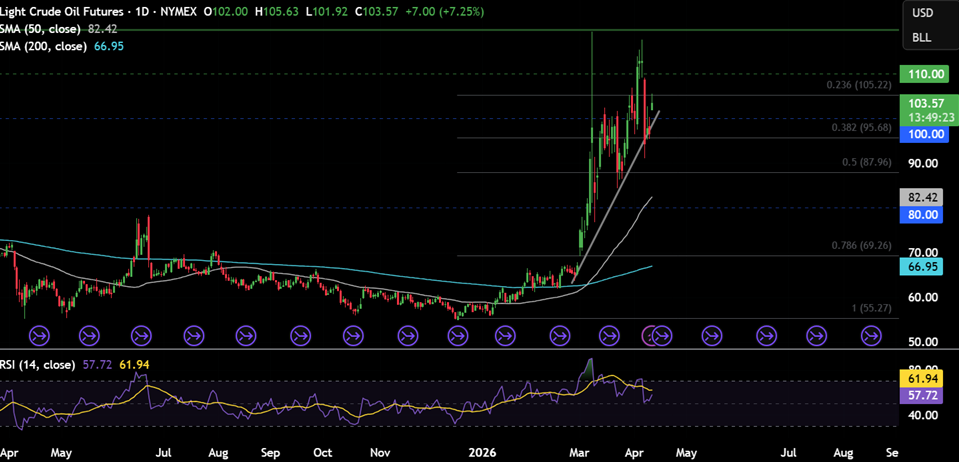
US stocks rallied strongly last week, supported by optimism surrounding a two-week ceasefire between the US and Iran, which raised hopes of a more durable de-escalation. The relief rally saw the Nasdaq jump 4.6% over the week, while oil prices fell around 15% despite the Strait of Hormuz remaining effectively closed.
While markets were hopeful that a more permanent agreement could be reached, sentiment remained fragile given the uncertainty around negotiations. The USD fell 1.4%.
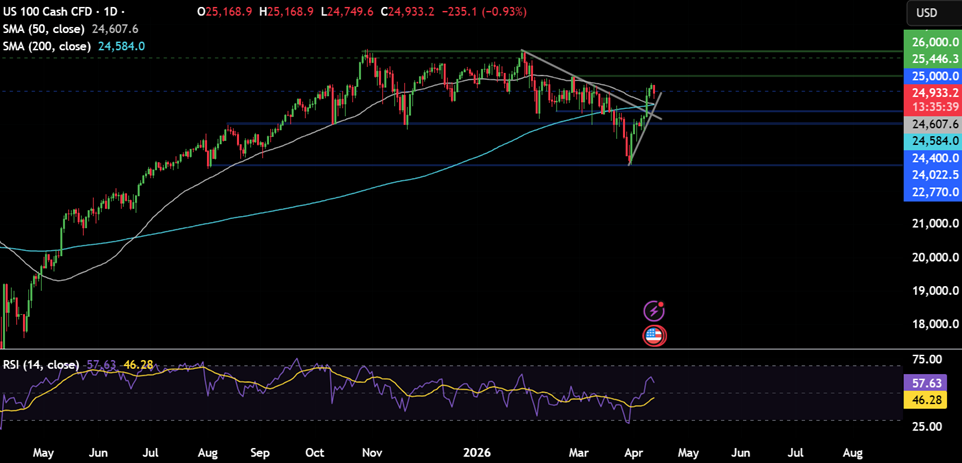
The importance of finding an off-ramp from the conflict was underscored by hotter-than-expected US inflation data, which showed the largest increase in prices in four years. CPI rose to 3.3% YoY in March from 2.4%, highlighting the risk that higher energy prices could begin to weigh on consumer spending and broader economic activity.
Geopolitical tensions
Over the weekend, geopolitical tensions escalated again as peace talks between the US and Iran broke down. Donald Trump announced plans for a US naval blockade of the Strait of Hormuz starting today, targeting Iranian ships and ports in an effort to prevent Iran from benefiting from elevated oil prices.
These developments suggest there is little immediate prospect of de-escalation and that disruptions to global energy supply could persist. Oil prices have jumped back above $100 at the start of the week as the move takes out a further 2 million barrels per day from the market, but also raises concerns over what comes next. Stocks are falling as a result and could remain under pressure unless there are signs of de-escalation.
US earnings season
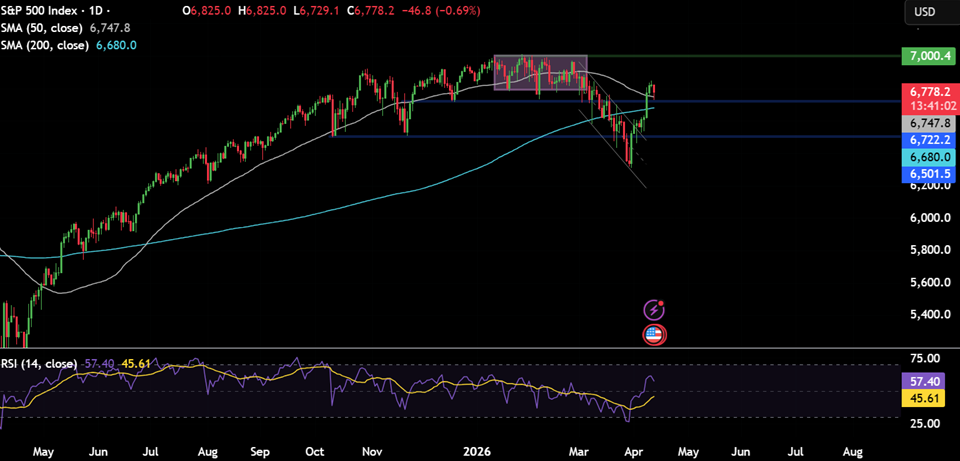
While the Middle East will remain the key focus, attention also turns to the US earnings season, which begins this week with major banks reporting. Around 70% of S&P 500 companies are expected to release their Q1 results by the end of April.
According to FactSet, earnings are forecast to grow by 13.2% year-on-year, marking the sixth consecutive quarter of double-digit growth, while revenues are expected to rise 9.7%, the strongest pace since 2022.
All 11 sectors are projected to deliver revenue growth, led by technology, communications, and financials, although the focus will be firmly on forward guidance given the uncertain macro backdrop. Upbeat earnings could offer some support for stocks and the S&P 500, but only if there are signs of de-escalation in the war.
US PPI (Tuesday)
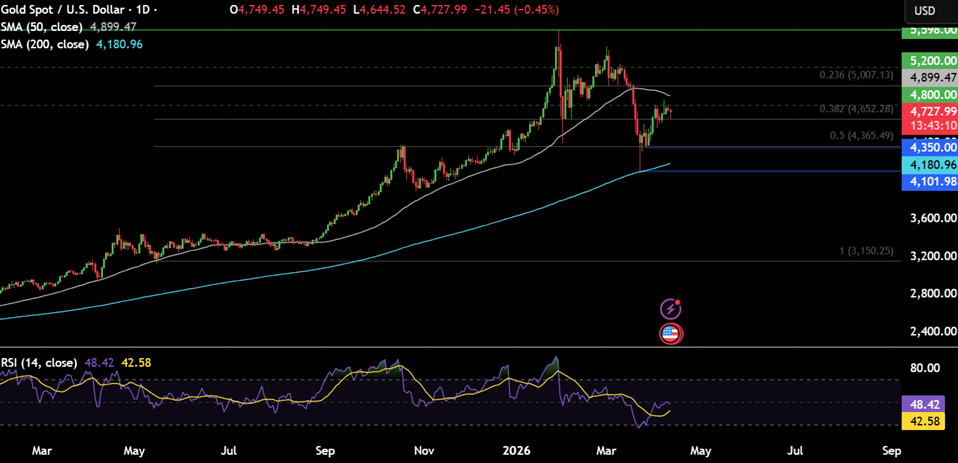
The March PPI report, due on Tuesday, will provide further insight into inflationary pressures at the wholesale level. Producer prices are expected to have risen 1.2% month-on-month, up from 0.7% in February, as higher energy prices start to show up in the data.
The previous reading was already surprising to the upside. Annual PPI stood at 3.4% in February, reinforcing the view that inflation remains sticky even before the recent energy shock starts to feed in. This could reduce the likelihood of Federal Reserve rate cuts in the near term and may provide support for the US dollar, and pull Gold lower.
ECB minutes (Thursday)
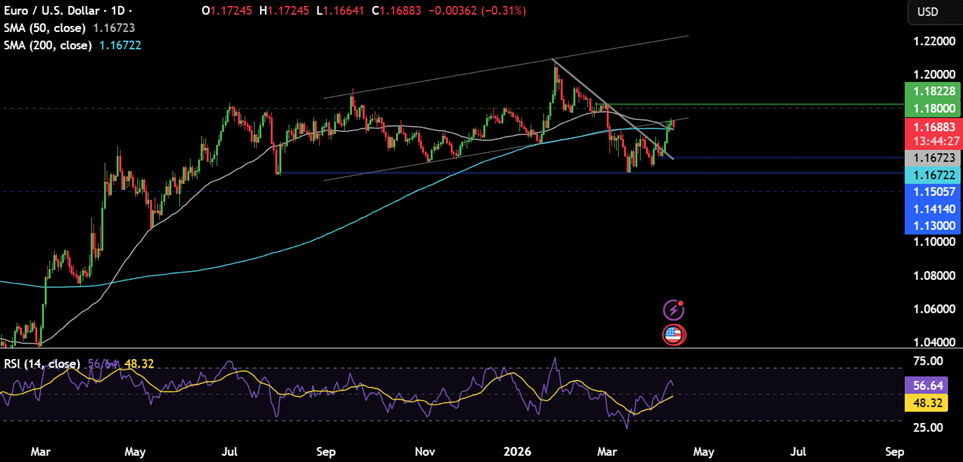
Minutes from the latest meeting of the European Central Bank will be closely scrutinised after policymakers left interest rates unchanged at 2%. Christine Lagarde emphasised that the ECB is not committed to a fixed policy path and remains well positioned to respond to evolving risks.
Markets are currently pricing in around 45 basis points of rate hikes across 2026. Inflation jumped to 2.5% in March, a rise that was entirely due to higher energy prices, as core inflation and food prices eased.
However, the longer the Strait of Hormuz remains closed, the higher the chances of second-round effects causing higher inflation. Investors will be watching closely for any signs of concern about second-round inflation effects. Hawkish minutes could support EUR/USD.
Australian unemployment (Thursday)
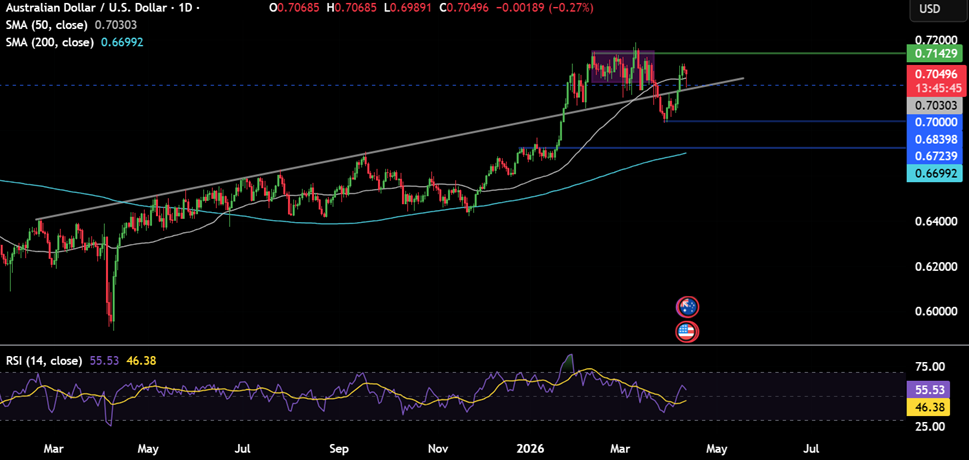
Australia’s labour market report will be the first major domestic data release since the escalation in the Middle East, although employment and hiring data tends to lag economic developments. The unemployment rate is expected to remain relatively low at around 4.3%, with employment increasing by approximately 25,000 jobs.
The Reserve Bank of Australia still considers the labour market to be tight, which gives policymakers some flexibility to keep interest rates elevated in order to contain inflation. However, the key driver for the outlook will be developments in the Strait of Hormuz and the extent to which higher energy prices feed through to consumers. Strong data could offer support to AUD/USD.
China GDP (Thursday)
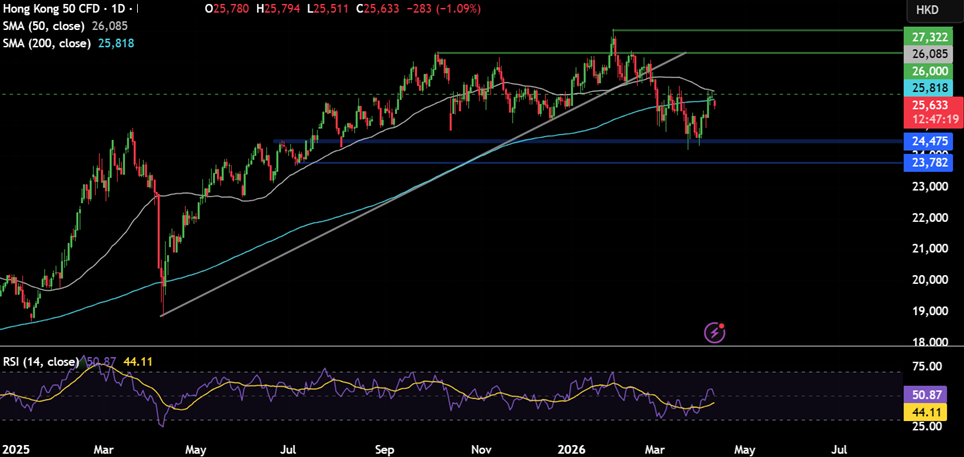
China’s GDP data, due on Thursday, is expected to show the economy grew by around 4.8% year-on-year in the first quarter, with some indicators pointing to stronger growth of around 5%. Industrial production has remained firm, and unemployment is expected to hold near 5.3%, broadly in line with the government’s target.
However, the key question is whether this early-year momentum can be sustained beyond the seasonal effects of the Lunar New Year. While manufacturing and exports remain supportive, weakness in the property sector continues to weigh on investment, and rising energy costs present an additional external risk. Solid data could support sentiment and Hang Seng.
UK GDP (Thursday)
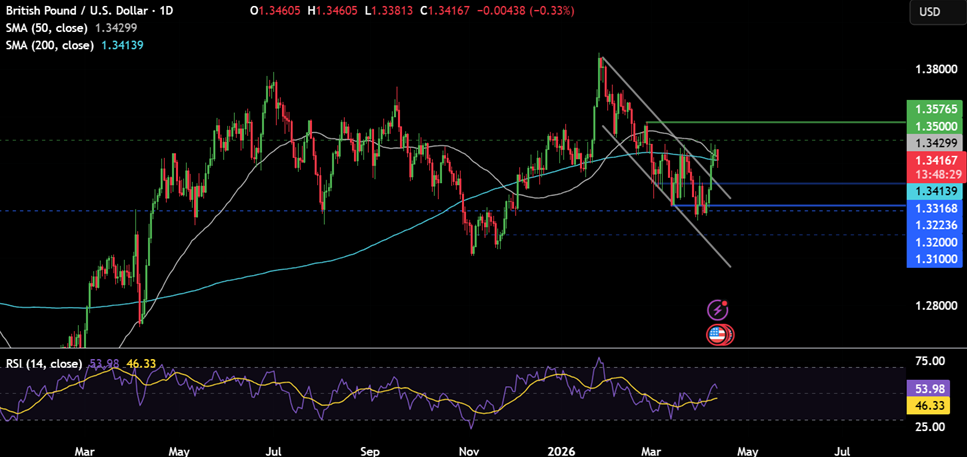
UK GDP data for February will provide insight into how the economy was performing before the recent energy shock. The United Kingdom economy recorded flat growth in January, although PMI data pointed to stronger activity in the services sector in February.
GDP is expected to rise by 0.3% month-on-month in February. However, the outlook has shifted notably since then, with the Bank of England likely to focus more on inflation risks than growth, given the potential impact of higher oil prices and the increasing risk of stagflation. Weaker-than-expected data could weigh on GBP/USD.
Trading involves risk.
Author



 Risk Disclaimer
The content provided here is for informational purposes only. It is not intended as personal investment advice and does not constitute a solicitation or invitation to engage in any financial transactions, investments, or related activities. Past performance is not a reliable indicator of future results.
The financial products offered by the Company are complex and come with a high risk of losing money rapidly due to leverage. These products may not be suitable for all investors. Before engaging, you should consider whether you understand how these leveraged products work and whether you can afford the high risk of losing your money.
The Company does not accept clients from the Restricted Jurisdictions as indicated in our website/ T&C. Some services or products may not be available in your jurisdiction.
The applicable legal entity and its respective products and services depend on the client’s country of residence and the entity with which the client has established a contractual relationship during registration.