8 min read
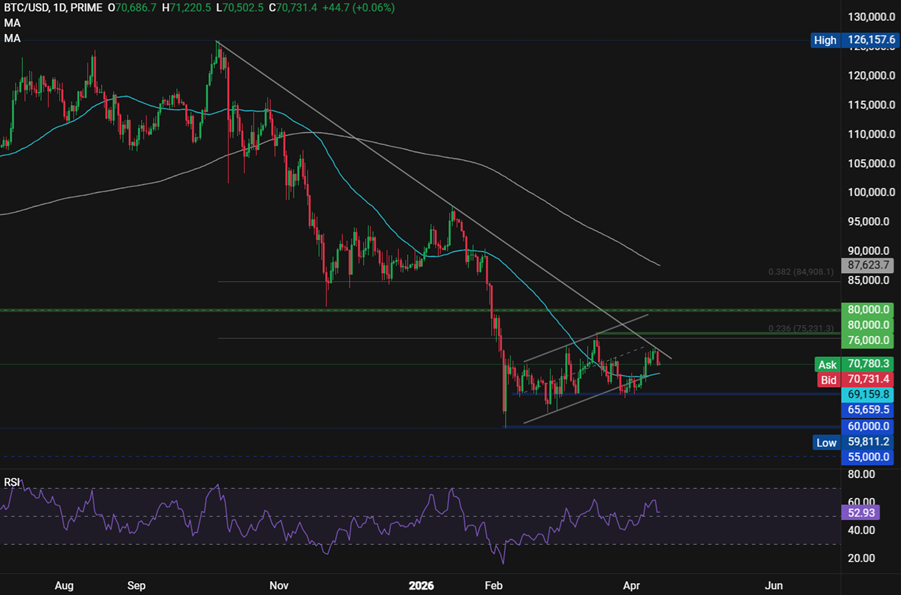
Bitcoin rallied 8.5% last week, marking its strongest weekly gain since September. The largest cryptocurrency opened the week around $67,000, climbed to a high of $73,700, before pulling back over the weekend to trade near $70,600 at the start of the new week.
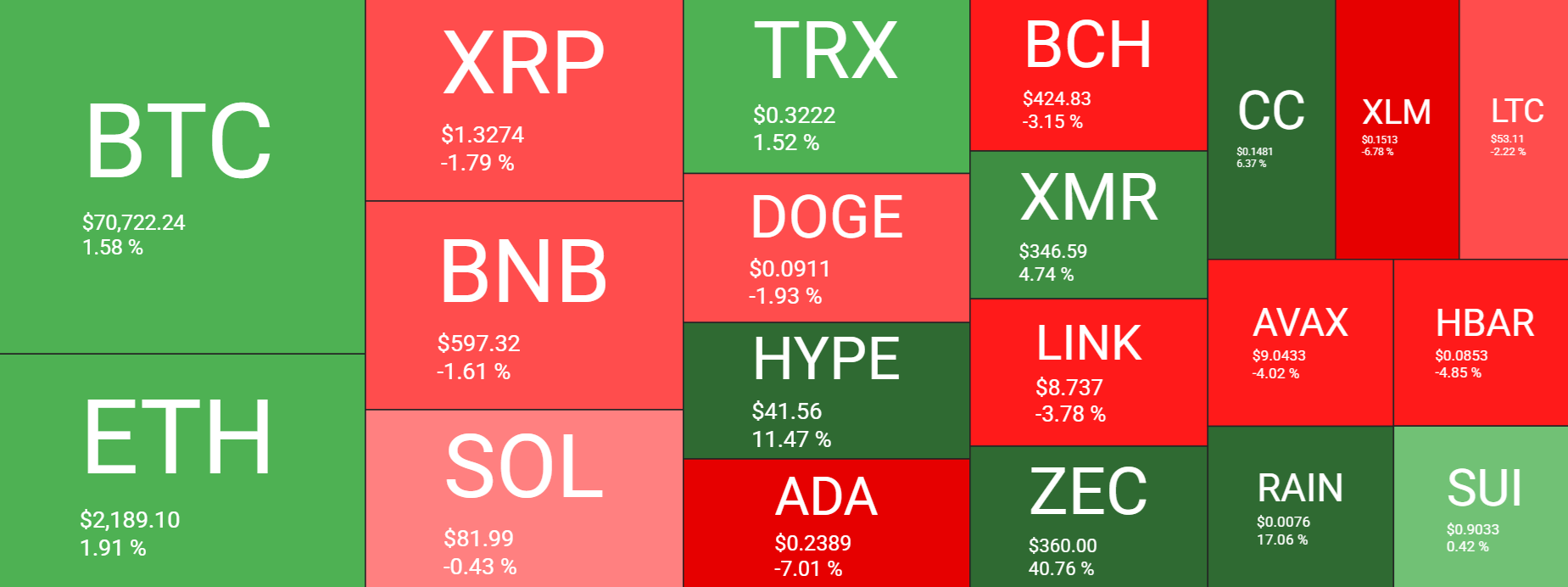
Despite the strong rally last week, recent losses mean that over the past seven days, Bitcoin is up around 1.5%, while Ethereum has risen 1.9%. In contrast, XRP, BNB and Solana have posted losses of 1.8%, 1.6% and 0.4% respectively, leaving the broader altcoin market mixed.
The total cryptocurrency market capitalisation rose from $2.37 trillion at the start of last week to a peak of $2.50 trillion on Friday, before easing back to around $2.41 trillion at the time of writing.
Market sentiment remains weak. The Crypto Fear & Greed Index slipped back to 12 after reaching 16 during last week. While this is an improvement from 9 previously, it still reflects extreme fear across the market, which is limiting the upside.
Institutional demand strengthens
Institutional flows improved last week, offering some support to prices. Spot Bitcoin ETFs recorded net inflows of $787 million, according to SoSoValue — the strongest weekly inflow since early March. If this trend continues, it could help to lift Bitcoin’s price.
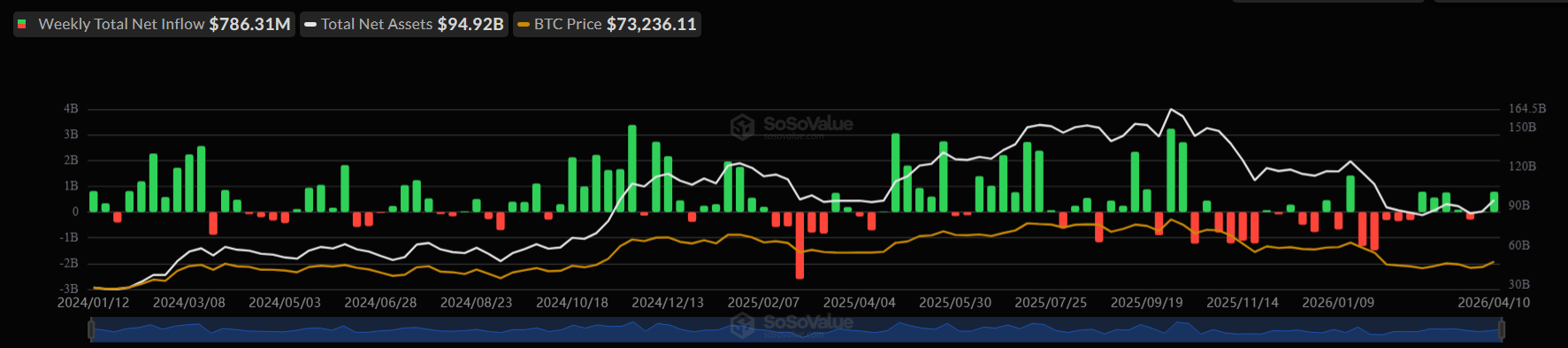
BTC ETFs saw $1.2 billion in net inflows in March, its first positive month after four straight months of net outflows. This puts net inflows over the past 6 weeks at $1.82 billion. BTC ETFs haven’t seen two straight months of net inflows since September and October last year.
Corporate demand also remains strong. Strategy, the world’s largest public holder of Bitcoin, announced it purchased $330 million worth of BTC last week, bringing its total holdings to 766,970 BTC.
Michael Saylor, the founder of Strategy, published an updated version of his orange dot charts on social media, reviving speculation of new BTC purchases by the company. The return of this format is traditionally seen as a signal that the company is entering a phase of aggressive accumulation, especially after it stopped its buying spree for two weeks in March.
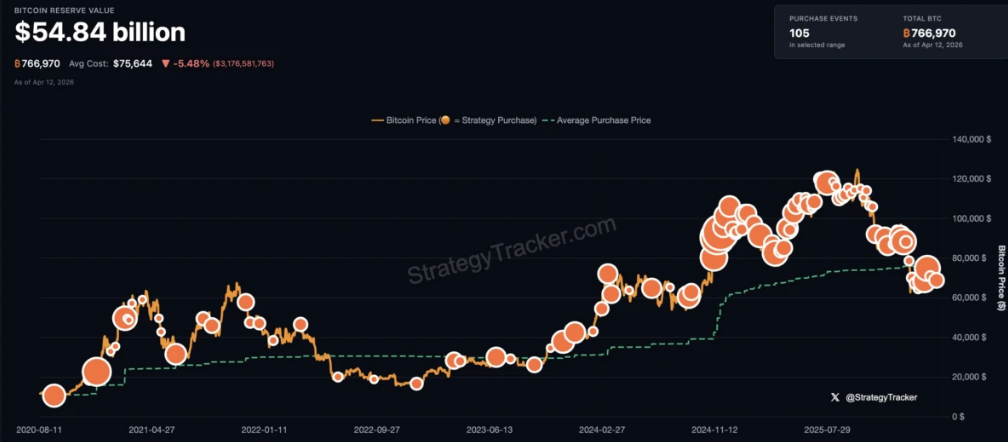
While ETF and corporate flows aren’t large in absolute terms, what matters most is their persistence. Continued accumulation helps absorb supply and can limit downside pressure, even in a volatile macro environment.
Macro backdrop: relief rally fades
Bitcoin’s rally last week was driven primarily by an improvement in global risk sentiment following a temporary ceasefire between the US and Iran.
Oil prices fell more than 13%, dropping below $95 per barrel — their largest decline in nearly six years — after President Trump paused strikes on Iran and markets anticipated a reopening of the Strait of Hormuz. That shift eased inflation concerns, lowered Treasury yields, and supported a broad rally across equities and crypto.
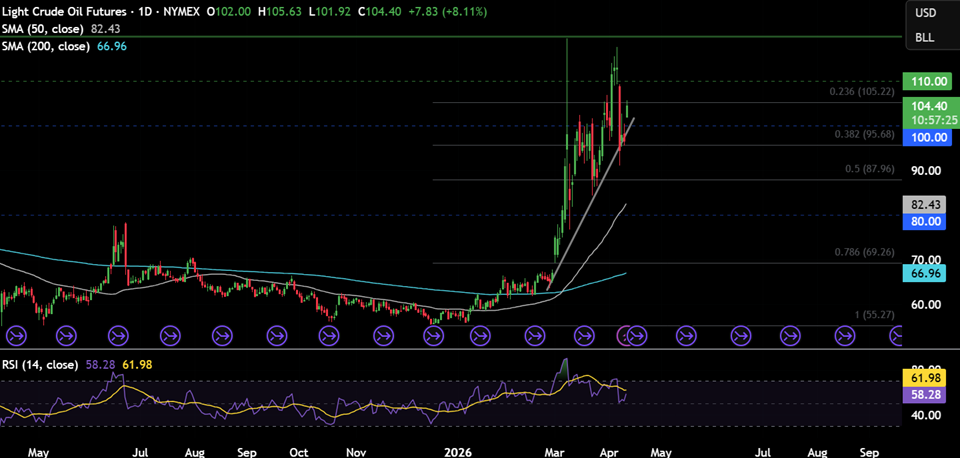
However, that optimism proved short-lived.
Over the weekend, peace talks stalled. Oil prices have surged back above $100 per barrel, Treasury yields are moving higher, and both equities and crypto are under pressure after President Trump ordered a blockade of the Strait of Hormuz by the US Navy, signalling a renewed escalation.
Why macro still matters for Bitcoin
Markets are now bracing for another week of headline-driven volatility, with the flow of oil and gas through the Strait of Hormuz remaining the key focus.
This matters for Bitcoin because higher oil prices increase inflation expectations, which push Treasury yields higher. Rising yields tighten financial conditions, strengthen the US dollar, and reduce liquidity — creating a less supportive environment for Bitcoin and other risk assets.
Relative resilience stands out
Despite the volatile macro backdrop, Bitcoin has shown notable resilience. BTC posted gains of around 2% in March even as US equities fell sharply, and it has extended those gains into April, rising 3.6% so far this month — a period that is historically seasonally strong for Bitcoin.
This suggests that while Bitcoin remains macro-sensitive, it may be holding up better than traditional risk assets at the margin.
Inflation data back in focus
Looking ahead, attention will turn to the US Producer Price Index (PPI) data, following last week’s CPI release. US CPI inflation rose to 3.3% year-on-year, up from 2.4%, and rose 0.9% MoM, marking its largest monthly increase since 2022.
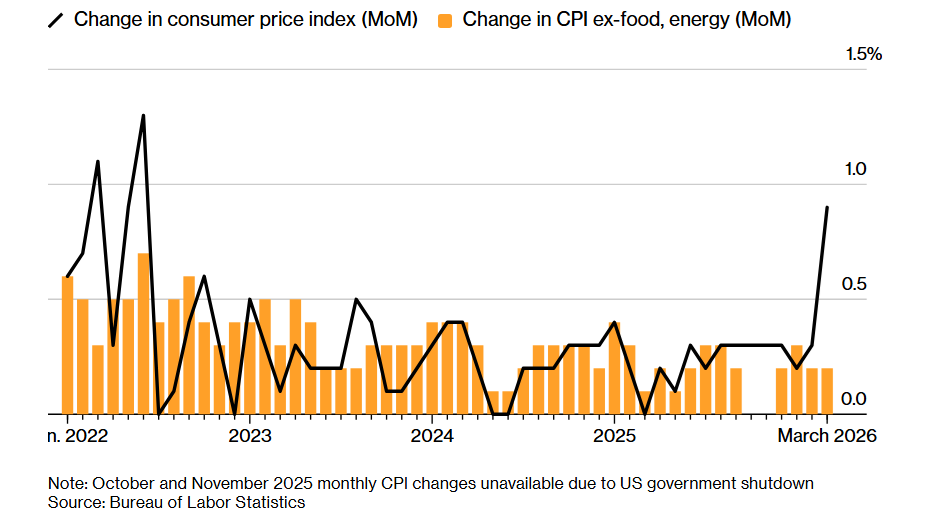
PPI is expected to move higher as elevated oil prices begin to feed through into producer costs. Stronger-than-expected inflation data would reinforce concerns that the Federal Reserve may need to keep interest rates elevated for longer — a scenario that could weigh on Bitcoin.
On-chain signals show easing sell pressure
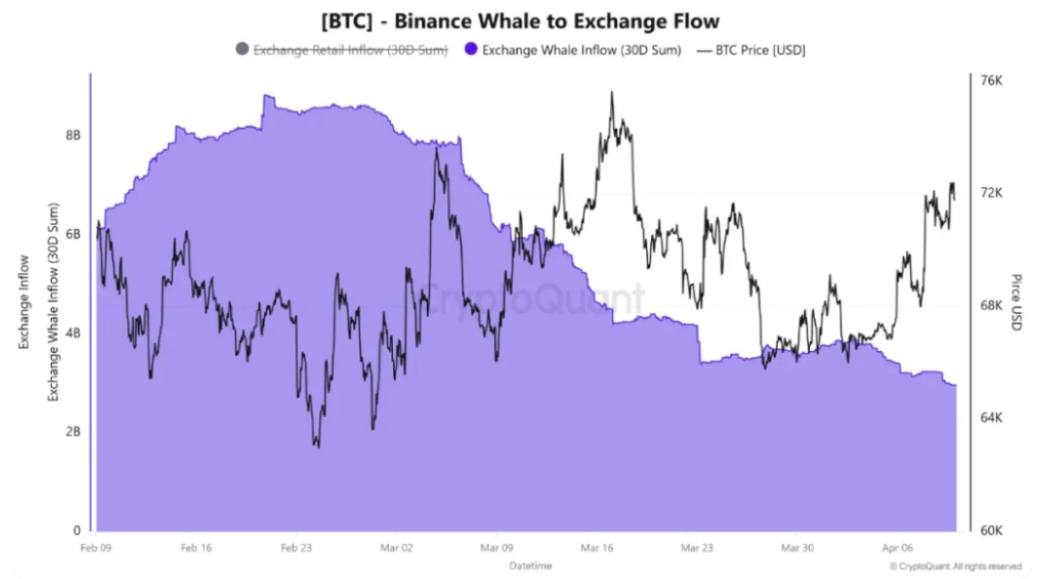
On-chain data is offering some more constructive signals. Whale inflows to Binance have dropped to a multi-month low, pointing to a potential easing in near-term selling pressure. The 30-day sum of whale inflows to the exchange has fallen to $2.96 billion — the first reading below $3 billion since June 2025.
This marks a clear shift from the elevated levels seen in February and early March, when inflows consistently exceeded $6 billion and briefly peaked near $8 billion.
Why this matters
Flows from large holders (“whales”) to exchanges are often interpreted as a signal of intent to sell or reposition. When these inflows are elevated, it typically suggests that significant supply may be preparing to enter the market.
Conversely, a decline in whale inflows indicates that large players are no longer rushing to move assets onto exchanges — reducing immediate sell-side pressure.
From a market structure perspective, this is constructive.
Lower exchange inflows from whales suggest that supply overhang is easing, which can help stabilise prices, particularly in a fragile macro environment where broader liquidity conditions remain tight.
Short-term holders show reduced profit-taking
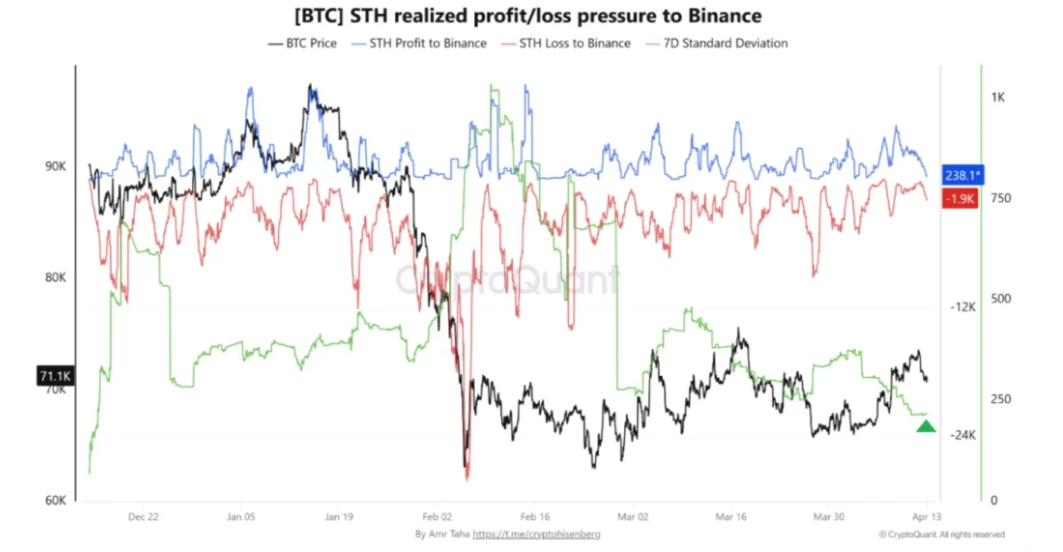
According to CryptoQuant, selling pressure appears to be entering a cooling phase. Short-term holders (STHs) are showing reduced profit-taking and less panic-driven selling.
The 7-day standard deviation of realised profit/loss has fallen to 217 — its lowest level since February — down from a previous low of 277. This suggests that market participants are becoming less reactive, reducing near-term selling pressure.
At the same time, long-term holder (LTH) demand is building. The realised cap of long-term holders — which measures the value of BTC based on when coins last moved — has surpassed $50 billion for the first time in nearly a year.
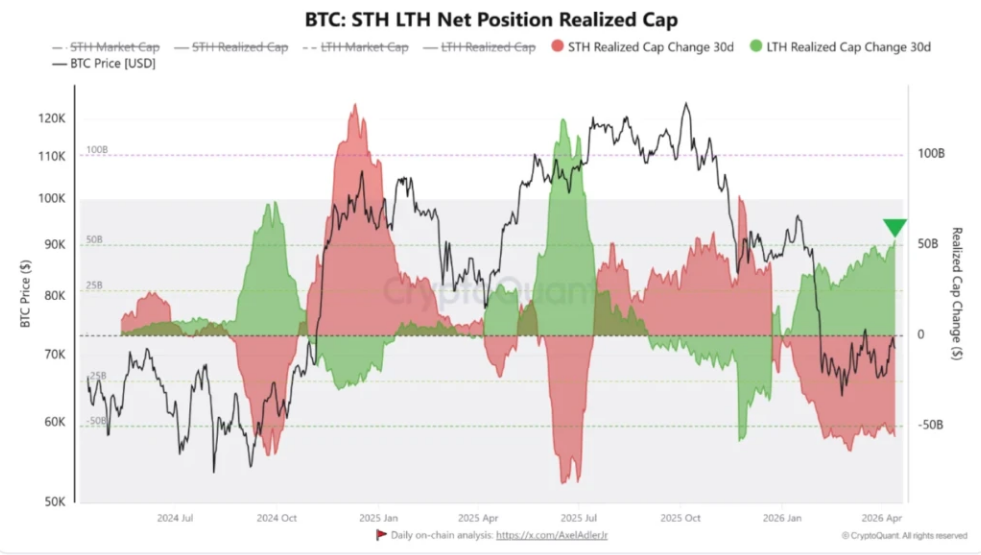
This indicates growing conviction among longer-term investors and provides a more supportive structural backdrop.
Conclusion
Bitcoin has shown resilience, supported by improving institutional inflows and easing on-chain selling pressure. The drop in whale inflows, rising long-term holder conviction, and steady ETF demand all point to a market where downside may be becoming more contained.
However, the broader picture remains heavily dependent on macro conditions. The sharp reversal in oil prices, rising Treasury yields, and renewed geopolitical tensions highlight how quickly the environment can shift.
Trading involves risk.
Author



 Risk Disclaimer
The content provided here is for informational purposes only. It is not intended as personal investment advice and does not constitute a solicitation or invitation to engage in any financial transactions, investments, or related activities. Past performance is not a reliable indicator of future results.
The financial products offered by the Company are complex and come with a high risk of losing money rapidly due to leverage. These products may not be suitable for all investors. Before engaging, you should consider whether you understand how these leveraged products work and whether you can afford the high risk of losing your money.
The Company does not accept clients from the Restricted Jurisdictions as indicated in our website/ T&C. Some services or products may not be available in your jurisdiction.
The applicable legal entity and its respective products and services depend on the client’s country of residence and the entity with which the client has established a contractual relationship during registration.