11 min read
 Weekly Recap
US Global stocks recap
US equities ended a six-week winning streak on Friday, retreating from record highs due to inflation concerns and rising Treasury yields. The S&P 500 closed at 7,408.50, down 1.24% for the day but up 0.3% for the week. The Dow Jones fell 1.07% to 49,526.17, and the Nasdaq declined 1.54% to 26,225.15.
Earlier in the week, all three indices reached new highs, with the Dow Jones briefly surpassing 50,000 on Thursday. The reversal followed a higher-than-expected April CPI and rising wholesale prices, leading markets to rule out 2026 rate cuts and some traders to consider a possible December rate hike.
President Trump’s two-day summit with President Xi in China resulted in “fantastic” trade deals on Friday. However, there was no progress on the situation in Iran or on reopening the Strait of Hormuz, despite both leaders expressing support for reopening the strait.
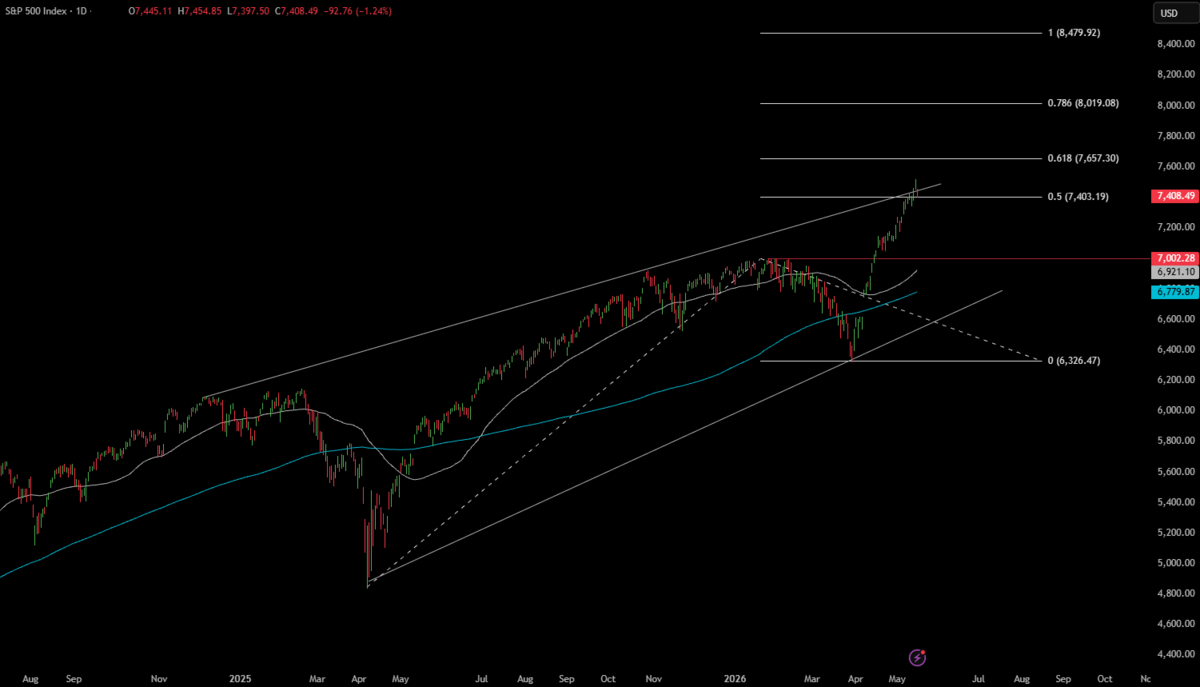
A significant rebound in the S&P 500 will depend on the tone of the FOMC minutes and NVIDIA’s earnings on Wednesday, as valuations are stretched and expectations for rate cuts have diminished.
Major US data/themes
The April CPI release on Tuesday undermined disinflation expectations. Headline CPI increased 0.6% month-over-month and 3.8% year-over-year, the highest since May 2023 and above the 3.7% consensus. This marks a 0.5-percentage-point rise from March’s 3.3%. Core CPI rose to 2.8% year-over-year from 2.6%, with monthly core prices up 0.4%, the largest gain since January 2025.
Wholesale prices added to the inflation shock, recording their largest monthly increase since early 2022. Energy costs rose 17.9% year-over-year, gasoline prices increased 28.4%, and shelter costs rose 0.6% for the month. The data indicate that the economic impact of the war in Iran is broadening.
Kevin Warsh was confirmed as the next Fed Chair on Wednesday in a historic 54-45 Senate vote, the closest in the modern era. He succeeds Jerome Powell, whose term ended Friday. Powell will remain on the Board of Governors through January 2028. Warsh’s first FOMC meeting as chair is scheduled for June 16-17.
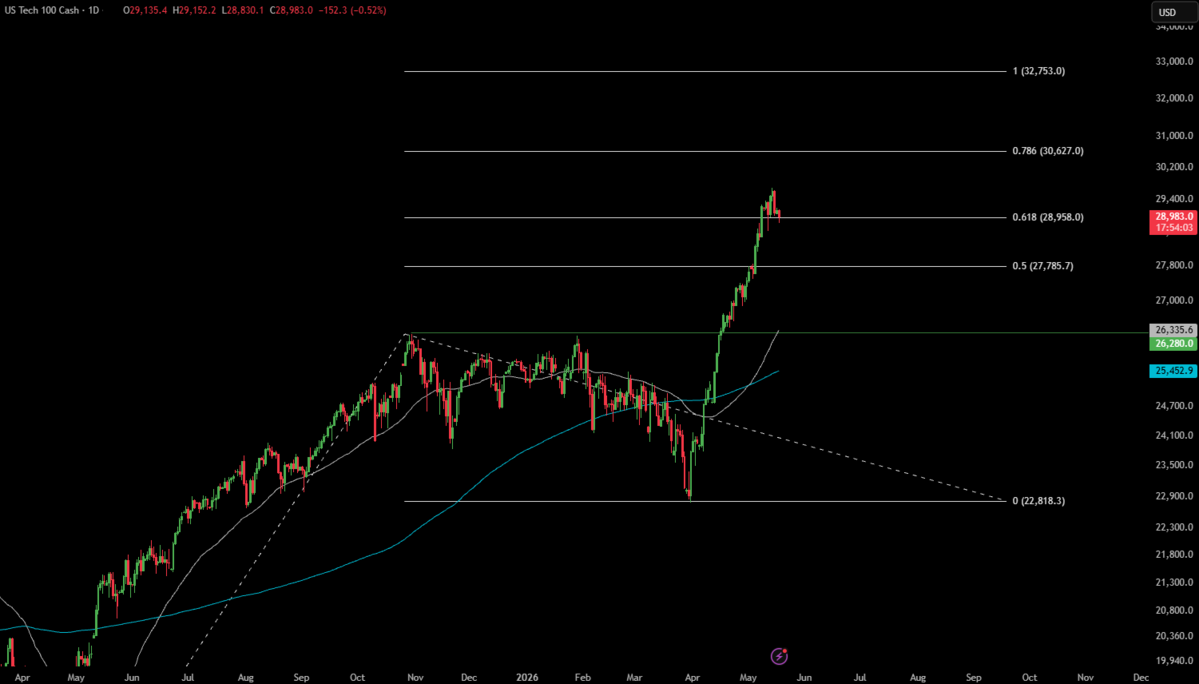
Stagflation pressures and a hawkish Fed transition have sharply shifted CME FedWatch probabilities, with markets now assigning a roughly 50% chance of a December rate hike. Nasdaq performance will depend on the tone of the FOMC minutes and NVIDIA’s earnings on Wednesday.
Gold moves
Gold experienced its largest weekly decline in months, falling approximately 4% to close near $4,548 per ounce on Friday, the lowest level since March 2026. On Friday alone, gold fell 1.83% as risk-off sentiment drove broad selling across equities, Treasuries, and precious metals.
Elevated US CPI, the sharpest PPI increase since 2022, and Kevin Warsh’s hawkish confirmation ended the rate-cut narrative that had supported gold earlier in May. Two-year Treasury yields reached a 14-month high, and the US dollar strengthened broadly.
Although gold rebounded to $4,703 on Thursday, it failed to maintain gains as markets ruled out a 2026 Fed rate cut and some traders began pricing in a December hike. Physical demand remained steady below $4,600, with buyers viewing the decline as an opportunity to accumulate.
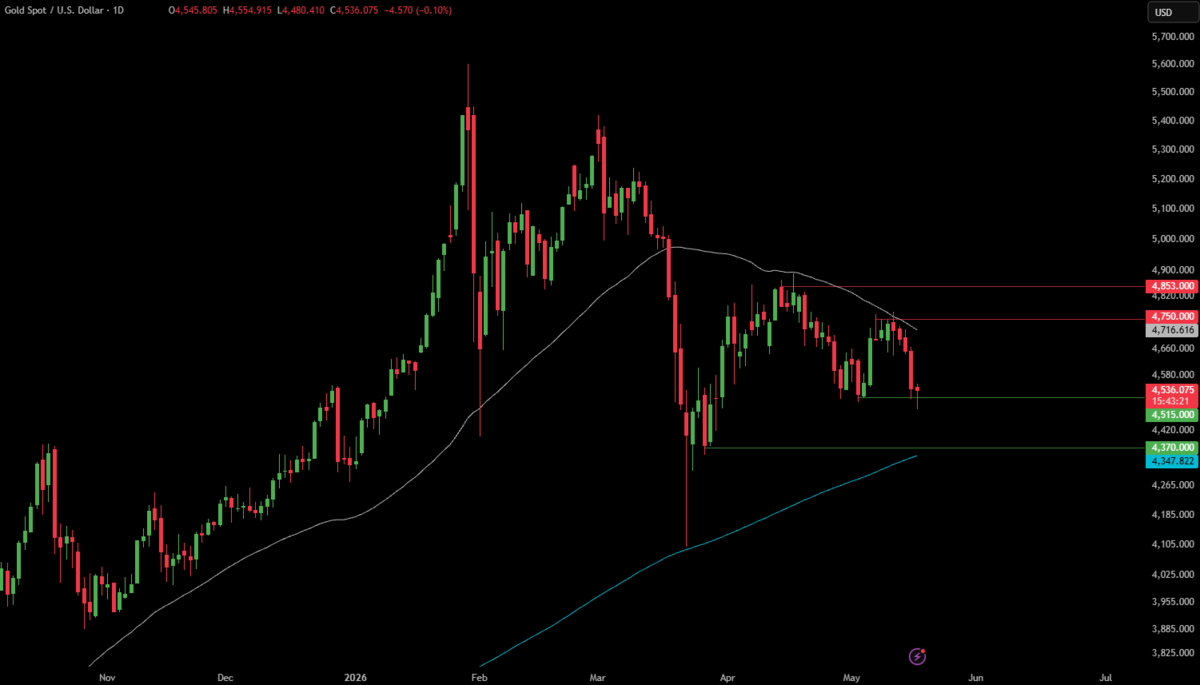
A dovish signal in Wednesday’s FOMC minutes could support gold, while a continued hawkish tone or further oil-driven inflation would likely pressure the metal.
Oil moves
UK Brent rose above $107 per barrel on Friday, gaining over 6% for the week as diplomatic efforts to resolve the US-Iran conflict stalled. The Strait of Hormuz remained closed for an eleventh week, with the International Energy Agency reporting a combined reduction of approximately 4 million barrels per day in crude and fuel flows during March and April.
President Trump described the current ceasefire as on “massive life support” after rejecting Tehran’s latest response to his peace proposal. Mixed signals from Trump added to volatility, as he initially stated the US did not need the strait open, then later affirmed with President Xi that “we want the straits open.”
The IEA warned that the global oil market could remain significantly undersupplied through October, even if hostilities end next month. Ship attacks and seizures continued this week, and tanker traffic through the Strait of Hormuz remained very limited.
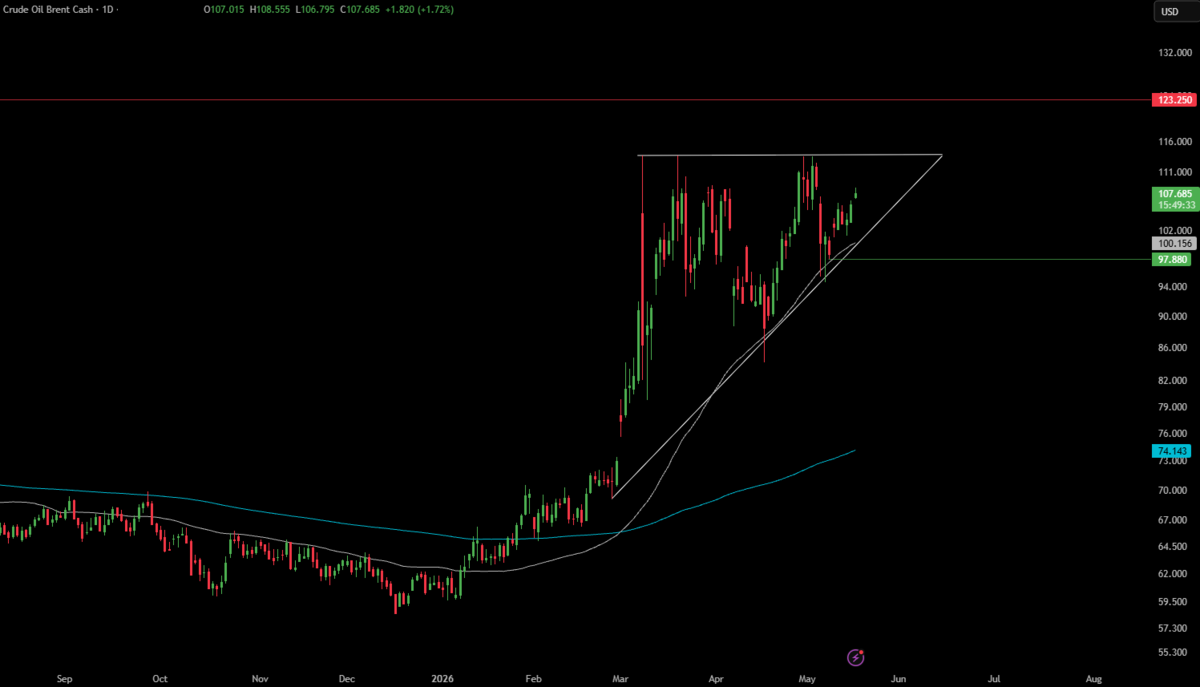
UK Brent will remain sensitive to developments related to Iran and post-summit diplomacy. If negotiations deteriorate further, $114 per barrel is a likely target.
Indian markets
Indian equities were volatile this week. The Nifty 50 fell to an intraweek low near 23,300 before recovering over two days to close at 23,689.60 on Friday. The Sensex ended at 75,398.72, with both indices gaining about 1% on Friday after Thursday’s rebound. For the week, the Nifty 50 declined approximately 2.4%.
April CPI inflation was 3.48% year-over-year, below the 3.8% consensus, though slightly higher than March’s 3.40%. Food inflation increased to 4.20% from 3.87%. While the softer CPI reading offered some relief, wholesale price inflation surged to 8.3% year-over-year, the highest in 42 months, driven by a 24.71% rise in fuel and power prices.
The Indian rupee reached a record low against the dollar, with USD/INR hitting 96.0188 by Friday morning. The Reserve Bank of India reportedly intervened by selling dollars through state-run banks to limit volatility. The government increased customs duty on gold and silver imports from 6% to 15% mid-week to reduce pressure on foreign exchange reserves.
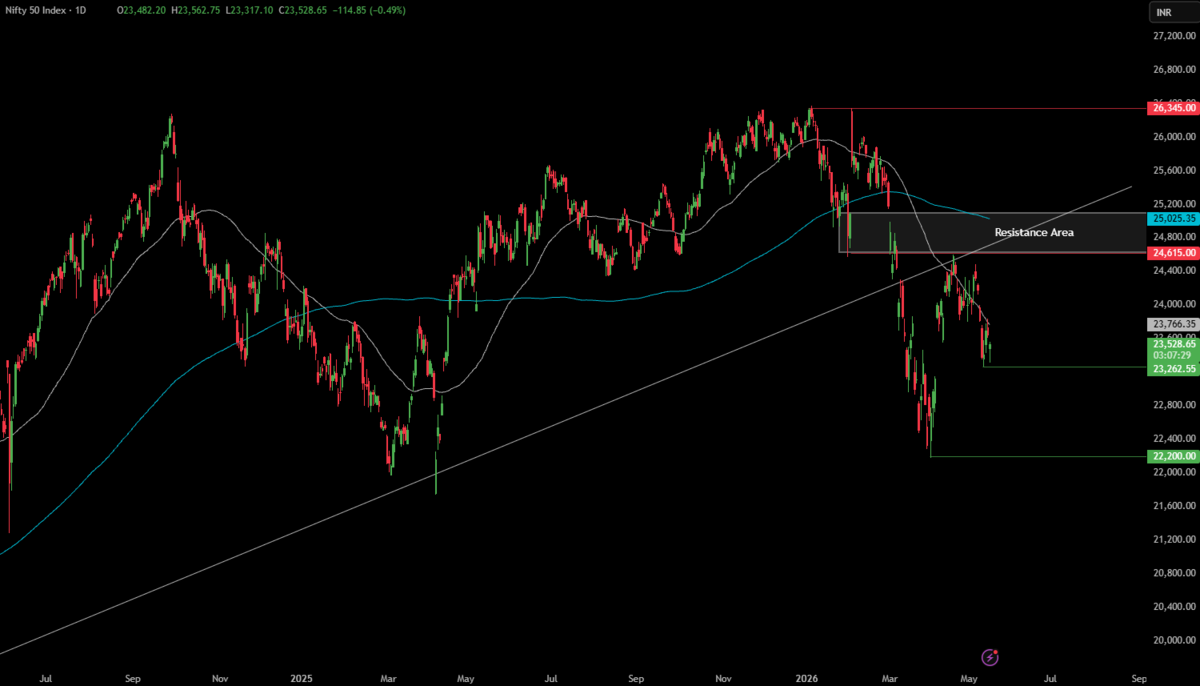
Foreign portfolio outflows continued, resulting in a 10.8% year-over-year decline in the rupee. Strong corporate earnings from major companies offered some support, but the Nifty 50 remains vulnerable to further rupee depreciation and FII selling unless oil prices ease.
Week Ahead (US & Asia)
FOMC April Minutes (Wednesday)
The minutes from the April 29 FOMC meeting will be released on Wednesday, May 20, and are considered among the most significant transcripts of the year. This meeting was Jerome Powell’s last as Chair and resulted in an 8-4 vote, the highest number of dissents on a rate decision since October 1992. Governor Miran supported a 25-basis-point cut, while Hammack, Kashkari, and Logan opposed the easing bias in the statement.
The minutes are released amid a changed macroeconomic environment. April CPI rose to 3.8% year-over-year, the highest since May 2023, and PPI recorded its largest monthly increase since early 2022. CME FedWatch now assigns almost no probability to a 2026 rate cut, with traders pricing about a 50% chance of a December hike. Kevin Warsh’s hawkish confirmation has further shifted expectations.
Markets will review the minutes for the extent of disagreement on forward guidance, indications of openness to rate hikes, and any committee discussion of inflation resulting from the war in Iran. Warsh’s first FOMC meeting on June 16-17 will take place against this backdrop of division.
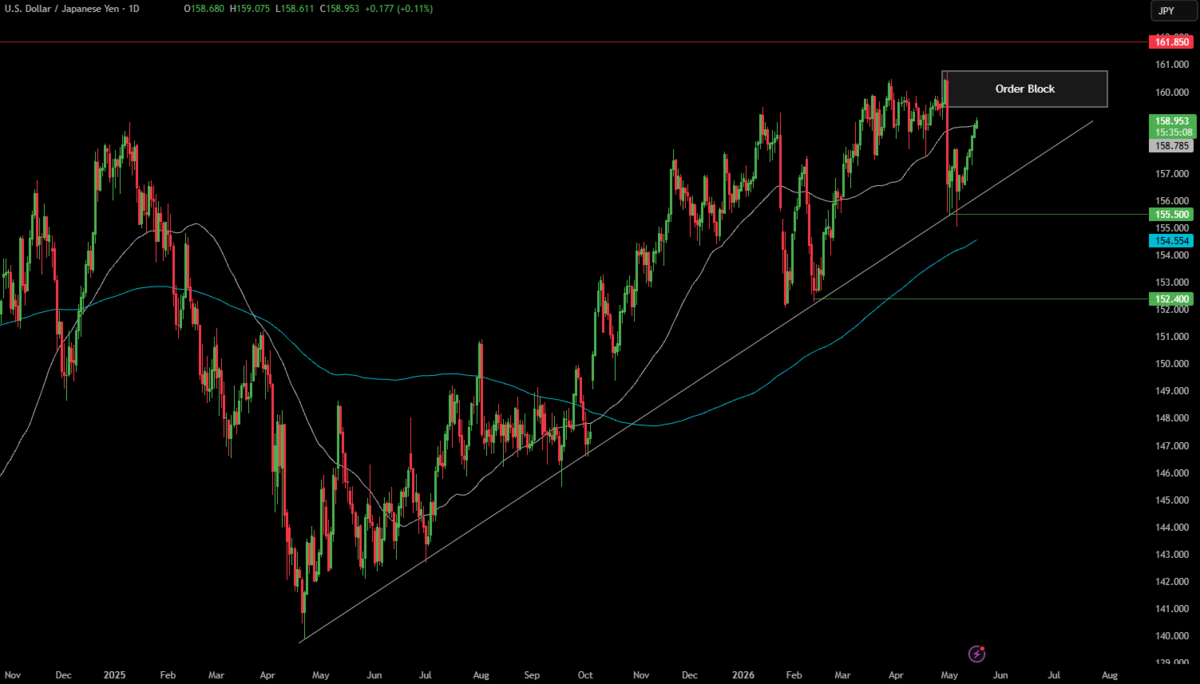
A hawkish set of minutes could push USD/JPY toward the 160 OB, especially given the yen’s recent weakness amid suspected BoJ inaction. Conversely, unexpectedly dovish commentary or signs of pre-Warsh consensus would likely weigh on the pair.
India: RBI rupee defense & FII flows (Tuesday-Friday)
The Indian rupee begins the week at record lows, with USD/INR reaching 96.0188 on Friday morning, its first time above 96. The Reserve Bank of India is expected to remain active, with state-run banks reportedly selling dollars recently to limit disorderly depreciation rather than reverse the overall trend.
Several policy measures have been implemented: customs duty on gold and silver imports was increased from 6% to 15% on Tuesday to reduce non-essential dollar demand, and Prime Minister Modi publicly urged conservation of foreign exchange. India’s reserves remain robust at approximately $690 billion, providing the RBI with significant capacity for further intervention if needed.
Foreign portfolio investor flows will be a key factor. Significant FII selling in equity and debt markets, along with high oil import costs, has driven dollar shortages. Analysts expect USD/INR to trade between 94 and 98 in the near term, with the trajectory primarily influenced by crude prices and developments in West Asia rather than domestic policy alone.
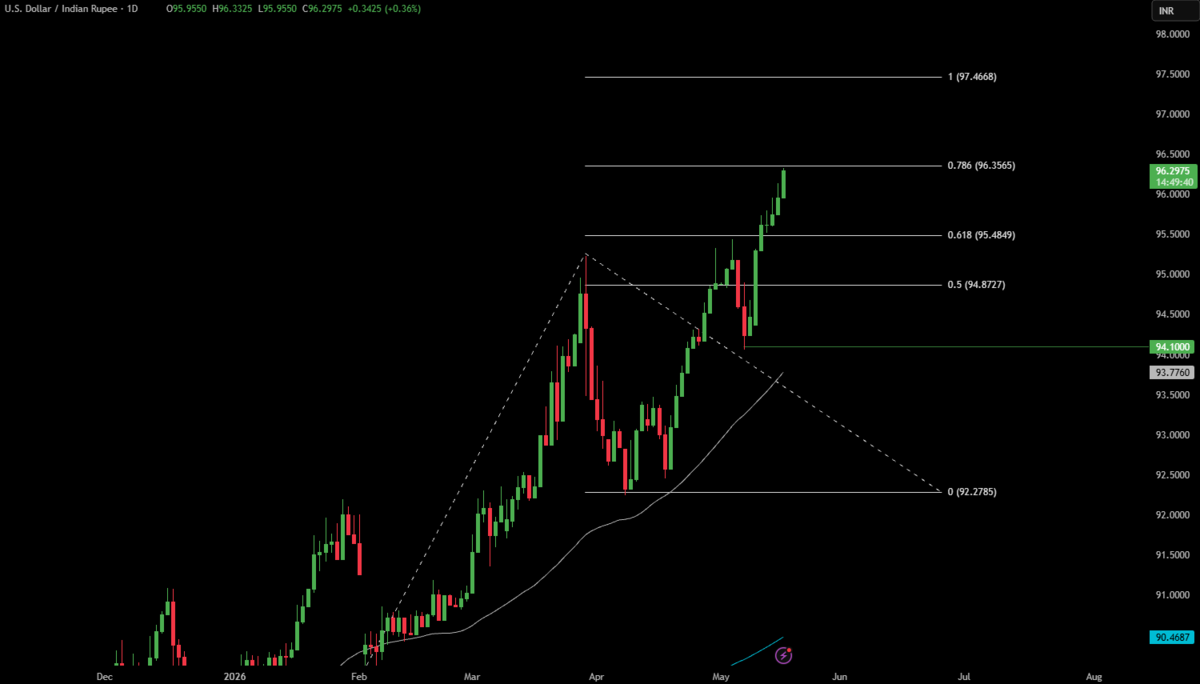
Continued RBI intervention and any relief in oil prices could bring USD/INR back toward 95. However, worsening tensions in the Strait of Hormuz or further FII outflows could push the pair toward 97, testing the RBI’s resolve to defend the currency.
Pakistan: IMF mission & FY27 budget preparations (All week)
The IMF mission in Islamabad will continue direct negotiations this week to finalize Pakistan’s FY2026-27 federal budget, expected to be presented to parliament in the first week of June. The government must obtain IMF approval for the budget framework before submission, making these talks the primary focus of policy discussions.
The Fund has established 11 new structural benchmarks, including a primary surplus target of 2% of GDP by June 2026, semi-annual gas tariff notifications starting July 1, an annual electricity tariff adjustment by January 2027, and a roadmap from the State Bank of Pakistan for the gradual liberalization of the foreign exchange regime by March 2027. Reports also suggest the government plans to increase defense spending by PKR 100 billion in the new budget.
Foreign exchange reserves data for the week ending May 15 will be released on Thursday and will include the $1.3 billion IMF tranche received on May 12. The SBP’s total liquid foreign exchange reserves were $21.34 billion at the previous reading, with SBP-held reserves at $15.87 billion, covering approximately 2.5-3 months of imports.
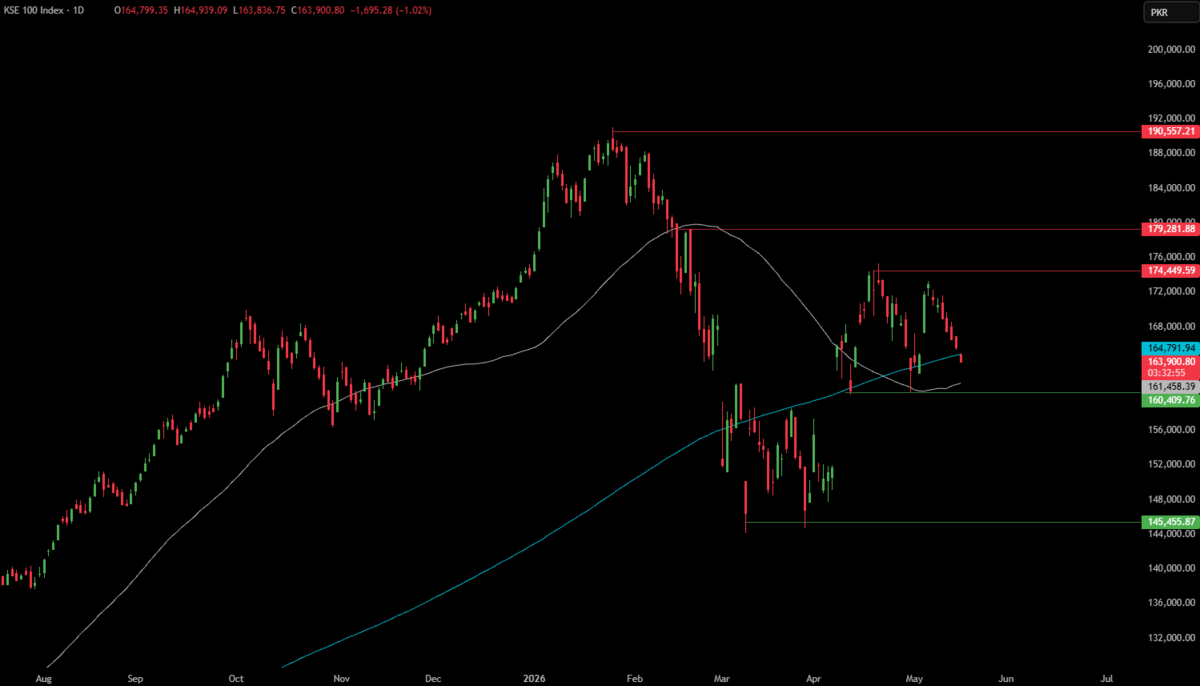
KSE-100 will respond to budget signals and IMF discussions. Any indications of fiscal slippage or resistance to benchmarks may weigh on sentiment, while a positive outcome from IMF talks and stronger reserves data could support the index above 168,000.
Bottom line
The balance between growth and inflation has shifted decisively toward inflation following the April CPI and PPI data, presenting the new Warsh-led Fed with a more challenging environment than markets anticipated. The FOMC minutes on Wednesday will set the immediate tone for USD/JPY and gold, while NVIDIA’s earnings that evening will test whether the US 100’s valuations can withstand the repricing of rate-cut expectations. India’s rupee defense is entering a critical phase, with USD/INR above 96 and limited options for the RBI. Pakistan’s IMF negotiations and budget signals will guide the KSE-100, while UK Brent remains closely linked to developments in Iran and to an oil market the IEA warns could remain undersupplied through October. The risk this week is that hawkish FOMC minutes, disappointing NVIDIA results, and ongoing rupee pressure may reinforce each other, amplifying volatility across all four key markets.
Trading involves risk.
Author



 Risk Disclaimer
The content provided here is for informational purposes only. It is not intended as personal investment advice and does not constitute a solicitation or invitation to engage in any financial transactions, investments, or related activities. Past performance is not a reliable indicator of future results.
The financial products offered by the Company are complex and come with a high risk of losing money rapidly due to leverage. These products may not be suitable for all investors. Before engaging, you should consider whether you understand how these leveraged products work and whether you can afford the high risk of losing your money.
The Company does not accept clients from the Restricted Jurisdictions as indicated in our website/ T&C. Some services or products may not be available in your jurisdiction.
The applicable legal entity and its respective products and services depend on the client’s country of residence and the entity with which the client has established a contractual relationship during registration.