7 min read
Weekly recap:
US stocks ended lower after a volatile week shaped by geopolitical tensions, wild swings in oil prices, persistent inflation worries, and a hawkish interpretation of the FOMC meeting.
The Dow Jones fell 2.1% while the Nasdaq tumbled 2.07% and the S&P500 fell 1.3%.
Treasury yields moved higher, and the USD fell 1%.
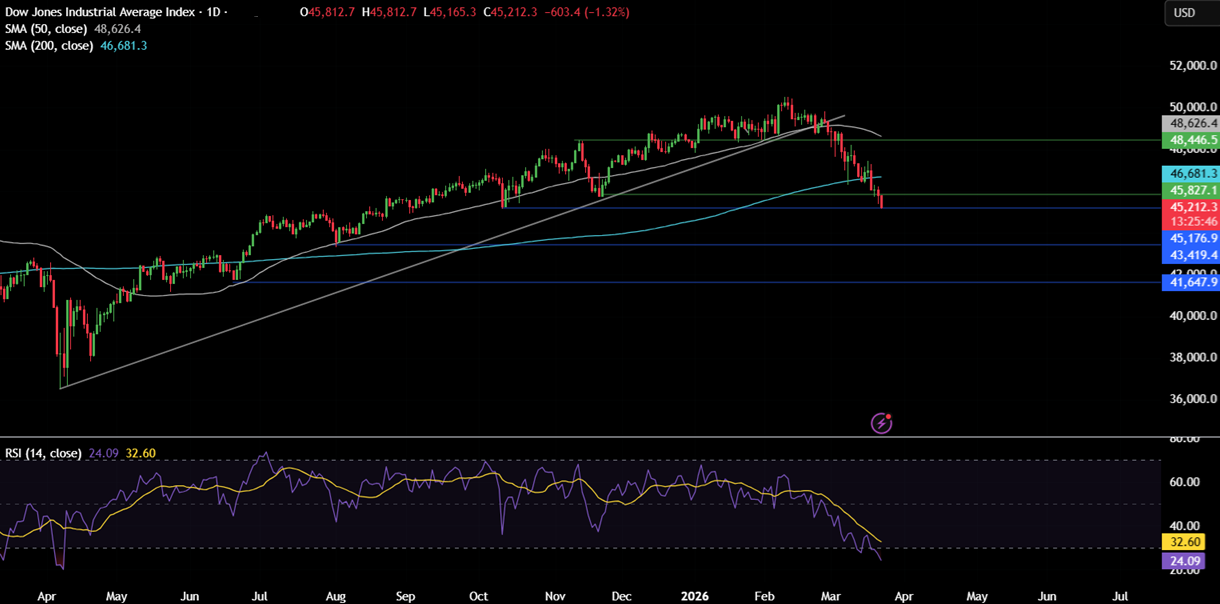
The Federal Reserve left interest rates unchanged at 3.5% to 3.75%, as expected. However, the central bank acknowledged that the Iran conflict has complicated policymaking, lifting inflation worries. While the Fed still signals at least one rate cut this year, investors are less convinced, pushing expectations for easing out towards 2027.
Other major central banks — including the ECB, BoE, and BoJ — also held rates steady. However, there was a notably more hawkish shift from the BoE and BoJ, strengthening both sterling and the Japanese yen. European markets fell sharply, with the European STOXX 600 slumping 3.7%.
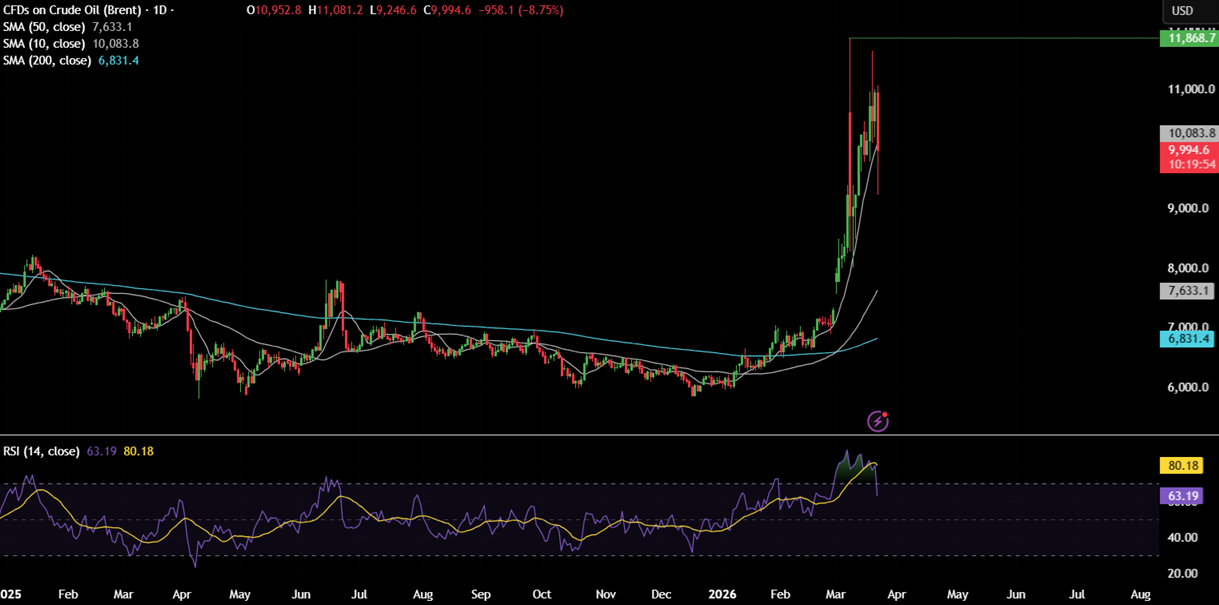
Oil prices have been highly volatile. Brent rose to a peak of $119 per barrel before easing back to settle at $106, up 7.5% across the week, putting gains at 54% this month. Meanwhile, WTI fell -0.4%, highlighting greater disruption to European energy markets than to US markets.
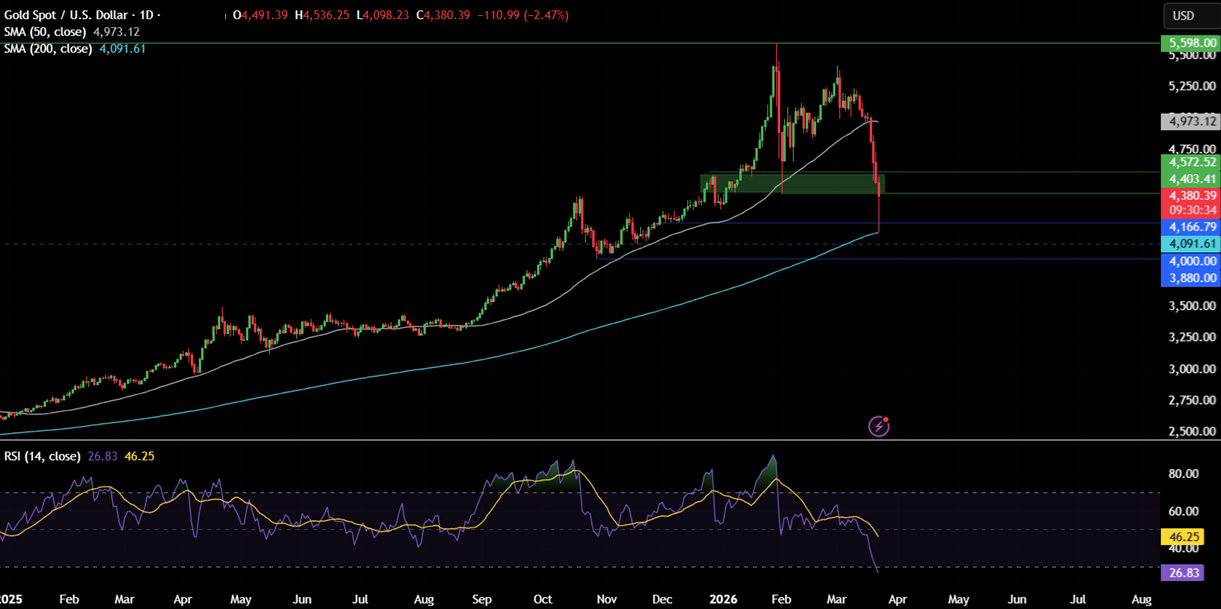
Gold fell 10.5% in its largest weekly decline since 1983, pulled lower by expectations that the Fed will keep rates higher for longer and by rising treasury yields. Gold is experiencing high levels of volatility at the start of the week.
Geopolitical tensions
Middle East tensions escalated last week. Iran attacked energy facilities across the region following Israel’s strike on its gas field. Over the weekend, President Trump gave Iran an ultimatum to reopen the Strait of Hormuz within 48 hours, or the US will obliterate Iranian power plants. Tehran responded with threats to destroy energy and data centre infrastructure in the region. This showed that tensions escalated.
However, Trump announced on Monday that he is postponing attacks on Iran and hailed progress in talks with Iran at the weekend, sending risk sentiment sharply higher. Oil prices are falling after strong gains earlier in the session.
The market will want to see comments from Iran supporting this idea that talks will progress, and the Strait of Hormuz will reopen, for risk sentiment to continue improving.
Japan CPI (Monday)
Japan’s CPI data follows the Bank of Japan’s decision to leave interest rates unchanged at 0.75% last week, while maintaining a hawkish tone.
Two board members voted for a rate hike to 1%, reflecting concerns about inflation, and BoJ Governor Ueda said he expected a strong outcome from the coming Spring wage negotiations, adding to the hawkish bias that helped boost the yen.
In January, headline and core CPI slowed to 1.5% and 2.0% respectively (from 2.1% and 2.4%), suggesting inflationary pressure from the previously weak yen has yet to materialise fully.
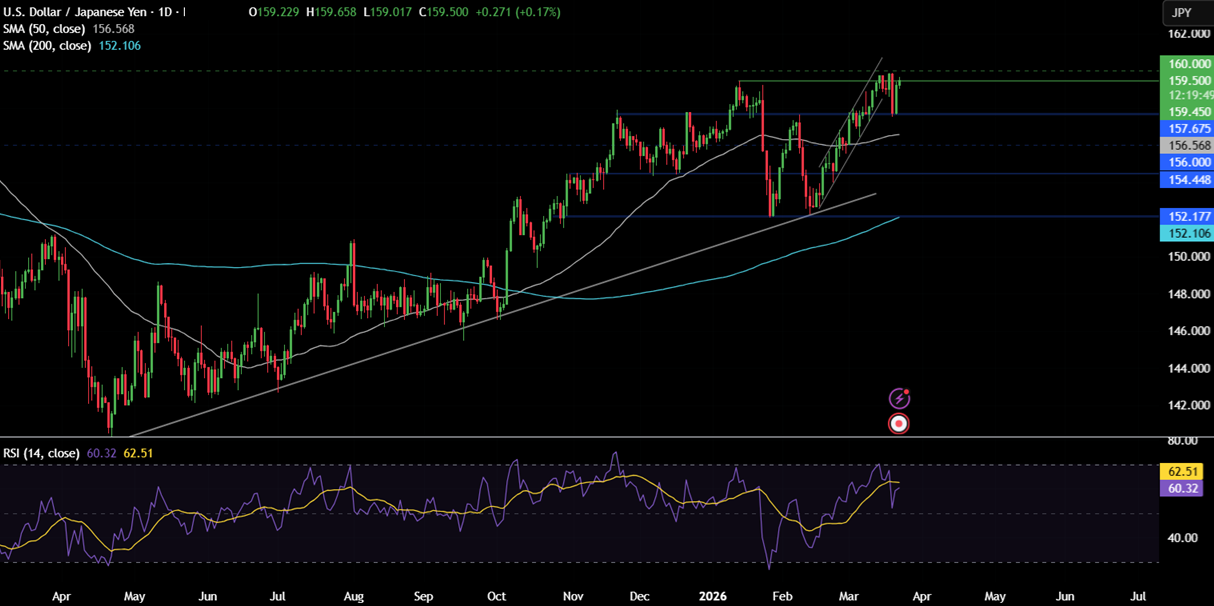
A further slowdown in February inflation could reduce urgency for an April rate hike and weigh on the yen. USD/JPY remains close to the 160.00 level, which is the perceived line in the sand for Japanese authorities to intervene.
Eurozone PMIs (Tuesday)
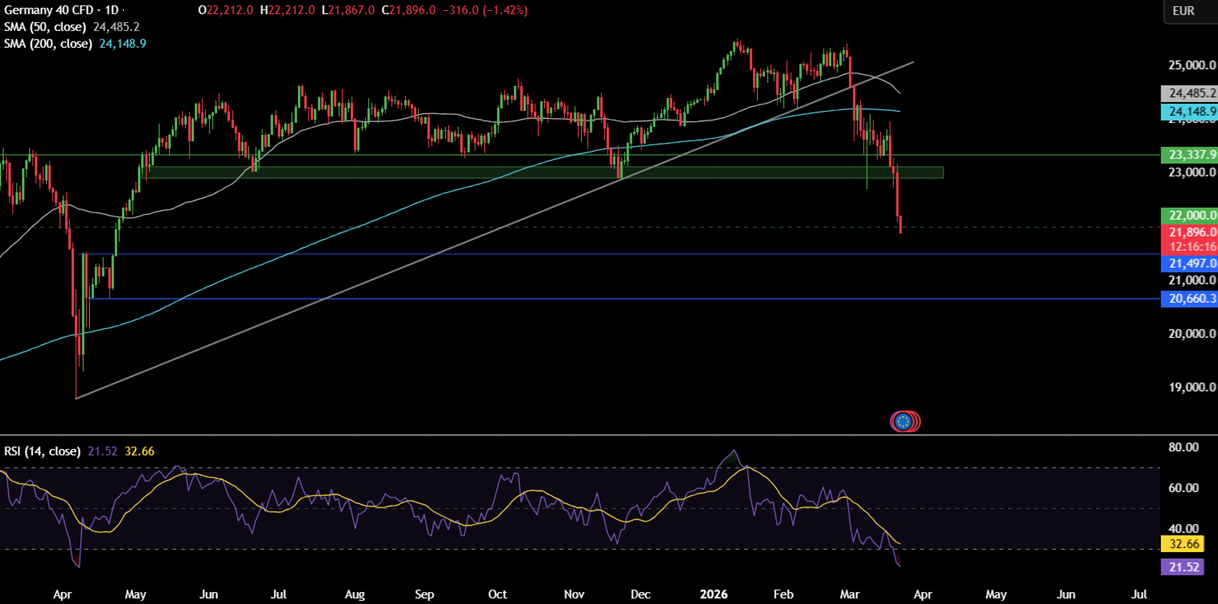
Flash PMI readings for March will provide an early indication of how rising oil prices are affecting global economic activity. These surveys are among the most timely indicators of economic momentum. The “prices paid” components will be especially important, offering insight into how quickly higher energy costs are being passed on to businesses.
Signs of rising input costs could reinforce inflation concerns. European equities may be particularly sensitive, with indices such as the DAX already under pressure. Weak data combined with rising inflation could weigh further on sentiment.
US PMIs (Tuesday)
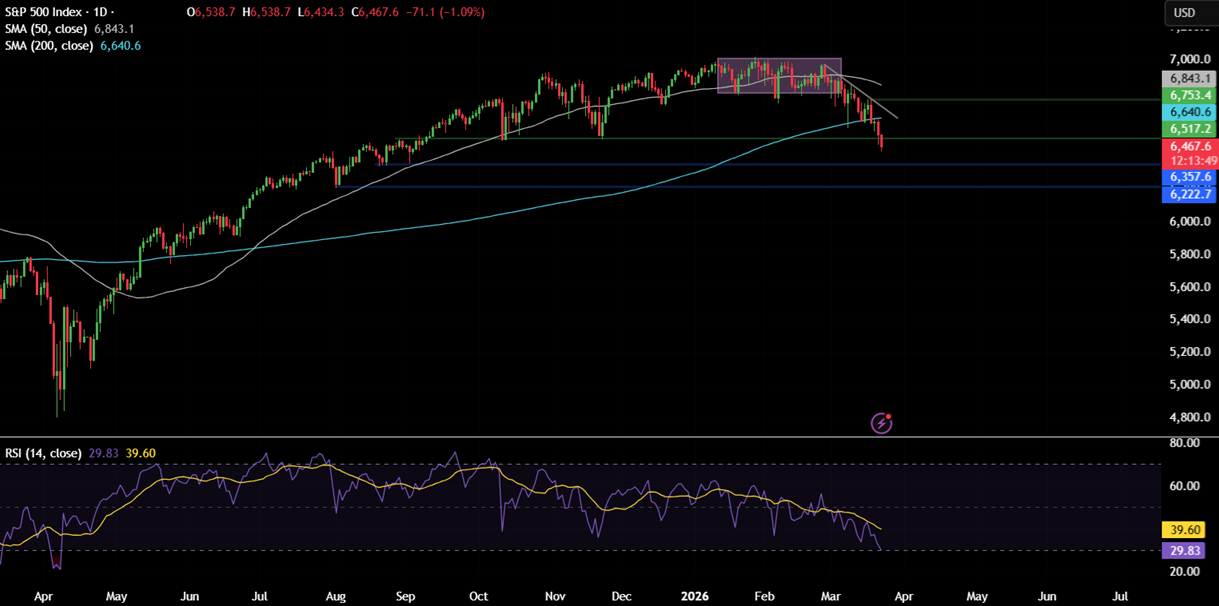
The Federal Reserve left rates unchanged last week but highlighted growing uncertainty due to the Middle East conflict. More policymakers now favour less easing than three months ago, with the number expecting no rate cuts this year rising to seven from four.
Markets have priced out rate cut expectations and are now pricing in 15 basis points of rate hikes. If PMI data shows that higher energy prices are hitting business activity, it would highlight the Fed’s dilemma: slowing growth alongside rising inflation. This would likely weigh further on U.S. stocks such as the S&P 500.
UK CPI (Wednesday)
UK CPI has been trending lower in recent months, slowing to 3% year-on-year in January — its lowest level since last March (2.6%). The Bank of England had expected inflation to return to its 2% target by April, although services inflation remains elevated at 4.4%.
The BoE refrained from cutting rates last week due to concerns over the Middle East conflict, rising energy prices, and the risk of more persistent inflation. This cautious stance comes despite unemployment being at a five-year high at 5.2%.
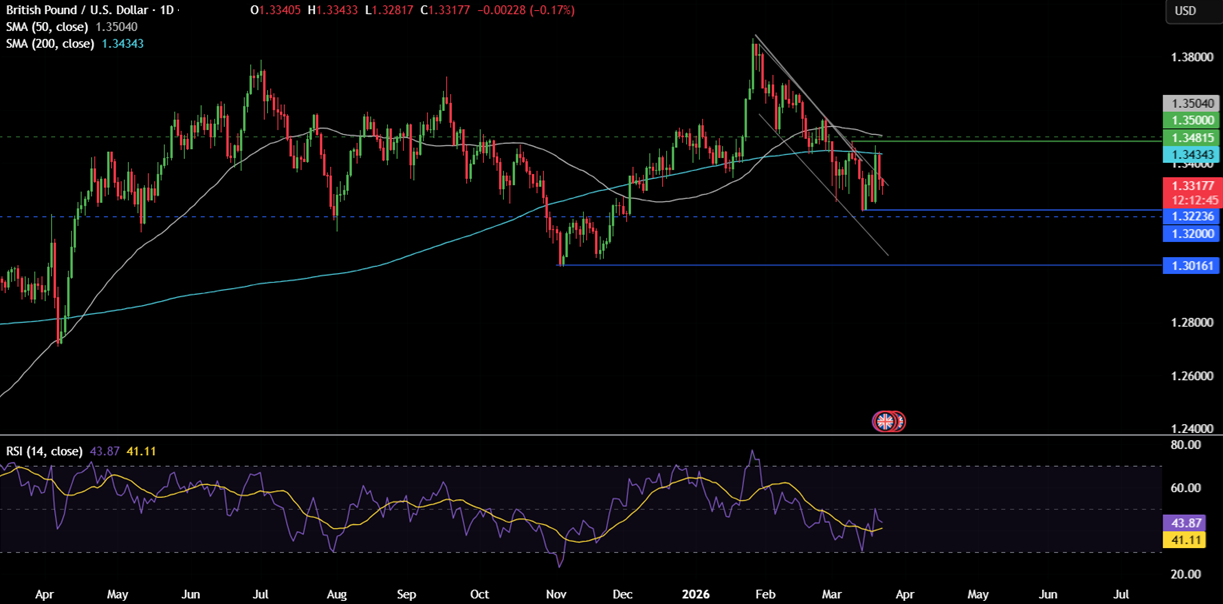
Market expectations have shifted significantly, with previous rate cut expectations replaced by pricing for potential rate hikes. Upcoming inflation data is expected to show CPI remaining above target, even before the recent rise in fuel prices.
A stronger-than-expected reading could support the pound and heighten rate-hike expectations, lifting GBP/USD. UK PMIs will also be released on Tuesday, and retail sales on Friday.
Australian CPI (Wednesday)
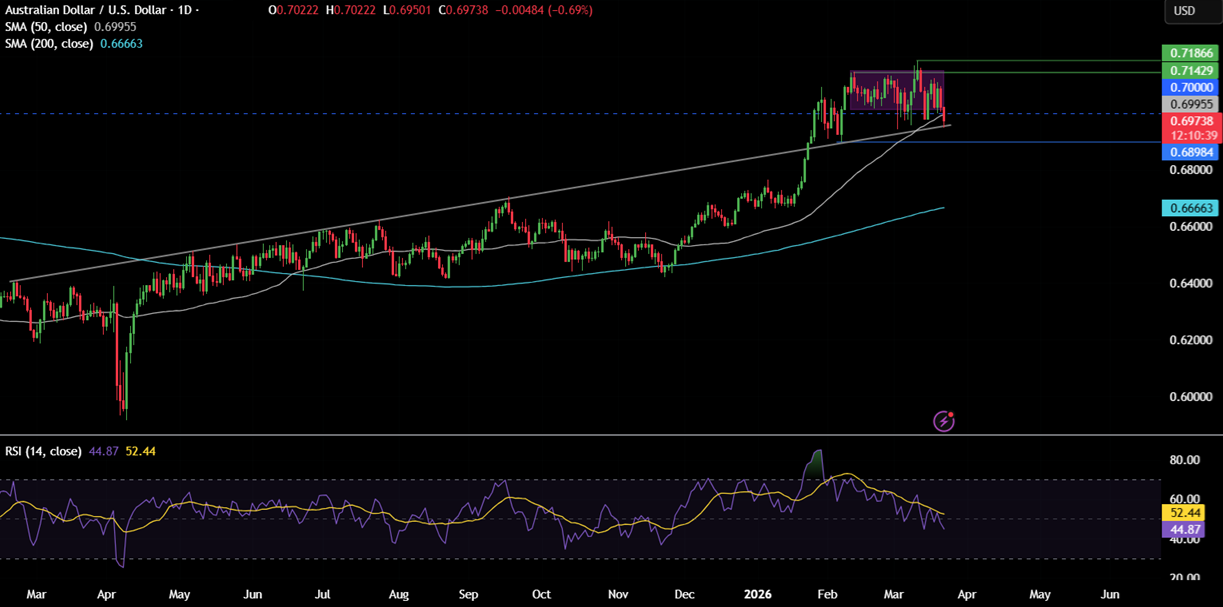
The Reserve Bank of Australia has been one of the few central banks to start tightening policy again. It raised rates in February, its first rate hike since November 2023, and carried out a back-to-back rate hike last week, citing persistent inflation risks and geopolitical uncertainty, while keeping the door open to further easing.
Markets are pricing in around a 60% probability of another 25-basis-point hike in May. This week’s CPI data will be closely watched — particularly if it shows sticky inflation, which would strengthen the case for further tightening and potentially boost AUD/USD.
Trading involves risk.
Author



 Risk Disclaimer
The content provided here is for informational purposes only. It is not intended as personal investment advice and does not constitute a solicitation or invitation to engage in any financial transactions, investments, or related activities. Past performance is not a reliable indicator of future results.
The financial products offered by the Company are complex and come with a high risk of losing money rapidly due to leverage. These products may not be suitable for all investors. Before engaging, you should consider whether you understand how these leveraged products work and whether you can afford the high risk of losing your money.
The Company does not accept clients from the Restricted Jurisdictions as indicated in our website/ T&C. Some services or products may not be available in your jurisdiction.
The applicable legal entity and its respective products and services depend on the client’s country of residence and the entity with which the client has established a contractual relationship during registration.