9 min read
 US stocks ended last week broadly higher, with both the S&P 500 and the Nasdaq reaching record highs. Positive economic data, continued strength in AI-related stocks, and upbeat corporate earnings helped offset ongoing uncertainty surrounding the US–Iran conflict. The USD rose after 3 weeks of declines.
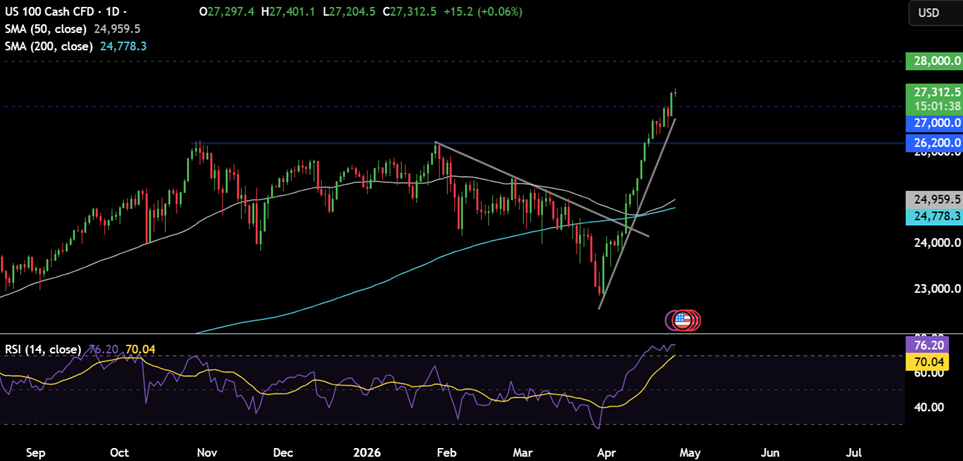
Earnings season has been a key focus, with around 20% of S&P 500 companies reporting so far. Of those, 84% have beaten estimates, with year-on-year earnings growth running at 15.1%, putting the index on track for a sixth consecutive quarter of double-digit growth.
On the data front, retail sales jumped 1.7% in March, marking the strongest monthly increase since 2023, driven largely by a 15% surge in gasoline sales.
Middle East tensions
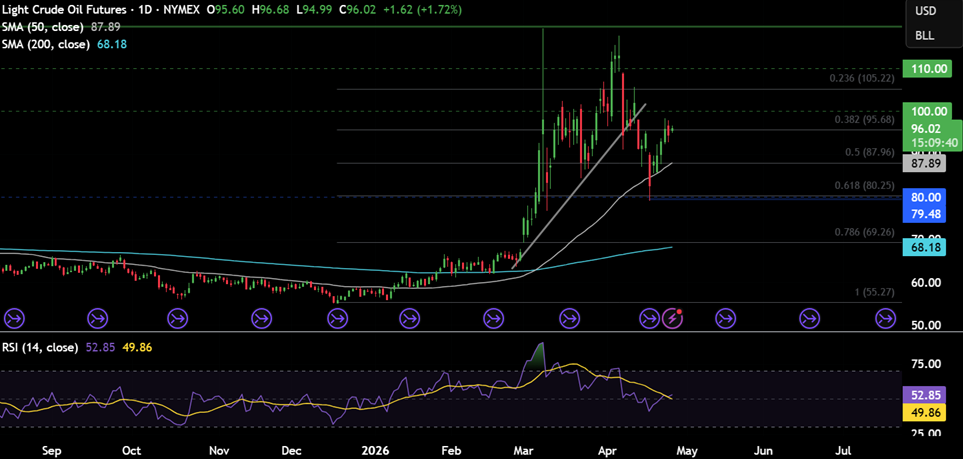
Efforts to restart peace talks have stalled after Trump cancelled a planned trip by senior officials, stating negotiations would not proceed while Iran continued to make threats. While the ceasefire has largely held since April, both sides continue to enforce blockades around the Strait of Hormuz, disrupting a key global energy route.
As a result, oil prices remain elevated above $105 per barrel at the start of the week. Developments around the Strait will remain a major focus for markets. The ongoing closure and a lack of progress towards a US-Iran deal could lift oil prices further. Should oil prices remain high, price pressures will rise, and growth forecasts will decline.
Tech earnings
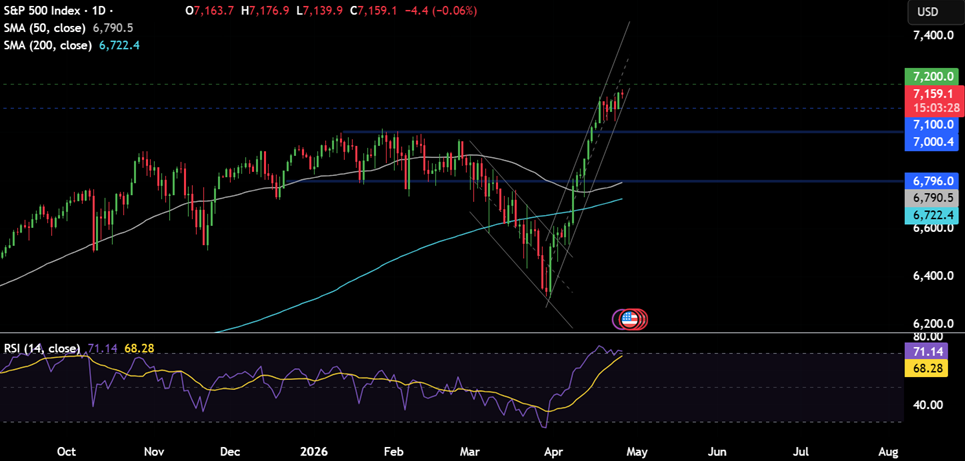
This week, the spotlight will be on earnings, with five of the “Magnificent Seven” set to report. This includes Microsoft, Alphabet, Amazon, and Meta Platforms on Wednesday, followed by Apple on Thursday.
These tech heavyweights have powered much of the US economy over the past decade, although they came under pressure in the first quarter before recovering in recent weeks. Magnificent Seven’s net income is expected to grow around 25% in 2026, compared to roughly 11% for the rest of the S&P 500, with this outperformance expected to extend into 2027.
The group has returned around 13% over the past month, outperforming the S&P 500’s 9% gain. These results will act as a key test of investor appetite for tech stocks since the Iran conflict began and will also provide insight into how companies are approaching large-scale AI spending plans.
BoJ rate decision (Tuesday)
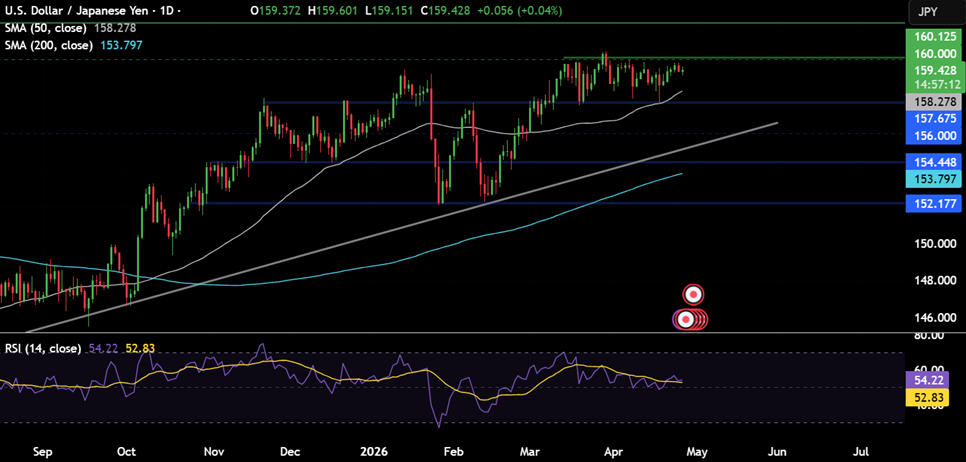
The Bank of Japan is expected to keep rates unchanged at around 0.75% at its upcoming meeting. Market expectations have shifted significantly, with a near-certainty of no change (99%), compared to earlier expectations of 70%. Recent comments from Governor Kazuo Ueda at the IMF meeting highlighted concerns about inflation driven by supply shocks, which are harder to address with monetary policy, leading the market to raise expectations of a hold.
Inflation rose to 1.5% year-on-year in March, with core inflation (excluding food and fuel) ticking up to 1.8%. The BoJ is expected to revise inflation forecasts higher and growth projections lower in its outlook report, potentially paving the way for a rate hike in June, giving the BoJ more time to assess the impact of the Iran war. A hawkish BoJ could lift the yen, pulling USD/JPY lower.
Australian CPI (Wednesday)
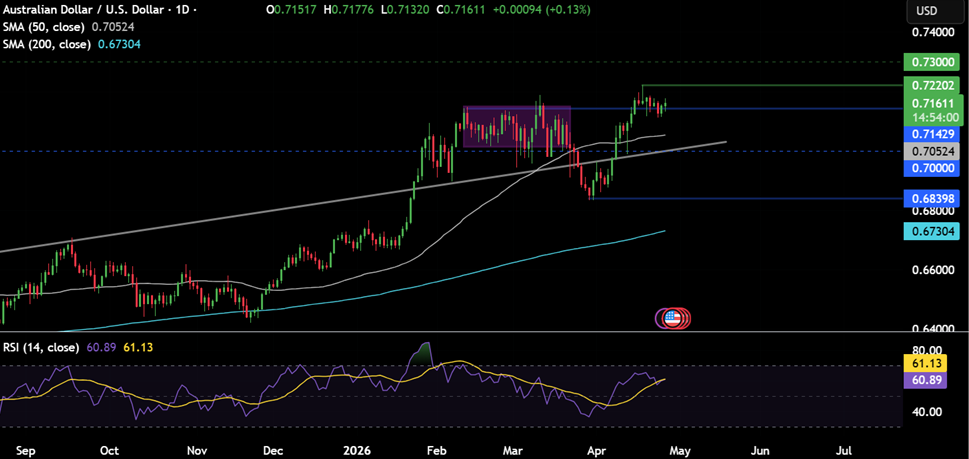
Australia’s Q1 CPI is expected to show that price pressures accelerated again, with headline inflation rising to around 4.6% year-on-year, up from 3.7% in February, driven in part by higher oil prices linked to Middle East tensions. Core CPI is expected to remain elevated, holding around 3.3%, keeping inflation above the Reserve Bank of Australia’s 2–3% target band. Hotter inflation could boost AUD/USD.
BoC rate decision (Wednesday)
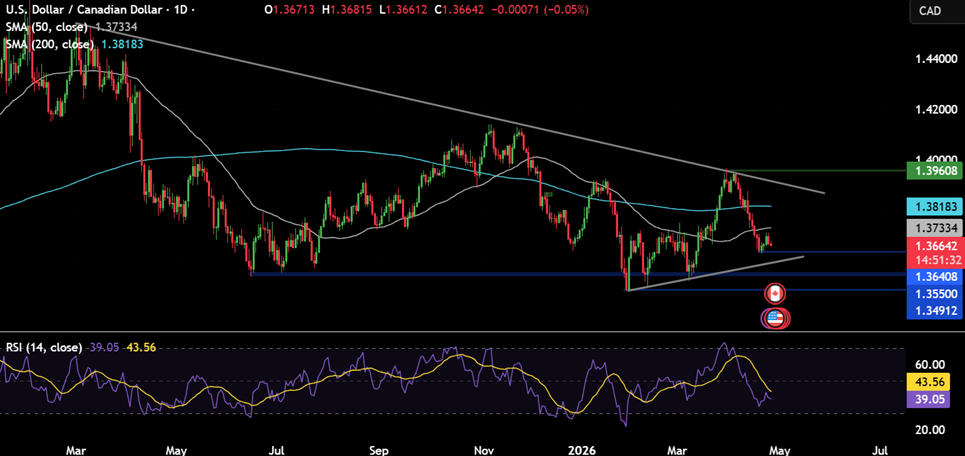
The Bank of Canada is expected to leave rates unchanged at 2.25% at its April meeting, likely maintaining this level for the remainder of 2026 amid ongoing concerns over trade with the US and the Iran war. Recent inflation data came in cooler than expected, and the labor market has slowed in recent months.
Higher energy prices are expected to lift inflation forecasts, while GDP projections may be revised lower. Policymakers are likely to emphasize two-sided risks stemming from the ongoing disruption in global energy markets. A cautious sounding BoC could drag on the loonie and boost USD/CAD.
FOMC decision (Wednesday)
The Federal Reserve is expected to leave rates unchanged at 3.50%–3.75%, where they have been since January, as policymakers assess the impact of the Iran conflict.
Markets had previously priced in two to three rate cuts this year, but rising oil prices and inflation risks have reduced expectations to roughly a 50% chance of one cut. Even some of the more dovish policymakers have acknowledged that inflation remains too high. The Fed will not release updated economic projections; these are not expected until June.
This meeting could be one of Powell’s final appearances as Chair, with Kevin Warsh undergoing the confirmation process as his potential successor. Concerns about central bank independence remain a key theme.
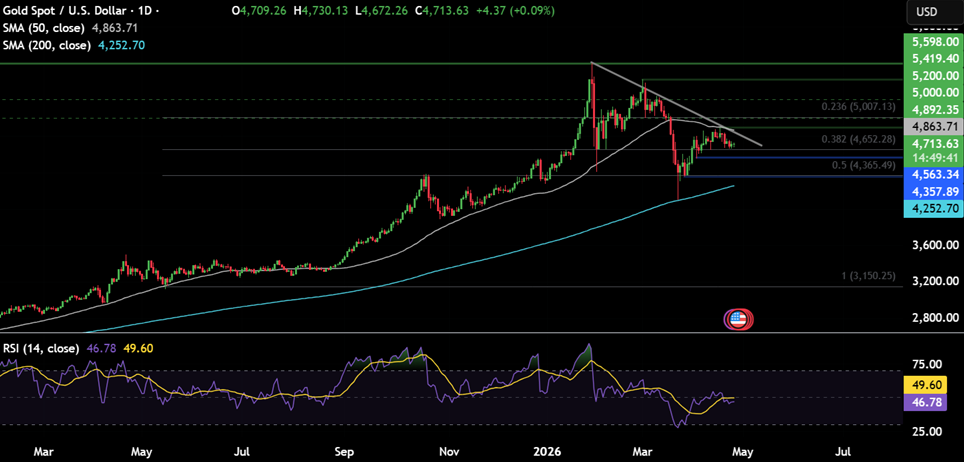
Should Powell highlight the resilience of the US economy, they could support the view that the Fed will keep rates high for longer, boosting the USD and pulling Gold lower.
BoE rate decision (Thursday)
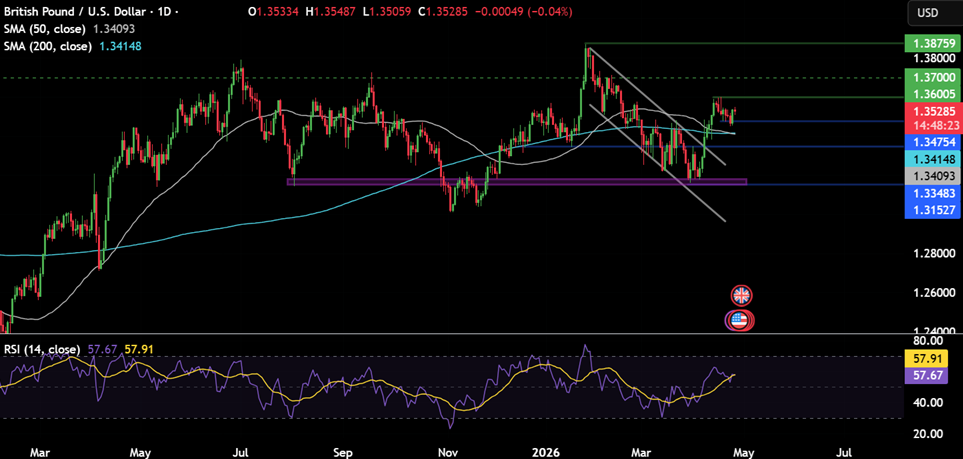
The Bank of England is expected to leave interest rates unchanged at 3.75% at its April meeting, with an 8–1 vote split anticipated.
This comes after markets had priced in two rate hikes this year before the start of the war. The market then repositioned to price in up to 4 rate hikes a month ago. However, expectations have eased following comments from Governor Andrew Bailey, who pushed back against overly hawkish pricing.
Bailey may not push back as strongly this time; uncertainty remains high. The longer the Strait of Hormuz stays closed, the greater the risk of rising inflation pressures. Recent data has been mixed, with higher fuel-driven inflation at 3.3%, PMIs showing inflationary pressures, but wage growth cooled, and PMIs pointed to slowing business activity.
The Bank is expected to signal inflation peaking near 4% later this year. The market is pricing in 59 basis points of tightening this year, up from 23 basis points last week.
ECB rate decision (Thursday)
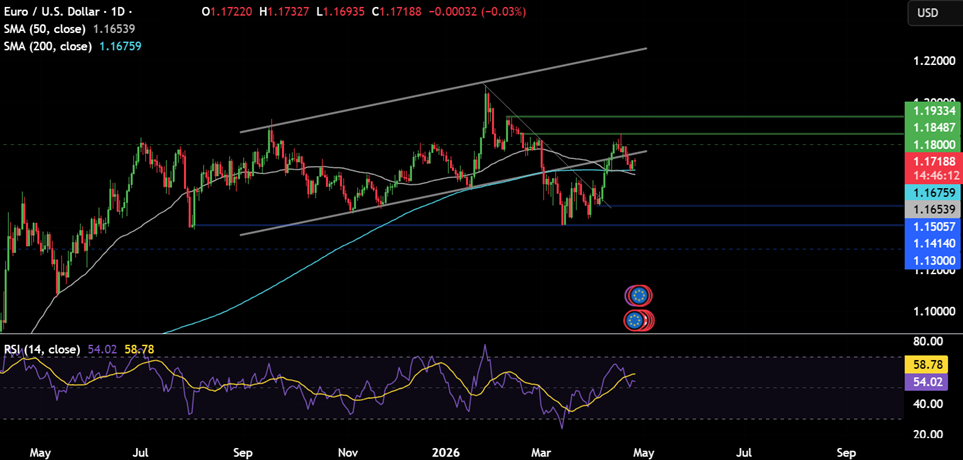
The ECB is also expected to leave rates unchanged on April 30 at a deposit rate of 2%. The market is assigning a 92% probability to this outcome. Policymakers have emphasized a lack of urgency, citing limited new data or signs of second-round inflation effects so far.
Markets are currently pricing in around 50 basis points of tightening by year-end. ECB President Christine Lagarde may hint at a possible summer rate hike, while maintaining a cautious tone given risks to both inflation and growth.
This could offer EUR/USD some support. However, the ECB is likely to avoid committing to action and to insist on remaining data-dependent. Upcoming data—including inflation and Q1 GDP—will be released ahead of the meeting, but are unlikely to change expectations surrounding the meeting.
US Q1 GDP & Core PCE (Thursday)
Attention will also be on US Core PCE inflation, following the recent rise in oil prices. Headline PCE is expected to remain firm in March, but the focus will be on core PCE, which excludes volatile components such as food and energy and provides a clearer view of underlying inflation trends.
Core PCE—the Federal Reserve’s preferred inflation gauge—is expected to rise 0.2% month-on-month, down from 0.4% in February, with the annual rate edging up to around 3.1% from 3.0%. A stronger-than-expected reading could support the US dollar against its major peers and weigh on equity markets.
GDP data is also due. According to the Federal Reserve Bank of Atlanta’s GDPNow model, preliminary Q1 GDP is expected to come in around 1.2%, up from the final Q4 growth of just 0.5%, which was impacted by the government shutdown, but down from the stronger 4.4% growth recorded in Q3.
Following the weakness seen in Q4, investors will be watching closely for signs that inflation pressures are gaining traction. However, it is worth noting that consumer spending appears to have held up through the quarter. A rebound in government spending after the Q4 shutdown is also expected to support growth.
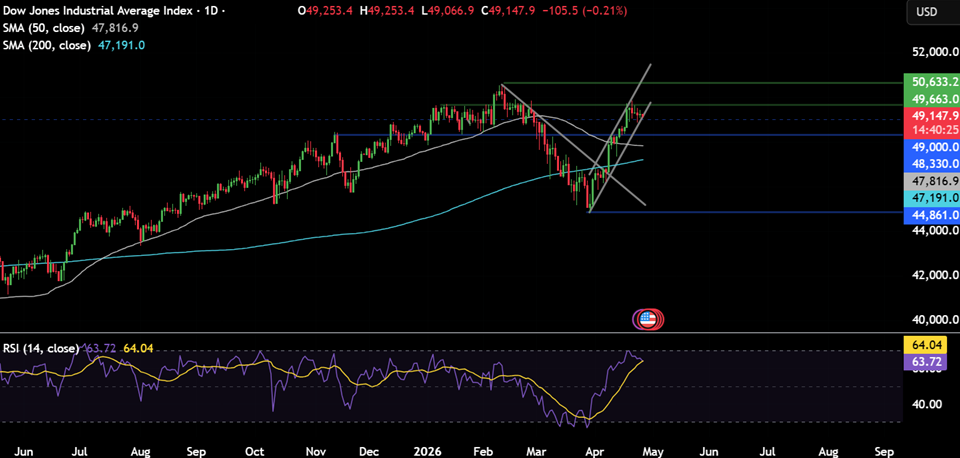
That said, signs of slowing growth combined with sticky inflation present a challenging backdrop for the Federal Reserve—the kind of environment that could keep rate cut expectations at bay and drag on stocks such as the Dow Jones.
Trading involves risk.
Author



 Risk Disclaimer
The content provided here is for informational purposes only. It is not intended as personal investment advice and does not constitute a solicitation or invitation to engage in any financial transactions, investments, or related activities. Past performance is not a reliable indicator of future results.
The financial products offered by the Company are complex and come with a high risk of losing money rapidly due to leverage. These products may not be suitable for all investors. Before engaging, you should consider whether you understand how these leveraged products work and whether you can afford the high risk of losing your money.
The Company does not accept clients from the Restricted Jurisdictions as indicated in our website/ T&C. Some services or products may not be available in your jurisdiction.
The applicable legal entity and its respective products and services depend on the client’s country of residence and the entity with which the client has established a contractual relationship during registration.