10 min read
Weekly recap:
US global stocks recap
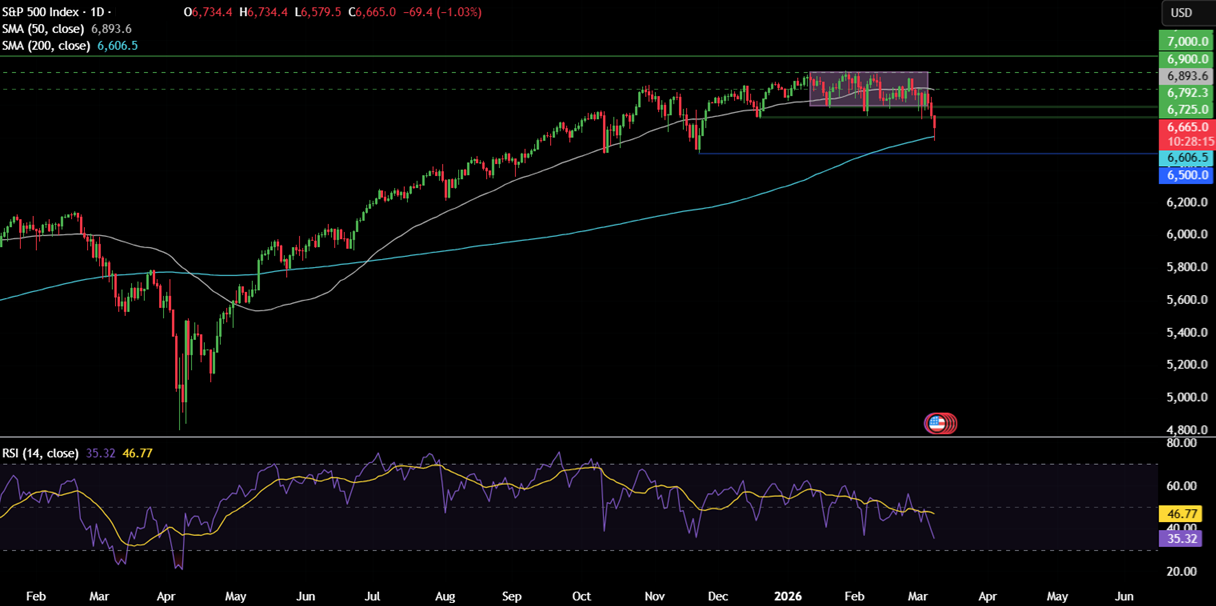
US major stock indices finished a volatile week in the red as investors digested the escalating conflict in the Middle East in the wake of US and Israeli military strikes on Iran, lifting energy-driven inflation risks as well as some economic data. While the Dow Jones underperformed, tech stocks held up best, but the Nasdaq still declined 1.2%.
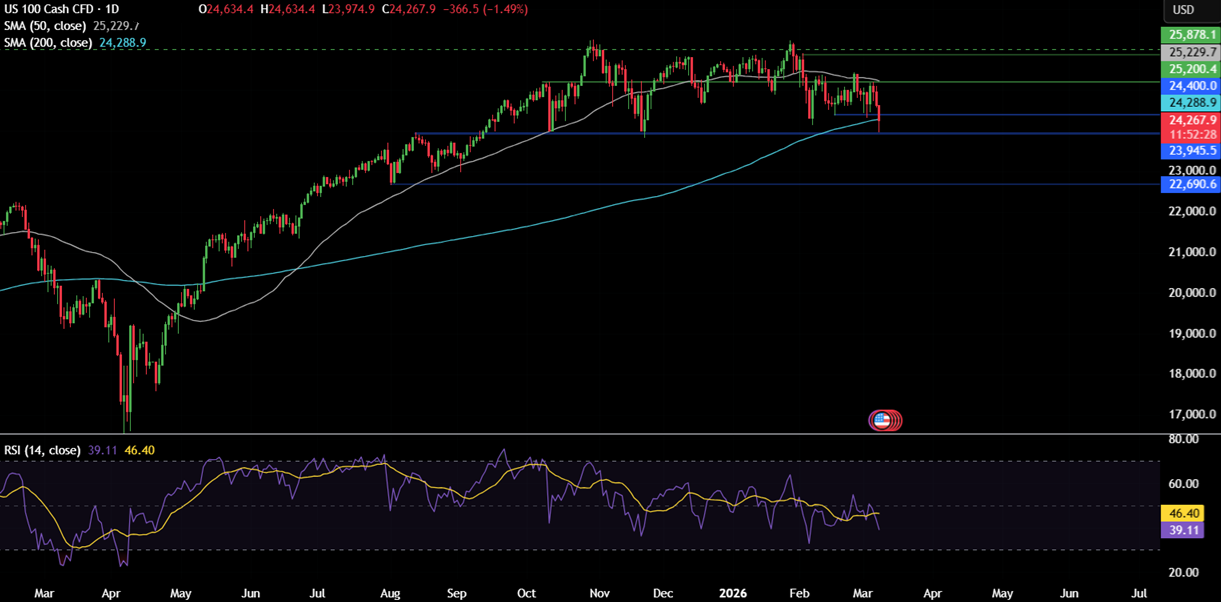
Oil prices soared last week on concerns about potential supply disruptions and broader geopolitical spillovers. Treasury yields rose as investors reassessed inflation risks and the outlook for Federal Reserve policy.
Major US data/themes
On the data front, the US non-farm payroll report showed the US economy lost 92,000 jobs, and unemployment unexpectedly rose to 4.4%. The weaker-than-expected report could complicate decision-making at the Federal Reserve as policymakers balance signs of labour market cooling against potential rising inflation.
Gold moves
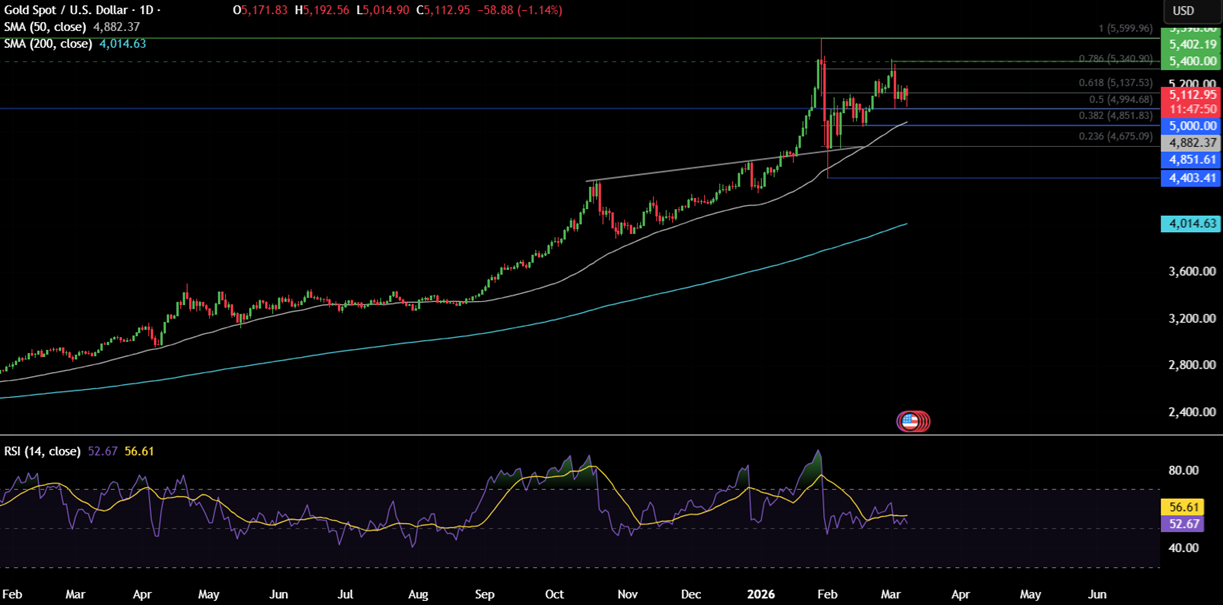
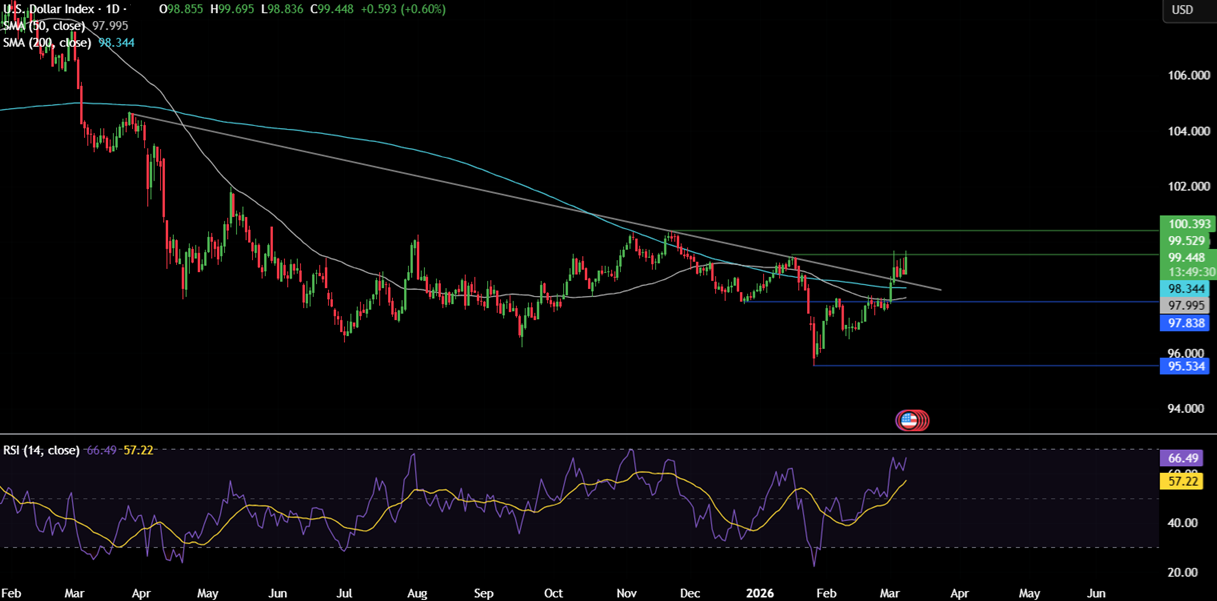
While Gold fell 2% last week and is falling a further 1% at the start of the new week, the precious metal eased back from its recent high of 5410 due to USD strength. The USD is proving to be the safe haven of choice, marking a distinct turnaround from the “sell America” trade.
The stronger USD overshadows Gold’s safe-haven status. Looking ahead, the precious metal could continue to struggle if the USD keeps rising. However, losses will likely be capped by safe-haven flows and concerns about higher inflation amid rising energy prices. US inflation data could impact Gold.
Oil moves
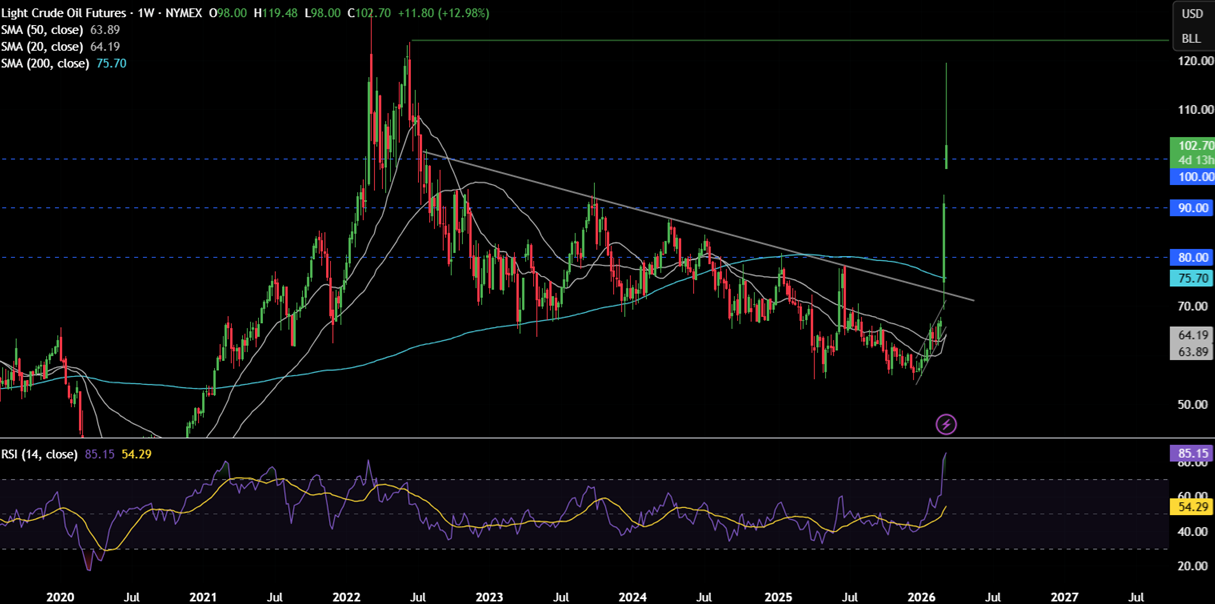
Oil prices soared by 35% last week, marking the largest weekly jump on record. This increase has continued at the start of the week with WTI briefly climbing above $119 per barrel, a level last seen in 2022. The surge in oil prices comes as the Strait of Hormuz remains closed, with no ships passing through, as they can’t get insured after warnings from Iran not to transit.
Key oil sites in the Middle East have also been targeted by strikes, raising worries about supply. With no oil exports leaving the Middle East, oil storage in the region is filling up. It will take approximately 14 days from the start of the war for oil storage to fill up, after which the oil producers in the region will start to reduce supply considerably. This significantly changes the position, as oil refiners can’t just be switched on again, meaning oil prices would likely remain higher for longer.
Indian markets
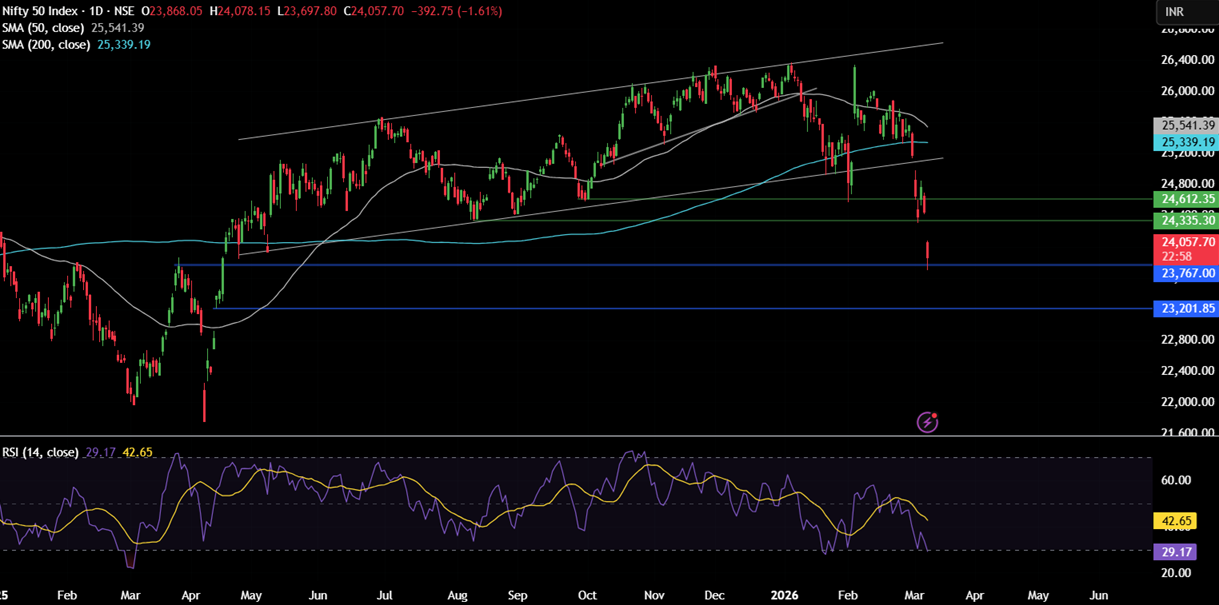
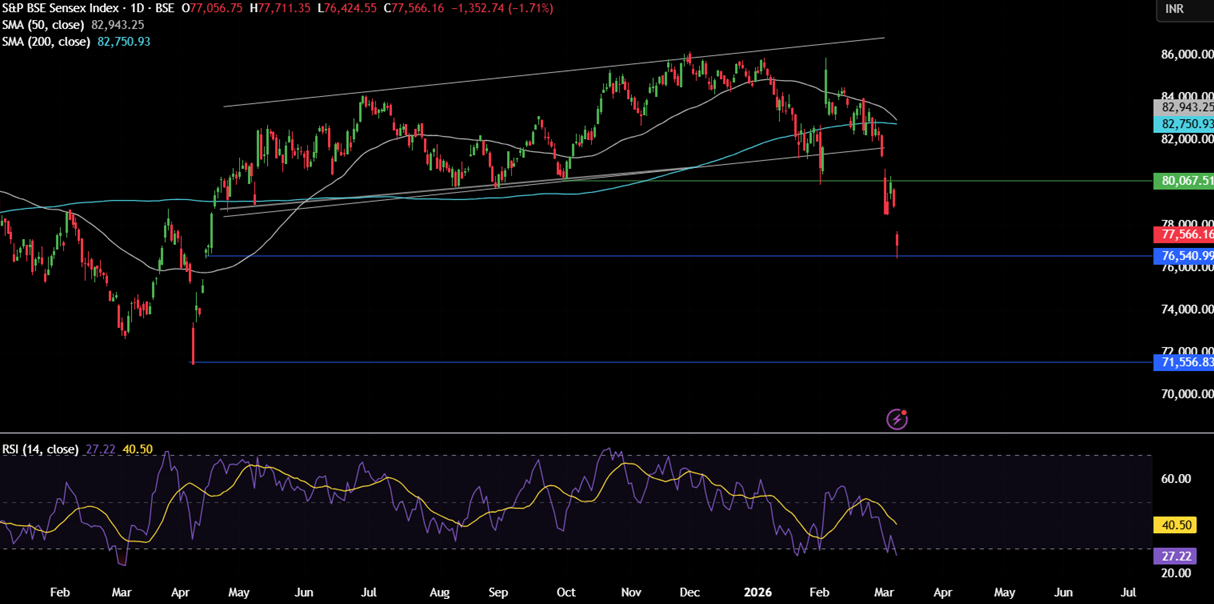
Indian equities ended last week on a volatile note, with benchmark indices coming under pressure amid rising crude oil prices and cautious global sentiment. The Nifty 50 ended the week at 24,450, down 2.8%, while the Sensex dropped 2.9% to 78,918, reflecting a broad risk-off mood across the market. Defence stocks performed well while banks and real estate declined the most.
Foreign institutional investors (FIIs) have begun March on a weak note, offloading equities worth ₹15,800. This surpassed the total outflows recorded in February and extends a streak of net selling to 9 consecutive months.
Meanwhile, domestic institutional investors (DIIs) continue to support the market as net buyers.
India’s GDP growth was revised higher using the new GDP series (with base year 2022-23), with FY26 projected at 7.6%, up from earlier estimates of 7.4% using the previous method. The updated data also showed that the economy expanded by 7.8% in the October to December period, amid resilience in manufacturing and services despite global uncertainties.
Key Indian market drivers will be the oil price, given that India imports over 80% of its oil requirements; rising oil prices will remain a key concern. US and Indian inflation data could also influence sentiment and the market, though it will play second fiddle to geopolitical developments.
USD/INR rose 0.94% last week, settling on Friday at 91.93, amid Rupee weakness for a third straight week, as the Indian stock market failed to attract foreign investors.
Pakistan markets
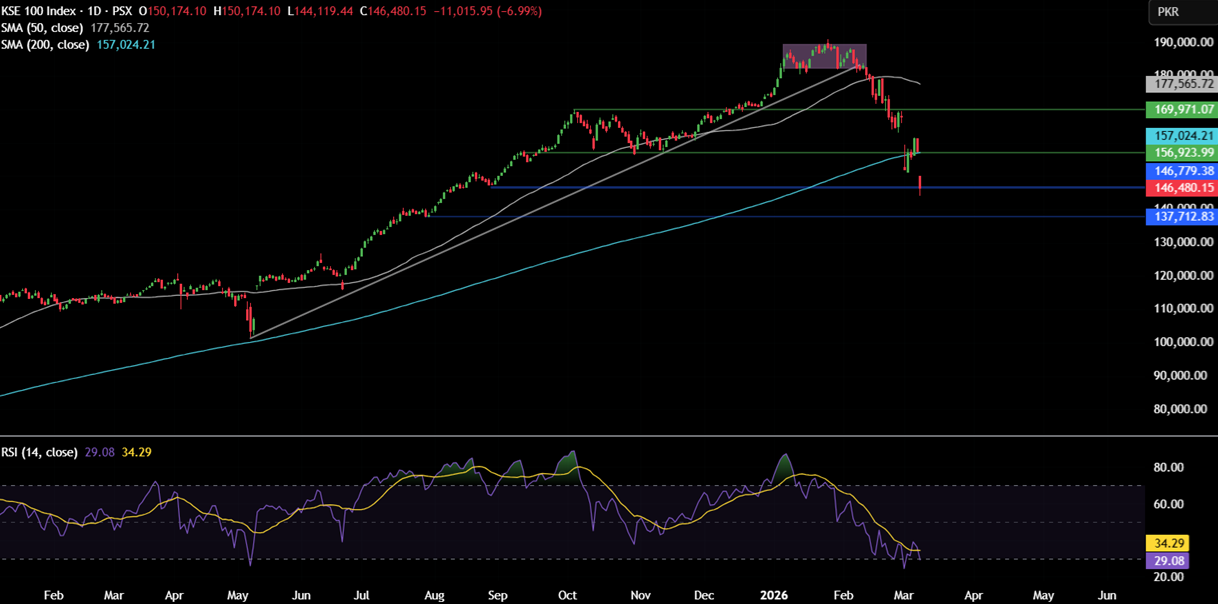
The Pakistan Stock Exchange recorded declines during the last week amid geopolitical tensions following the outbreak of conflict in the Middle East. Last Monday, the KSE 100 fell almost 10% in a single session, the largest ever decline, as investors panicked and hurried to leave the market amid fears of prolonged war in the Gulf. While the index recovered slightly, the KSE 100 declined 6.3% across the week, closing at 157,496.
Foreign investors remained net sellers, offloading equities worth $25.5 million; in contrast, domestic institutions provided support, purchasing $36 million worth across the week.
On the data front, inflation rose 6.98% year-on-year in February, up from 5.8% in January, marking the highest level since October 2024.
Looking ahead, the market is falling further as investors respond to developments in the Middle East and to security concerns on the Pakistan-Afghan border. Geopolitical tensions will be the main market drivers after the State Bank of Pakistan left interest rates unchanged at 10.5% on Monday.
USD/PKR was broadly unchanged at -0.06% last week, settling at 279.37, as the State Bank of Pakistan saw reserves rise marginally to $16.3 billion from $16.2 billion.
Week ahead (US & Asia)
Geopolitical tensions
The Middle East conflict was the main driver of market moves last week, and with no signs of de-escalation, the conflict will remain the main focus for the market this week. Oil prices surged by the most on record last week and have jumped 50% since the start of the conflict. Rising oil prices have investors fretting about the impact of global inflation, lifting treasury yields.
Meanwhile, the safe-haven of choice remains the US dollar, while Gold struggles amid the dollar’s strength after a year of impressive gains. The Strait of Hormuz remains a closed military zone, impacting not only oil but also fertiliser, which will likely impact food prices.
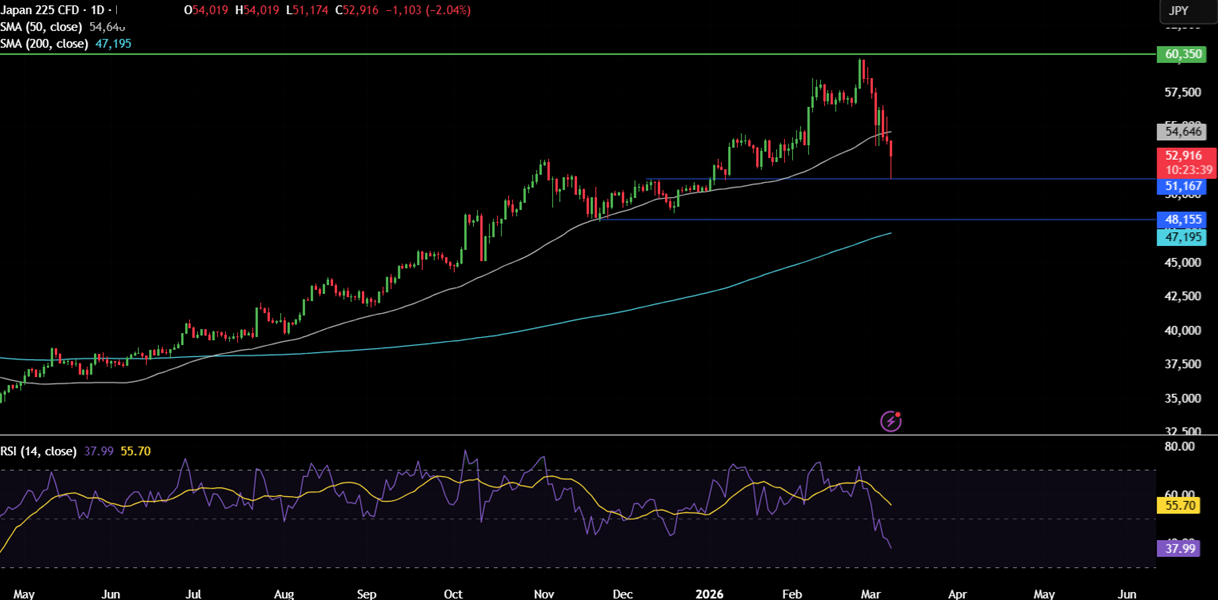
Any sense of de-escalation could see these price moves unwind; however, should the Strait remain closed for two weeks, oil storage in the Middle East will be full, and oil-producing countries will start to turn off production, creating a more serious structural shift in oil prices. European and Asian stocks, such as the Nikkei, are being hit harder given their reliance on imported energy.
China trade balance (Tuesday)
China trade data for the first two months of the year will be released on Wednesday, in line with standard practice to smooth Lunar New Year distortions. After posting a $1.2 trillion surplus in 2025, markets will be watching closely to see whether export demand can hold up amid intensifying global trade tensions.
Whole strength in semiconductors and EV vehicles remains supportive for exports, and on the import side, Beijing has pledged to actively increase imports following last week’s Two Sessions meeting. However, subdued domestic demand could limit the pace of recovery.
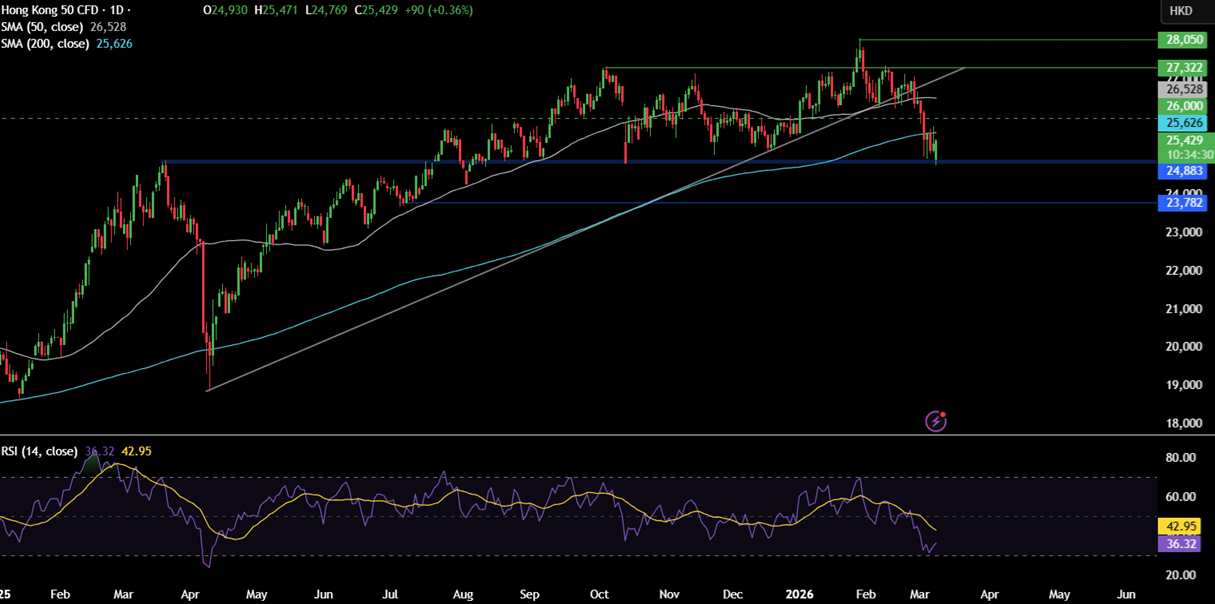
Solid data could help support sentiment and therefore the Hang Seng, although surging oil prices are likely to remain a key driver, given that China is the largest importer of crude oil.
US CPI (Wednesday)
Headline CPI is expected to rise 0.2% MoM in February, in line with January, whilst core CPI is also expected to rise 0.2%, down from 0.3% in January. Before the start of the Middle East conflict, officials were already warning that prices remained elevated above the central bank’s target level and, barring any downside in the labour market, policy was in a broadly good place.
However, the conflict in the Middle East has made officials more cautious about further rate cuts. The situation remains fluid, and there is little clarity over the duration of the conflict; as a result, the medium-term impact on energy prices and supply chains also remains uncertain.
Concerns here that it could add a stagflationary impact, complicating the Fed’s position, given the two differing policy responses required to slow growth and contain rising inflation. Hot data will make it difficult for the Fed to sound dovish at the March 18 rate decision and could further boost the USD.
Indian CPI (Thursday)
Indian inflation data is expected to show that the consumer price index rose to 3.1% year-on-year in February from 2.13%. On a monthly basis, it is expected to rise 0.3%, slightly down from this 0.35% previously. The figures will likely give the central bank reason to hold off on any further rate cuts, potentially pushing up bond yields further and dragging on stock indices such as the Sensex.
This will mark the second month of the new CPI basket, which reflects changes in spending patterns since the last overhaul a decade ago.
US Core PCE (Friday)
Expectations are for PCE to rise 0.3% MoM, down from 0.4%, with the annual rate unchanged at 2.9%. Meanwhile, core PCE, the Federal Reserve’s preferred inflation gauge, is expected to rise 0.4% MoM, in line with the December monthly reading, while the annual reading is expected to edge up to 3.1% from 3%.
It’s worth noting that this data comes before the Middle East conflict, which has clouded the inflation outlook. If the jump in energy prices persists, it is likely to impact inflation, with the market pushing back Fed rate cut expectations. This could keep the USD supported and pull US stocks such as the S&P 500 lower.
Trading involves risk.
Author



 Risk Disclaimer
The content provided here is for informational purposes only. It is not intended as personal investment advice and does not constitute a solicitation or invitation to engage in any financial transactions, investments, or related activities. Past performance is not a reliable indicator of future results.
The financial products offered by the Company are complex and come with a high risk of losing money rapidly due to leverage. These products may not be suitable for all investors. Before engaging, you should consider whether you understand how these leveraged products work and whether you can afford the high risk of losing your money.
The Company does not accept clients from the Restricted Jurisdictions as indicated in our website/ T&C. Some services or products may not be available in your jurisdiction.
The applicable legal entity and its respective products and services depend on the client’s country of residence and the entity with which the client has established a contractual relationship during registration.