5 min read
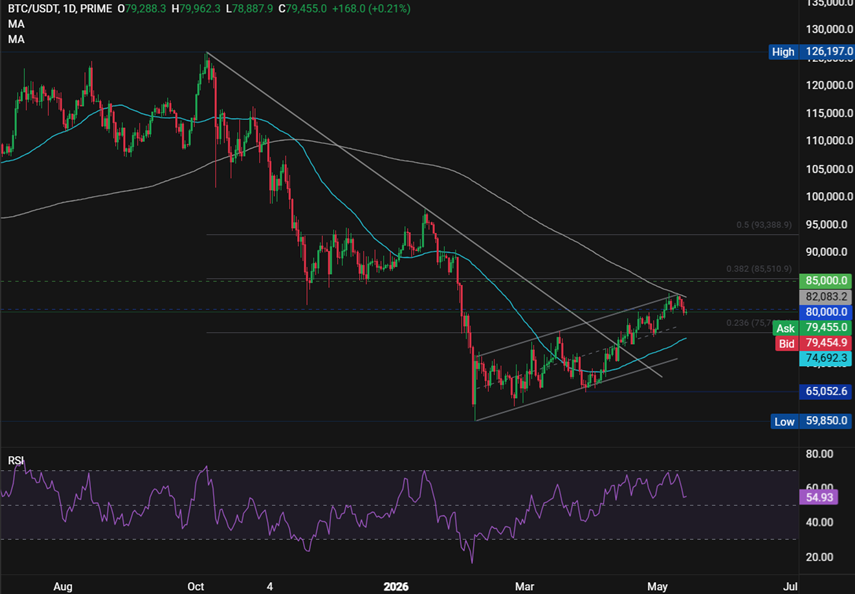
 Bitcoin is falling on Thursday, struggling to regain the key $80,000 level as hotter US inflation data reinforces expectations of higher interest rates and tighter financial conditions.
The world’s largest cryptocurrency is down around 2% over the past 24 hours, trading near $79,500 at the time of writing. Broader weakness is also visible across digital assets, with Ethereum falling 2.75% and XRP down 2.6%.
Bitcoin’s move below $80,000 is notable given that the level had acted as an important area of support in recent weeks, even as US equity markets continued to push towards fresh record highs.
PPI accelerates by most in 4 -years
The latest pressure on crypto follows another strong US inflation reading. Data released on Wednesday showed producer prices accelerated 6% year-on-year in April — the fastest pace since December 2022 — while monthly PPI rose 1.4%, marking the sharpest increase since March 2022.
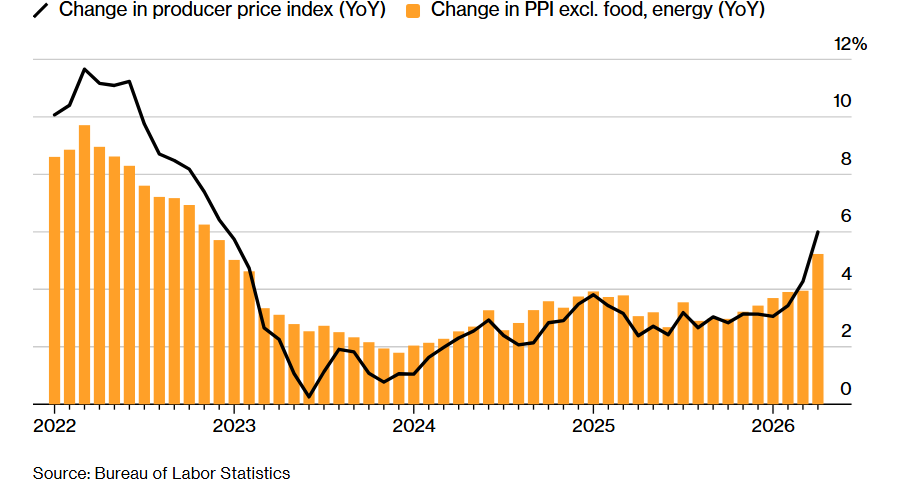
The surge in wholesale inflation is the latest sign that elevated energy prices linked to the ongoing Middle East conflict are feeding through the broader economy via transportation and supply chains.
Markets increasingly believe those pressures could continue lifting consumer inflation in the months ahead.
Following the data, traders raised expectations that the Federal Reserve may need to tighten policy further. Markets are now pricing roughly a 35% probability of a 25 basis point Fed rate hike before the end of 2026.
Cryptocurrencies typically perform better in lower-rate environments due to higher liquidity conditions. As a result, the prospect of a more hawkish Fed has weighed on sentiment across digital assets.
US stocks rose to record highs
Interestingly, US equities have shown greater resilience despite the same macro backdrop. Wall Street indices continue to trade near record highs, driven largely by ongoing enthusiasm surrounding AI and semiconductor stocks.
The rally in technology shares — particularly chipmakers — has continued to offset concerns over inflation and geopolitical risk.
That dynamic is important for Bitcoin, given its close relationship with technology stocks. The 30-day Bitcoin–Nasdaq correlation remains elevated at around 0.85, suggesting that continued strength in US equities could help limit broader downside pressure on crypto.
Investors are also closely watching the summit between Donald Trump and Xi Jinping in Beijing, where discussions are expected to include trade, AI, tariffs, and the ongoing US-Iran conflict.
Markets continue to hope that any progress towards easing tensions in the Middle East could help lower oil prices and reduce inflationary pressures.
Clarity Act hearing in focus
Attention is also turning towards developments in Washington, where the US Senate Banking Committee is due to hold a “markup” session on the proposed Clarity Act later today.
Some lawmakers have warned that any significant delay to the legislation could push it back several years.
The latest draft of the bill attempts to balance concerns from both the banking and digital asset industries. A key area of debate remains restrictions on passive interest payments for stablecoins offered by crypto platforms – a proposal that banks support, given concerns that those products increasingly resemble traditional savings accounts.
Trading involves risk.
Author

 Risk Disclaimer
The content provided here is for informational purposes only. It is not intended as personal investment advice and does not constitute a solicitation or invitation to engage in any financial transactions, investments, or related activities. Past performance is not a reliable indicator of future results.
The financial products offered by the Company are complex and come with a high risk of losing money rapidly due to leverage. These products may not be suitable for all investors. Before engaging, you should consider whether you understand how these leveraged products work and whether you can afford the high risk of losing your money.
The Company does not accept clients from the Restricted Jurisdictions as indicated in our website/ T&C. Some services or products may not be available in your jurisdiction.
The applicable legal entity and its respective products and services depend on the client’s country of residence and the entity with which the client has established a contractual relationship during registration.