5 min read
 Bitcoin has fallen further on Wednesday, briefly breaking below 66,000 as a sharp sell-off triggered a wave of liquidations across the crypto market.
The largest cryptocurrency has extended recent losses, dropping 9% so far this week and falling to its lowest level since February.
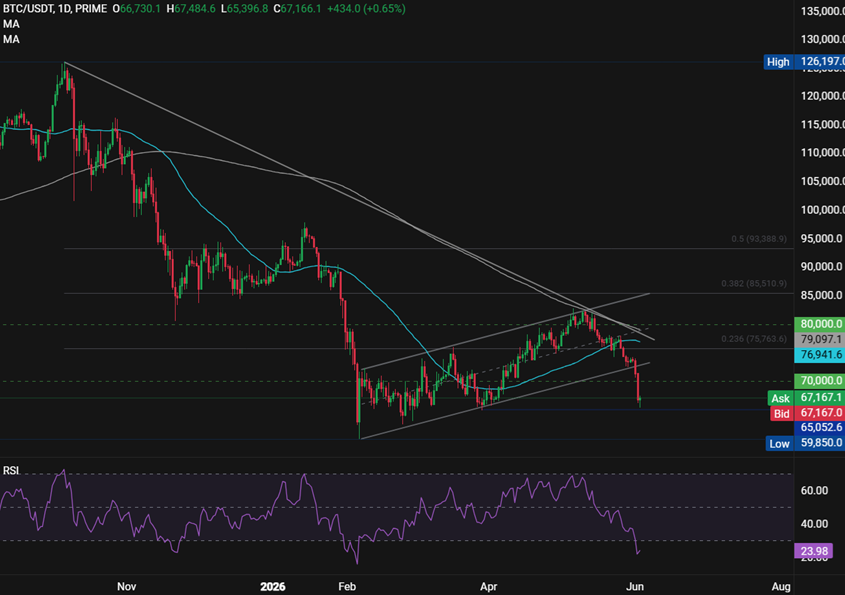
The move lower triggered a massive market-wide wipeout of bullish positions, with crypto liquidations totalling $1.84 billion over the past 24 hours. Of that, $1.66 billion came from long positions, highlighting the extent of the bearish move and reinforcing negative sentiment across the market.
Strategy sale rattles sentiment
The near-term catalyst came on June 1, when Strategy, the largest corporate Bitcoin holder, disclosed a rare BTC sale. The move hit sentiment hard for several reasons. Firstly, Strategy is known almost exclusively for buying Bitcoin and aggressively accumulating the asset. Secondly, the fact that the company sold into weakness, after Bitcoin had already fallen over the previous three weeks, raised concerns among investors that one of the market’s strongest supporters was becoming more cautious.
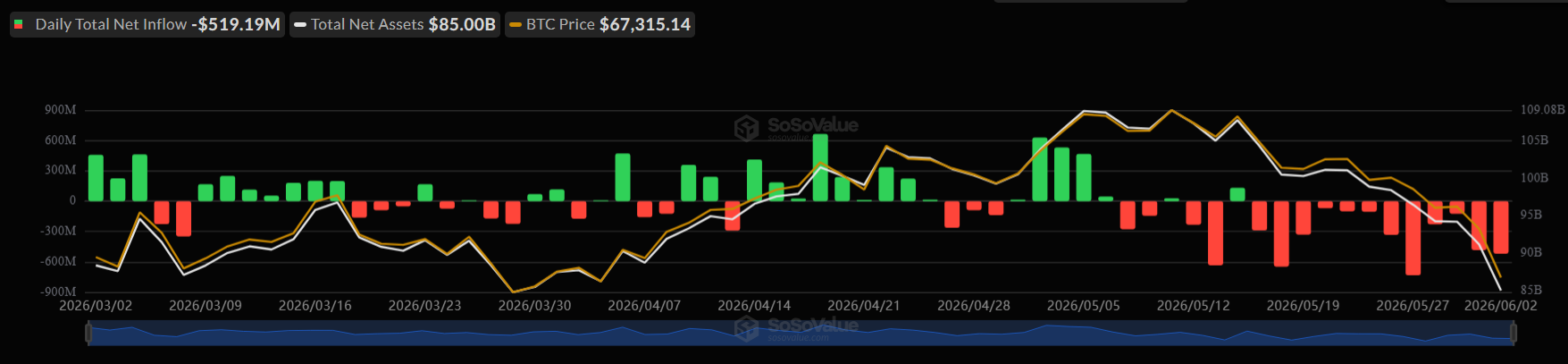
BTC institutional demand is also deteriorating rapidly. BTC ETFs recorded a record 12 straight days of net outflow – totaling almost $4 billion.
With sentiment already fragile, the developments have been enough to push the Crypto Fear & Greed Index firmly into Fear territory.
Capital rotation from crypto to AI stocks
However, this caution is not being reflected in traditional financial markets. U.S. equities surged to fresh record highs on Tuesday, highlighting a growing divergence between the sell-off in Bitcoin and the rally in equities, particularly AI and semiconductor stocks.
The divergence suggests capital is rotating away from Bitcoin and into other high-beta opportunities, particularly AI-related equities that continue to attract strong investor inflows.
With three blockbuster IPOs potentially on the horizon this year — SpaceX, Anthropic and OpenAI — Bitcoin could continue to face competition for investor capital. These highly anticipated listings may attract significant institutional demand, potentially reducing the amount of capital flowing into alternative assets such as cryptocurrencies.
Rising yields add to the pressure
In addition to capital rotating away from Bitcoin, the cryptocurrency is also facing pressure from rising Treasury yields and inflation concerns.
Renewed hostilities between the U.S. and Iran, combined with stalled peace talks, suggest a deal between Tehran and Washington is becoming less likely in the near term. This has helped push oil prices higher, reviving worries over inflation and the outlook for interest rates.
Meanwhile, U.S. economic data continue to point to a resilient economy. ADP payrolls rose by 122,000, ahead of expectations for 117,000. This followed stronger-than-expected JOLTS job openings data, which showed vacancies rising by the most since 2021.
The figures come ahead of Friday’s non-farm payroll report and support the view that the U.S. labour market remains relatively strong despite elevated interest rates and geopolitical tensions.
Today, attention turns to the ISM Services PMI, which is expected to rise to 53.8 in May from 53.6 previously. The prices-paid component will also be closely watched after rising to 70.7 in April, its highest level since May 2023.
Strong economic data, elevated oil prices and persistent inflation pressures have led markets to price in a 60% probability that the Federal Reserve will raise interest rates by 25 basis points before the end of the year.
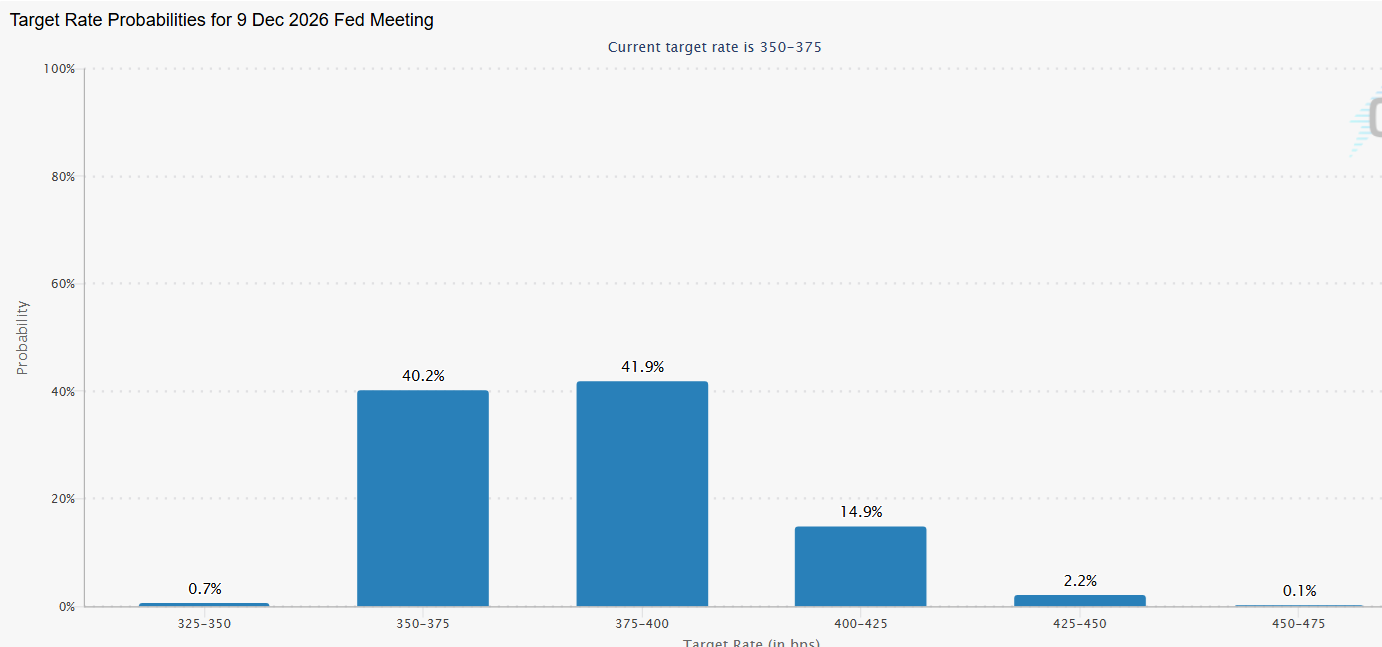
Bitcoin has historically performed best in lower-interest-rate environments due to higher liquidity. As expectations for tighter monetary policy increase, the backdrop for risk assets becomes less supportive, potentially limiting the upside for BTC.
Trading involves risk.
Author

 Risk Disclaimer
The content provided here is for informational purposes only. It is not intended as personal investment advice and does not constitute a solicitation or invitation to engage in any financial transactions, investments, or related activities. Past performance is not a reliable indicator of future results.
The financial products offered by the Company are complex and come with a high risk of losing money rapidly due to leverage. These products may not be suitable for all investors. Before engaging, you should consider whether you understand how these leveraged products work and whether you can afford the high risk of losing your money.
The Company does not accept clients from the Restricted Jurisdictions as indicated in our website/ T&C. Some services or products may not be available in your jurisdiction.
The applicable legal entity and its respective products and services depend on the client’s country of residence and the entity with which the client has established a contractual relationship during registration.