7 min read
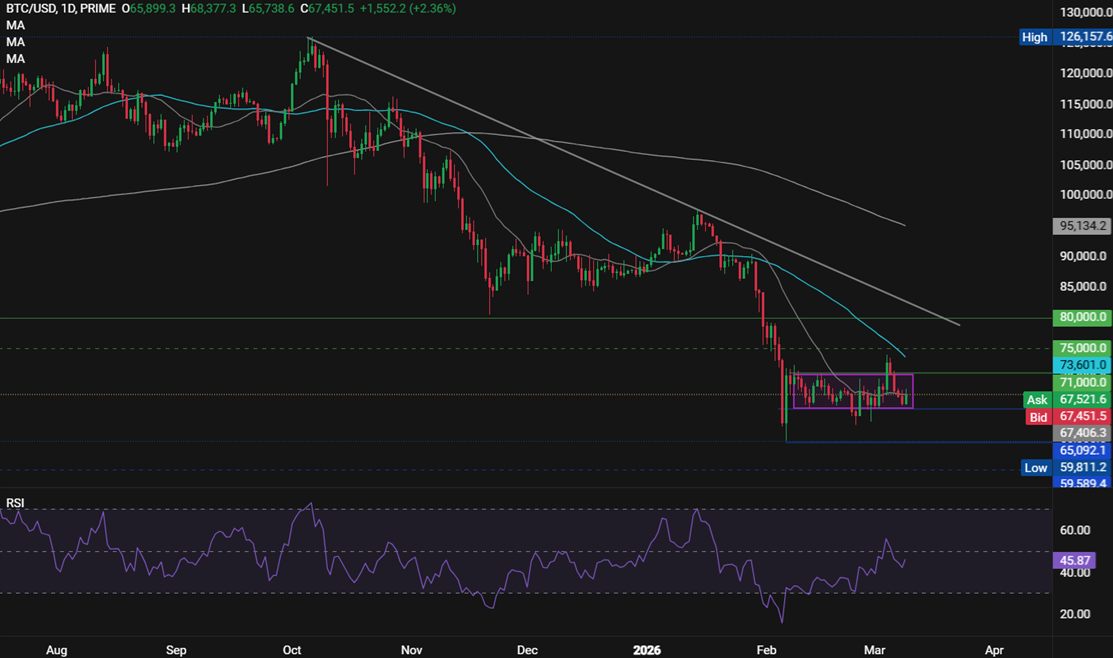
Bitcoin ended last week flat, at approximately the same level that it started. However, this disguises some of the volatility seen. The largest cryptocurrency started the week at 67k, briefly easing to 65k, then recovering to 74k, its highest level in over a month.
However, the breakout wasn’t sustained, and BTC trades back around 67k on Monday, a weekly low, and back within the familiar trading range it has been in of 65k-71k since the start of February.
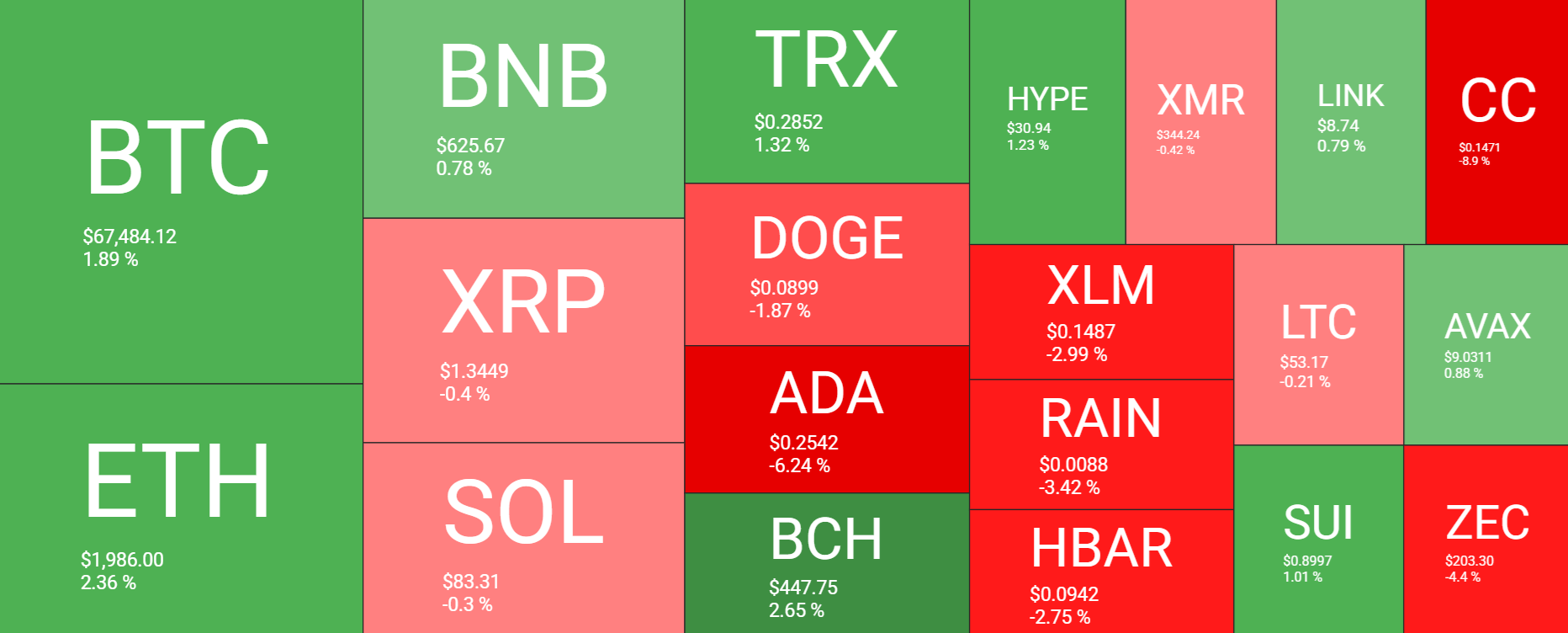
Over the past 7 days, the cryptocurrency market has been mixed. While some altcoins, such as Ethereum and BNB, have posted gains, others, such as Ripple, Solana, and ADA, have posted small losses. Overall, the crypto space has shown resilience.
The total cryptocurrency market capitalisation is at $2.31 trillion at the start of the new week, more or less in line with where it was this time last week, but down from the $2.49 trillion high seen mid-week, the highest since early February.
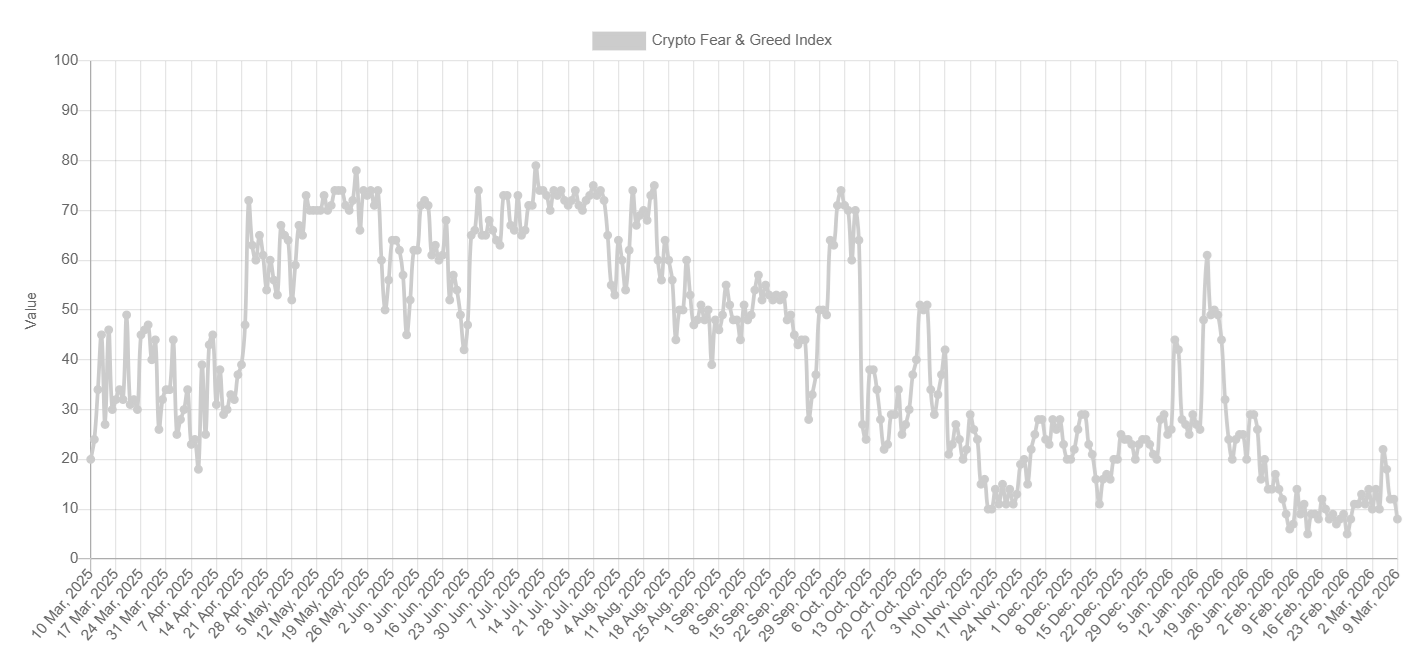
Sentiment analysis shows that the mood towards crypto has deteriorated again, with the Fear and Greed index falling back to 8 on Monday, down from 12 yesterday and 10 last week, but up from 5, a record low last week.
Bitcoin institutional demand rises, but can it remain?
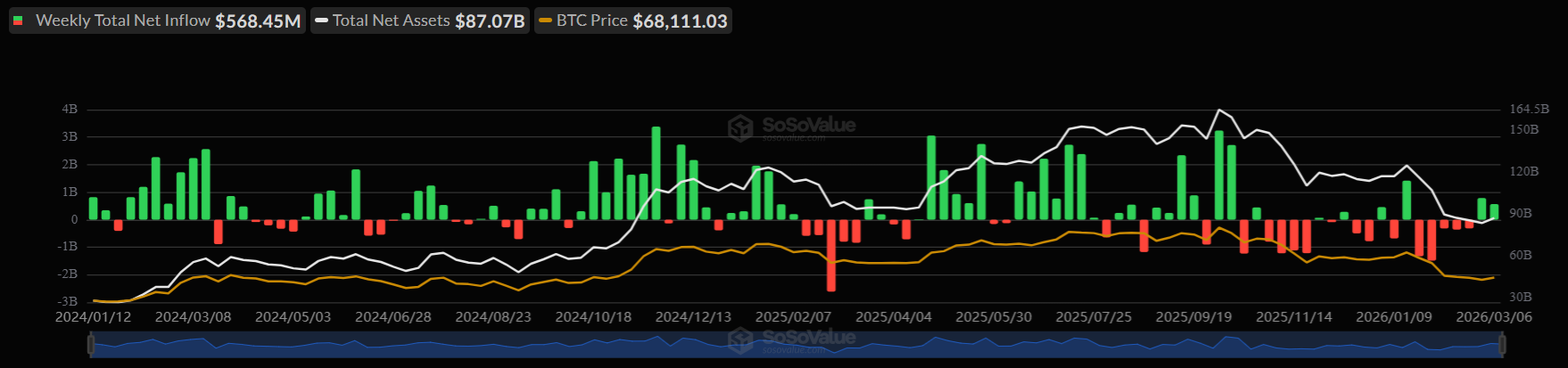
Bitcoin institutional demand rose last week for a second straight week, after five consecutive weekly declines. This suggests that the demand could be slowly turning a corner after months of net outflows.
However, it’s worth noting that last week was a week of two halves, with strong net inflows across the first three days of the week, followed by two days of steep net outflows. This highlights how fragile the recovery is.
Total net ETF inflows last week were $568.45 million, which could quickly be reversed should selling pressure ramp up. Persistent BTC ETF inflows could support Bitcoin’s price higher.
Macro backdrop
Bitcoin is trading relatively quietly around 67k, a weekly low, but still showing resilience even as concerns grow about a prolonged war in Iran, sending oil prices soaring and stocks and bonds tumbling.
The oil price has surged well past $100 a barrel, with WTI briefly reaching a 4-year high of $119 per barrel. Oil prices rallied 35% last week and currently trade up a further 15% this week, stoking fears of an inflation crisis.
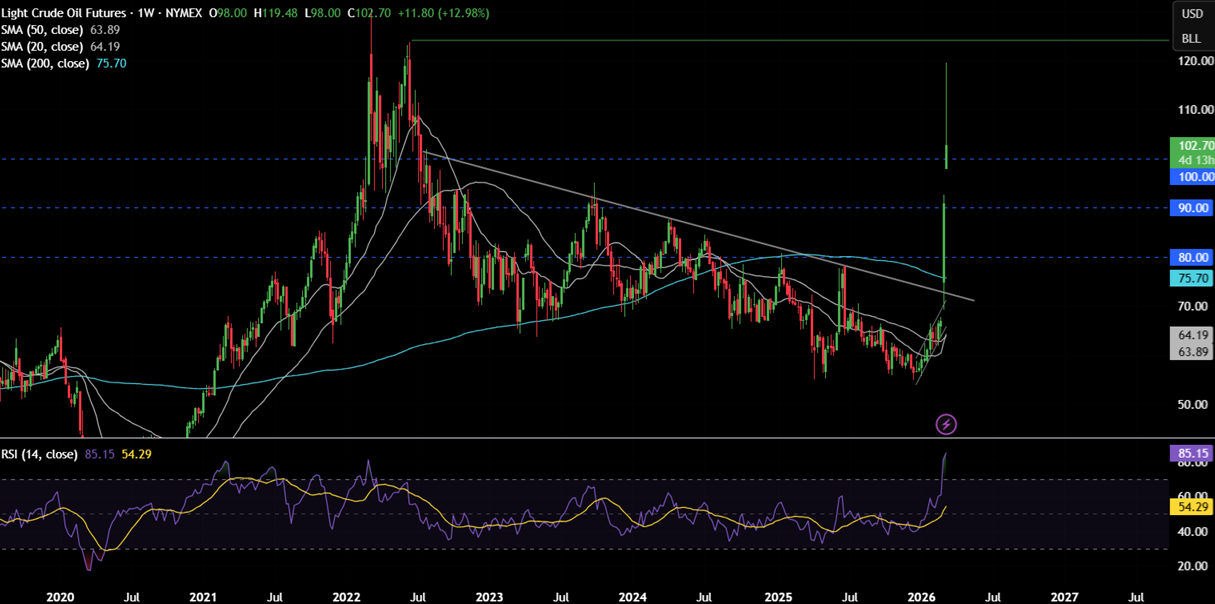
Stocks are selling off, with Asia and Europe the hardest hit, given their reliance on imported energy, whilst U.S. Treasury yields are rising, with a 10-year U.S. Treasury yield at a one-month high. Typically, higher U.S. Treasury yields draw capital away from riskier assets, so they bode poorly for BTC, but that hasn’t necessarily been the case this time around. The market has pushed back expectations for a Federal Reserve rate cut to July.
Furthermore, given the elevated volatility, there is a potential for an increased cryptocurrency sell-off as institutional players could be forced to reduce leverage amid declines in other key assets.
Oil crosses $100 per barrel. Could a BTC rally be close?
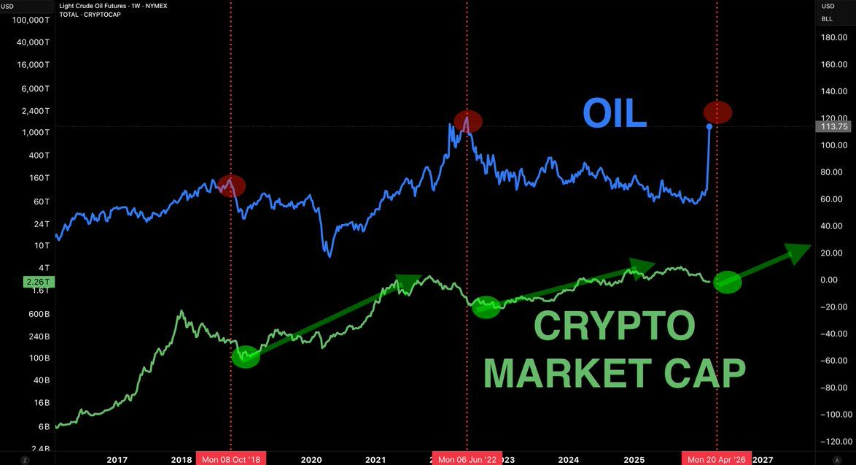
However, as a report from Crypto Quant points out, in the short term, geographical instability and rising oil prices usually put downward pressure on risk assets such as Bitcoin; however, historical data show that strong oil price rallies often coincide with the late stages of the BTC market cycle.
This suggests that the current environment is not favourable for highly speculative assets. Still, a potential path to a strong Bitcoin recovery could be revealed once oil prices start to fall.
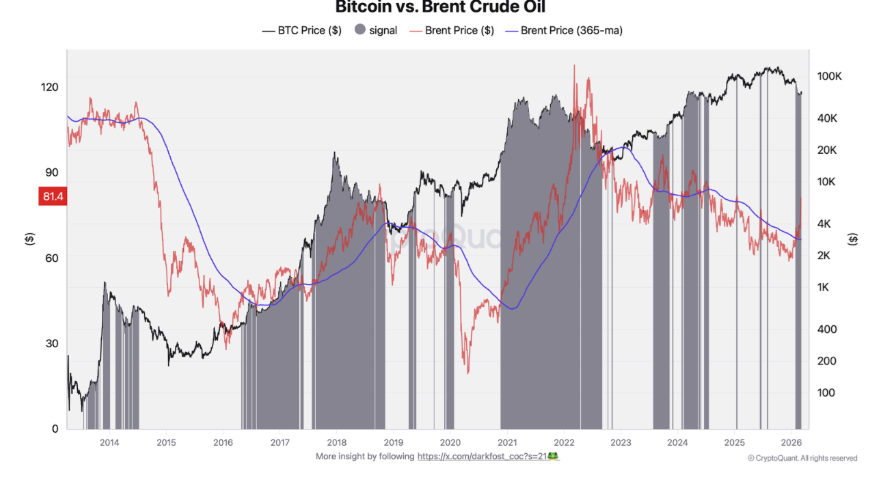
Looking at historical figures, oil prices and oil price peaks often coincide with crypto market bottoms or accumulation zones.
For example, in October 2018, oil prices peaked while crypto market capitalisation bottomed near $100 billion before surging afterwards.
In June 2022, oil prices reached another peak in the crypto market, bottoming near $800 billion, then staged a solid recovery.
In March 2026, oil prices have jumped to $113 per barrel at the time of writing, while the cryptocurrency market capitalisation is at 2 points, $2 trillion. If the pattern holds, oil prices reverse, macro pressures ease in crypto, and it could begin its next leg up.
However, it’s worth noting that these observations do rely entirely on historical patterns.
For now, there are no signs of a de-escalation in the war, although Trump recently stated that oil prices will fall rapidly once the Iranian nuclear threat is over. He considered the recent rally in oil prices a small price to pay, suggesting it may be temporary.
Meanwhile, the G7 is considering releasing 300 to 400 million barrels of oil from its joint strategic reserves to help ease prices.
However, it’s also worth keeping in mind that should oil stores in the Middle East fill up, which they are expected to do by the weekend if the Strait of Hormuz remains closed, then major oil producers will start to reduce supply, which means prices could remain high for longer.
US ownership grows
Interestingly, whilst oil prices have surged, safe-haven Gold has actually been falling since the start of the Middle East conflict. Gold fell 2% last week and trades 1% lower this week. In comparison, Bitcoin’s sideways moves point to a resilience in the cryptocurrency.
More recent US ownership data hinted at a deeper structural shift in demand, with buyers appearing active again.
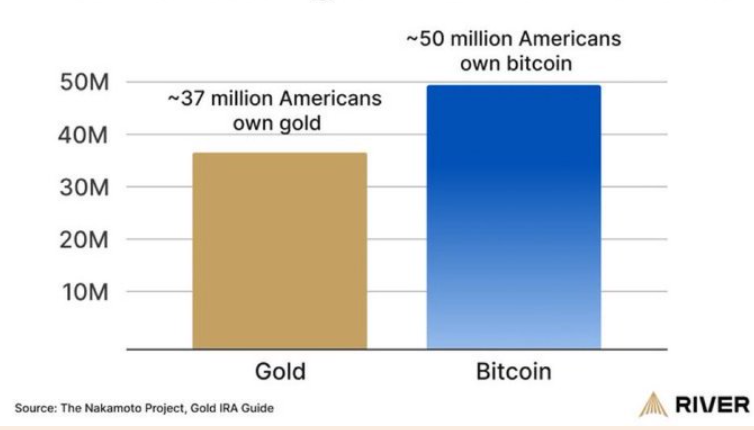
On March 7, according to Bitcoin Teddy, 50 million Americans owned Bitcoin compared to roughly 37 million who owned Gold. This does not translate into total market value, as gold’s aggregate US holding still significantly exceeds Bitcoin’s; however, it does point to retail investors increasingly willing to treat Bitcoin as a reserve asset.
Coinbase Premium also points to strong demand in the US
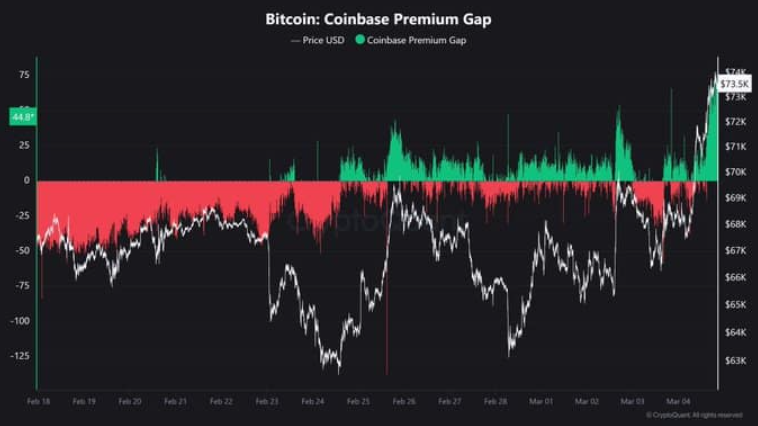
According to data from CryptoQuant, the Coinbase Premium indicates that US investors have stepped up their buying of Bitcoin. This is important because it reflects demand from American buyers willing to pay more and suggests conviction, which may be helping keep the Bitcoin price supported.
Trading involves risk.
Author



 Risk Disclaimer
The content provided here is for informational purposes only. It is not intended as personal investment advice and does not constitute a solicitation or invitation to engage in any financial transactions, investments, or related activities. Past performance is not a reliable indicator of future results.
The financial products offered by the Company are complex and come with a high risk of losing money rapidly due to leverage. These products may not be suitable for all investors. Before engaging, you should consider whether you understand how these leveraged products work and whether you can afford the high risk of losing your money.
The Company does not accept clients from the Restricted Jurisdictions as indicated in our website/ T&C. Some services or products may not be available in your jurisdiction.
The applicable legal entity and its respective products and services depend on the client’s country of residence and the entity with which the client has established a contractual relationship during registration.