8 min read
Weekly recap
US stock indices ended the volatile, holiday-shortened week higher amid tentative signs of de-escalation in the conflict in the Middle East. The Nasdaq Composite led the gains, recording its best week since November, while the S&P 500 and the Dow Jones rose 3.3% and 3.0% respectively.
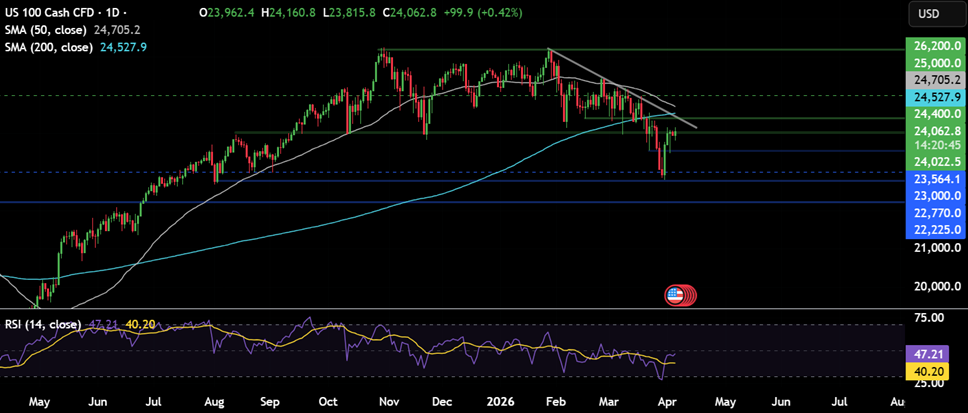
Equities rallied after President Trump signalled a growing willingness to de-escalate the situation in the Middle East. However, in a speech on Wednesday, Trump also warned that military operations could intensify over the next two to three weeks, pushing oil prices higher and dragging on risk sentiment on Thursday.
Labour market data also helped support sentiment. Nonfarm payrolls showed that the US economy added 178,000 jobs in March, following a downwardly revised 133,000 decline in February, while the unemployment rate unexpectedly fell to 4.3%.
The data reinforced the view that the Federal Reserve can remain focused on inflation, rather than being forced to respond urgently to labour market weakness.
Week ahead
President Trump’s Iran deadline (Monday)
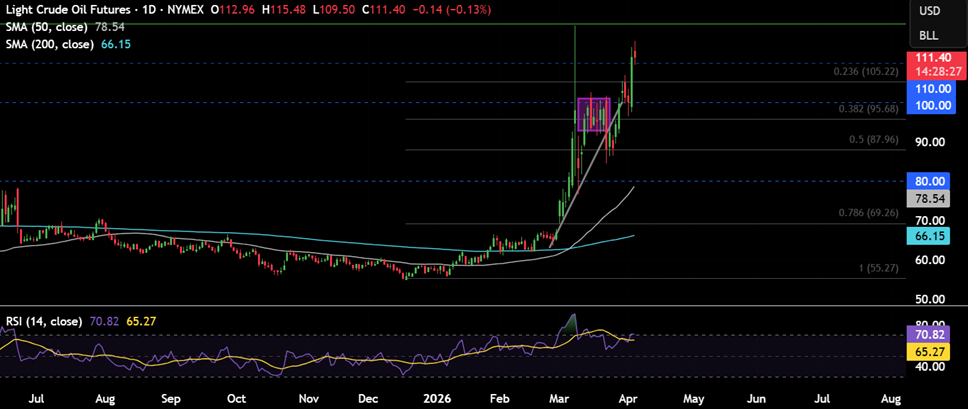
President Trump has set April 6 at 8:00 PM ET (earlier Tuesday morning GMT) as the latest deadline for Iran to fully reopen the Strait of Hormuz. Failure to comply risks further US strikes on Iran’s power grid and energy infrastructure. Trump has already extended the deadline several times, underlining the fluid and uncertain nature of the situation.
Trump’s rhetoric remains contradictory. While he has suggested that the military mission could conclude within two to three weeks, that does not necessarily imply the Strait of Hormuz would reopen quickly — meaning oil prices could remain elevated even in a ceasefire scenario. That distinction remains crucial for the inflation and growth outlook and for the markets.
FOMC minutes (Wednesday)
The minutes relate to the mid-March FOMC meeting, where the Fed left interest rates unchanged against a backdrop of rising uncertainty following the outbreak of conflict in the Middle East and its potential long-term implications for the US economy. At the time, headline inflation was at 2.4%, but core inflation remained significantly higher, leaving policymakers in a difficult position as the labour market was also showing signs of slowing.
The March meeting reinforced the idea that the Fed was in no rush to adjust policy until incoming data provided a clearer direction.
Since then, the backdrop has become even more complicated. With oil prices higher, inflation risks have intensified, while labour market data has shown signs of stabilising.
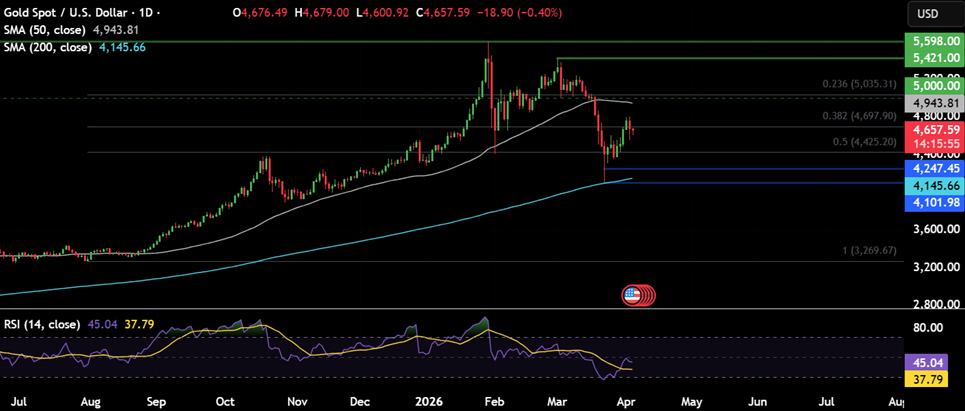
That likely keeps the Fed leaning more heavily towards the inflation side of its mandate, particularly if growth remains resilient. Hawkish minutes could boost the USD and pull Gold lower.
RBNZ policy decision (Wednesday)
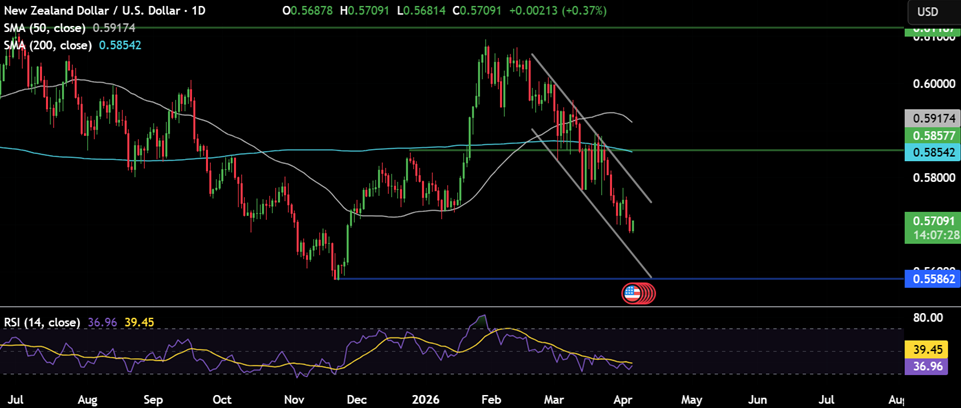
The Reserve Bank of New Zealand is expected to leave interest rates unchanged at 2.25%, with markets pricing in a 97% probability of no change. However, the narrative has shifted towards a more hawkish hold, reflecting the inflationary implications of higher energy prices and global supply disruptions linked to Middle East tensions. The focus will be on whether the RBNZ acknowledges the risk of second-round inflation effects from rising fuel and freight costs.
Forward guidance will also be closely watched for any indication of when the first rate hike could come into view, with markets increasingly leaning towards tightening by September rather than any further easing. A hawkish RBNZ could offer some support to NZD/USD.
US PCE inflation & revised Q4 GDP (Thursday)
Core PCE inflation, the Federal Reserve’s preferred measure of inflation, and the revised Q4 GDP reading will also be in focus. That said, the PCE data is for February, which, together with Q4 GDP, could be considered outdated, given that it was before the more recent geopolitical developments in the Middle East, which have since driven up energy prices and increased the cost of key industrial inputs.
Expectations are for core PCE to ease to 3.0% year-on-year, down from 3.1% in January, while the monthly reading is expected to remain firm at 0.4%. A third straight 0.4% month-on-month core reading would still reinforce the view that underlying inflation was proving sticky even before the latest energy shock.
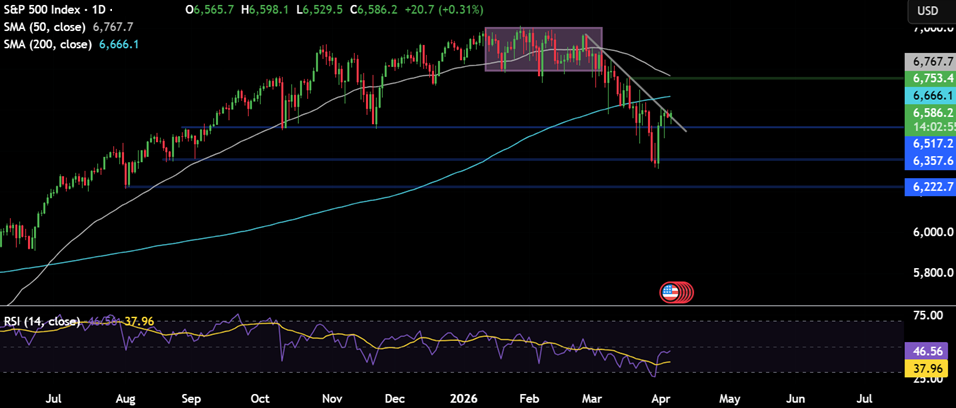
An upside surprise would likely support the case for the Fed keeping rates higher for longer, lifting the USD, while a downside surprise may offer only limited relief if markets choose to dismiss it as backward-looking. Watch USD crosses such as EUR/USD and US stocks like the S&P 500.
Chinese CPI (Friday)
China’s inflation data will be watched for signs of how higher energy prices are feeding into the broader economy. Headline CPI is expected to remain relatively firm at around 1.2% year-on-year, down slightly from 1.3%, supported by higher fuel costs and a modest improvement in domestic demand.
Meanwhile, producer price inflation (PPI) is expected to return to positive territory, at around 0.4%, marking the first positive reading in four years. Recent PMI price components have already risen to their highest levels since 2022, suggesting pipeline inflation pressures are building.
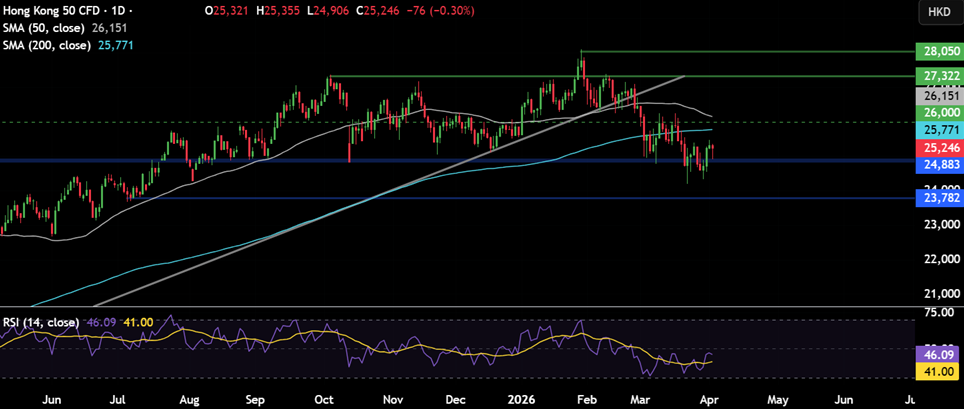
For the PBoC, a firmer inflation backdrop could reduce the urgency for further near-term easing. That could make Chinese equities, such as the Hang Seng, more sensitive to upside inflation surprises, especially if they challenge the current policy-support narrative.
Canadian jobs report (Friday)
The Canadian jobs report for March will also be closely monitored to assess how the labour market is holding up amid ongoing concerns around trade tensions with the US. The Iran war also poses an indirect risk through higher energy costs and global uncertainty, though it is likely still too early to see a meaningful direct impact on the labour market.
The February report was weak, showing a negative employment change of 83,900. Markets will now be watching closely to determine whether that weakness was a one-off or the start of a more persistent slowdown. Unemployment is expected to rise to 6.8%.
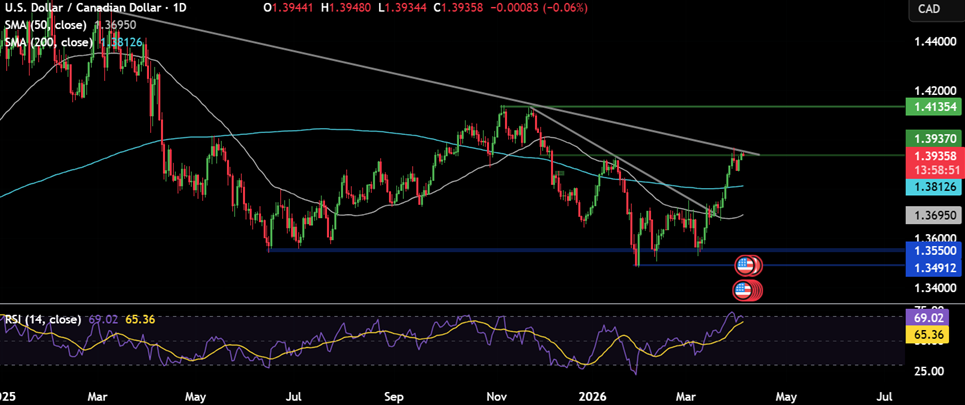
The latest Bank of Canada minutes noted that labour market weakness was concentrated in industries most exposed to trade. Another weak report could weigh on the Canadian dollar and lift USD/CAD.
US CPI (Friday)
After inflation in Germany and across the eurozone jumped sharply in March as a result of the Middle East conflict, attention will now turn to whether US CPI begins to show a similar acceleration US inflation had been easing in recent months, with headline CPI slowing to 2.4% YoY in February, from 2.7% in January, although part of that moderation likely reflected post-holiday discounting and inventory clearance.
That dynamic may now be reversing. With gasoline prices up around 30% and approaching $4 per gallon, there is a growing expectation that US inflation could rise to 3.4% — and potentially higher — relatively quickly. While the US is more insulated than Europe, given its domestic energy production, there is already evidence that higher costs are beginning to filter through the rest of the economy.
Notably, the ISM manufacturing survey showed input prices jumping to their highest level since June 2022, reinforcing concerns that inflation may be broadening again.
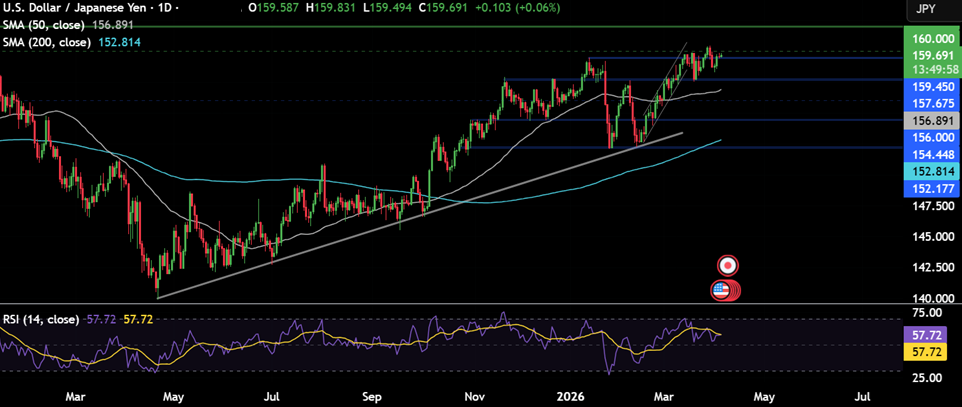
That makes Friday’s CPI report especially important, particularly for markets still trying to judge whether the next Fed move is more likely to be a hold, hike, or eventual cut. Hot inflation would boost the USD and USD crosses such as USD/JPY and pull stocks lower.
Trading involves risk.
Author



 Risk Disclaimer
The content provided here is for informational purposes only. It is not intended as personal investment advice and does not constitute a solicitation or invitation to engage in any financial transactions, investments, or related activities. Past performance is not a reliable indicator of future results.
The financial products offered by the Company are complex and come with a high risk of losing money rapidly due to leverage. These products may not be suitable for all investors. Before engaging, you should consider whether you understand how these leveraged products work and whether you can afford the high risk of losing your money.
The Company does not accept clients from the Restricted Jurisdictions as indicated in our website/ T&C. Some services or products may not be available in your jurisdiction.
The applicable legal entity and its respective products and services depend on the client’s country of residence and the entity with which the client has established a contractual relationship during registration.