9 min read
 Weekly recap:
US global stocks recap
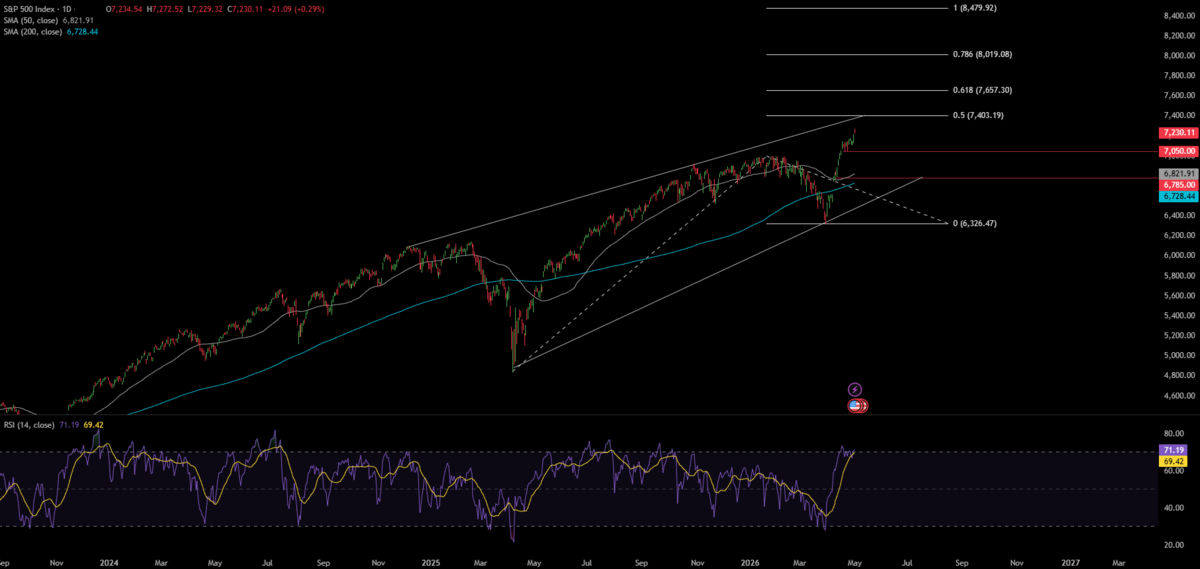
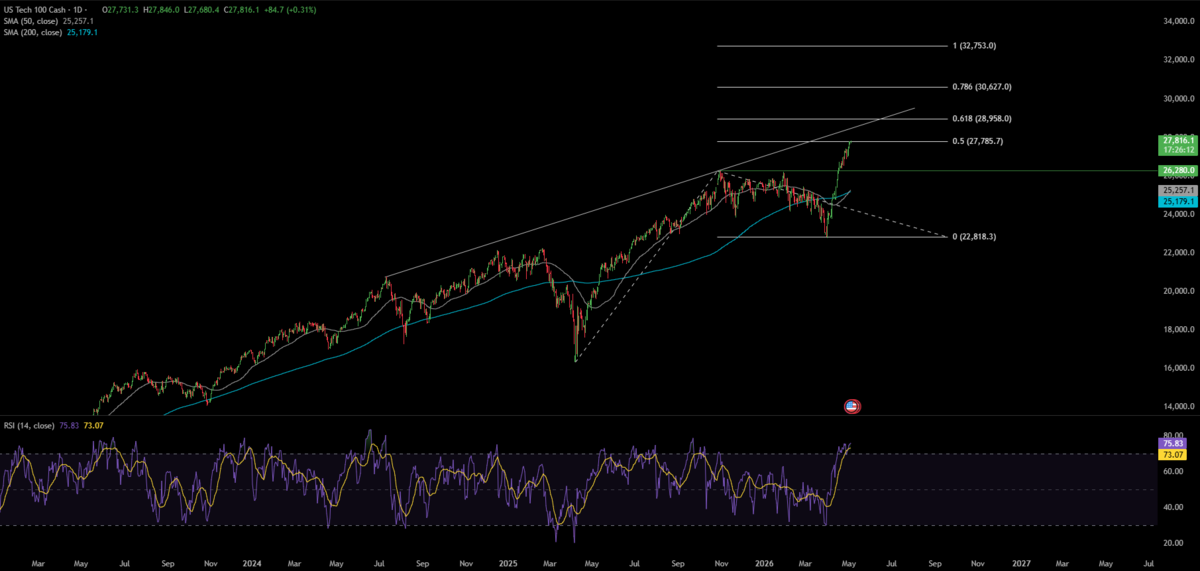
US stocks finished higher for a sixth consecutive week, marking the longest winning streak since October 2024. The S&P 500 advanced 0.9% to a record close of 7,230.12, the Nasdaq reached a new all-time high of 27,710, and the Dow Jones added 0.5% to settle at 49,499.27 on Friday.
Apple shares rose by more than 3% following stronger-than-expected earnings and positive guidance, boosting overall tech sentiment. Risk appetite improved after President Trump informed Congress that US hostilities with Iran had ended for now, and Iran reportedly sent a revised peace proposal through Pakistani mediators late Friday. Sustained gains in the S&P 500 will depend on whether positive Q1 earnings can offset ongoing inflationary pressures from the Iran conflict.
Major US topic
The Federal Open Market Committee left the federal funds rate unchanged at 3.50%–3.75% on April 29, but the meeting was marked by the deepest split since October 1992. The 8-4 vote saw Governor Miran prefer a 25-basis-point cut, while three other officials, Hammack, Kashkari, and Logan, opposed the easing bias in the statement.
The Q1 PCE Price Index rose to 4.5%, the highest since Q3 2022, with Core PCE at 4.3%. March Core PCE increased to 3.2% year-on-year from 3.0%.
Microsoft, Alphabet, Meta, Amazon, and Apple all reported strong earnings. The combination of steady growth, persistent inflation, and a divided Fed may support the Nasdaq but could also increase volatility.
Gold moves
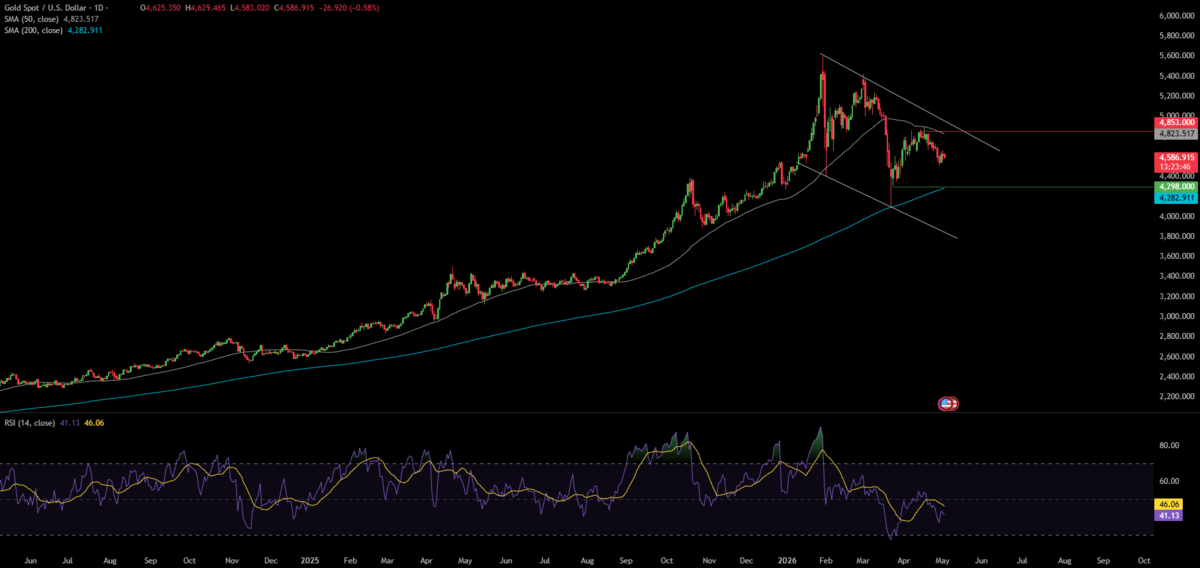
Gold declined for a second consecutive week, trading near $4,600 per ounce on Friday, despite a late rebound driven by a weaker US dollar and lower oil prices. XAU/USD has dropped about 15% since the Iran conflict began, as higher energy prices have strengthened expectations that major central banks will maintain higher policy rates.
World Gold Council data indicated that central banks increased their gold reserves in Q1 2026, offering structural support. Renewed Middle East tensions or weaker NFP data could boost gold, while signs of de-escalation may keep prices subdued.
Indian markets
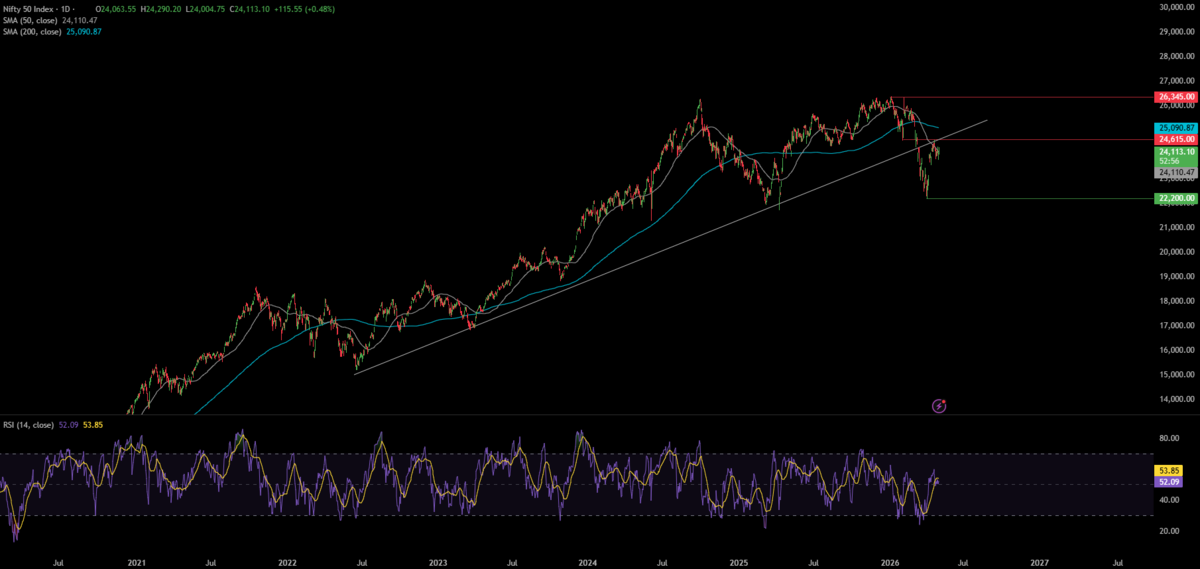
Indian equities lost ground last week. The Nifty 50 declined approximately 0.85% to close at 23,997.55, while the Sensex finished flat at 76,913.50 on April 30, the final session before markets closed for Maharashtra Day on May 1.
Foreign institutional investors recorded net outflows of approximately ₹8,048 crore on April 30, while domestic institutional investors offset some of the pressure with net buying of ₹3,487 crore. Sentiment was negatively affected by rising oil prices, the Fed’s hawkish stance, and ongoing rupee weakness.
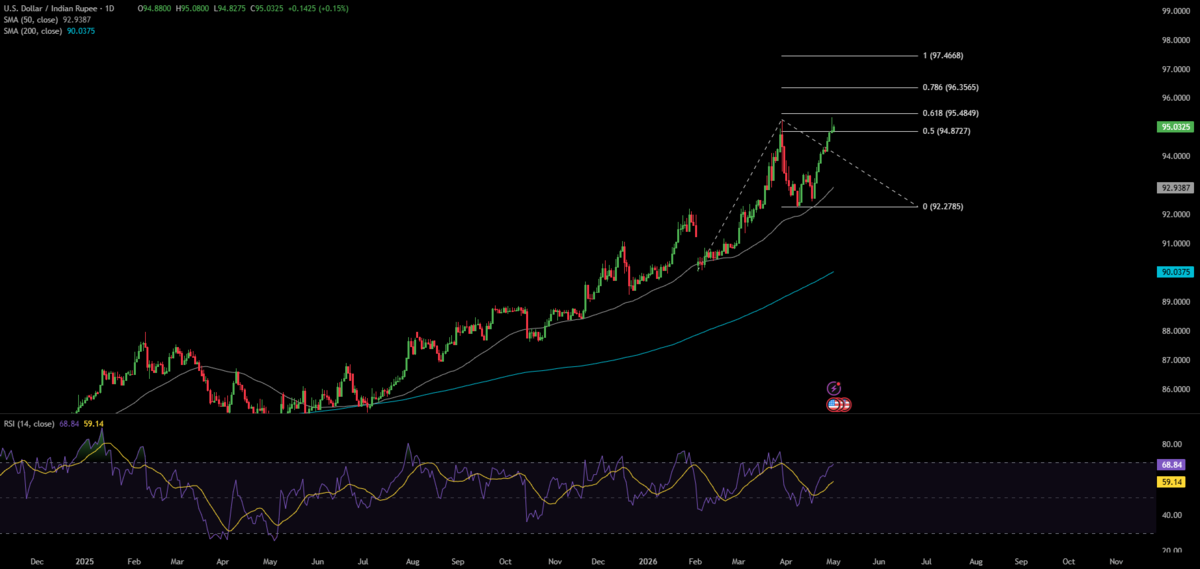
USD/INR reached a record high of 94.92 on April 29 due to foreign outflows and higher oil import costs. The focus now shifts to the May 4 state election results, the HSBC India Services PMI, and the start of the corporate earnings season. Continued rupee weakness and a lower PMI could keep the Nifty 50 under pressure.
Pakistan markets
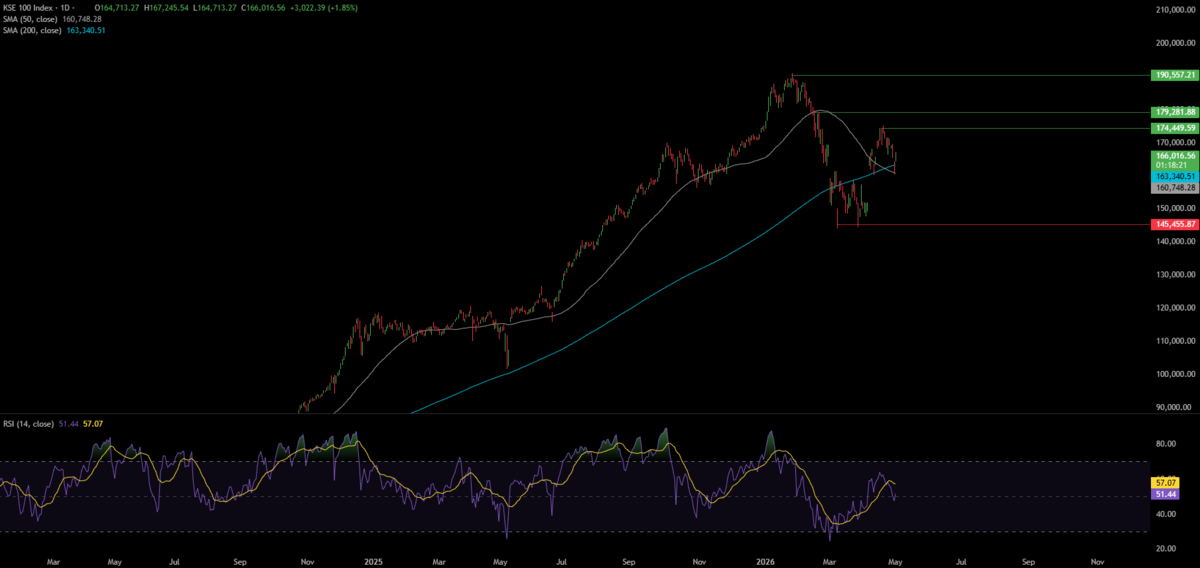
The State Bank of Pakistan unexpectedly raised the policy rate by 100 basis points to 11.5% on April 27 in response to rising inflation, marking a significant shift from its previous wait-and-see approach. Markets were divided between expecting a 50-basis-point hike or no change, making this a notable hawkish move. The KSE-100 dropped to 162,994 on April 30, falling 1.71% for its fourth consecutive session of losses.
Pakistan’s April CPI rose to 10.9% year-on-year, the first double-digit increase in 21 months, driven by higher housing, utilities, food, and transport costs. Additional concerns about high borrowing costs, elevated electricity tariffs, and reports of Etisalat reviewing its telecom exposure further weakened sentiment.
The Pakistani rupee remained stable, with USD/PKR near 278.78, and State Bank of Pakistan FX reserves at approximately $15.1 billion. Ongoing inflation pressures may limit KSE-100 gains in the near term.
Week Ahead (US & Asia)
Iran ceasefire and the Strait of Hormuz
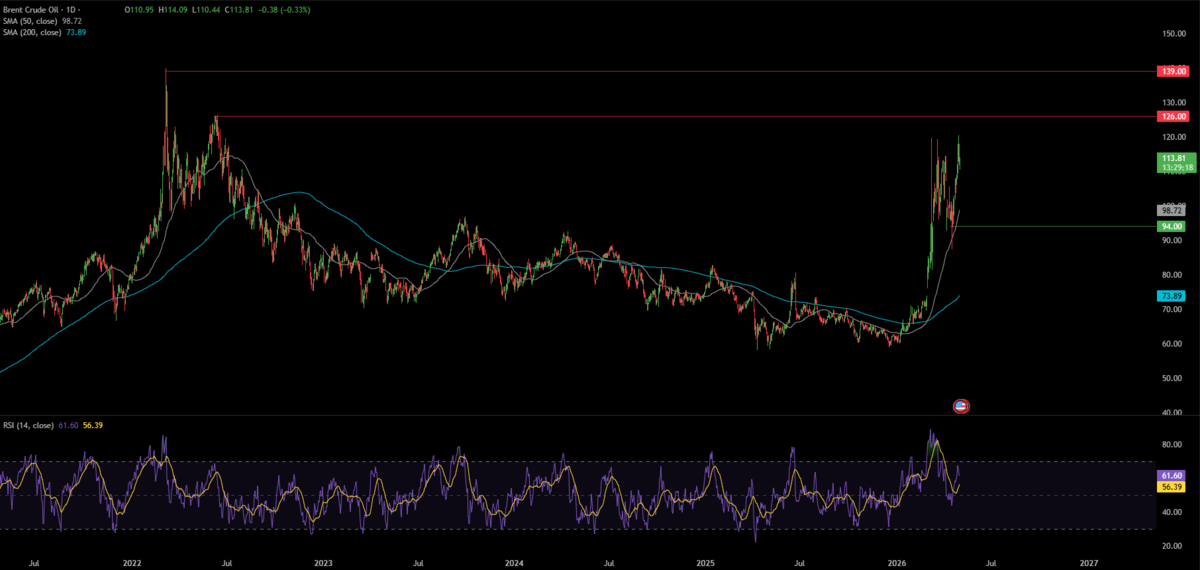
Geopolitical effects continue to drive markets this week. Over the weekend, Iran sent a revised peace proposal to Washington via Pakistani diplomatic channels in response to recent US amendments. Iranian Foreign Minister Abbas Araghchi indicated that Tehran is open to further diplomatic engagement if the US modifies its stance.
The situation remains unstable. Although a fragile ceasefire has held since early April, the Strait of Hormuz remains largely closed to most shipments, disrupting about 14 million barrels per day of oil and LNG transit, or one-fifth of global oil and LNG transit.
UK Brent remains volatile due to headline risk. Ongoing disruptions sustain inflationary pressures and hinder a shift toward more accommodative central bank policies in major economies.
Progress toward a lasting agreement could support risk assets and lower UK Brent prices. Conversely, a breakdown in talks or reports of expanded US military action would likely have the opposite effect.
RBA rate decision (Tuesday)
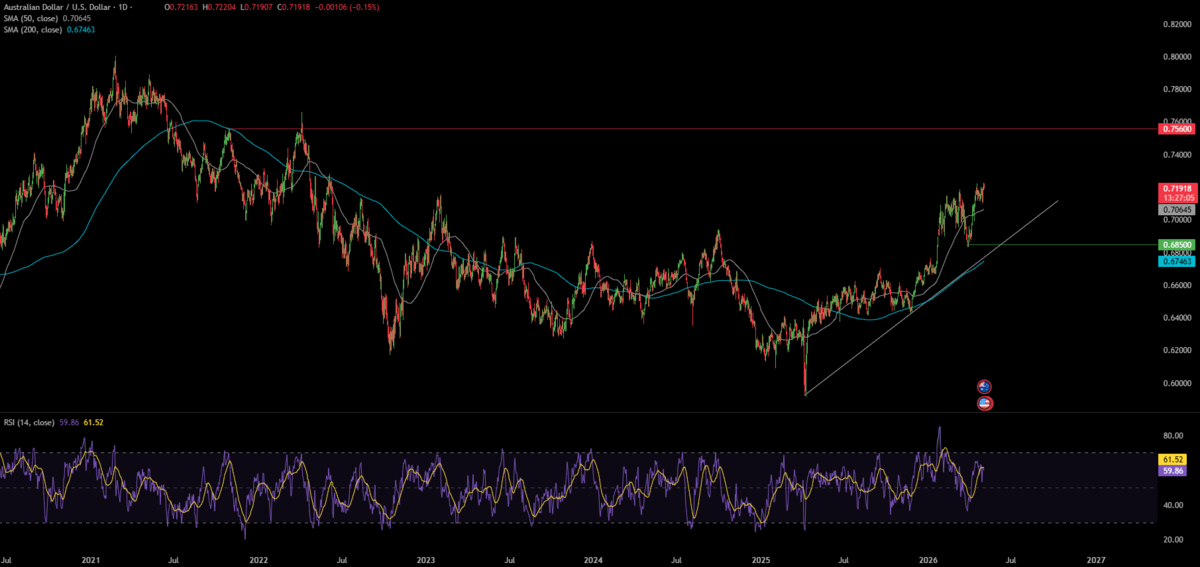
The Reserve Bank of Australia is expected to raise the cash rate by 25 basis points to 4.35% on May 5, with futures markets indicating a 70–86% probability. Westpac, NAB, and other major banks anticipate a hike, while AMP’s Shane Oliver estimates the probability at 60%. The RBA has already implemented two hikes in 2026, increasing the rate from 3.60% to 4.10% after three cuts in 2025.
Australian inflation reached about 4.6% in March, one of the highest levels in nearly three years and well above the 2–3% target. Energy price pressures from the Iran conflict have worsened the inflation outlook. Governor Bullock has stated that policy decisions will be data-dependent, especially on the Q1 trimmed-mean CPI. A rate hike with hawkish commentary could strengthen AUD/USD, while a hold or dovish tone may weaken the pair.
India Services PMI (Wednesday)
The final HSBC India Services PMI for April will be released on May 6. The flash India Composite PMI indicated renewed private-sector growth, with the Manufacturing PMI rising to 55.9 from 53.9 in March, driven by stronger output, new orders, and export demand. The March Services PMI fell to a 14-month low due to the conflict in Iran and higher input costs.
A reading well above 50 would confirm resilience in India’s services sector, the largest contributor to GDP, and may support the rupee, which recently closed near record lows. However, input cost inflation from higher fuel and energy prices remains a significant risk. A stronger PMI could ease pressure on USD/INR, while a weaker result could push the pair higher.
US jobs report (Friday)
April Nonfarm Payrolls is the main data release this week. Consensus forecasts expect 49,000 to 100,000 jobs added, with most analysts predicting moderate hiring as weather effects normalise after a volatile first quarter. The unemployment rate is expected to remain at 4.3%, and average hourly earnings are projected to rise by 0.3% month-over-month.
Expectations for this report are low. The Fed’s hawkish stance reflects the belief that the labor market is no longer the primary policy constraint. As a result, a weak headline will only affect rate-cut discussions if it is accompanied by a clear increase in unemployment or a downward revision of March data.
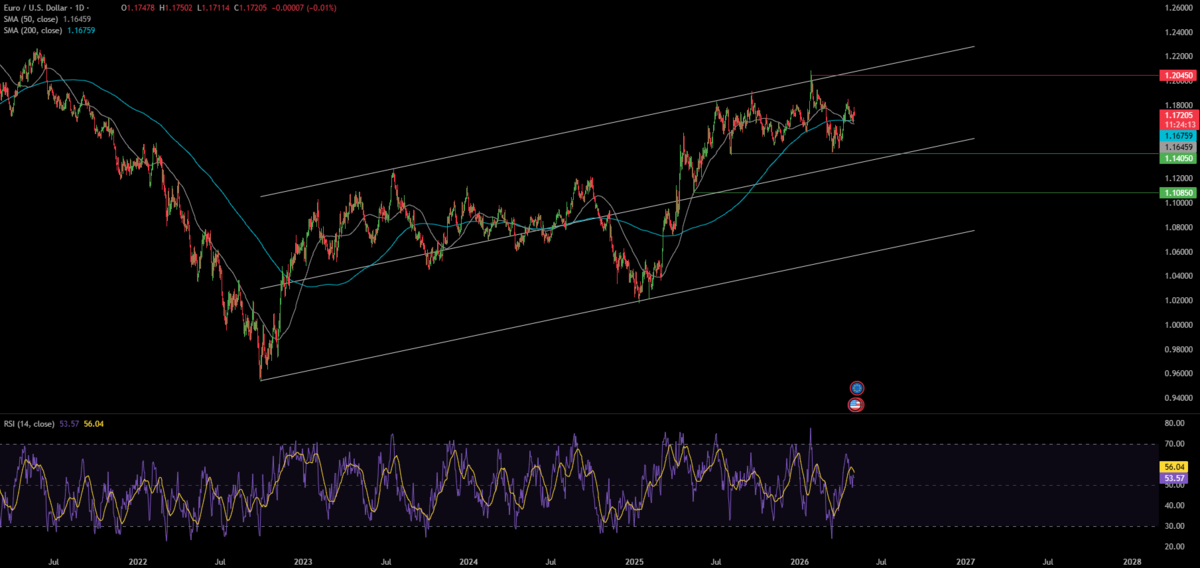
A stronger-than-expected result would reduce expectations for rate cuts and could support the US dollar, adding pressure to EUR/USD.
Bottom line
The Iran conflict and high energy prices continue to drive macroeconomic conditions as markets enter a data-heavy week. This week’s calendar is expected to clarify the ongoing debate over growth versus inflation following the FOMC’s divided April meeting.
The anticipated RBA hike underscores the growing divergence between tightening economies and the Fed’s steady approach. The India Services PMI and Pakistan’s response to the SBP’s surprise move will be important for sentiment in the South Asian market.
Most importantly, a weak NFP report combined with Q1 PCE inflation at 4.5% would heighten stagflation concerns that Powell has previously downplayed
Trading involves risk.
Author



 Risk Disclaimer
The content provided here is for informational purposes only. It is not intended as personal investment advice and does not constitute a solicitation or invitation to engage in any financial transactions, investments, or related activities. Past performance is not a reliable indicator of future results.
The financial products offered by the Company are complex and come with a high risk of losing money rapidly due to leverage. These products may not be suitable for all investors. Before engaging, you should consider whether you understand how these leveraged products work and whether you can afford the high risk of losing your money.
The Company does not accept clients from the Restricted Jurisdictions as indicated in our website/ T&C. Some services or products may not be available in your jurisdiction.
The applicable legal entity and its respective products and services depend on the client’s country of residence and the entity with which the client has established a contractual relationship during registration.