9 min read
 Weekly Recap
Major US data: cool inflation drives records before a retail-sales stumble
Two subdued inflation reports drove Wall Street to new highs. July CPI, released Wednesday, increased 0.1% for the month to a 3.4% annual rate, down from 3.5% and in line with expectations, while core CPI eased to 2.5%. Producer prices on Thursday were also soft, with headline PPI unchanged. These results supported the prevailing view that further rate hikes are unnecessary, lowering Treasury yields and boosting equities.
Technology stocks led the gains. The US 100 surpassed 30,000, closing the week at 30,046.14, up approximately 1.1%. The S&P 500 exceeded 7,800 for the first time and recorded its 27th record close this year, while the volatility index fell to a 2026 low. Markets reduced the probability of a September rate hike to about one in three.
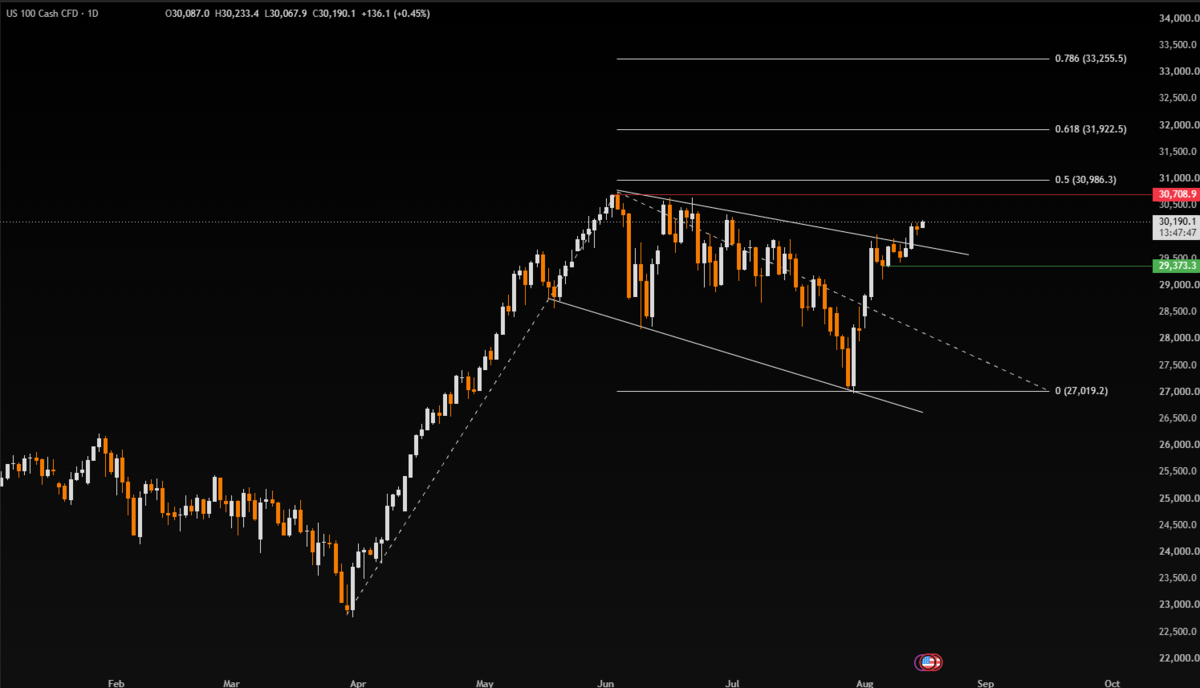
Momentum slowed on Friday as July retail sales unexpectedly declined by 0.6%, the largest drop since May 2025, and consumer sentiment weakened. This pulled major indexes slightly below their highs, though all three posted a third consecutive weekly gain. The US 100 remains strong but is now more sensitive to any hawkish signals from this week’s Fed minutes.
Gold: the rally extends to a two-month high
Gold continued to rise, trading near $4,376 an ounce by Friday, its highest level since early June, as softer inflation data reinforced expectations that the Federal Reserve will maintain current rates. December futures settled at $4,437.30 on Friday, rebounding after a brief 1.3% decline due to profit-taking on Thursday.
The environment remained favorable. With both CPI and PPI cooling and last week’s jobs report showing payroll losses, the likelihood of a September rate hike dropped to about one in three, limiting real yields that had pressured gold earlier in 2026. Ongoing tensions in the Middle East and a weaker dollar, which fell to a one-week low after disappointing retail sales, further supported gold prices.
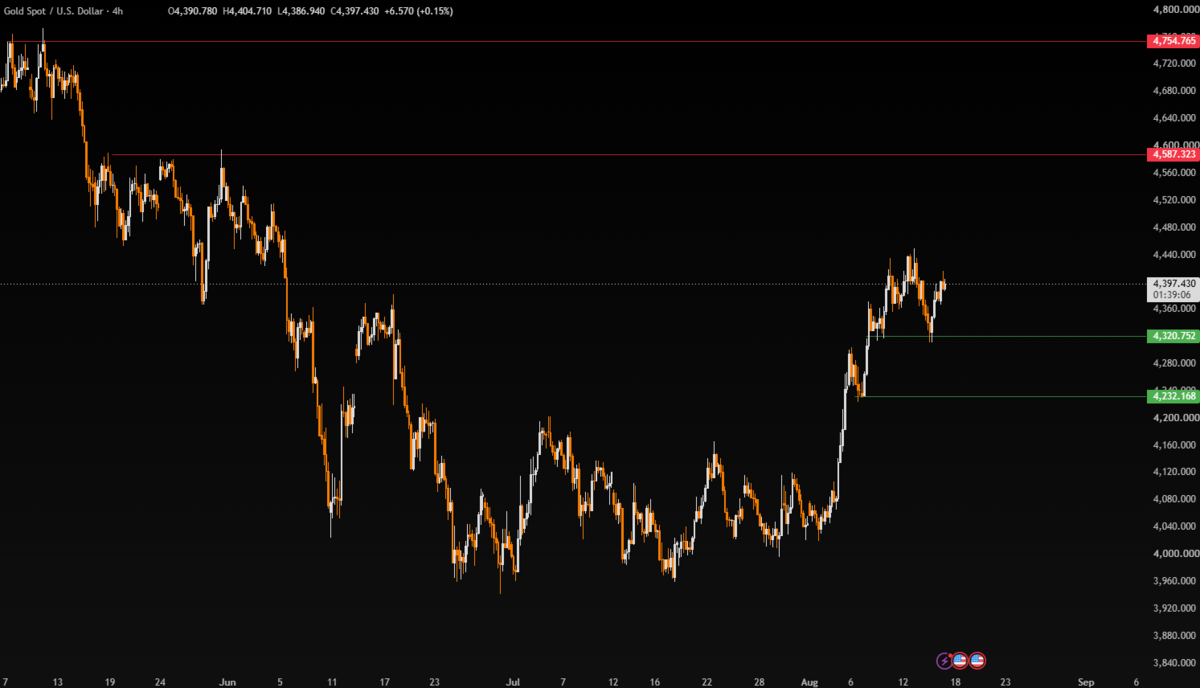
Gold’s near-term direction now depends on the tone of this week’s FOMC minutes and developments leading up to the Jackson Hole symposium. Confirmation that the Fed is comfortable maintaining current rates would support gold, while indications of growing hawkish sentiment could renew rate-hike expectations and limit gains.
Oil: UK Brent climbs ~6% as Iran talks stall
Brent rose approximately 6% over the week, closing at $88.52 on Friday, as stalled diplomatic efforts maintained a risk premium in the market. Iran stated that a deal with Oman to establish new shipping lanes through the Strait of Hormuz was nearing completion, but emphasized that the waterway would reopen only if the United States met additional conditions. Meanwhile, Washington indicated it would maintain its naval blockade of Iran indefinitely.
The ongoing stalemate reversed the previous week’s decline. Prices strengthened even as data showed tankers continued to leave the region despite the standoff, and the rebound in crude contributed to higher Treasury yields heading into the weekend. The absence of progress in peace talks kept upward pressure on oil prices.
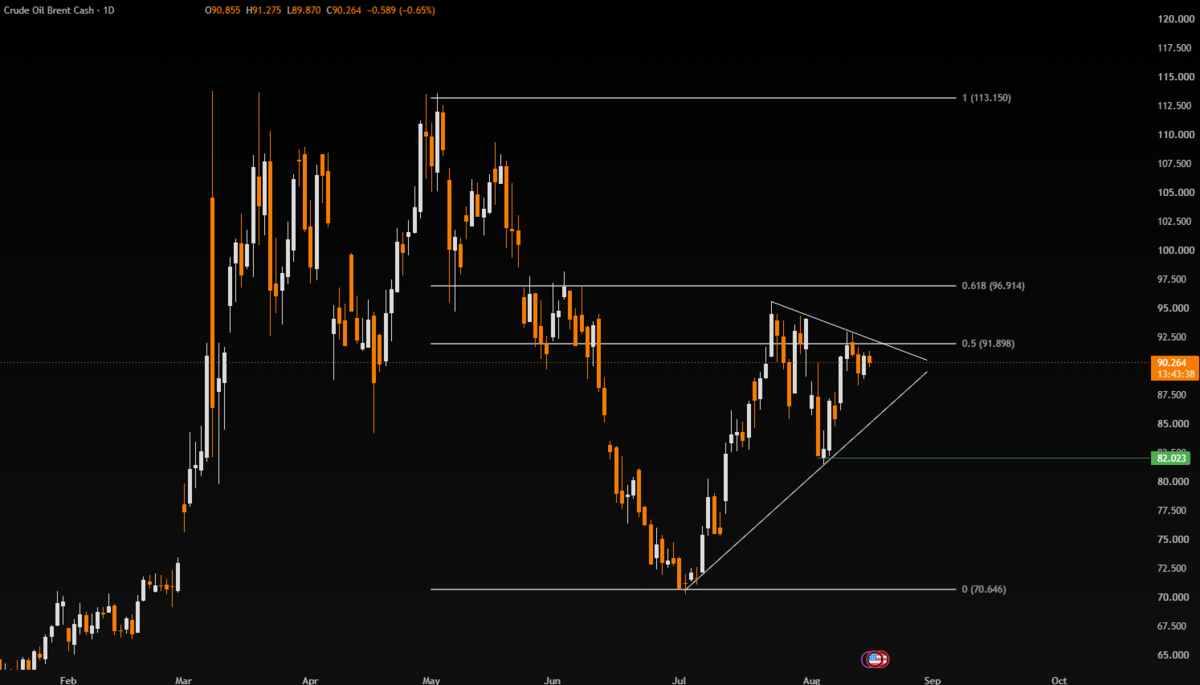
UK Brent’s outlook depends on whether the Iran-Oman agreement is finalized and the blockade is eased. Progress toward reopening Hormuz would increase supply and lower prices, while a breakdown in talks could push UK Brent back toward $100.
Pakistan markets: KSE-100 eases as oil rebounds
The KSE-100 declined 0.73% during a holiday-shortened week, closing at 180,104.61 on Thursday, with markets closed Friday for Independence Day. The pullback followed two strong weeks and reflected profit-taking, as rising oil prices and stalled Gulf peace talks reduced the optimism that fueled the previous rally.
The broader environment remained positive. Overseas workers’ remittances totaled $3.631 billion in July, continuing strong inflows that have supported the external account. The recent Makkah Joint Defense Agreement with Saudi Arabia and Türkiye also bolstered sentiment. Trading was volatile, with the index fluctuating widely before closing lower.
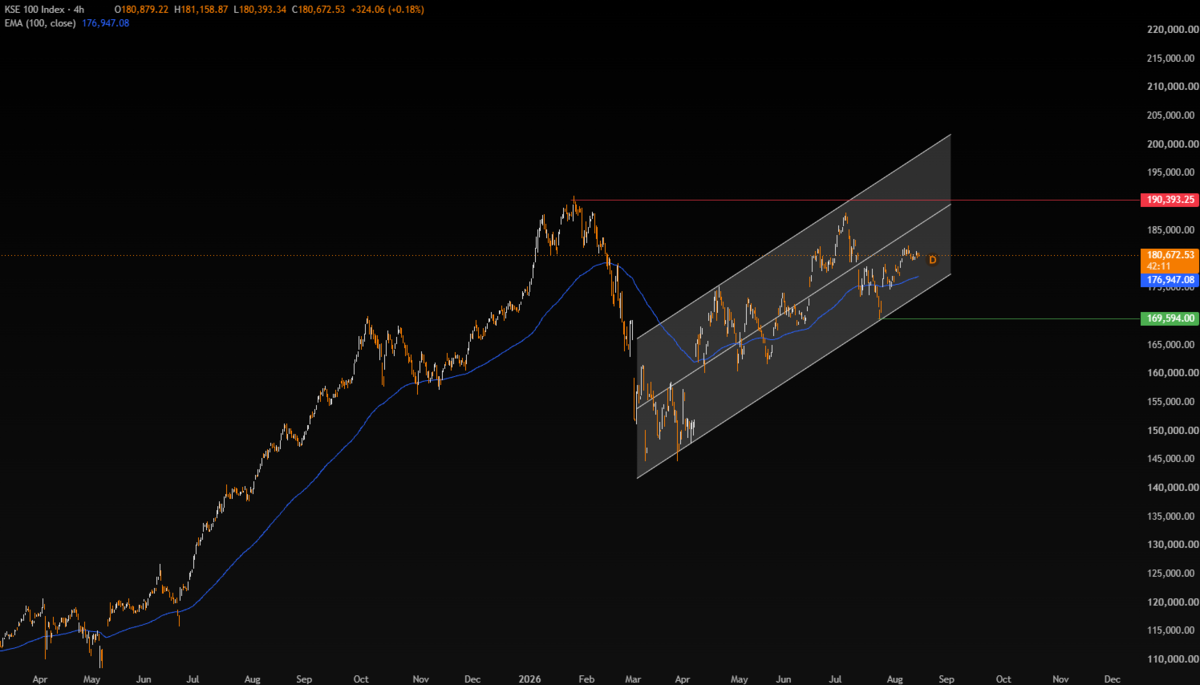
The rupee held firm at 277.65 against the dollar. With no domestic policy catalyst this week, the KSE-100’s direction rests on external cues — chiefly the path of UK Brent and any movement in the Hormuz negotiations — alongside the tail end of the earnings season.
Week Ahead
FOMC Minutes — Wednesday, 19 August, 18:00 UTC
The minutes of the Federal Reserve’s 28–29 July meeting will be released on Wednesday, providing the most detailed account yet of a decision that split the committee three ways. The Fed held its policy rate at 3.50–3.75%, but three officials, Beth Hammack, Neel Kashkari, and Lorie Logan, dissented in favor of a hike. This marked the first three-way, same-direction dissent since September 2016.
Investors will examine the record to assess how strongly the hawkish camp argued its case and what might prompt more members to support a rate hike. The context has changed since the meeting: last week’s payroll decline and this week’s subdued CPI and PPI have reduced the odds of a September hike to about one in three. The minutes will be reviewed to determine whether this dovish repricing is justified or premature, just before the Jackson Hole symposium later this month.
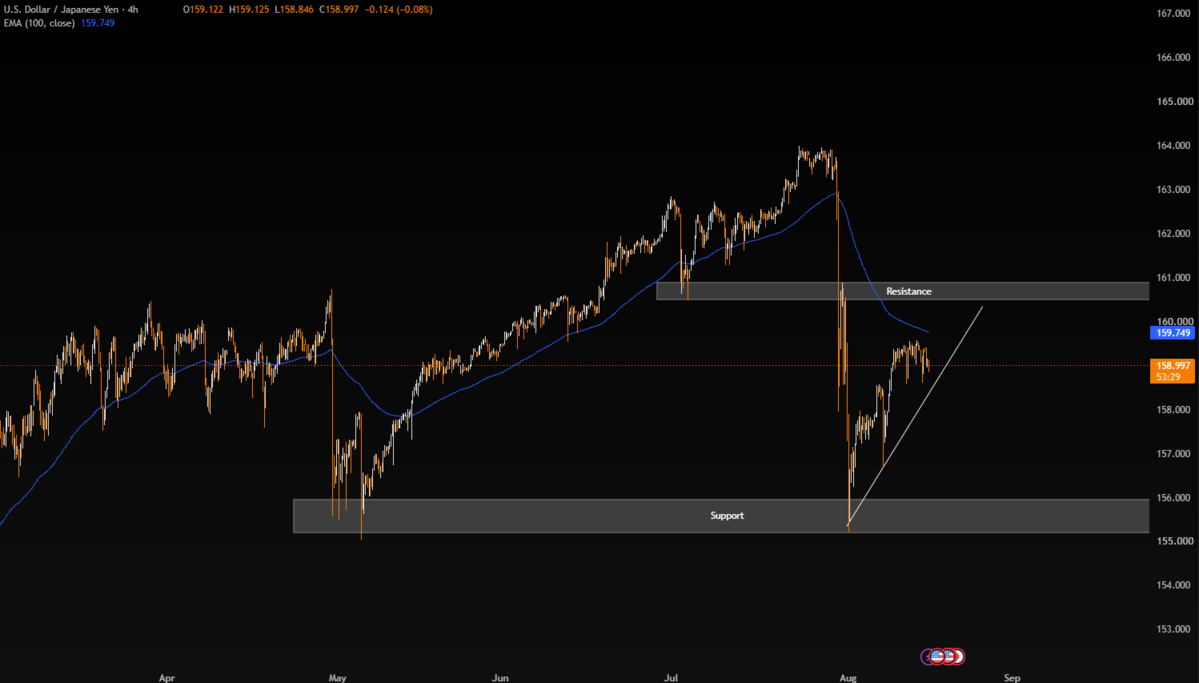
USD/JPY trades near 159, with the yen having given back about half of the gains from this month’s historic US-Japan intervention. The Bank of Japan is reportedly considering a rate hike as early as September. Hawkish-leaning minutes that keep a hike possible would widen the rate gap and support USD/JPY. A record emphasizing patience and a divided committee would weigh on the pair, allowing the yen to strengthen.
India Flash PMIs (August) — Friday, 21 August, 05:00 UTC
India’s flash PMIs for August, compiled by S&P Global for HSBC, are due Friday and will provide the first indication of private-sector momentum this month. In July, the flash Composite Output Index fell to a three-year low of 54.3, reflecting a services-led slowdown, though activity remained firmly in expansion.
The August reading will be monitored for two factors: whether growth is stabilizing after the recent slowdown, and whether rising oil prices are increasing input-cost inflation. This comes amid a challenging domestic backdrop, with July CPI at 4.45% for a second month above the RBI’s 4% target and ongoing foreign investor outflows, even as the central bank’s neutral stance and strong growth forecasts support the medium-term outlook.
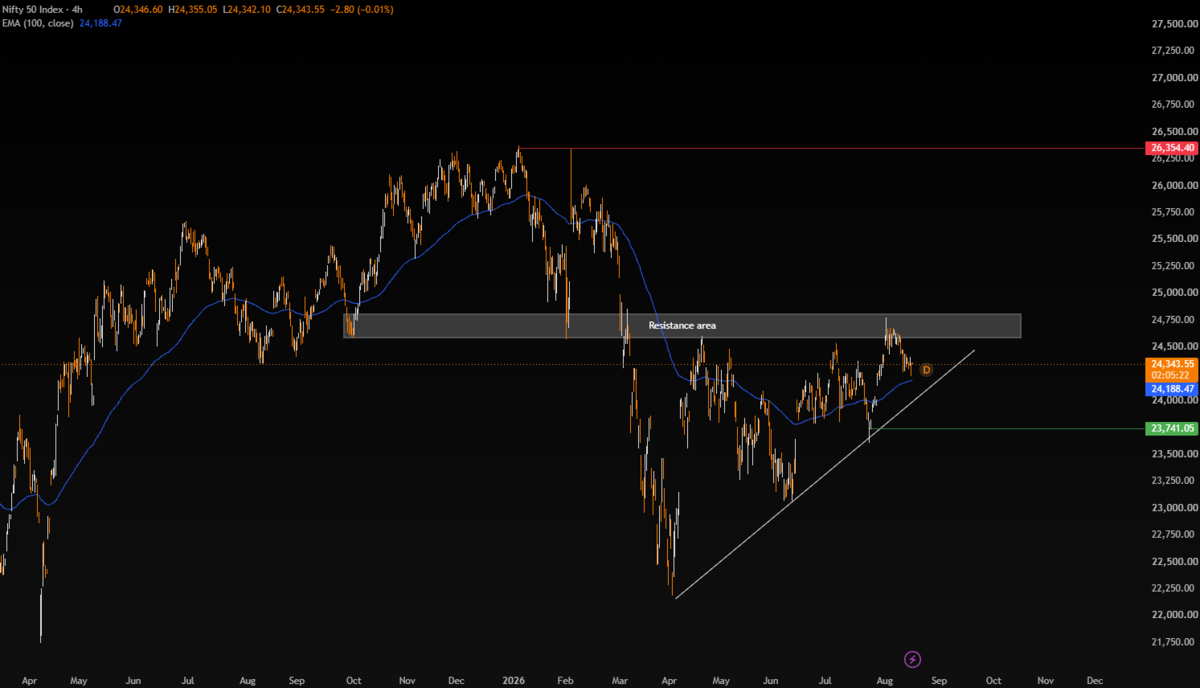
The Nifty 50 enters the week at 24,366 after snapping a two-week advance with a 0.83% decline, weighed by the oil rebound and geopolitical caution. A resilient set of PMIs would reinforce the growth story and support the Nifty 50, while a softer reading — landing alongside firmer crude and above-target inflation — would add to the pressure on rate-sensitive and cyclical names.
UK Jobs — Tuesday, 18 August, 06:00 UTC
The UK labor market report will be released on Tuesday and serves as a key indicator for a divided Bank of England. The previous reading showed the unemployment rate steady at 4.9% and regular pay growth at 3.4%, the joint-slowest pace since October 2020, but still above the level the BoE considers consistent with its 2% inflation target.
This data is significant because the MPC kept the Bank Rate at 3.75% on 30 July by a 6–3 vote, with three members favoring a hike. Policymakers are closely monitoring wages: a sharp public-private divide remains, with public-sector pay rising above 5% while private-sector pay has slowed below 3%. Further easing in wage growth or higher unemployment would support the case for future cuts, while persistent pay growth and steady joblessness would strengthen the hawkish stance.
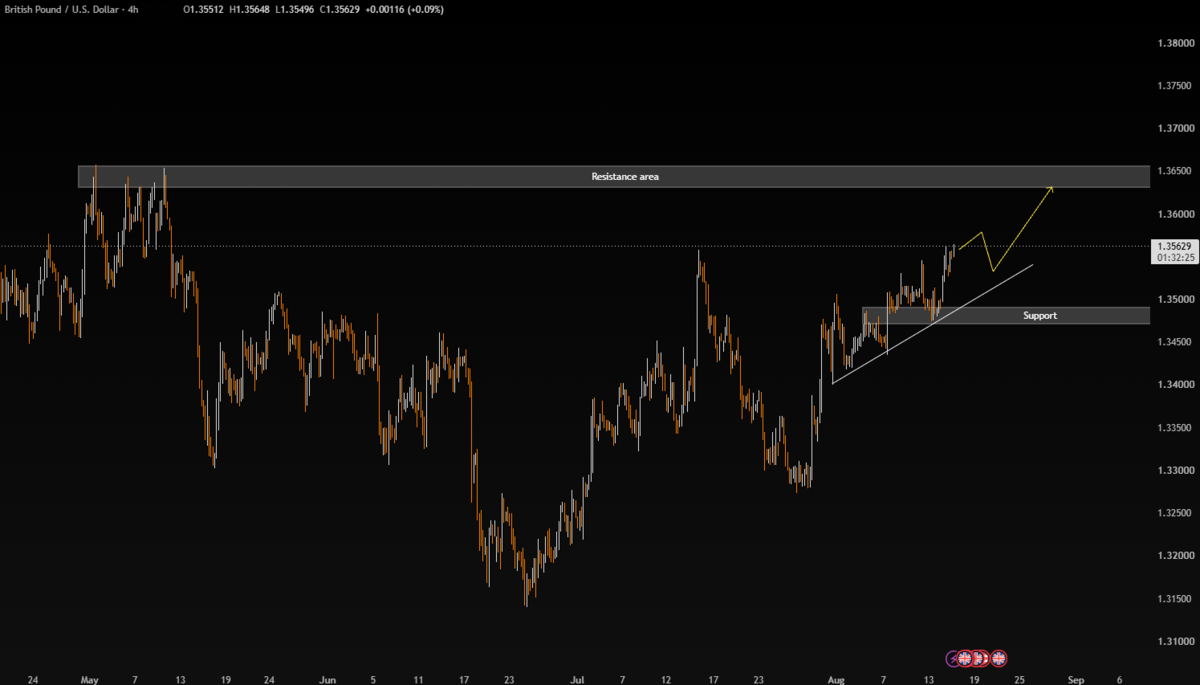
GBP/USD trades near 1.355, after reaching a three-month high last week as the dollar weakened. A strong jobs report that keeps the BoE cautious would support GBP/USD, while clear signs of labor-market cooling would revive rate-cut expectations and weigh on the pair. The dollar’s reaction to the FOMC minutes the following day will also influence the outcome.
Bottom line
The main theme is a US market reaching new highs on cooling inflation, with the US 100 surpassing 30,000 for the first time and the probability of a September Fed hike now around one in three. This makes this week’s FOMC minutes the key event: the account of the three-way dissent will influence USD/JPY and set the tone ahead of Jackson Hole, while softer retail sales and sentiment data suggest the economy may be cooling faster than hawkish members expect.
Trading involves risk.
Author



 Risk Disclaimer
The content provided here is for informational purposes only. It is not intended as personal investment advice and does not constitute a solicitation or invitation to engage in any financial transactions, investments, or related activities. Past performance is not a reliable indicator of future results.
The financial products offered by the Company are complex and come with a high risk of losing money rapidly due to leverage. These products may not be suitable for all investors. Before engaging, you should consider whether you understand how these leveraged products work and whether you can afford the high risk of losing your money.
The Company does not accept clients from the Restricted Jurisdictions as indicated in our website/ T&C. Some services or products may not be available in your jurisdiction.
The applicable legal entity and its respective products and services depend on the client’s country of residence and the entity with which the client has established a contractual relationship during registration.