9 min read
 Weekly recap
Tech sell-off, hot Core PCE & Dow record
US indices showed significant divergence this week. The Dow Jones closed at 51,876, up 0.61%. The Nasdaq ended at 29,266, down 3.1%, while the S&P 500 finished at 7,354.02, declining about 2%.
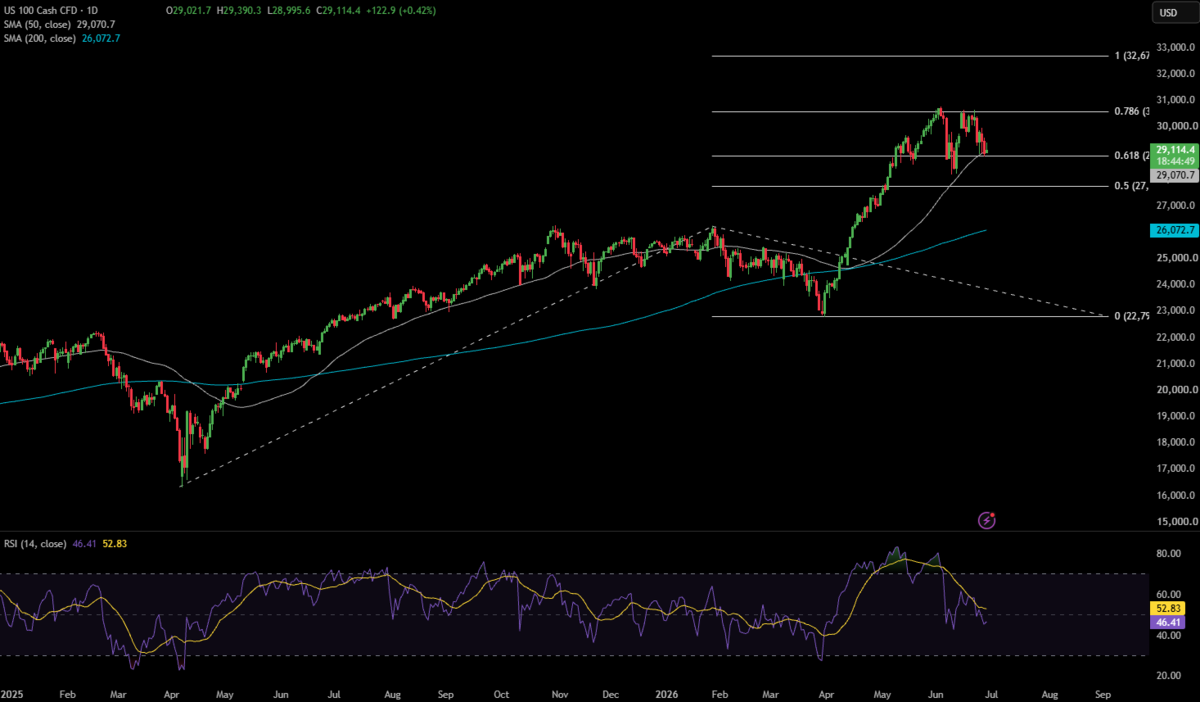
Thursday’s key data showed May Core PCE rising 0.3% month-on-month and 3.4% year-on-year, the highest annual rate since October 2023 and above the 3.3% consensus. Headline PCE increased to 4.1% year-on-year, the highest since April 2023. Personal spending rose 0.7%, exceeding expectations, while Jobless Claims fell to 215,000. These results have effectively ruled out 2026 rate cuts and reinforced the Federal Reserve’s hawkish stance.
Consumer price increases impacted markets. Apple shares fell 6% after the company announced higher prices for its MacBook and iPad models. Microsoft declined by 4% following a $100-$150 price increase for Xbox consoles, depending on configuration.
Brent collapse & Hormuz reopening — OPEC+ Sunday looms
Brent crude prices fell sharply this week as the Iran energy shock unwound rapidly. Supply normalization has outpaced market expectations. Saudi-flagged tankers have moved freely since 18 June, the US Central Command lifted port restrictions, and Kuwait ended its force majeure declaration. The risk premium from the four-month Iran conflict has now largely dissipated.
The seven OPEC+ voluntary-cut countries will meet on Sunday, 5 July, marking the week’s final event. The core producers—Saudi Arabia, Russia, Iraq, Kuwait, Kazakhstan, Algeria, and Oman—have increased output for four consecutive months. April and May saw increases of 206,000 barrels per day, while June and July each added 188,000 bpd.
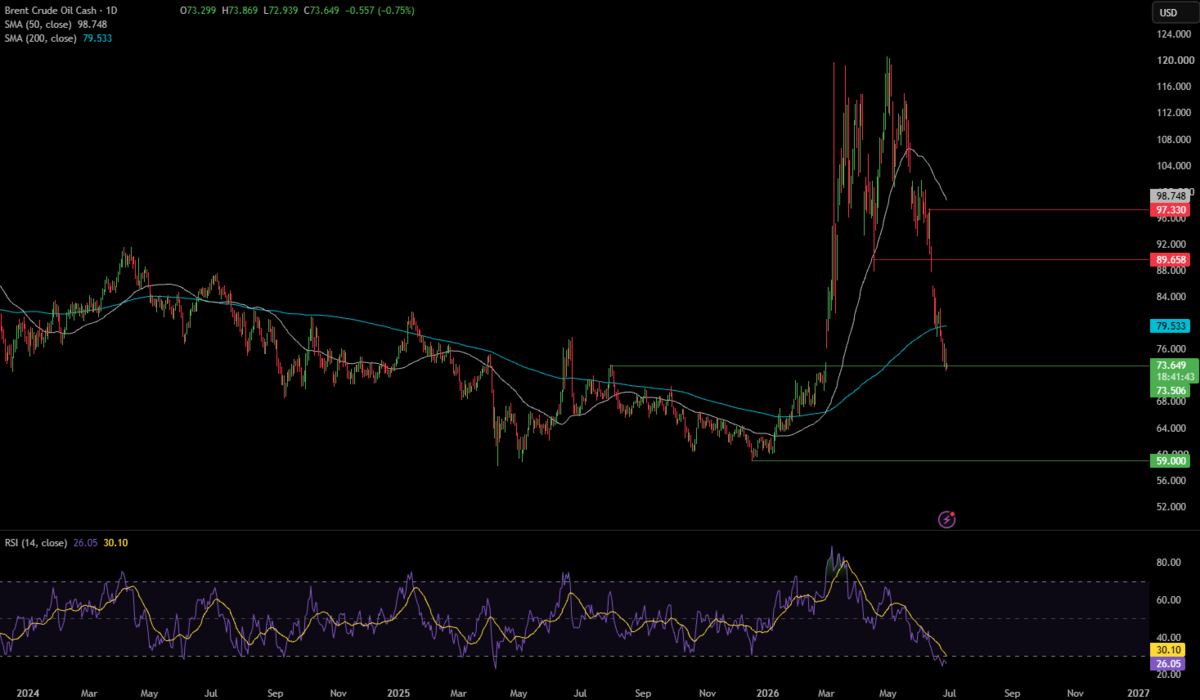
Sunday’s meeting will determine the August target. With Hormuz reopened, Saudi tankers moving freely, and Brent near pre-war levels at $73-74, the group must decide whether to continue the 188,000 bpd pace, which would fully unwind the remaining 567,000 bpd of the original 1.65 million bpd voluntary cut by end-September, or pause to support prices. This decision will influence Brent’s direction at the Monday, 6 July open.
Week Ahead
Eurozone CPI flash for June (Tuesday, 09:00 UTC+0)
Eurostat will release the flash estimate for June Eurozone inflation at 09:00 UTC+0 on Tuesday. This is the first major data point following the ECB’s 11 June 25bp hike to a 2.25% deposit rate. May inflation was 3.2% year-on-year, the highest since September 2023, with energy at 10.9% and core CPI at 2.6%. Services inflation rose to 3.5% from 3.0%.
The June inflation reading may be the first to reflect the unwinding of the Iran energy shock. Brent fell from above $80 to near $73 in the latter half of the month, so the euro-area diesel and gasoline pass-through should begin to fade. However, there is a risk that services inflation continues to broaden, as Lagarde highlighted at the June press conference. The ECB’s updated staff projections place headline inflation at 3.0% for 2026, with risks tilted upward.
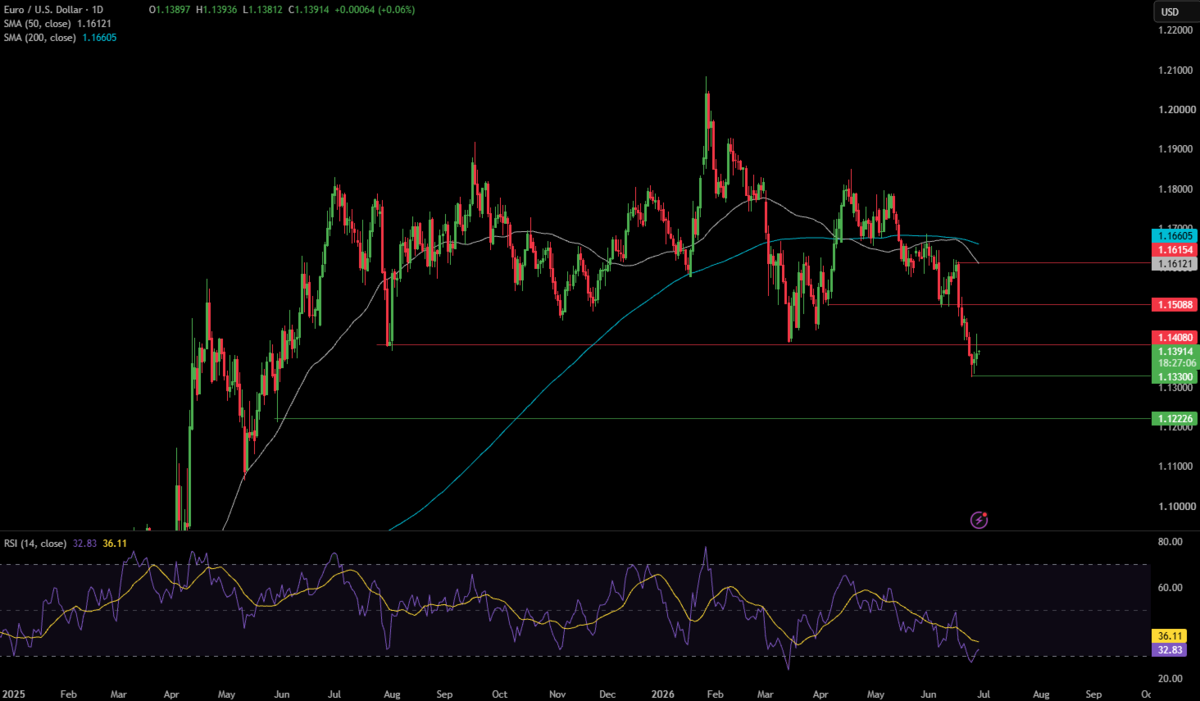
A softer-than-expected inflation reading, especially with energy prices declining, would weaken the case for another rate hike and could pressure EUR/USD. Conversely, persistent core or higher services inflation would reinforce a hawkish outlook and support the euro. This outcome will directly influence the Sintra Forum discussion the following day.
ECB Sintra Forum panel — Warsh’s international debut (Wednesday)
The 2026 ECB Forum on Central Banking runs in Sintra, Portugal, from 29 June to 1 July, with the marquee event on Wednesday: a Q&A panel featuring Federal Reserve Chair Kevin Warsh, ECB President Christine Lagarde, BoE Governor Andrew Bailey, and BoC Governor Tiff Macklem. This is Warsh’s first international appearance as Chair after taking over from Powell on 22 May, and every word will be parsed for policy signals.
The context is complex. Markets have just absorbed a hotter-than-expected Core PCE print, and the June FOMC dot plot signals a potential rate hike before year-end. The Supreme Court is also expected to rule this week on the Lisa Cook case, which will influence presidential authority over the Fed. Warsh has publicly criticized the dot plot and forward guidance, opting not to submit his own dot at the 17 June meeting. His tone in Sintra, when contrasted with that of three more communicative peers, will be a key indicator.
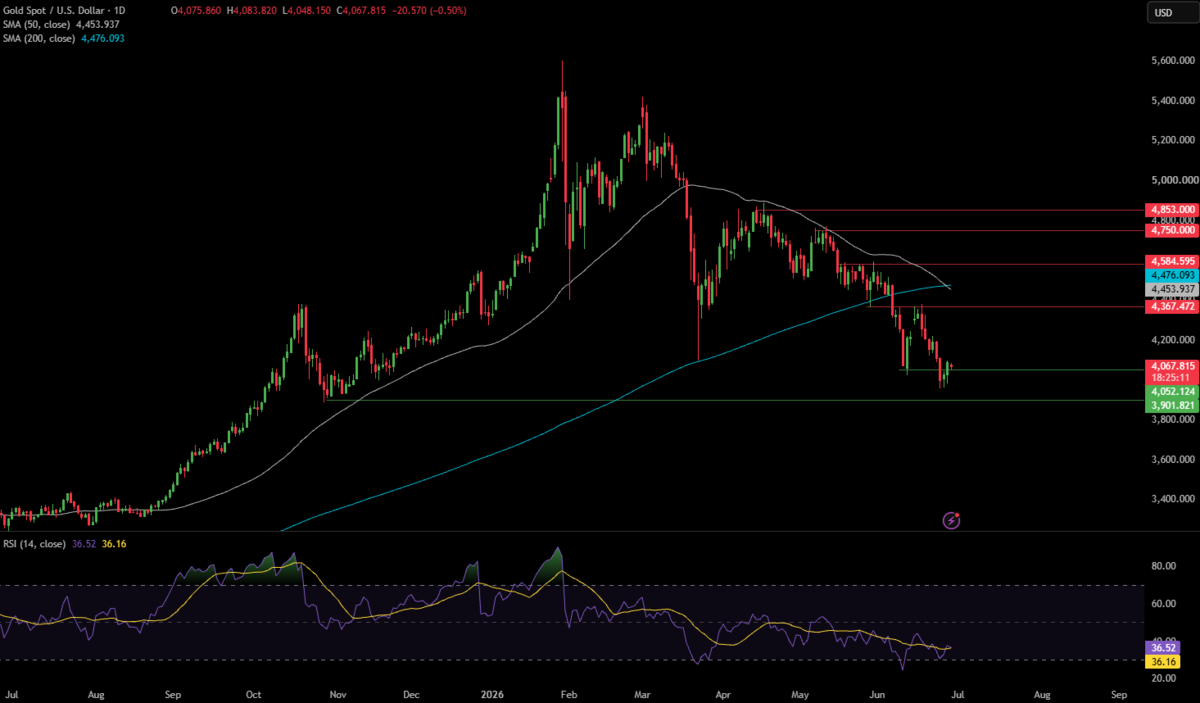
Gold has consolidated around $4,000 to $4,100 after the reopening of the Strait of Hormuz reduced safe-haven demand. Friday’s softer-than-expected monthly Core PCE lifted gold by 1.1% to $4,092.
A hawkish signal from Warsh indicating further tightening would raise real yields and push gold lower. A more measured tone, especially if the Cook ruling affirms Fed independence, would support gold by reducing institutional risk.
US ISM Manufacturing PMI June (Wednesday, 14:00 UTC+0)
ISM publishes June Manufacturing PMI at 14:00 UTC+0 on Wednesday — the first major US activity data point of the week and an important read on whether the energy-shock relief has started feeding through to industrial demand. The May print at 54.0 marked the strongest factory expansion since May 2022, with the prices-paid index elevated at 82.1.
The June reading will be informative on two fronts. First, whether the prices-paid component eases meaningfully now that Brent has collapsed below pre-war levels. Second, whether new orders and employment hold up against the backdrop of higher rates and the Fed’s hawkish pivot. The Dow Jones is at near-record highs precisely because the index’s industrial and financial weightings benefit from this kind of “no-recession-yet” data.
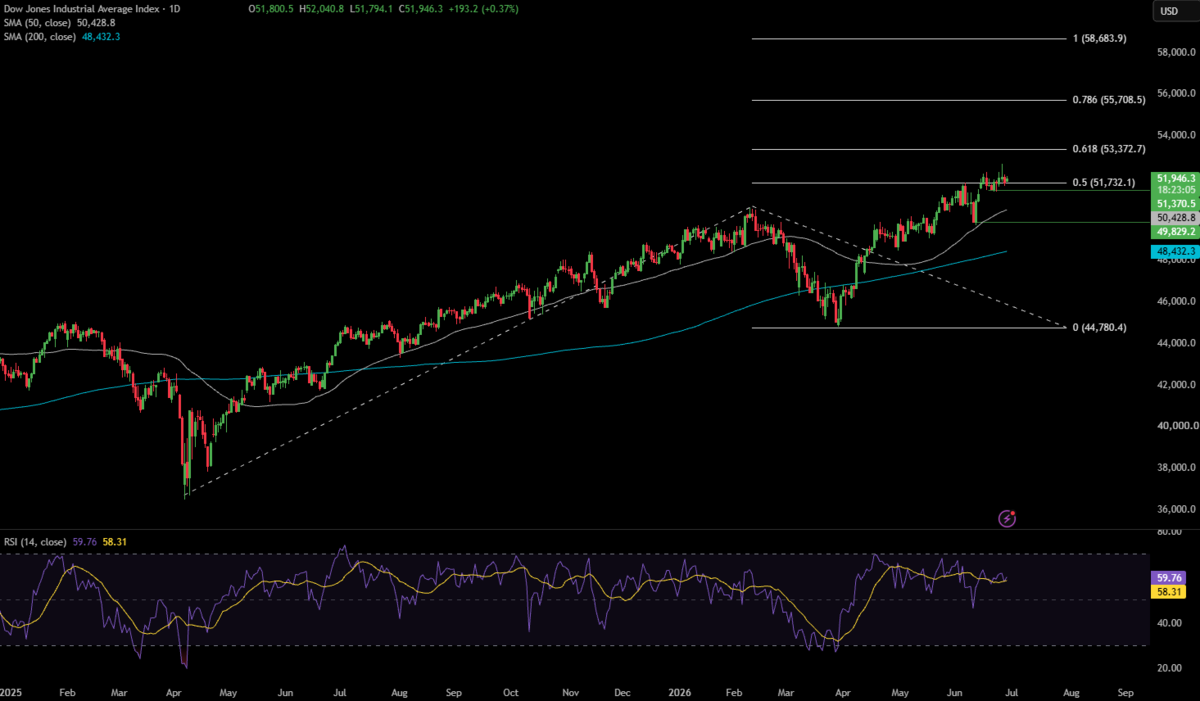
A strong headline with lower prices paid would likely extend the Dow Jones rally by easing inflation concerns and confirming robust activity. Conversely, a weak headline with persistent price pressures would revive stagflation concerns and put pressure on the index. This reading will also influence positioning ahead of Friday’s NFP release.
US ADP Employment June (Wednesday, 12:15 UTC+0)
ADP will release the June private payrolls report at 12:15 UTC+0 on Wednesday, providing an early indication ahead of Thursday’s NFP. May’s ADP report was subdued compared to the official NFP, which posted 172,000 versus an 80,000 consensus. Markets are focused on whether June’s labor data confirms May’s strength or indicates it was a one-off due to World Cup-related hiring.
This report comes as markets have already dismissed 2026 rate cuts and are increasingly pricing in 2026 hikes. CME FedWatch now implies a 60% probability of a hike by October, following the FOMC’s hawkish pivot and Core PCE at 3.4%. A strong ADP and a hawkish tone from Warsh at Sintra would further support expectations for rate hikes. A soft reading would provide some relief, but is unlikely to revive expectations for cuts.
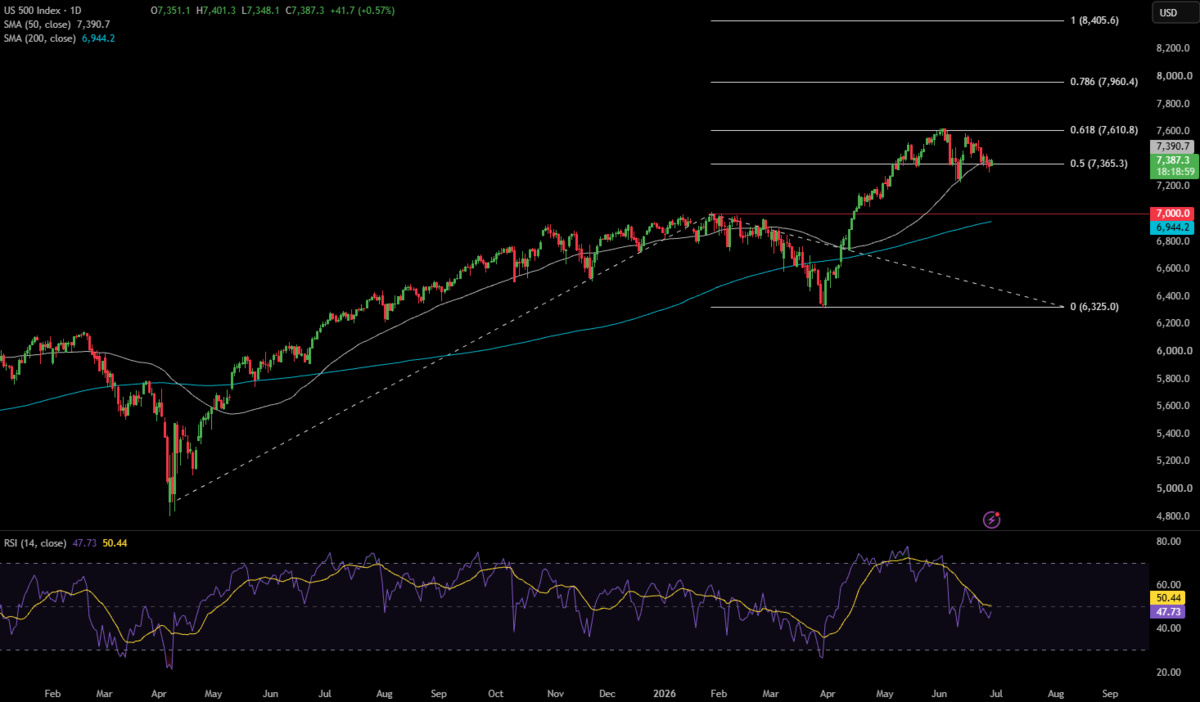
The S&P 500 has provided the clearest overall signal amid recent market shifts. Last week’s 2% decline was driven by tech and the Nasdaq, while defensive sectors helped cushion the broader index. A strong ADP would challenge the index as rate-cut risks diminish, while a soft reading would offer support, especially ahead of the NFP release.
US Non-Farm Payrolls June (Thursday, 12:30 UTC+0)
The BLS will release June payrolls at 12:30 UTC+0 on Thursday, a day earlier than usual due to the 3 July US early close and 4 July Independence Day holiday. Marc Giannoni’s preview suggests a consensus of around 172,000, similar to May’s figure. The three-month moving average for Q2 is over 150,000, compared to just 73,000 in Q1.
The print is the most consequential US labor report of the cycle. May surprised dramatically to the upside at 172,000 against a consensus of 80,000, with March and April revised up by a combined 93,000. Some of that strength was attributed to World Cup-related hiring — the tournament kicked off on 11 June — which makes June’s release a critical test of whether the underlying labor market is genuinely accelerating or whether one-off effects flattered the May print.
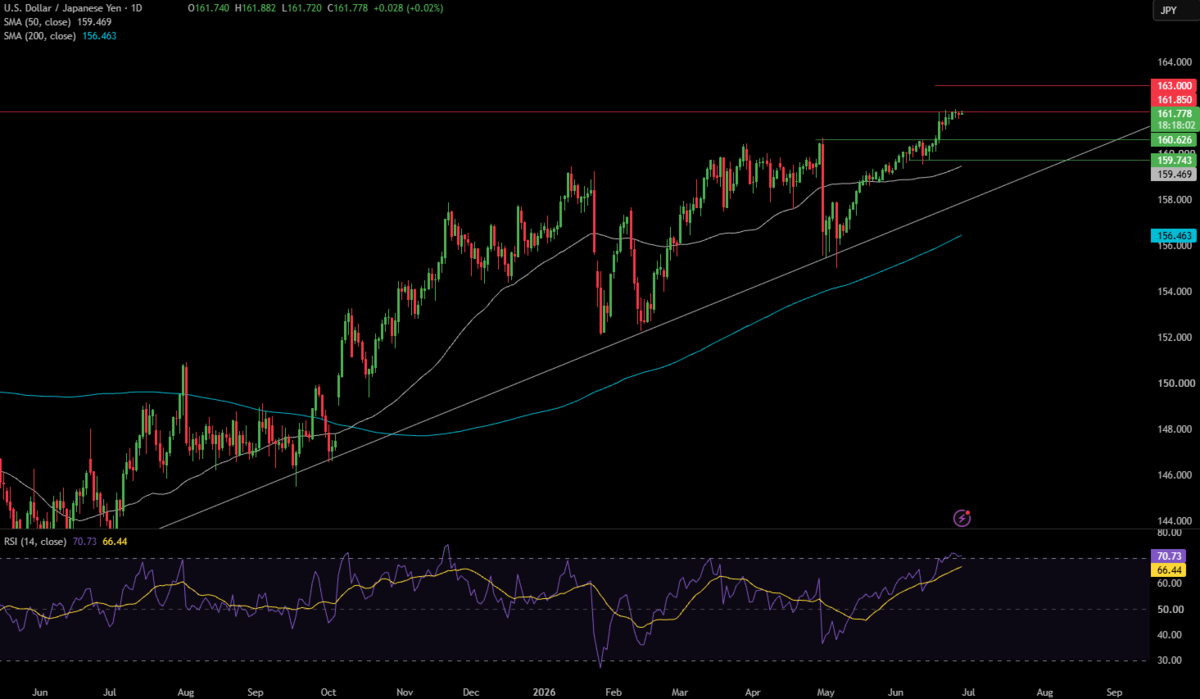
USD/JPY remains the clearest indicator of US labor data. A hot beat would push USD/JPY higher as rate-spread compression slows and Fed hike odds firm further; a sub-130,000 miss combined with rising unemployment would trigger a dollar pullback and pull the pair lower. The BoJ’s tightening path adds an additional layer of two-way risk.
Bottom line
The defining force this week is Thursday’s NFP, released a day early — landing into a market that has already absorbed a hotter-than-expected Core PCE and is pricing 2026 hikes rather than cuts. Wednesday is the second pivot: Warsh’s Sintra debut on stage with Lagarde, Bailey, and Macklem coincides with the ISM Manufacturing PMI, ADP, and a potential Supreme Court ruling on Fed Governor Lisa Cook — any single one of which could reset the USD path.
Trading involves risk.
Author



 Risk Disclaimer
The content provided here is for informational purposes only. It is not intended as personal investment advice and does not constitute a solicitation or invitation to engage in any financial transactions, investments, or related activities. Past performance is not a reliable indicator of future results.
The financial products offered by the Company are complex and come with a high risk of losing money rapidly due to leverage. These products may not be suitable for all investors. Before engaging, you should consider whether you understand how these leveraged products work and whether you can afford the high risk of losing your money.
The Company does not accept clients from the Restricted Jurisdictions as indicated in our website/ T&C. Some services or products may not be available in your jurisdiction.
The applicable legal entity and its respective products and services depend on the client’s country of residence and the entity with which the client has established a contractual relationship during registration.