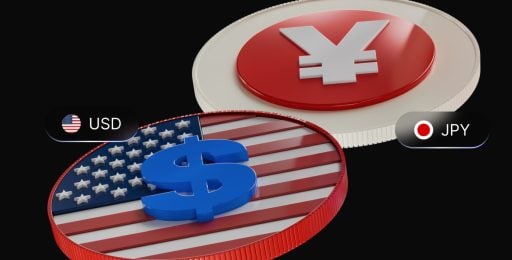

Japan's finance minister is set to confirm that Tokyo and Washington coordinated action in the currency market to pull the yen back from 40-year lows. The move follows the first joint yen intervention since 2011 and comes as the Bank of Japan signals it could raise interest rates soon.
Japanese Finance Minister Satsuki Katayama is due to announce that Tokyo and Washington took joint action in the currency market to arrest the yen's slide to 40-year lows, according to two Japanese government officials cited by Reuters. Katayama is likely to stress the two countries' determination to combat what they consider excessive yen declines, the officials said.
First joint intervention since 2011
Japan bought yen for dollars in New York trading hours on Thursday, a market source told Reuters. Bank of Japan data suggested it sold as much as $58.97 billion to support the currency, marking the first joint intervention with Washington since 2011.
That buying came hours before the Bank of Japan decided to keep monetary policy steady on Friday while signaling a strong chance it would raise rates soon. A widening rate differential with the US, where the Federal Reserve has shifted to a more hawkish stance, has been a key factor behind the dollar's rise against the yen.
The pair last traded at 157.57, down 1.2312% on the day. Shortly after BOJ Governor Ueda's press conference on Friday, the yen spiked in what markets suspected may have been another round of intervention by Tokyo.
Treasury signals readiness to act
Katayama's top currency diplomat, Atsushi Mimura, said Tokyo would respond to currency policy in close coordination with monetary policy after the yen's spike on Friday, suggesting the finance ministry and the central bank were working together against the weak yen. Separately, the US Treasury informed a number of banks on Friday that it might intervene in the yen market and told them to prepare for possible action, a source told Reuters.
According to Reuters, Treasury Secretary Scott Bessent said last week the yen "seems very undervalued to me". A Reuters photo showed his notepad at a Friday cabinet meeting listing plans to buy $5 billion to $10 billion in yen.
Shared concerns over bond yields
Critics have said Japan could face constraints on continued yen-buying, since selling down its Treasury holdings to fund the intervention could trigger a selloff in US debt and an unwelcome spike in yields. Some analysts, however, saw the Japan-US cooperation as also driven by Washington's own concern over rising Treasury yields, which could worsen if Tokyo failed to prevent a selloff in the yen and Japanese government bonds.
Former Bank of Japan official Nobuyasu Atago told Reuters that inflation turning hot risks leaving both countries' central banks behind the curve, adding that the two countries see merit in cooperating. The Ministry of Finance also made a rare English-language post on X saying it has a broad range of tools to address market liquidity needs, including access to the Federal Reserve's dollar-liquidity facility introduced in 2020.
Highlighting Japan's concern over rising bond yields, Economy Minister Minoru Kiuchi said Sunday that the government will step up efforts to enhance communication with markets, calling market trust in Japan's fiscal sustainability important to maintain.
Source: US Top News and Analysis
Trading involves risk.





 Risk Disclaimer