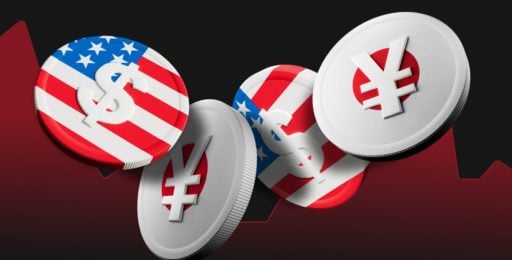

The dollar fell 1.64% last week to close at 99.80, its lowest level since mid-June, even as a hawkish Fed vote, rising Treasury yields, and a rebound in oil prices all pointed toward dollar strength. Japan's intervention to defend the yen, where authorities may have spent as much as $59 billion, paired with reported US-Japan cooperation, overrode those signals and pushed traders to trim dollar exposure broadly.
Japan's move to defend the yen last week broke the dollar's usual relationship with its own macro drivers. The Dollar Index fell 1.64% over the week to 99.80, its lowest close since mid-June, even though the Fed delivered a more hawkish vote than expected, yields climbed, and oil rebounded sharply.
Intervention overrides a hawkish Fed
Reuters reported that Japan intervened to support the yen during New York trading on Thursday, with Bank of Japan data indicating authorities may have spent as much as $59 billion. Reports later suggested the US Treasury had warned banks to be prepared for further action, and the Financial Times reported Washington itself bought yen on Friday — the first such support operation since 2011. Japan's top currency diplomat Atsushi Mimura said US support had gone "beyond psychological support", though strategists cautioned the move reflects tacit cooperation rather than the coordinated G7 intervention seen after the 2011 Tohoku earthquake.
A hawkish vote that still couldn't lift the dollar
The Fed left interest rates unchanged at 3.50%-3.75%. The vote split 9-3, with three policymakers — Beth Hammack, Lorie Logan, and Neel Kashkari — dissenting in favor of an immediate 25-basis-point hike. Chair Kevin Warsh kept June's minimalist tone, and his message was read as patience rather than urgency. By Friday, futures still implied a 67% chance of a September hike, confirming traders hadn't abandoned the tightening cycle.
Growth data reinforced the case for patience
Advance estimates showed the economy expanded at an annualized 1.5% in the second quarter, well below the 2.1% consensus forecast. The following day's report showed headline inflation slowing to 3.7% year-over-year, with core PCE easing to 3.3%, reinforcing the view the Fed could afford to wait.
Oil, yields rebounded — the dollar still slid
Brent crude rebounded from Monday's low of $80.67 to above $91 by the weekly close as renewed Middle East hostilities revived supply concerns, while the 10-year Treasury yield climbed toward 4.74%. Both moves ordinarily favor the dollar by reinforcing inflation concerns and widening its rate advantage. Yet the Dollar Index remained under pressure, recovering only modestly from Thursday's lows, the clearest sign traditional drivers weren't fully explaining the move.
Correction or reversal?
Officials aren't trying to drive USD/JPY sharply lower from its current 157-158 range; the goal looks more like keeping the pair from re-entering the 160-164 zone that had encouraged one-directional dollar bets. Once that intervention risk fades, yields, oil, and Fed expectations should regain their usual pull on the pair — with next week's non-farm payrolls report the first test.
Source: ActionForex
Trading involves risk.





 Risk Disclaimer