8 min read
 Bitcoin rose 2.5% last week, marking a fourth straight weekly gain. The price of BTC recovered from a weekly low of $73.7K, rallying to a 10-week high of $79.4K. The price has eased back at the start of the week and is trading around $78k at the time of writing.
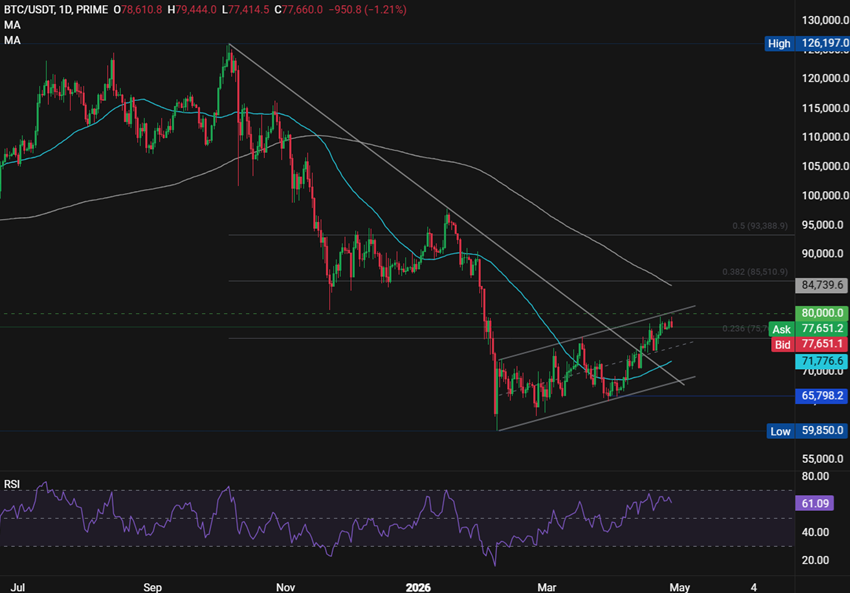
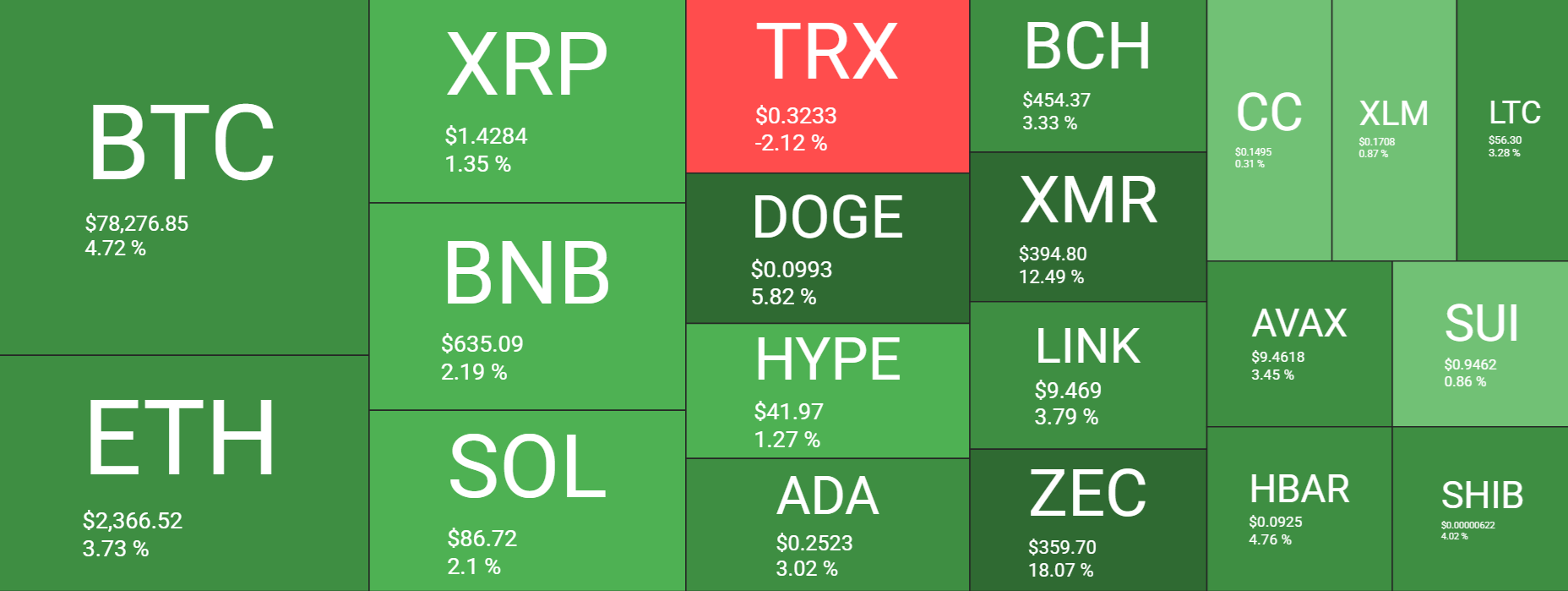
Gains were broad-based across the crypto market last week. Ethereum rose 3.7% over the week, BNB gained 2.1%, Dogecoin jumped over 5%, and Monero (XMR) surged more than 12%. TRX was an outlier, falling 2% over the past 7 days.
The total crypto market capitalisation increased to around $2.6 trillion, just below the weekly high of $2.64 trillion—the highest level since early March and up 14% since 28 February.
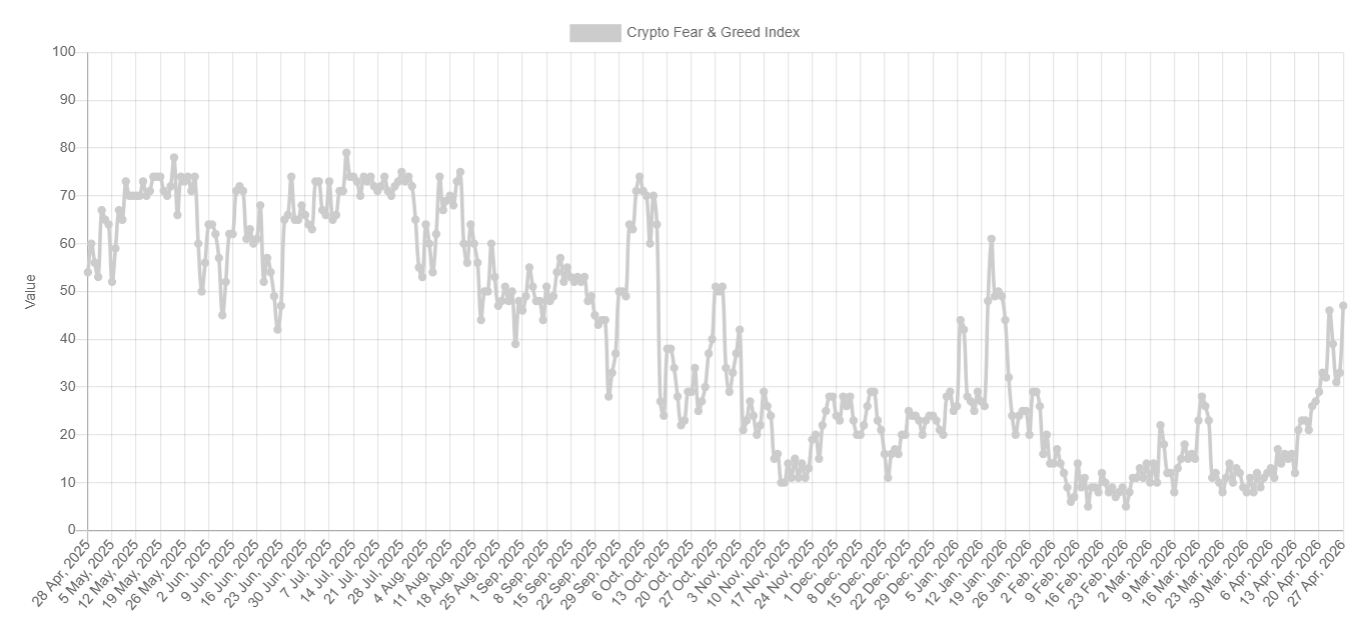
Meanwhile, the Crypto Fear & Greed Index improved to 47, moving out of “extreme fear” into “fear” and marking its highest level since 20 January. The Alternative Me index climbed 14 points on April 23—its strongest daily gain in recent months—signaling improved confidence and a gradual return of market interest.
The move from “Extreme Fear” into the “Fear” range signals that investments are beginning to reposition. The improvement in sentiment supports the recovery narrative.
Liquidity & market positioning
Capital flows across key segments suggest a gradual return of liquidity. According to DeFiLlama, total stablecoin market capitalisation has risen by $4.45 billion since the start of April, indicating capital is being positioned on-chain—often a precursor to deployment into risk assets. This contrasts with net outflows in the prior period.
Stablecoin inflows are often considered the “dry powder”, representing capital that has entered the ecosystem but has not yet been deployed into assets such as BTC and ETH.
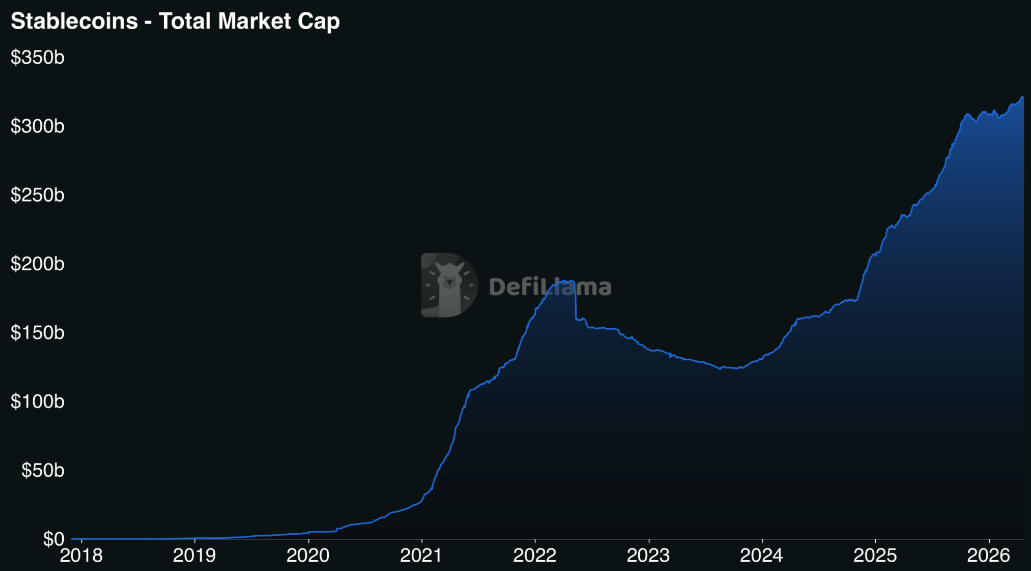
However, while liquidity is building, it has not yet translated into sustained buying pressure across major tokens. The stablecoin market now accounts for around $242 billion, reflecting ongoing capital rotation but not yet the levels typically seen in a mature bull cycle.
The market appears to be in an early recovery phase, with sentiment improving but investors remaining selective.
Institutional demand remains strong
Institutional demand remains a key support. According to SoSoValue data, Bitcoin ETFs recorded a ninth consecutive day of net inflows on Friday, bringing total inflows for the week to $823.7 million and marking a fourth straight week of inflows.

April inflows have now reached approximately $2.44 billion, highlighting growing investor conviction. Continued inflows could provide further upside support if momentum persists.
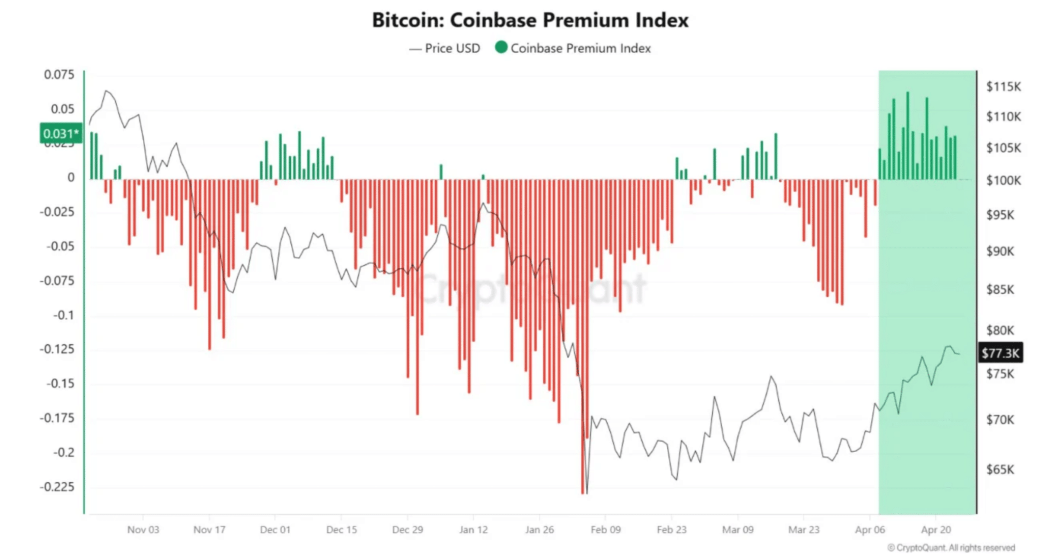
Furthermore, the Coinbase Premium Index reversed from -0.22 in February to above 0.03 in April. This shift signals sustained buying from US investors often linked to institutions. As the premium remains elevated, buyers absorb supply, reinforcing underlying strength and potentially limiting downside.
On the corporate side, Michael Saylor announced that MicroStrategy purchased an additional 34,164 BTC for $2.54 billion. The firm now holds 815,061 BTC at an average purchase price of $75,527—below current market levels—supporting investor confidence. MicroStrategy shares have also climbed, reaching their highest levels since mid-January.
Treasury liquidity injection
Last week, the US Treasury conducted a $15 billion debt buyback, injecting liquidity into the financial system. The move aims to improve liquidity and ease monetary liquidity pressures. This is considered a quasi-loosening signal. Such operations can be supportive for Bitcoin, given its sensitivity to liquidity conditions.
Macro & geopolitical risks
Despite some improving fundamentals, geopolitical risks remain a key overhang. Tensions in the Middle East continue, with reports of incidents last week involving ships in the Strait of Hormuz, even after President Trump extended the ceasefire while maintaining the US blockade on Iranian ports.
The stalling of US–Iran peace talks highlights the fragility of the situation and has pushed oil prices above $105 per barrel, keeping inflation concerns elevated.
Attention now turns to the Federal Reserve rate decision this week. The Fed is widely expected to leave rates unchanged at 3.50%–3.75%. Before the conflict, markets had priced in two to three rate cuts this year, but expectations have since shifted to roughly a 35% chance of just one cut.
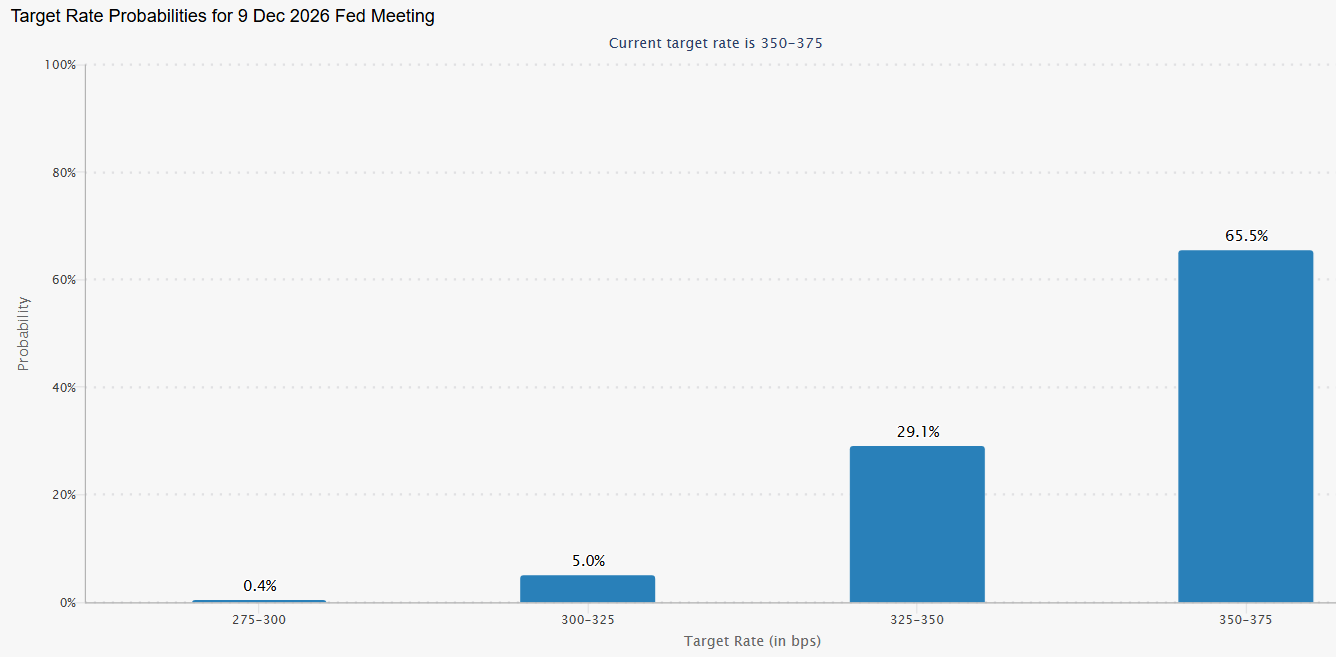
The focus will also be on Fed Chair Powell’s speech for clues on the health of the economy and the outlook for interest rates. The Fed will not release updated projections until June. In addition to the FOMC rate decision, US core PCE data, the Fed’s preferred inflation gauge, and Q1 GDP data will also be released.
Growth is expected to pick up from 0.5% in Q4 to 2.1%, and core PCE is expected to ease to 0.3% from 0.4% as secondary effects of higher oil prices are yet to show up in underlying inflation measures.
For now, a relatively steady Fed—compared to other central banks expected to tighten—has provided some support for US assets, including the Nasdaq, which continues to trade near record highs.
Conference week
What makes this week different is that the Bitcoin 2026 conference begins in Las Vegas today and runs through April 29. The focus will be on regulation, nation-state adoption, monetary policy, and the broader geopolitical implications of Bitcoin. The agenda also features policy-heavy sessions centered on Washington’s approach to crypto regulation and market access.
According to Galaxy Digital research covering 2019 through 2025, Bitcoin tends to rise into the conference, trade flat or mixed during the event, and soften afterward.
However, Bitcoin remains highly sensitive to broader risk appetite, meaning any conference-driven gains could quickly reverse if the macro backdrop deteriorates.
Bitcoin – derivatives signal caution despite price resilience
While Bitcoin has eased slightly, it remains resilient, rising 13% over the past month. However, derivatives positioning tells a different story, with funding rates remaining bearish—suggesting that many traders are still positioned defensively or betting against further upside.
The 30-day cumulative funding rate on Binance currently sits around -4.5%, highlighting how aggressively traders have been shorting the market in recent months. Not only are they short but willing to pay to maintain short positions – so confidently short.
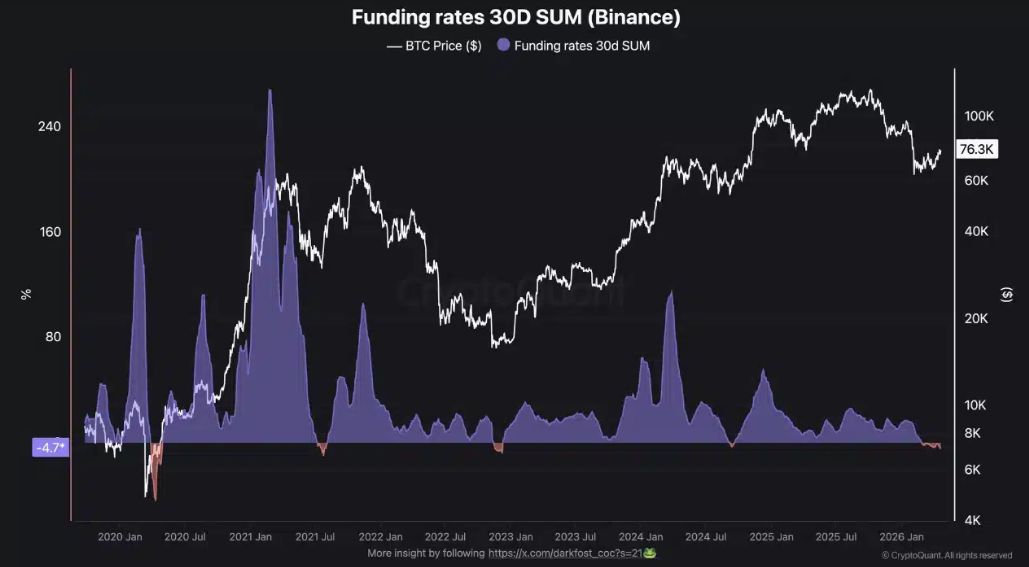
As a historical comparison, when Bitcoin emerged from the bear market in late 2022, funding rates fell further, reaching around -7% on a 30-day basis. At that time, extreme negative positioning helped form a market bottom and fuel the subsequent rally.
Funding rates have not been this negative since 2023, and historically, such extremes tend to occur when the market is heavily positioned to one side. Despite Bitcoin’s recent strength, many participants are still positioned for a reversal—creating conditions that can often lead to moves in the opposite direction.
If Bitcoin holds current levels or pushes higher, the build-up of short positions could trigger a short squeeze, accelerating any upward move.
Conclusion:
Bitcoin remains supported by strong institutional inflows, improving sentiment, and rising liquidity, helping it hold near recent highs. However, macro risks—particularly elevated oil prices, geopolitical tensions, and a more cautious Federal Reserve outlook—are capping upside.
At the same time, heavily bearish derivatives positioning suggests the market is skewed to the downside, creating the potential for a short squeeze if prices continue to hold or move higher. Near-term direction will likely depend on macro developments and whether risk appetite can be sustained.
Trading involves risk.
Author



 Risk Disclaimer
The content provided here is for informational purposes only. It is not intended as personal investment advice and does not constitute a solicitation or invitation to engage in any financial transactions, investments, or related activities. Past performance is not a reliable indicator of future results.
The financial products offered by the Company are complex and come with a high risk of losing money rapidly due to leverage. These products may not be suitable for all investors. Before engaging, you should consider whether you understand how these leveraged products work and whether you can afford the high risk of losing your money.
The Company does not accept clients from the Restricted Jurisdictions as indicated in our website/ T&C. Some services or products may not be available in your jurisdiction.
The applicable legal entity and its respective products and services depend on the client’s country of residence and the entity with which the client has established a contractual relationship during registration.