5 min read
Ethereum is falling on Thursday, dropping to $2,400 at the time of writing, amid a risk-off mood. Worries over AI, rising inflationary pressures and heavy ETH ETF outflows are weighing on the price.
ETH trades 2.5% lower over the past 24 hours, marking a deeper decline than Bitcoin, which is down 1.9%. Both cryptocurrencies have traded within a relatively tight range over the past month, as a third-quarter rally ran out of steam in October.
Tech stocks fall after mixed earnings
Ethereum is under pressure today in a session marked by risk aversion. A broad sell-off in global technology stocks following mixed overnight earnings from some of Wall Street’s major tech names has driven deeper losses in Asian and European markets. U.S. futures are also pointing to a weak open, with Nasdaq futures down 1.6%.
The sell-off in tech has been driven by rising concerns over higher interest rates, the spiralling costs of the AI buildout and whether this spending will generate sufficient returns.
Cryptocurrencies, particularly Bitcoin and Ethereum, are closely correlated with tech shares and therefore stand to be affected by moves in equity markets.
Also weighing on risk sentiment has been a surge in oil prices, which reached a five-month peak this week amid continued tensions in the Middle East. Deadly Houthi attacks in Saudi Arabia have sparked additional supply concerns, lifting Brent crude above $113 a barrel.
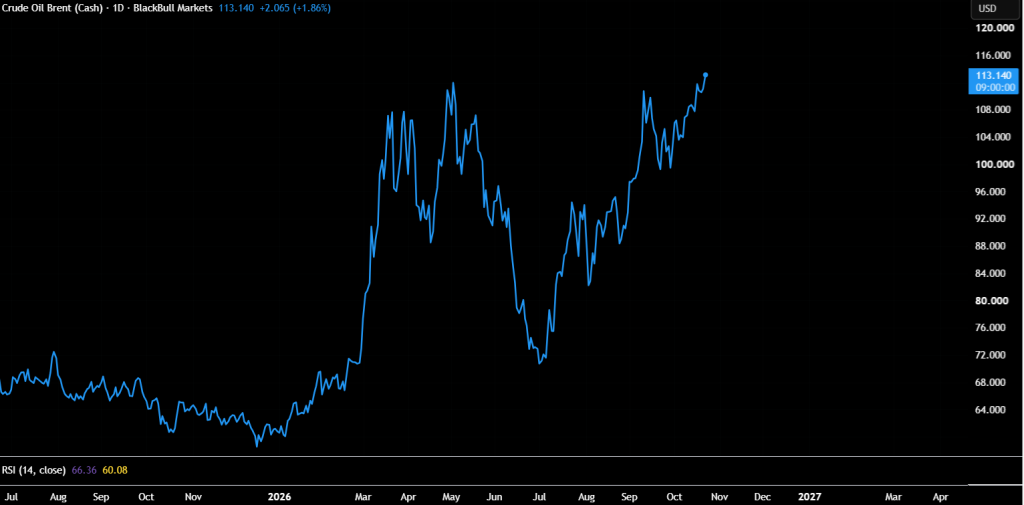
Persistently higher oil prices are adding to inflationary worries ahead of next week’s Federal Reserve rate decision. While the Fed is expected to leave rates unchanged, the market is pricing in an 87% probability of a rate hike before the end of the year. Cryptocurrencies often perform better in low-interest-rate environments, owing to increased liquidity.
However, U.S. Treasury yields are also falling, likely reflecting safe-haven flows amid the tech sell-off. Lower yields could help limit declines in risk assets by easing pressure from rising borrowing costs, although support appears to be outweighed by inflation concerns and weaker risk appetite.
ETH ETF outflows hit $1 billion in October
ETH ETFs have seen just two days of net inflows over the past 17 sessions. In October alone, Ethereum has recorded 12 days of outflows across the 14 sessions from 2 October to 22 October, losing around $1.01 billion.
Persistent net outflows could keep ETH under pressure, particularly while sentiment towards risk assets remains weak.
However, it’s interesting to note the contrast with Bitcoin ETFs, which have seen three consecutive sessions of net inflows totalling around $1.07 billion. As a result, Bitcoin ETF flows have turned positive in October, at $460.9 million, putting them on track for a fourth consecutive month of net inflows.
Persistent outflows while Bitcoin attracts inflows suggest weaker relative demand for Ethereum, rather than simply a broad retreat from crypto.
ETH technical analysis
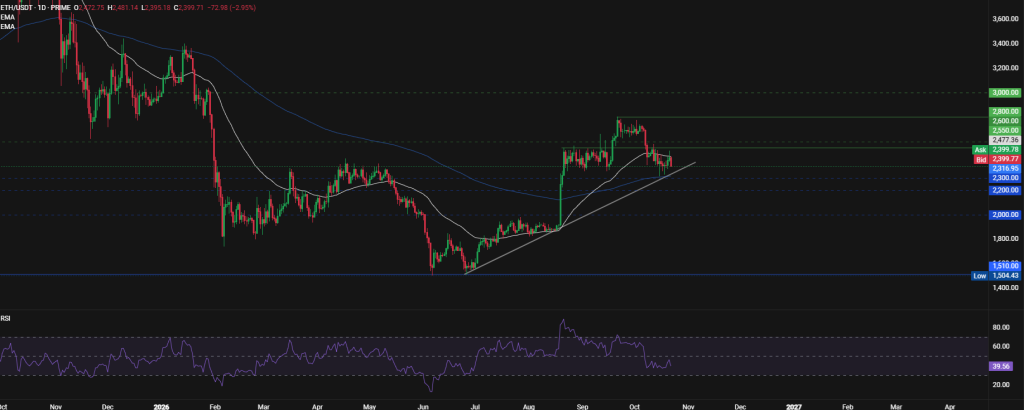
ETH/USDT ran into resistance at $2,800, an eight-month high, before easing back below the 50 EMA towards the 200 EMA, which keeps the longer-term outlook constructive for now. However, momentum has weakened, so sellers will be looking to test the 200 EMA at $2,300. A break below here could see sellers gain traction towards $2,000, the psychological level.
Should the 200 EMA hold, buyers will look to rise above the 50 EMA at $2,475 and then above $2,550, the August high. Above here, attention turns to $2,800, the September high.
Trading involves risk.
Author

 Risk Disclaimer
The content provided here is for informational purposes only. It is not intended as personal investment advice and does not constitute a solicitation or invitation to engage in any financial transactions, investments, or related activities. Past performance is not a reliable indicator of future results.
The financial products offered by the Company are complex and come with a high risk of losing money rapidly due to leverage. These products may not be suitable for all investors. Before engaging, you should consider whether you understand how these leveraged products work and whether you can afford the high risk of losing your money.
The Company does not accept clients from the Restricted Jurisdictions as indicated in our website/ T&C. Some services or products may not be available in your jurisdiction.
The applicable legal entity and its respective products and services depend on the client’s country of residence and the entity with which the client has established a contractual relationship during registration.