7 min read
 US stocks under a hawkish repricing
The S&P 500 closed Friday at 7,656.98, up 0.86% on the day but down 0.8% over the week. The August CPI report on September 11 turned the tape: headline inflation held at 3.4% year over year, core rose 0.3% month over month against the 0.2% expected. Fed funds futures moved to roughly 87% odds of a quarter-point hike, from 50% a week earlier.
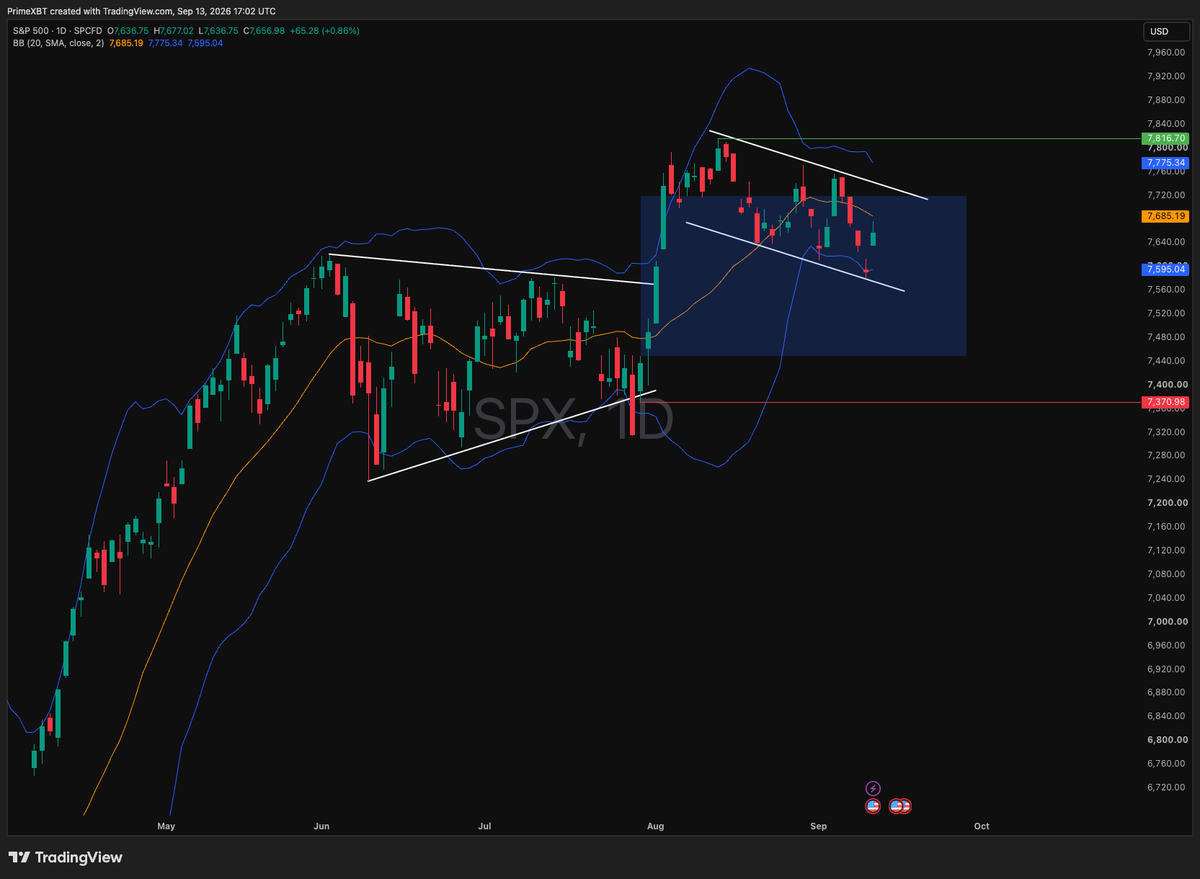
The daily structure for SP500 still reads constructive. The triangle that resolved higher in early August has given way to a falling channel, a bull flag, and the Bollinger bands are narrowing around the 7,685.19 basis. Compression like that resolves into range expansion rather than direction. Price sits inside the imbalance zone, with 7,816.70 the buyers’ reference. A flush below the 7,595.04 lower band ahead of the Fed would fit a false break more than a trend change; 7,370.98 argues otherwise.
Oil back above $100
Crude did most of the damage to the inflation picture above. WTI added about 9% over the week and settled near 99.98, with Brent at 105.82 on September 11 after approaching 108 midweek. US diesel crossed a record $6 per gallon. Gasoline alone rose 3.9% in August and accounted for over a third of the monthly CPI increase.
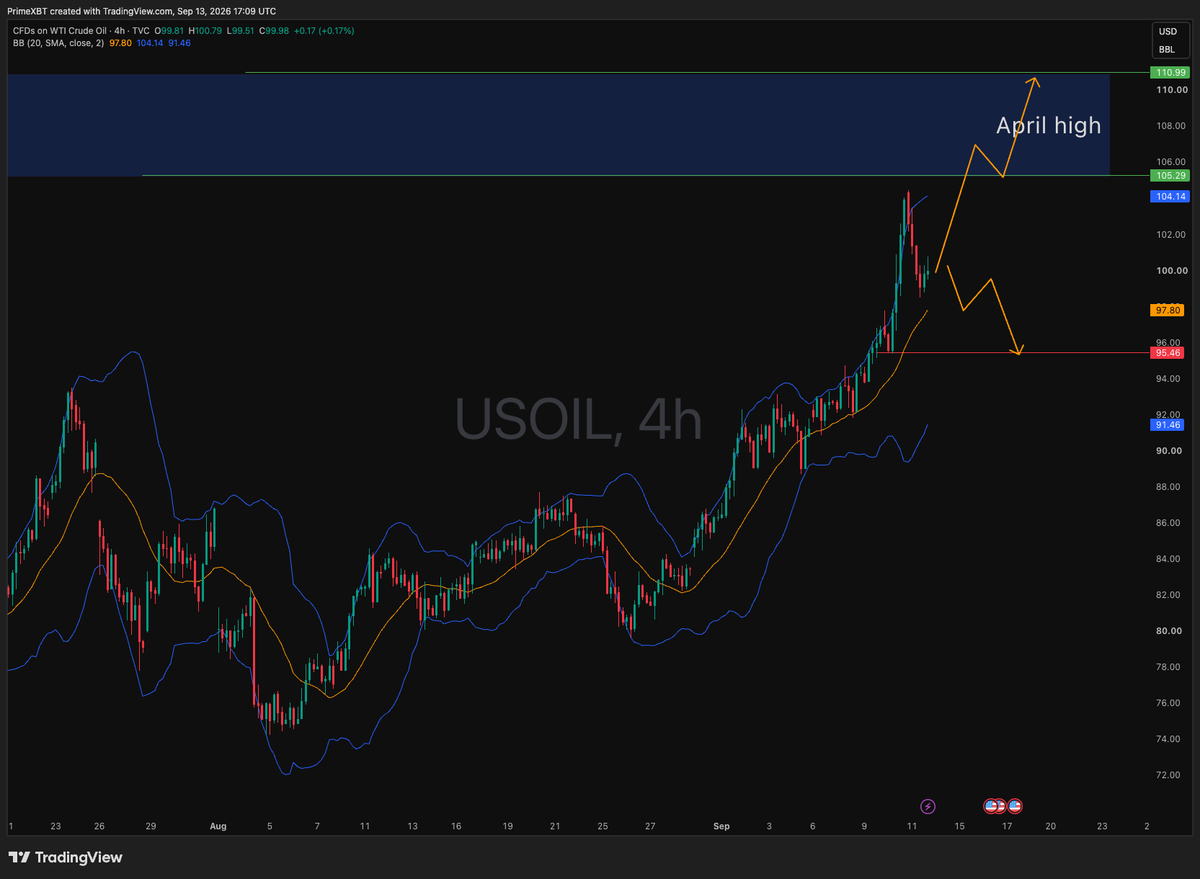
The drivers are supply-side: a vessel struck in the Strait of Hormuz on September 13, Houthi attacks on Saudi export infrastructure, and stalled US-Iran diplomacy. Price is extended above the 97.80 basis after tagging the 104.14 upper band. If escalation continues, the April high zone at 105.29 to 110.99 is the magnet. If diplomacy gains traction, 95.46 is the first level down.
Canada’s CPI m/m (Monday)
Statistics Canada releases August CPI on Monday at 12:30 UTC. July printed 0.5% month over month and 3.0% year over year, with CPI ex-gasoline at 2.2% and gasoline up 25.7%. The Bank of Canada held at 2.25% on September 2 and named tariffs and oil as the rising inflation risk. August employment fell 41,700, so the core measures carry the signal.
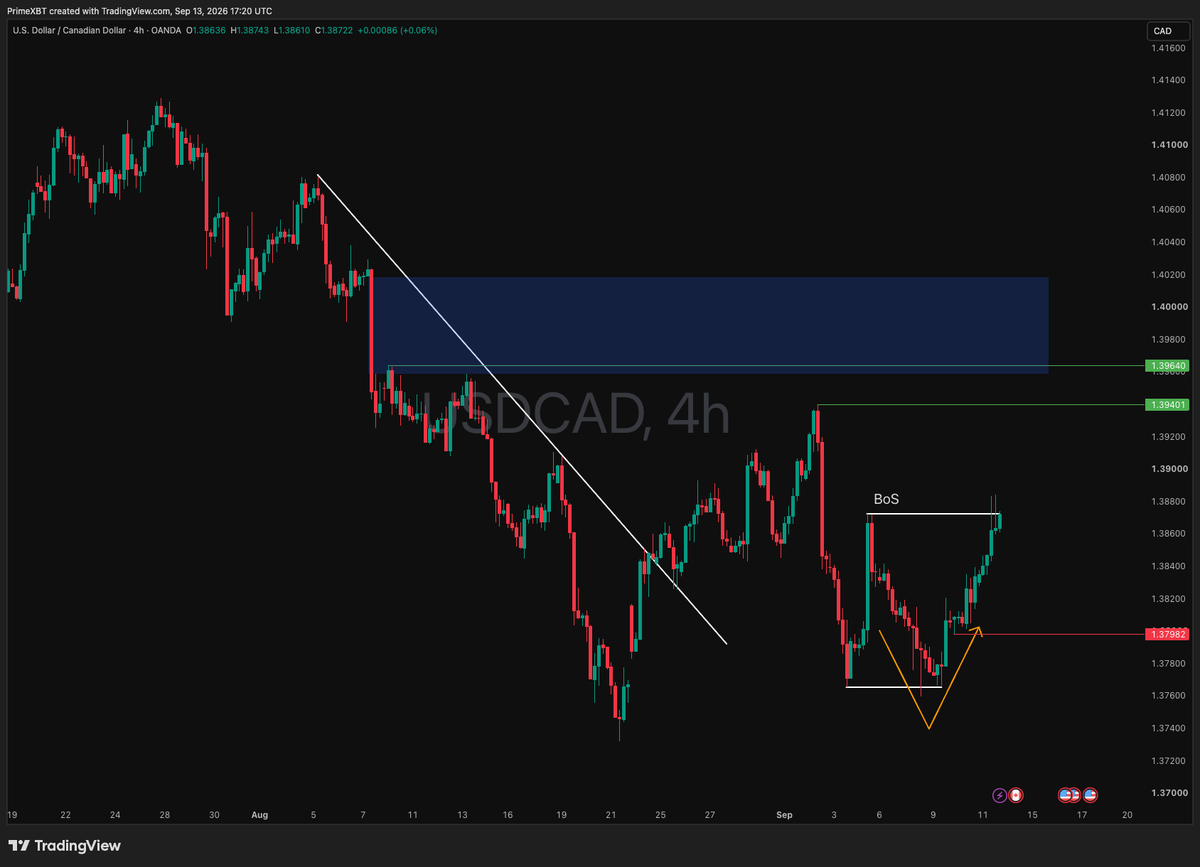
USD/CAD closed at 1.38722 after a break of structure above the early-September swing high. The pair climbed while crude rallied, so the rate differential is outweighing the oil beta for now. A soft core print keeps that going toward 1.39401 and the imbalance at 1.39640. Losing 1.37982 cancels the setup.
UK CPI y/y (Wednesday)
UK August CPI lands Wednesday at 06:00 UTC, a day before the Bank of England decides. July came in at 2.9% year over year, the highest in four months, core at 2.6%, services at 3.4%. Gas prices rose 14.7% after the Ofgem cap change, the same energy channel that lifted the US print.
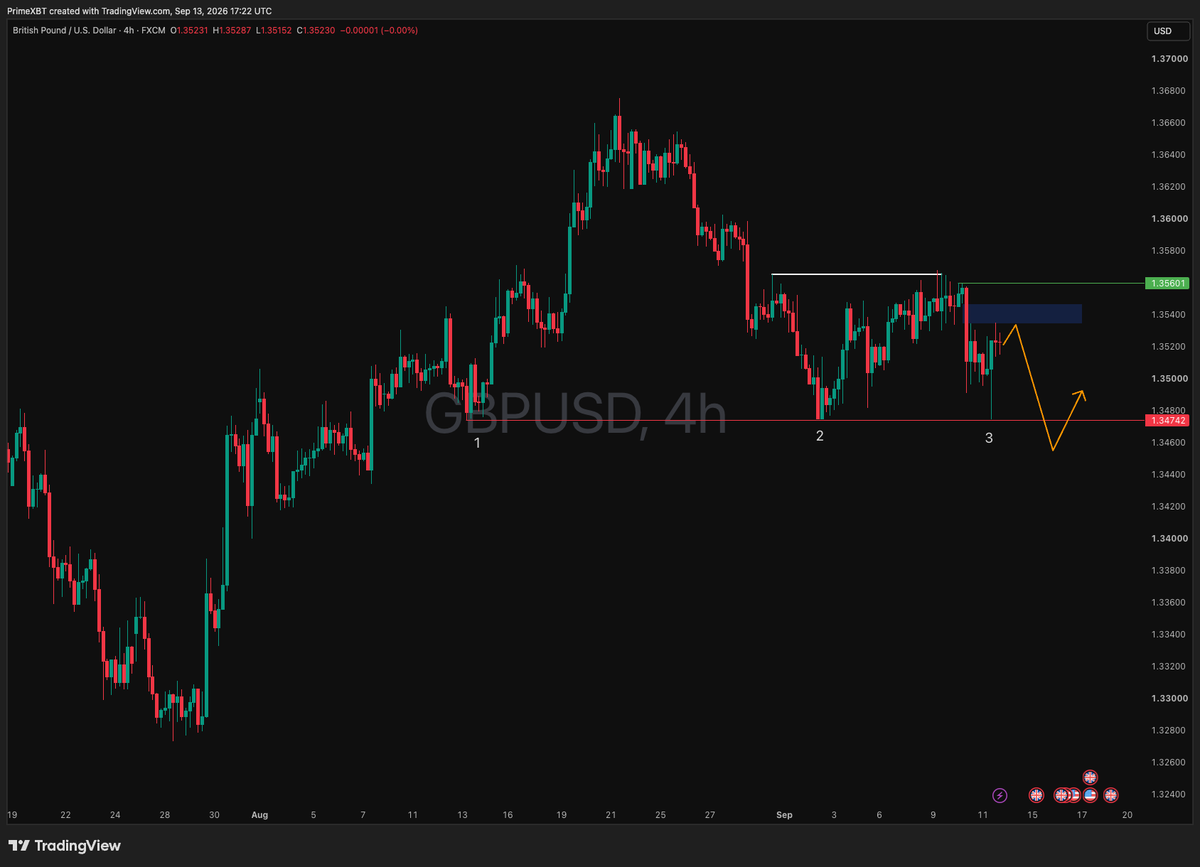
GBP/USD closed flat at 1.35230 with three separate touches of 1.34742 on the chart. Stops clustered under a level tested that often are the kind of liquidity a hunt goes looking for, and two further zones sit below it. A close back above 1.35601 would delay or invalidate that.
US Federal Funds Rate (Wednesday)
The Fed decides Wednesday at 18:00 UTC, with updated projections and Chair Kevin Warsh’s press conference at 18:30. The target range is 3.50% to 3.75%, and July already carried three dissents in favour of a hike. After the CPI above, futures put the odds of a quarter point between 85% and 87%. The dot plot matters more than the decision, with the 10-year yield near 5%.
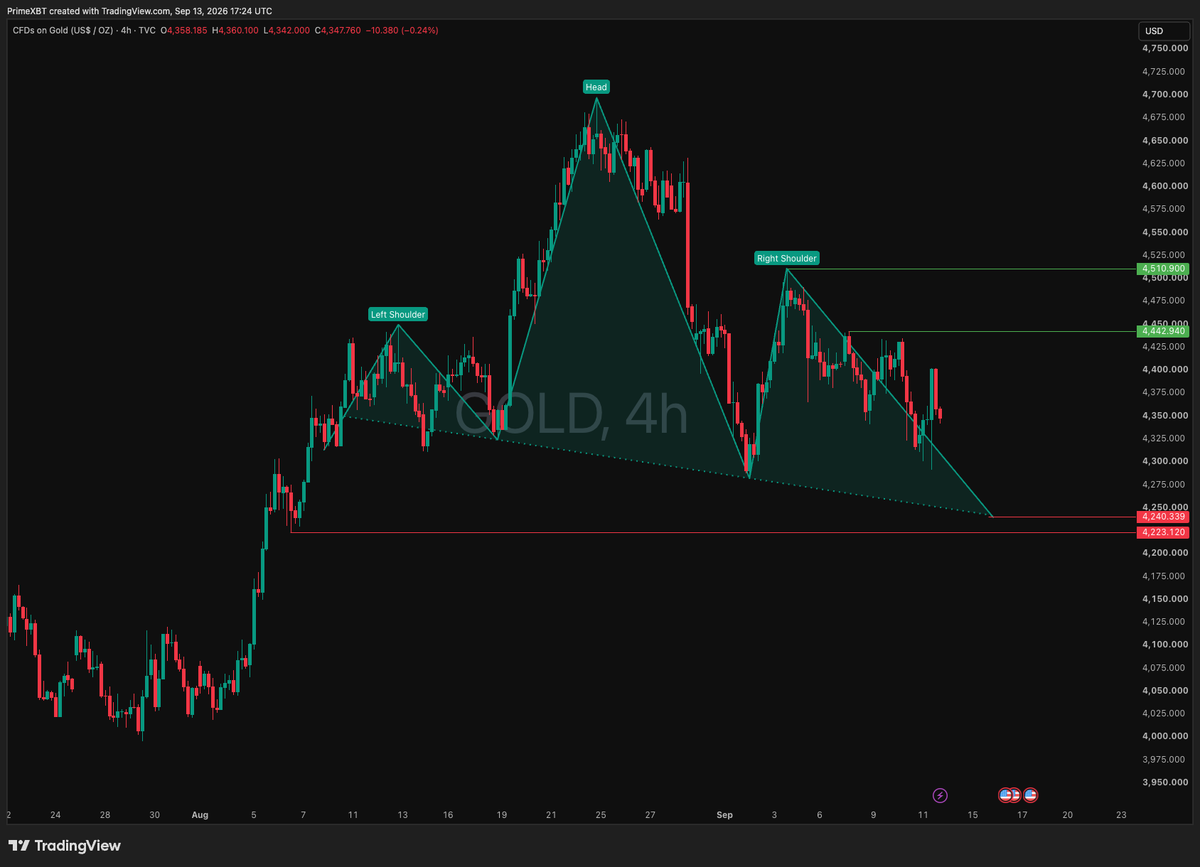
Gold closed at 4,347.76, down 0.24%, after failing at the 4,510.90 right shoulder. The head and shoulders on the four-hour chart is close to complete, neckline at 4,240.34 to 4,223.12. A hike plus a hawkish dot plot keeps real yields working against the metal. The complication is the oil story above: a fresh Gulf escalation puts a geopolitical bid back under gold.
UK Official Bank Rate (Thursday)
The MPC announces Thursday at 11:00 UTC. Bank Rate has been at 3.75% since July, held by a 6-3 vote, with Greene, Mann and Pill voting for 4%. Nearly 90% of economists in a Reuters poll expect no change through 2026, while markets price a quarter-point rise by year-end.
The mechanism matters more than the level. Bank Rate reaches mortgage resets, corporate credit and the front end of the gilt curve long before shop prices, with full pass-through taking four to six quarters. That lag is why the committee keeps returning to second-round effects: an energy shock that settles into wages becomes a policy problem, one that passes through prices alone does not.
BOJ Policy Rate (Friday)
The Bank of Japan announces Friday from 02:30 UTC, press conference at 06:30. The policy rate is 1.00% and a move to 1.25%, the highest since 1995, is close to fully priced. Ueda said on September 2 the Bank would decide with upside price risks in mind. The 10-year JGB yield broke 3.0% on September 1, a first since 1996.
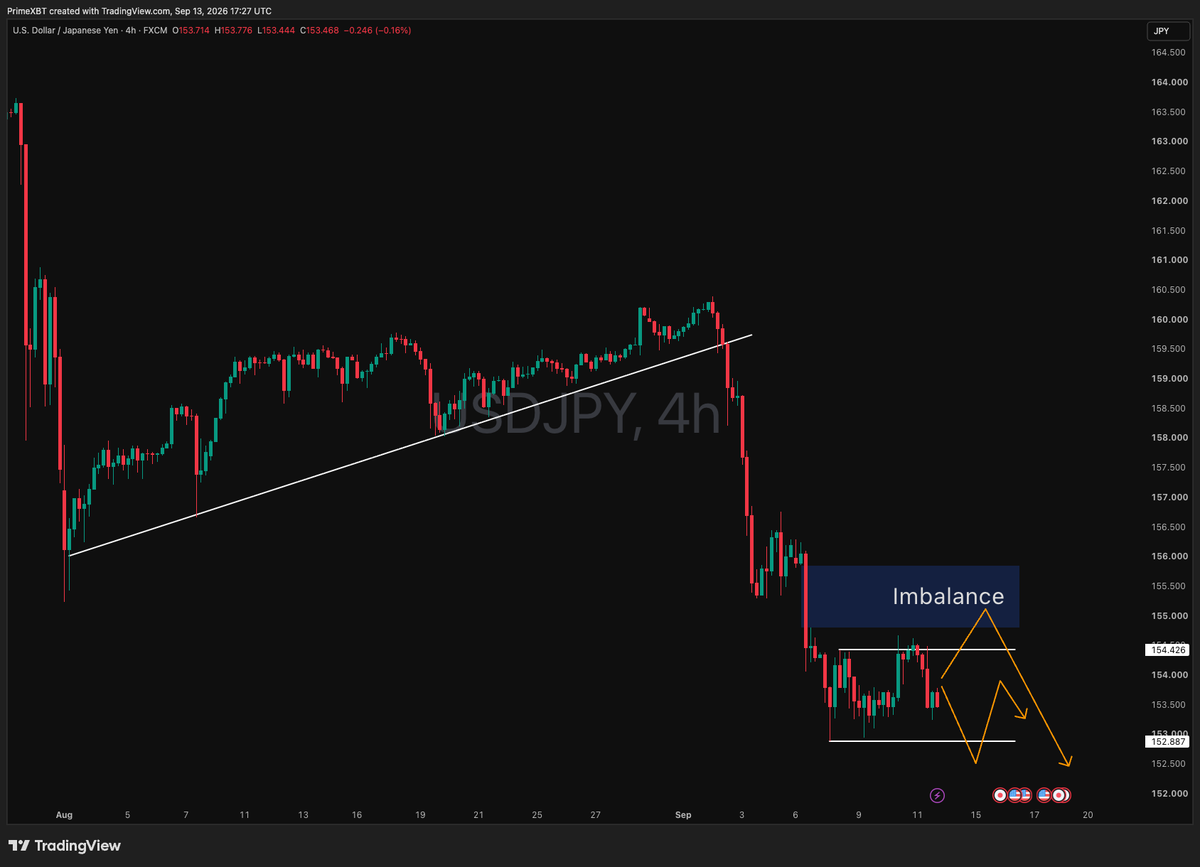
USD/JPY closed at 153.468 after losing the trendline that held since early August, boxed between 154.426 and 152.887. Two paths fit: a move into the imbalance near 155 that gets sold, or a direct break lower. The dollar side is the wildcard, since a Fed hike and a BoJ hike pull the pair opposite ways.
Bottom line
Four rate decisions, two inflation prints and a dot plot inside five days. Oil is the thread through all of them: it lifted the US August CPI, drove the UK July print through the energy cap, and is the risk the Bank of Canada named on September 2. Any position built on one outcome carries the weight of the other three. Size accordingly and keep the risk defined.
Trading involves risk.
Author



 Risk Disclaimer
The content provided here is for informational purposes only. It is not intended as personal investment advice and does not constitute a solicitation or invitation to engage in any financial transactions, investments, or related activities. Past performance is not a reliable indicator of future results.
The financial products offered by the Company are complex and come with a high risk of losing money rapidly due to leverage. These products may not be suitable for all investors. Before engaging, you should consider whether you understand how these leveraged products work and whether you can afford the high risk of losing your money.
The Company does not accept clients from the Restricted Jurisdictions as indicated in our website/ T&C. Some services or products may not be available in your jurisdiction.
The applicable legal entity and its respective products and services depend on the client’s country of residence and the entity with which the client has established a contractual relationship during registration.