5 min read
 Today at 12:30 UTC, the US releases three reports at the same time. They come one day after a surprise in US inflation, so traders will be watching closely.
Here’s what each one means, explained simply.
Quick catch up: yesterday’s inflation report
Inflation means prices going up. Yesterday’s report showed US prices rose 3.7% in a year, a bit more than the 3.6% experts expected. A big reason was petrol, which jumped 9.1% in just one month.
Report 1: PPI (prices businesses get paid)
The Producer Price Index (PPI) tracks the prices businesses charge when they sell their products.
Why it matters: when businesses’ prices go up, shoppers often end up paying more later. So PPI can be an early warning for future inflation.
- Expected: prices up around 0.5% in September, after 0.4% in August
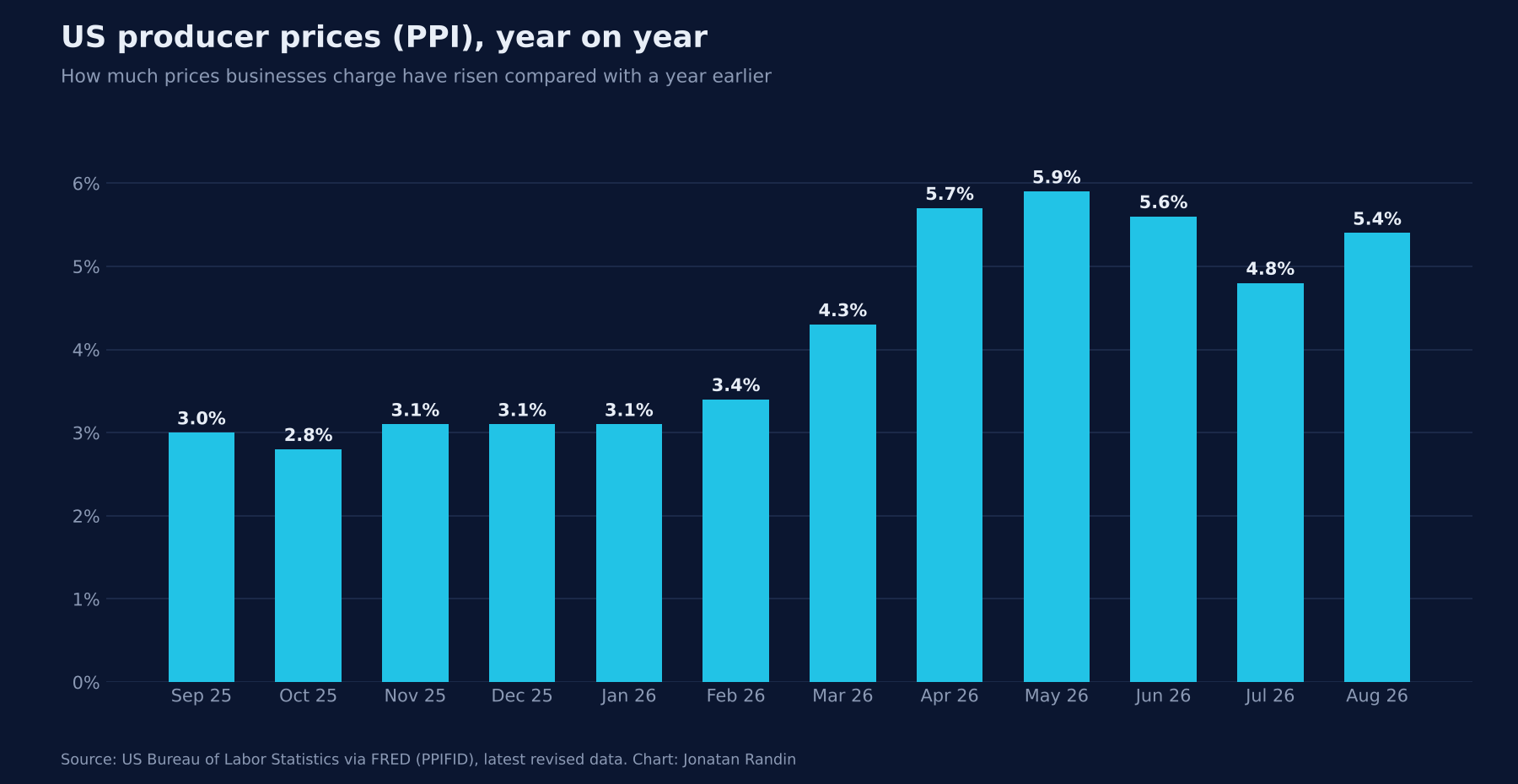
The chart shows how much business prices have risen compared with a year earlier. The rise was around 3% at the start of the year, jumped in the spring and was 5.4% in August.
Report 2: retail sales (how much people spend)
Retail sales show how much Americans spend in shops, online and in restaurants.
Why it matters: spending by ordinary people is the biggest part of the US economy. Strong spending usually means a strong economy.
- Expected: spending up 0.3% in September, after 1.1% in August
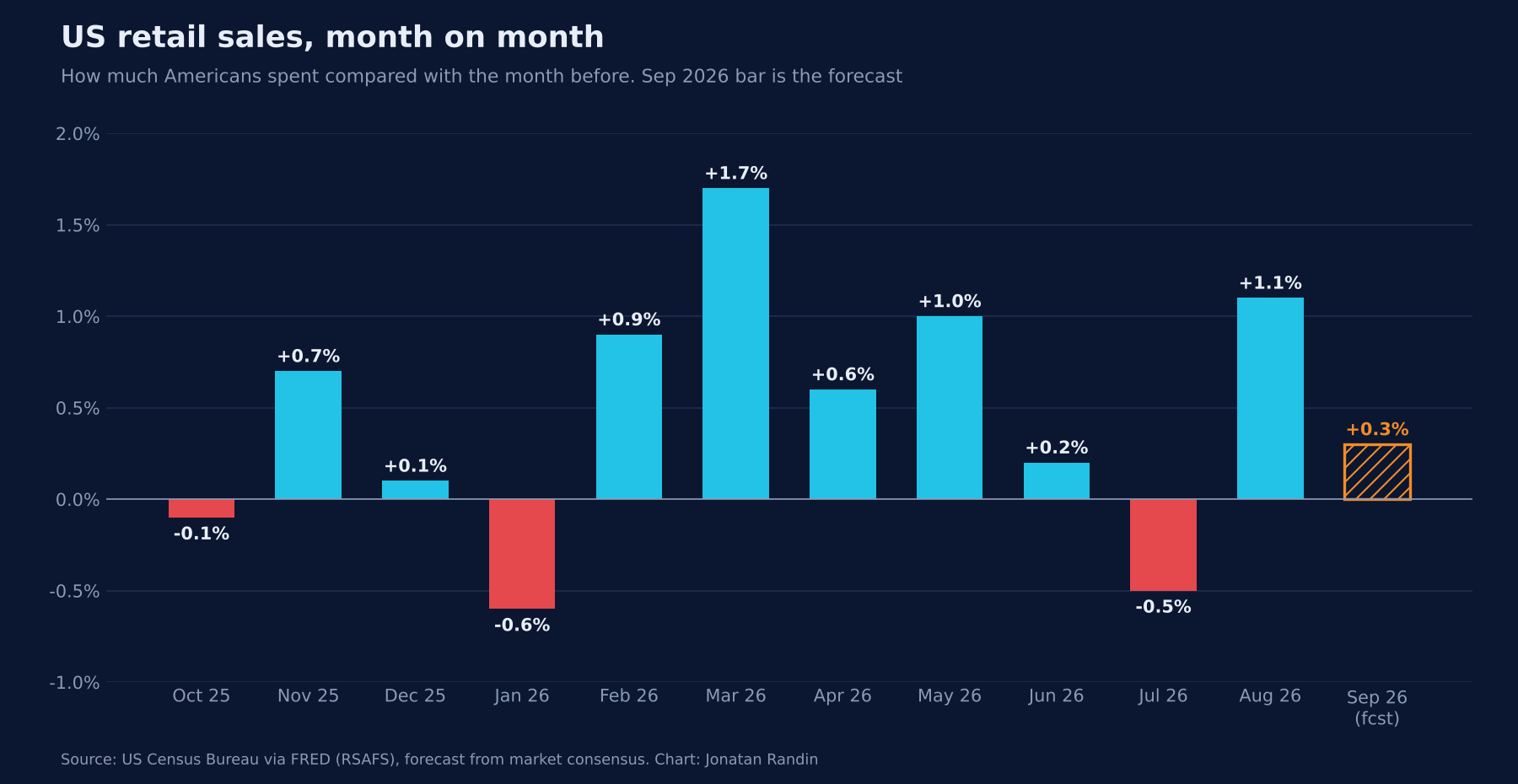
Spending goes up and down a lot from month to month. August was a very strong month, so a smaller rise in September would be normal.
One thing to keep in mind: petrol got more expensive in September. People paid more at the pump, which makes spending look higher even if they didn’t buy more.
Report 3: jobless claims (how many people lost their job)
Jobless claims count how many people asked for unemployment money for the first time last week.
Why it matters: it’s the fastest way to see if companies are letting people go.
- Expected: around 195,000, almost the same as last week’s 197,000
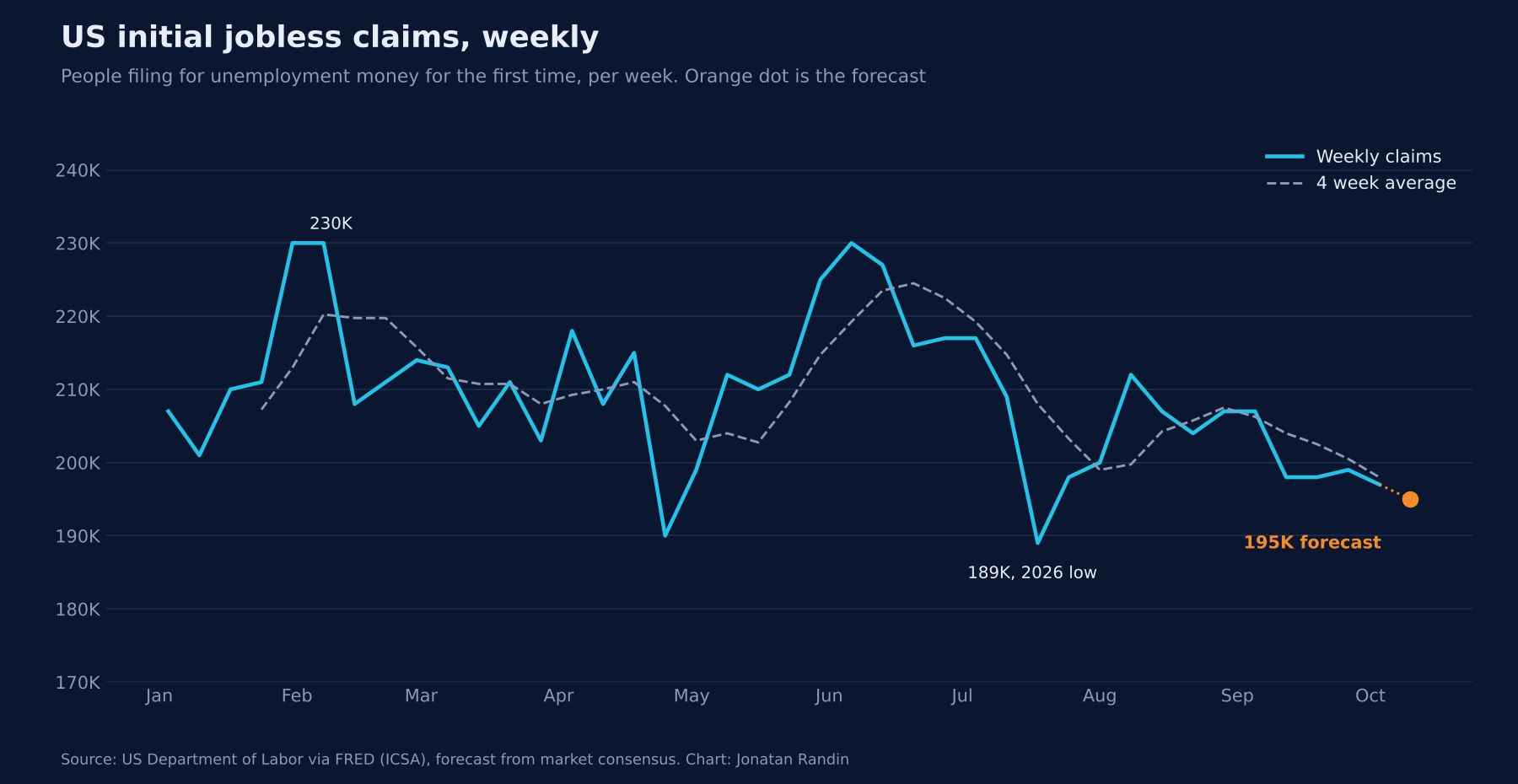
This number has stayed low all year, between about 189,000 and 230,000 a week. Low numbers mean few people are losing their jobs.
Why the Fed is watching
The Federal Reserve (the Fed) is the US central bank. When prices rise too fast, it can raise interest rates. That makes borrowing more expensive and helps slow price rises.
- The Fed raised rates in September, for the first time since 2023
- Its next decision is on 28 October
- After yesterday’s report, the chance of another rise this month briefly jumped to around 50%, before easing back
Today’s data could move those chances again.
How markets could react
These are possibilities, not guarantees:
- Stronger than expected: the US dollar could rise, while gold, stocks and crypto may fall
- As expected: markets may not move much
- Weaker than expected: the US dollar could fall, which may help gold, stocks and crypto
Three reports at once can cause fast, sharp moves in both directions.
Gold: one to watch
Gold (XAU/USD) often falls when the US dollar gets stronger, and rises when the dollar gets weaker. That makes it very sensitive to US data like today’s.
You could see this yesterday. After the inflation report, gold dropped close to $4,100, then bounced back as the dollar eased. Today’s reports could trigger a similar move.
What comes next
- Friday 16 October: Fed Chair Warsh is due to speak
- 28 October: the Fed’s next interest rate decision
Trade Now
Trading involves risk.
Author



 Risk Disclaimer
The content provided here is for informational purposes only. It is not intended as personal investment advice and does not constitute a solicitation or invitation to engage in any financial transactions, investments, or related activities. Past performance is not a reliable indicator of future results.
The financial products offered by the Company are complex and come with a high risk of losing money rapidly due to leverage. These products may not be suitable for all investors. Before engaging, you should consider whether you understand how these leveraged products work and whether you can afford the high risk of losing your money.
The Company does not accept clients from the Restricted Jurisdictions as indicated in our website/ T&C. Some services or products may not be available in your jurisdiction.
The applicable legal entity and its respective products and services depend on the client’s country of residence and the entity with which the client has established a contractual relationship during registration.