6 min read
UK inflation figures for September come out tomorrow, Wednesday 21 October, at 06:00 UTC. This is one of the biggest monthly releases for the British pound, and this time it lands just over two weeks before the Bank of England (BoE) decides on interest rates on 5 November.
What is CPI?
CPI stands for Consumer Price Index. It measures how much everyday prices, such as food, fuel, rent, phone bills and flights, have changed compared with a year ago. If CPI is 3%, prices are on average 3% higher than they were 12 months earlier.
The BoE wants inflation at 2%. When inflation stays well above that, the Bank may raise interest rates. Higher rates make borrowing more expensive, which can slow spending and help bring price rises down.
Where UK inflation is right now
- Prices rose 3.1% in the year to August, the highest in five months
- The main reason was fuel. Petrol averaged 161.3p a litre, the highest since November 2022
- Core inflation held at 2.6%. Core leaves out prices that jump around a lot, like energy and food, so it shows the underlying trend
- Services inflation stayed at 3.4%. Services are things like haircuts, restaurants, rent and insurance. Their prices mostly depend on wages, so they show whether price pressure is spreading through the UK economy
In simple terms, August’s rise came mainly from petrol, while the rest of the economy stayed fairly calm.
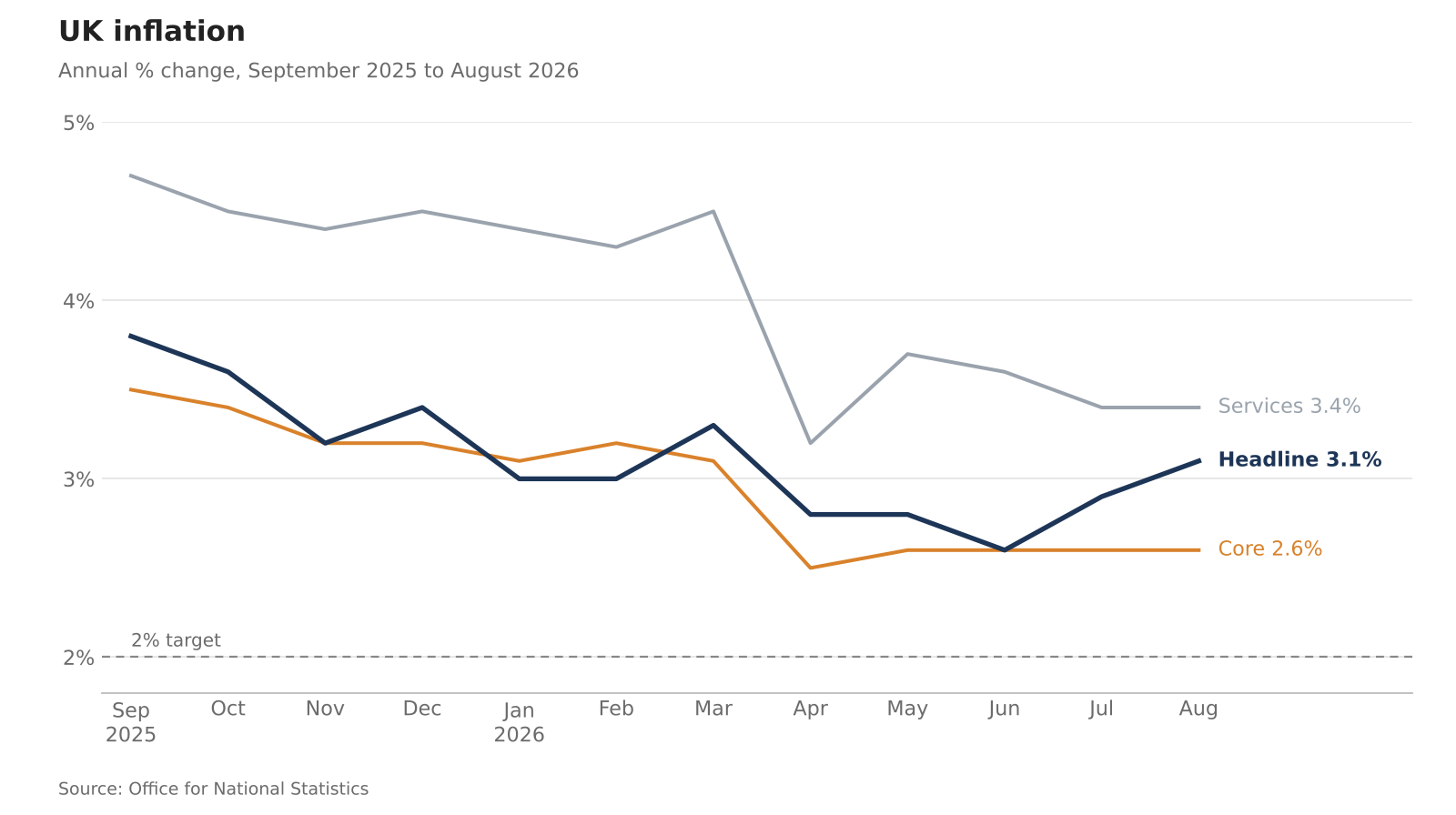
Headline inflation (dark blue) has climbed since June, mainly because of fuel. Core inflation (orange) has stayed flat at 2.6% since April, while services (grey) are still well above the Bank of England’s 2% target.
What’s expected tomorrow
- Headline inflation: 3.4%, up from 3.1%
- Core inflation: 2.8%, up from 2.6%
- Services inflation: 3.6%, up from 3.4%
There are two main reasons for the expected rise. Fuel is still expensive, as the conflict in the Middle East keeps oil prices high. The second reason is the comparison with last year. Inflation measures today’s prices against the same month a year ago, and prices didn’t rise at all last September, so even a normal rise this year pushes the yearly figure up.
Household energy bills won’t show up yet. The higher energy price cap only started on 1 October, so it appears in next month’s figures. The BoE itself expects inflation to reach around 3.75% by the end of this year and slightly above 4% early next year.
Why the Bank of England cares
- The BoE’s interest rate is 3.75%. In September, six of the nine policymakers voted to keep it there, while three voted to raise it to 4%
- Markets currently see a rate rise to 4% on 5 November as likely
- Tomorrow, the core and services numbers may matter more than the headline, because they show whether rising prices are spreading beyond fuel
- On the other side, the UK Budget on 28 October could cut government spending, which may cool the economy
- Today’s jobs data was stronger than expected: unemployment fell to 4.7% (forecast 4.9%) and wage growth rose to 3.7% (forecast 3.6%), adding to the case for a rate rise
How the pound could react
Interest rates and currencies are closely linked. Higher rates can make a currency more attractive to hold, because savers and investors may earn more on it. That’s why inflation data can move the pound.
- Higher than expected: if headline, core and services all come in above forecasts, a November rate rise may look even more likely, which could support the pound
- In line with forecasts: much of this is already expected, or “priced in”, so the reaction may be smaller and attention could move to next week’s Budget
- Lower than expected: if core and services stay close to August’s levels, markets may scale back how many rate rises they expect, and the pound could come under pressure
The pound is usually traded against the US dollar as GBP/USD, so US news can move it as well.
What the pound has done recently
GBP/USD shows how many US dollars one British pound buys. Over the past three months, the pound climbed to around 1.366 in late August, then fell to around 1.320 in early October as the US dollar strengthened. It has recovered a little since, sitting around 1.333 on 19 October.
That means the pound goes into tomorrow’s data near the lower end of its recent range. A surprise in either direction could decide whether that recovery continues.
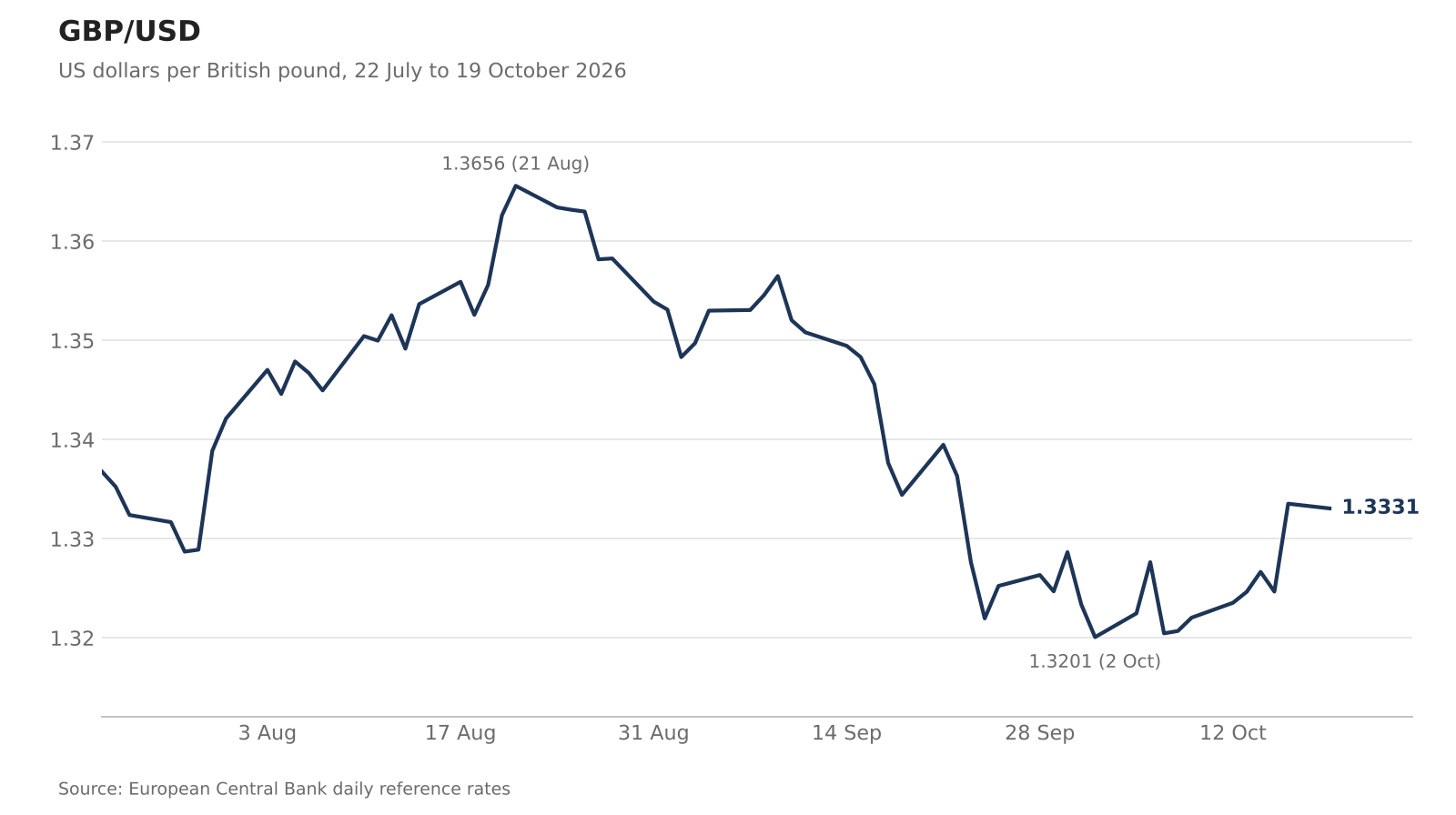
GBP/USD over the past three months. The pound fell from its August high into early October and has recovered slightly since, ahead of tomorrow’s UK inflation data.
Trading involves risk.
Author



 Risk Disclaimer
The content provided here is for informational purposes only. It is not intended as personal investment advice and does not constitute a solicitation or invitation to engage in any financial transactions, investments, or related activities. Past performance is not a reliable indicator of future results.
The financial products offered by the Company are complex and come with a high risk of losing money rapidly due to leverage. These products may not be suitable for all investors. Before engaging, you should consider whether you understand how these leveraged products work and whether you can afford the high risk of losing your money.
The Company does not accept clients from the Restricted Jurisdictions as indicated in our website/ T&C. Some services or products may not be available in your jurisdiction.
The applicable legal entity and its respective products and services depend on the client’s country of residence and the entity with which the client has established a contractual relationship during registration.