9 min read
 Weekly Recap
Key US data: Hawkish FOMC minutes coincide with a tech-driven rally.
Minutes from Chair Kevin Warsh’s first FOMC meeting, released Wednesday, 8 July, were more hawkish than expected. Policymakers expressed increased concern about inflation, with several supporting a rate hike, though the committee kept the policy rate at 3.50–3.75%. The minutes reinforced the June dot plot, which shifted the median projection toward a possible hike before year-end, moving away from earlier expectations of cuts.
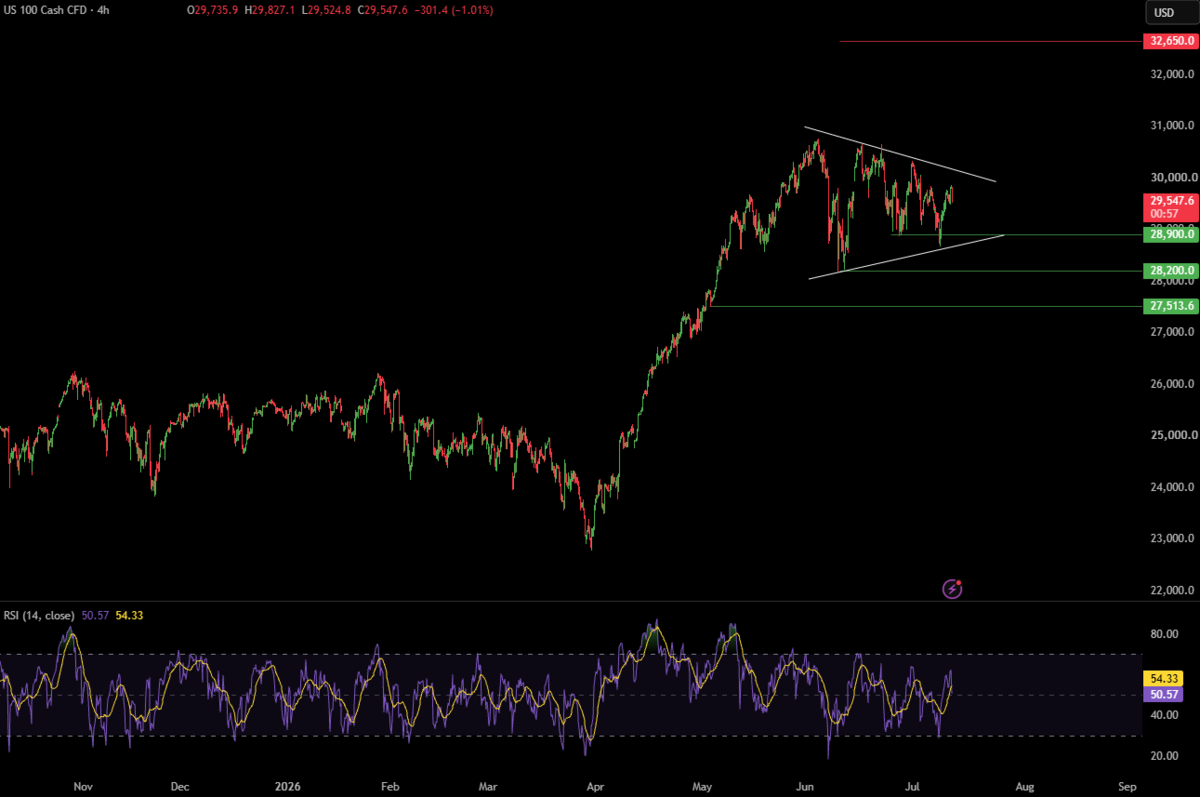
Despite this, technology stocks advanced. The Nasdaq gained 1.7% over five sessions, outperforming the Dow Jones, which fell 0.5%, and the S&P 500, which rose 1.2%. Meta led major tech stocks with a 15% weekly gain, its best since early 2024, driven by optimism about its AI cost structure. NVIDIA rose 4% on Friday.
By Friday, markets priced a July hold as the base case, with nearly a 60% chance of a rate hike by September, according to CME FedWatch. The 10-year Treasury yield ended at 4.56%. This week’s inflation data and Warsh’s testimony will determine whether the US 100 approaches record highs or stalls as the risk of further rate hikes is reassessed.
Gold moves: renewed strikes cap a second leg lower
Gold closed a volatile week at approximately $4,113 an ounce, down 1.5% over five sessions and partially reversing the previous week’s 2.3% gain, its first in five weeks. The metal opened near $4,155 and declined throughout the week, with a minor Friday uptick insufficient to offset the overall loss.
The same factors driving oil prices also pressured gold. Renewed US-Iran strikes increased energy prices and revived inflation concerns, supporting expectations that the Warsh Fed will maintain restrictive policy. Hawkish FOMC minutes and nearly 60% odds of a September hike kept real yields elevated, with the 10-year at 4.56%, weighing on gold.
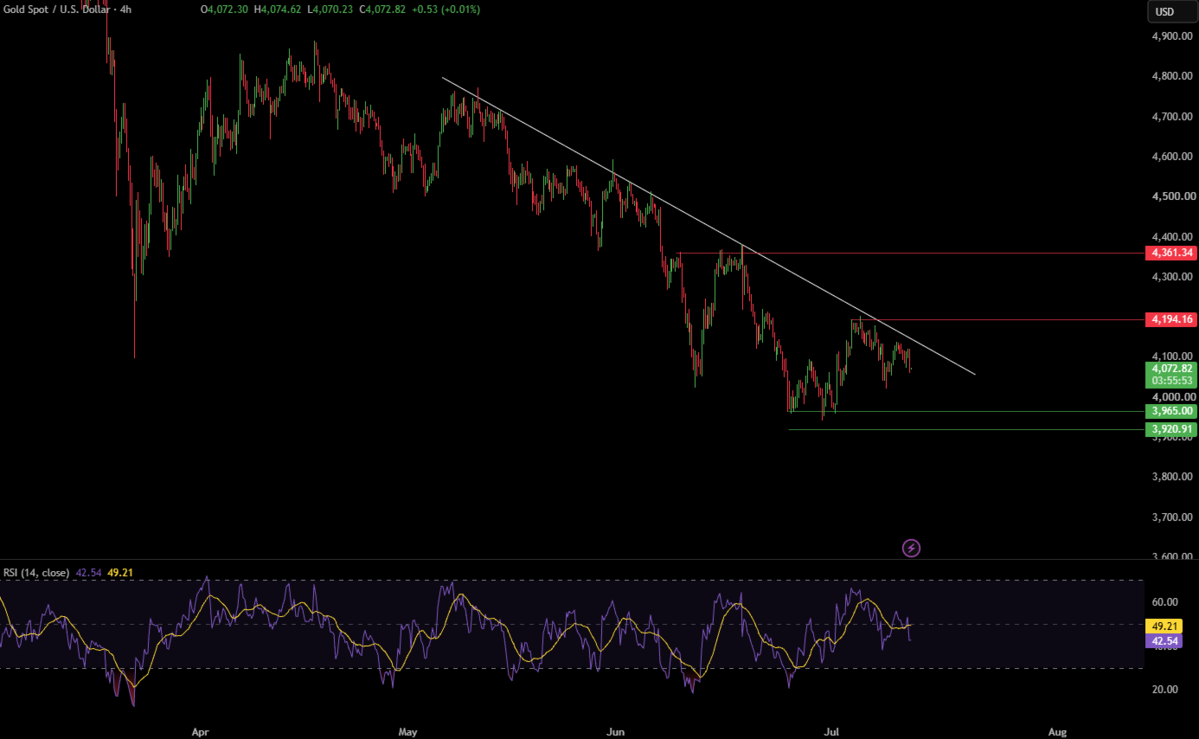
HSBC lowered its 2026 average gold forecast to $4,560 an ounce from $4,864, citing second-quarter repricing in rates and the dollar, despite ongoing structural demand. Gold is about 26% below its January record near $5,597. This week’s US CPI release will likely determine whether gold holds above $4,100 or continues to decline.
Oil moves: Hormuz risk premium lifts UK Brent ~5%
UK Brent closed the week near $76 a barrel, up roughly 5%, as renewed hostilities between the US and Iran disrupted tanker traffic through the Strait of Hormuz — the chokepoint for around a fifth of the world’s traded energy. After Iran fired on commercial vessels on 7 July, US forces carried out strikes over two days, and President Trump described the ceasefire as effectively over, though both sides signaled that technical talks would continue.
The International Energy Agency warned that a prolonged conflict could delay the rebuilding of global inventories this year, maintaining a risk premium in prices. This premium was partially offset by increased supply, as the United Arab Emirates raised output to a record last month. UK Brent declined on Friday as ongoing negotiations eased concerns about further escalation.
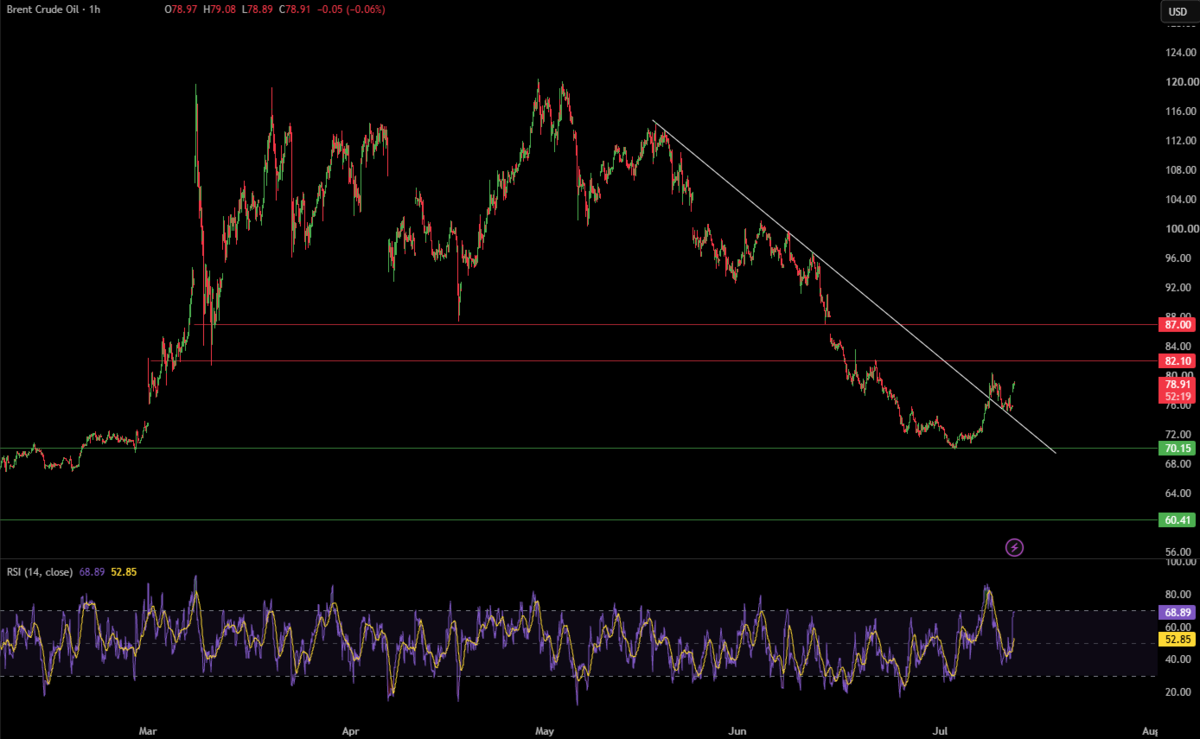
Structurally, the picture remains soft beneath the geopolitics. The US Energy Information Administration noted UK Brent averaged $85 in June — well down from May — and projects an average near $74 in the third quarter as flows normalize. For the week ahead, any fresh disruption around Hormuz would push UK Brent up, while durable progress in talks would let the risk premium bleed out.
Pakistan markets: KSE-100 snaps its streak on the ceasefire scare
The KSE-100 ended the week at 182,241.78, breaking its streak of weekly gains with a 1.69% loss, or 3,130 points. Losses were concentrated midweek: after a 2,083-point surge on Monday to 187,465, the index fell 4,626 points on Wednesday, its largest single-day drop of the period, as the end of the US-Iran ceasefire and rising energy prices triggered panic selling.
On Friday, the index partially recovered, gaining 982 points, or 0.54%, as oil prices eased and major banks led the rebound. Meezan Bank, UBL, HBL, MCB, and Askari together contributed 548 points. The macro environment remained supportive: Pakistan recorded FY26 remittances of $41.6 billion, up 9%, and State Bank reserves increased by $1.944 billion to $18.5 billion, providing about 2.9 months of import cover and raising total liquid foreign exchange holdings to approximately $24 billion.
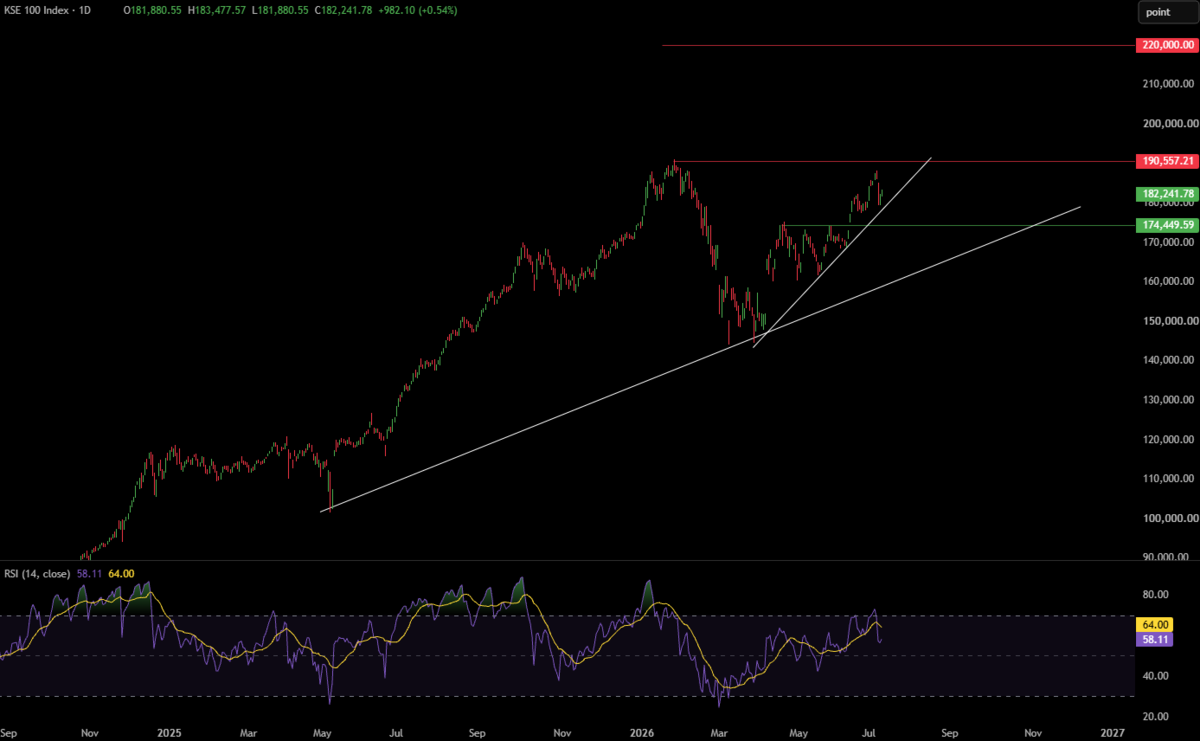
The rupee remained stable, with USD/PKR closing at 278.05 on Friday. Cut-off yields declined across tenors at a T-bill auction that raised Rs1.92 trillion, as the government prepared its first dollar-settled, rupee-linked bonds and planned new Eurobond and Sukuk issuances. With the State Bank’s next policy meeting scheduled for 27 July, the KSE-100’s near-term direction depends on external factors, including US inflation data and energy price movements.
Week Ahead
India CPI (June) — Monday, 13 July, 10:30 UTC
India’s June retail inflation, due Monday at 4:00 pm IST, is expected to exceed the Reserve Bank of India’s 4% target for the first time in 16 months. A Reuters poll of 37 economists forecasts a median of 4.3%, up from 3.93% in May, the highest since early 2025.
Economists attribute the increase mainly to higher food and fuel prices, with the US-Iran conflict raising energy costs and concerns about a below-normal monsoon adding risk. Poll estimates range from 3.65% to 5.50%. The release comes as the RBI remains cautious: after cutting rates to 5.25% to restart its easing cycle, the central bank held rates in June and raised its FY27 CPI projection to 5.1%. Governor Sanjay Malhotra also introduced measures to attract capital inflows and stabilize the currency.
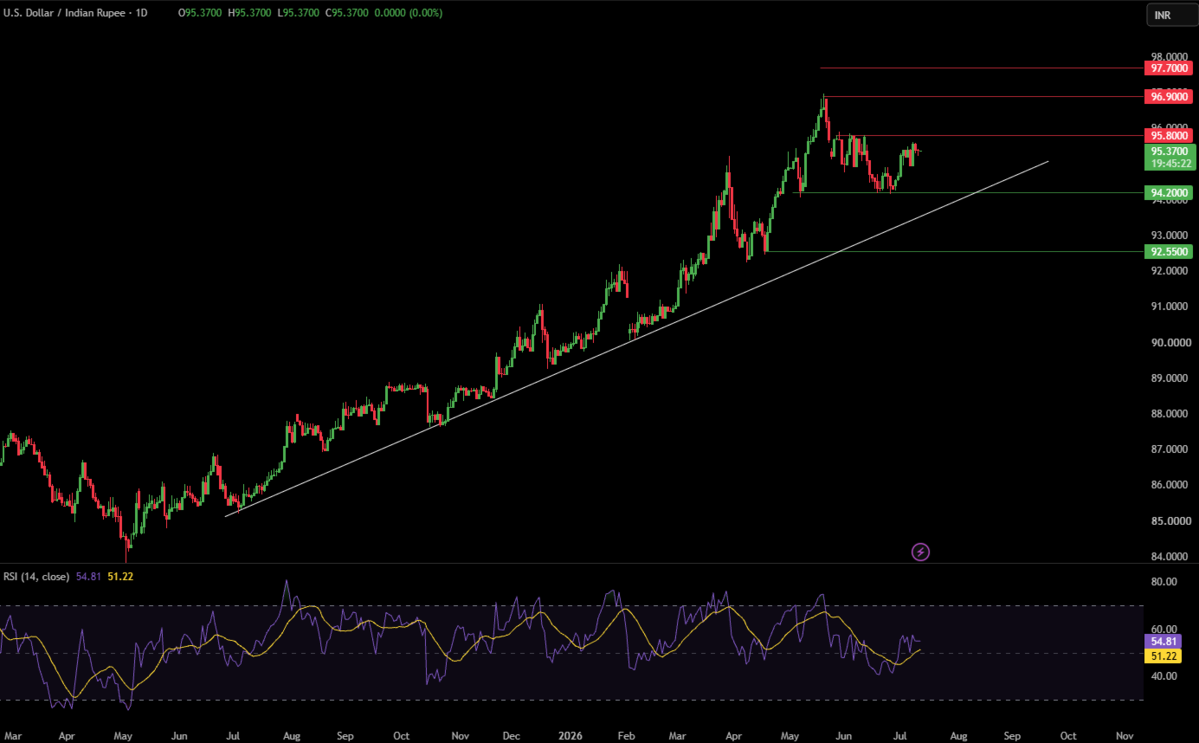
USD/INR is trading near 95.34, close to record lows. Higher-than-expected inflation would limit the RBI’s ability to ease policy and, combined with firm oil prices, could further weaken the rupee, pushing USD/INR into new territory. A softer reading would give the central bank more flexibility and could relieve pressure on USD/INR in the second half of July.
US CPI (June) — Tuesday, 14 July, 12:30 UTC
The Bureau of Labor Statistics will release June CPI at 8:30 am ET on Tuesday, the final major inflation report before the 28–29 July FOMC meeting. Consensus expects headline inflation to cool to about 3.9% year-on-year from May’s 4.2%, with the monthly figure potentially flat or negative due to a sharp correction in energy prices. Oil fell 21% in June, and pump prices dropped nearly 10%.
Despite a softer headline, underlying details are expected to be firmer. Core CPI is projected to rise about 0.3% for the month, with shelter and services in focus and a potential World Cup boost to hotel prices. The June data predates the early-July escalation, so it may not reflect recent energy pressures. The release coincides with Q2 results from major banks and markets, pricing nearly a 60% chance of a September rate hike.
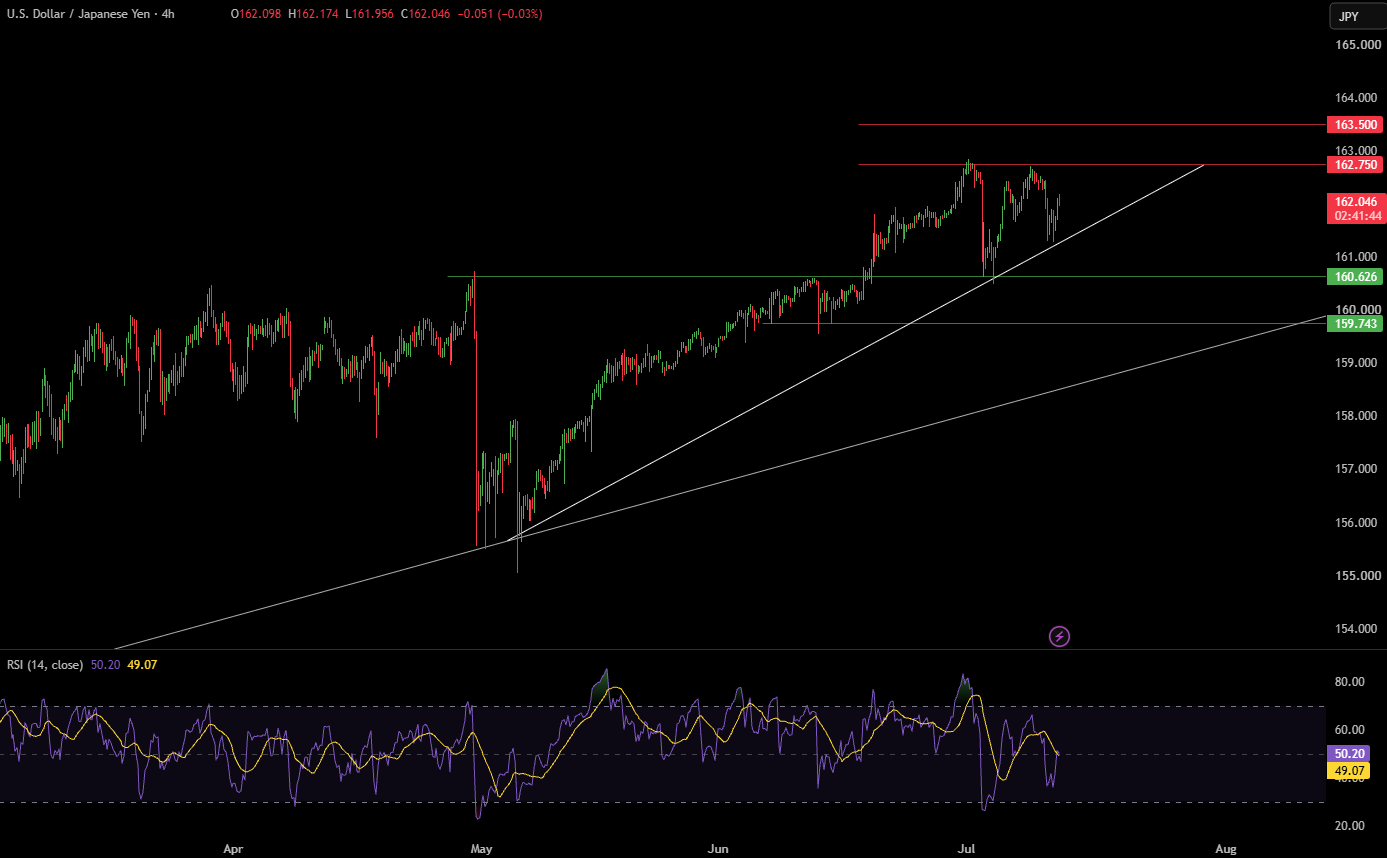
USD/JPY is trading near 162.0, moving toward 162.75 and 163.50 resistance levels.
Fed Chair Warsh Testimony — Tuesday, 14 July, 14:00 UTC
Fed Chair Kevin Warsh delivers his inaugural semi-annual monetary policy testimony this week, appearing before the House Financial Services Committee at 10:00 am ET on Tuesday and the Senate on Wednesday. It is his first congressional appearance since being sworn in on 22 May, and it comes stacked directly on top of the CPI and PPI releases.
The backdrop is a hawkish hold at 3.50–3.75%. The June dot plot shifted towards a possible 2026 hike, and Warsh notably declined to submit his own projection while setting up a task force to review the Fed’s forward guidance. Friday’s semi-annual Monetary Policy Report told lawmakers the Fed “will deliver price stability” and acknowledged that consumer price growth had stepped up further this spring — a firmer characterization than in recent communications. Lawmakers are likely to press him on the inflation path, the AI capex boom, cryptocurrency, and bank supervision.
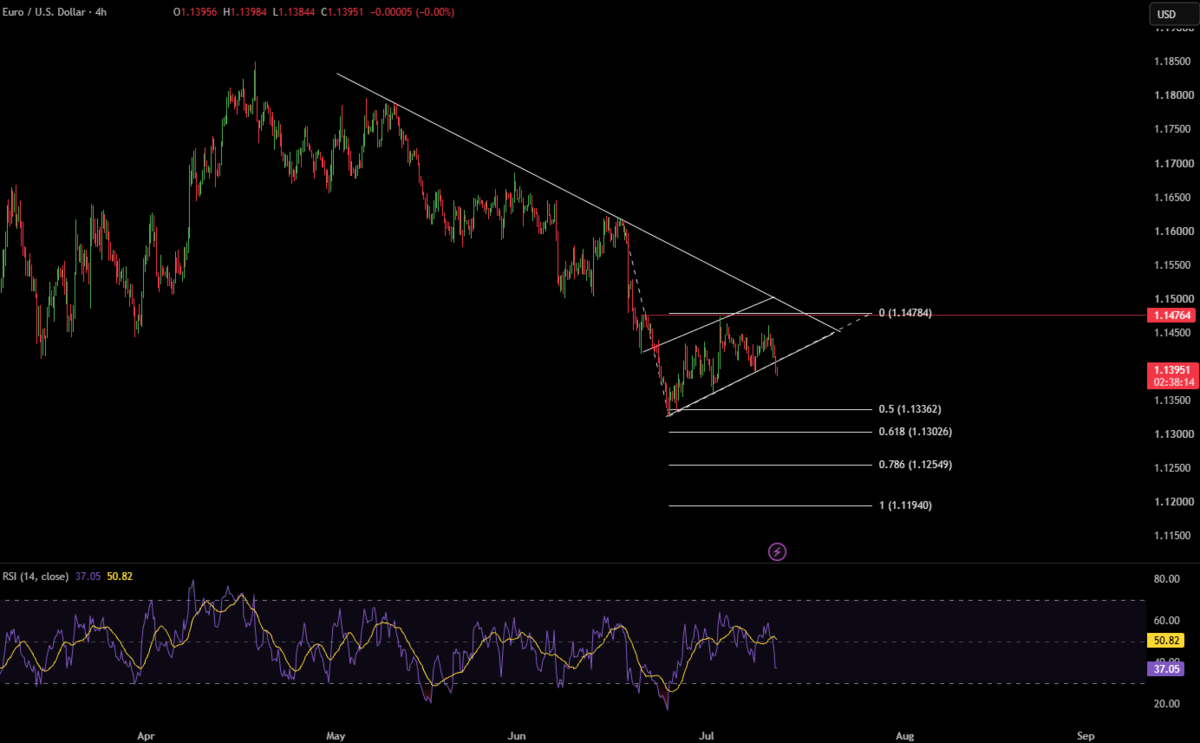
EURUSD is trading under its global trendline. Moreover, it lost the lower border of the rising bearish flag. If the testimony proves more hawkish than expected, the European currency may lose ground against the greenback.
Bottom line
This week’s main focus is the convergence of US and Indian inflation data with Warsh’s first testimony, against the backdrop of ongoing Hormuz energy risks. A strong US core inflation reading would keep the Fed hawkish, maintaining high real yields, which would weigh on gold and support the dollar, pressuring both USD/INR and USD/JPY.
Trading involves risk.
Author



 Risk Disclaimer
The content provided here is for informational purposes only. It is not intended as personal investment advice and does not constitute a solicitation or invitation to engage in any financial transactions, investments, or related activities. Past performance is not a reliable indicator of future results.
The financial products offered by the Company are complex and come with a high risk of losing money rapidly due to leverage. These products may not be suitable for all investors. Before engaging, you should consider whether you understand how these leveraged products work and whether you can afford the high risk of losing your money.
The Company does not accept clients from the Restricted Jurisdictions as indicated in our website/ T&C. Some services or products may not be available in your jurisdiction.
The applicable legal entity and its respective products and services depend on the client’s country of residence and the entity with which the client has established a contractual relationship during registration.