9 min read
 Weekly Recap
Iran-Israel escalation reignites war risk
The fragile ceasefire in place since early April ended on Sunday evening, June 7, when Iran launched ballistic missiles at Israel. The first such attack since hostilities paused two months ago. Iran’s Islamic Revolutionary Guard Corps confirmed it targeted Israel’s Ramat David airbase.
Brent fell 19% in May, its worst monthly performance since the Covid-19 pandemic, as markets responded to optimism over a US-Iran 60-day memorandum of understanding. By Friday, June 5, Brent closed at $92.56 per barrel, but surged 2.8% to $ 97.50 per barrel in Asian trading on Monday morning following the missile attack.
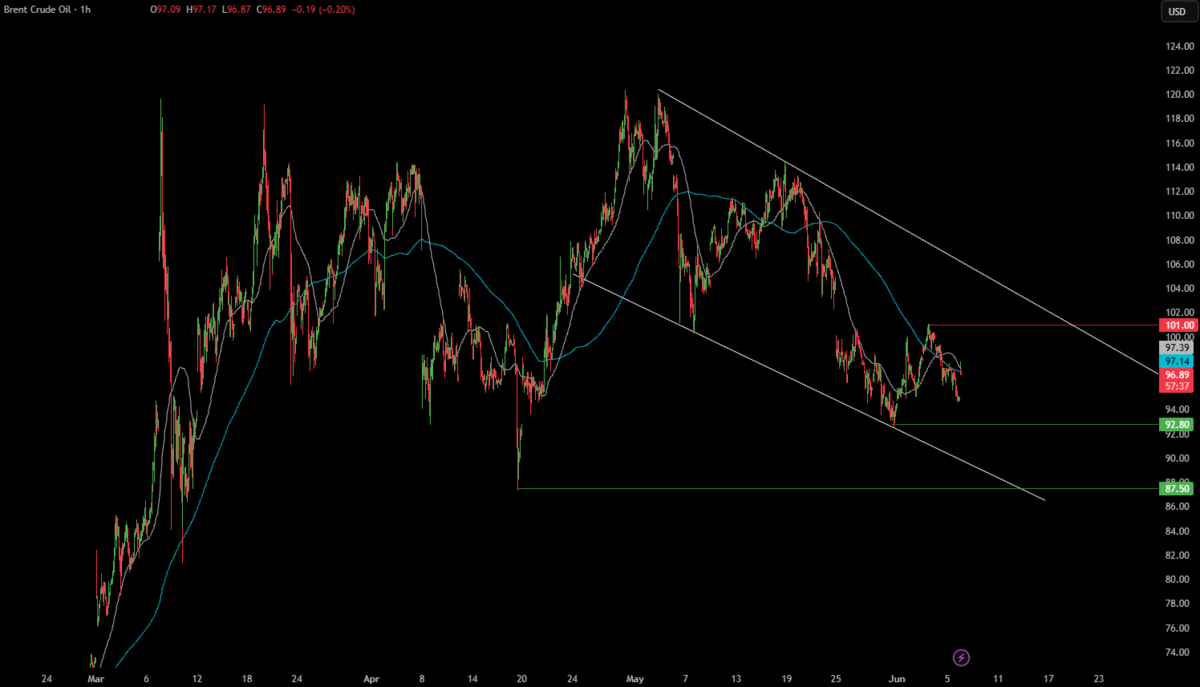
Brent’s near-term path is now overwhelmingly driven by whether Iran’s missile strike represents a one-off response to Israeli action in Lebanon or the beginning of a broader collapse of the ceasefire framework. A renewed full-scale conflict would push UK Brent back through $101, while diplomatic damage control limiting escalation could allow prices to stabilize in the high-$90s.
US labor market stuns with +172K NFP
The May Nonfarm Payrolls report on June 5 delivered the strongest upside surprise in months, with US employers adding 172,000 jobs against a consensus of just 80,000. The unemployment rate held steady at 4.3% for the eleventh consecutive month, while average hourly earnings rose 0.3% on the month and 3.4% on the year. March and April were revised up by a combined 93,000 jobs, marking the strongest three-month payrolls advance in more than two years.
Markets reacted sharply. US indices closed the week lower, ending the nine-week winning streak. The S&P 500 fell 2.89%, the Nasdaq dropped 4.99%, and the Dow Jones declined 0.51%. All three benchmarks reached new intraday highs early in the week before selling intensified on Friday.
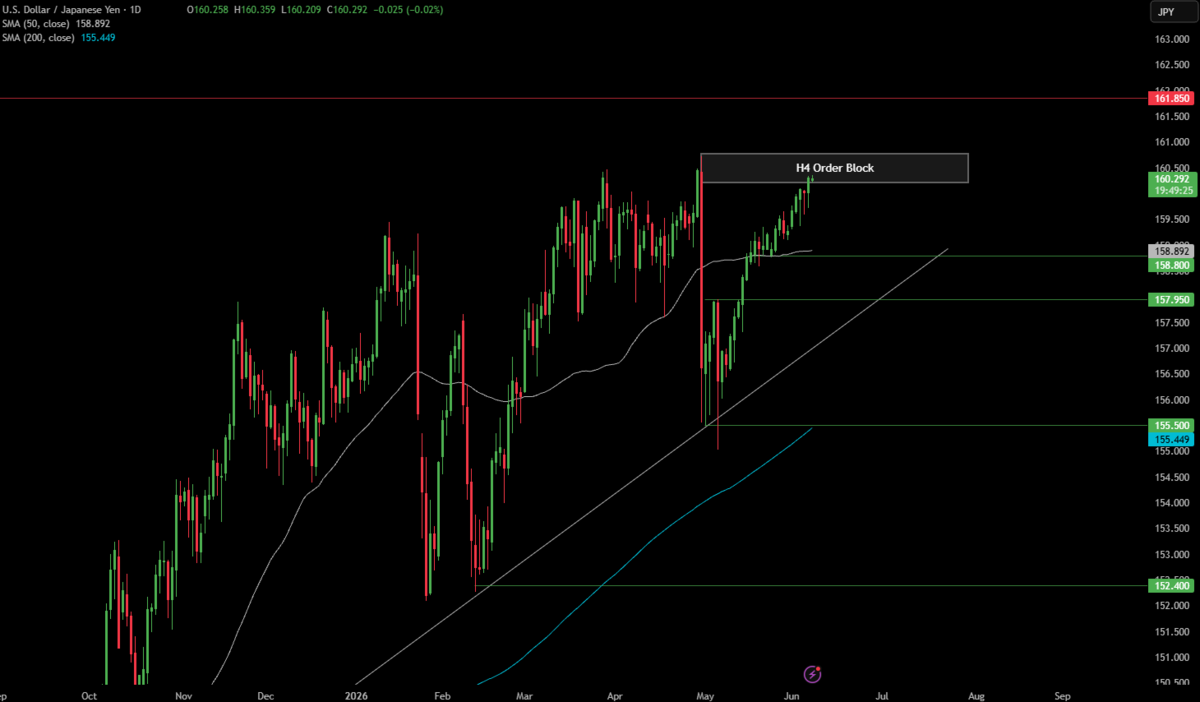
Kalshi now assigns a 52% probability to a Federal Reserve rate hike, up from 25% before the jobs report. Expectations for 2026 rate cuts have been removed, shifting focus to the possibility of a hike. USD/JPY overcame 160.00, increasing the possibility of reaching 161.85 within a couple of weeks.
India Q4 GDP beats at 7.8%, RBI holds at 5.25%
India’s economy outperformed expectations on June 5, with Q4 FY26 GDP rising 7.8% year-on-year, above the 7.2% consensus from Reuters and Bloomberg, despite the West Asia conflict affecting the latter half of the quarter. The National Statistical Office also raised full-year FY26 growth by 10 basis points to 7.7%, increasing nominal GDP to ₹346.4 trillion and enabling the government to maintain a fiscal deficit of 4.4% of GDP.
Earlier that day, the Reserve Bank of India’s Monetary Policy Committee unanimously kept the repo rate at 5.25% for the third straight meeting and maintained a neutral stance. The MPC lowered its FY27 real GDP forecast to 6.6% from 6.9% and revised its inflation projection to 5.1%, citing higher energy prices and supply-side pressures. Governor Sanjay Malhotra also announced a six-point plan to strengthen external financing through G-Secs, foreign portfolio investments, and FCNR(B) deposits.
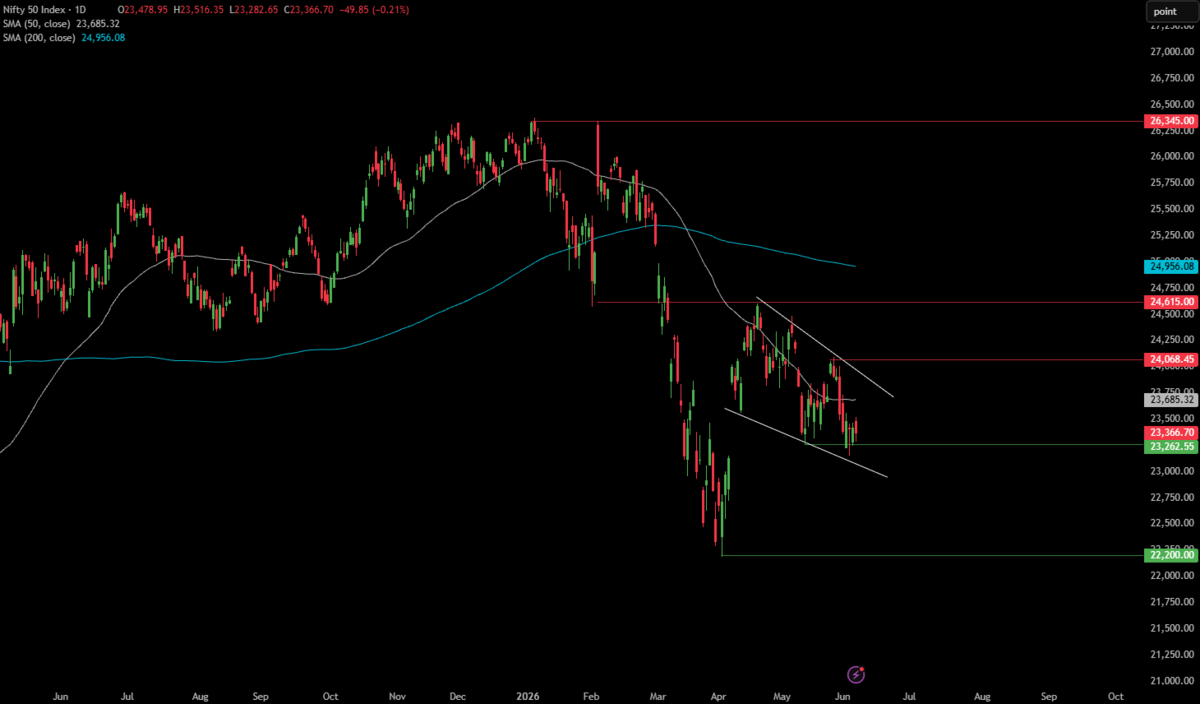
Economists remain cautious about FY27. Upasna Bhardwaj of Kotak Mahindra Bank highlighted tighter financial conditions, higher inflation, and weak monsoon risks that could limit GDP growth to 6.0-6.3%. With Sunday’s escalation in Iran erasing the optimism behind Friday’s rupee strength, the Nifty 50 is now vulnerable to renewed foreign outflows and potential oil price spikes.
Pakistan unveils FY27 budget under IMF pressure
Finance Minister Muhammad Aurangzeb presented Pakistan’s FY2026-27 federal budget to the National Assembly on Friday, June 5. The budget totals Rs17.6 trillion, with a GDP growth target of 4.1%, an average inflation projection of 8.4%, and a tax revenue target of Rs15.267 trillion. Prepared in close consultation with the IMF, the budget is subject to 11 new structural benchmarks under the Extended Fund Facility, including a primary surplus target of 2% of GDP, semi-annual gas tariff adjustments from July 2026, and an annual electricity tariff revision by January 2027.
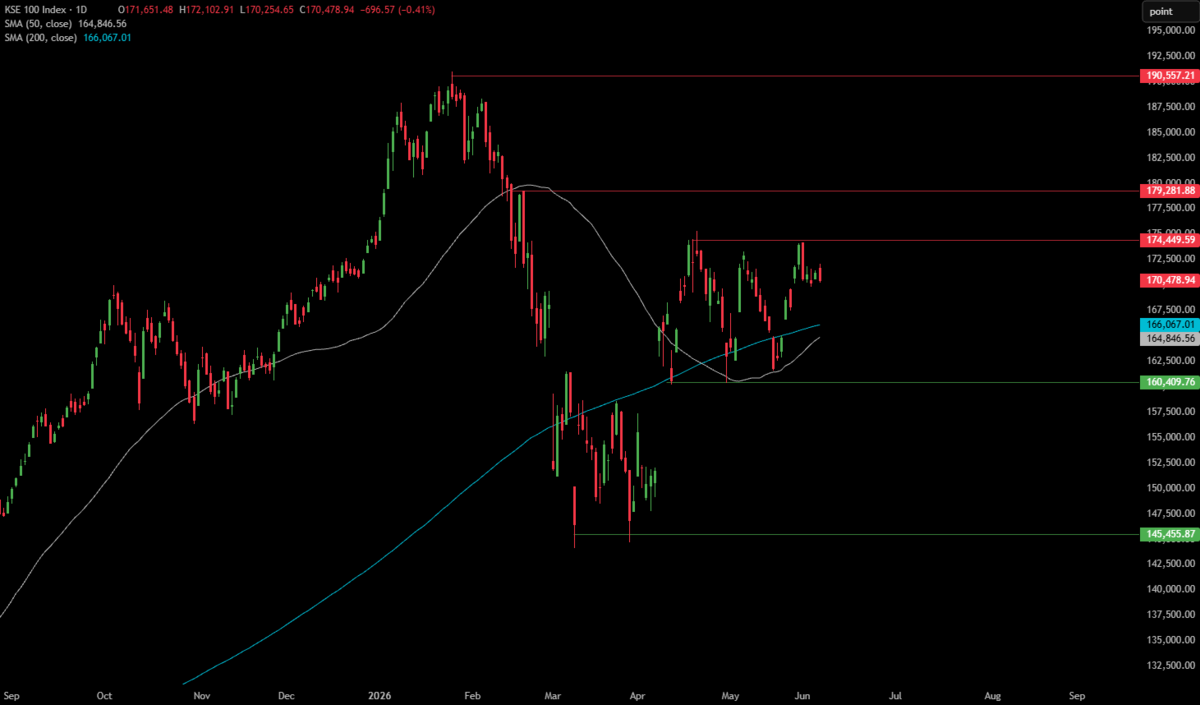
The KSE-100 closed at 171,478.94 on Friday, down 696.56 points (0.41%) for the session and about 2% for the week, and remains trading within the 160,400 – 174,500 horizontal range.
Week Ahead (US & Asia)
US CPI (Wednesday, 12:30 UTC+0)
The US May CPI release on Wednesday, June 10, is the most significant data point for global rate expectations this week. It follows April’s 3.8% year-on-year reading, the highest since May 2023, and a stronger-than-expected PPI increase, raising concerns about inflation related to Iran. Consensus forecasts expect headline CPI to remain elevated, with core CPI near 2.8%.
April’s CPI reading prompted the Warsh-era Fed to push back against rate-cut expectations, a stance reinforced by Friday’s strong NFP report. The renewed Iran-Israel escalation now threatens to reverse May’s oil price decline. A higher-than-expected CPI would worsen the inflation outlook and could increase the likelihood of a December rate hike. Markets are also monitoring for signs that the impacts of tariffs are spreading beyond energy.
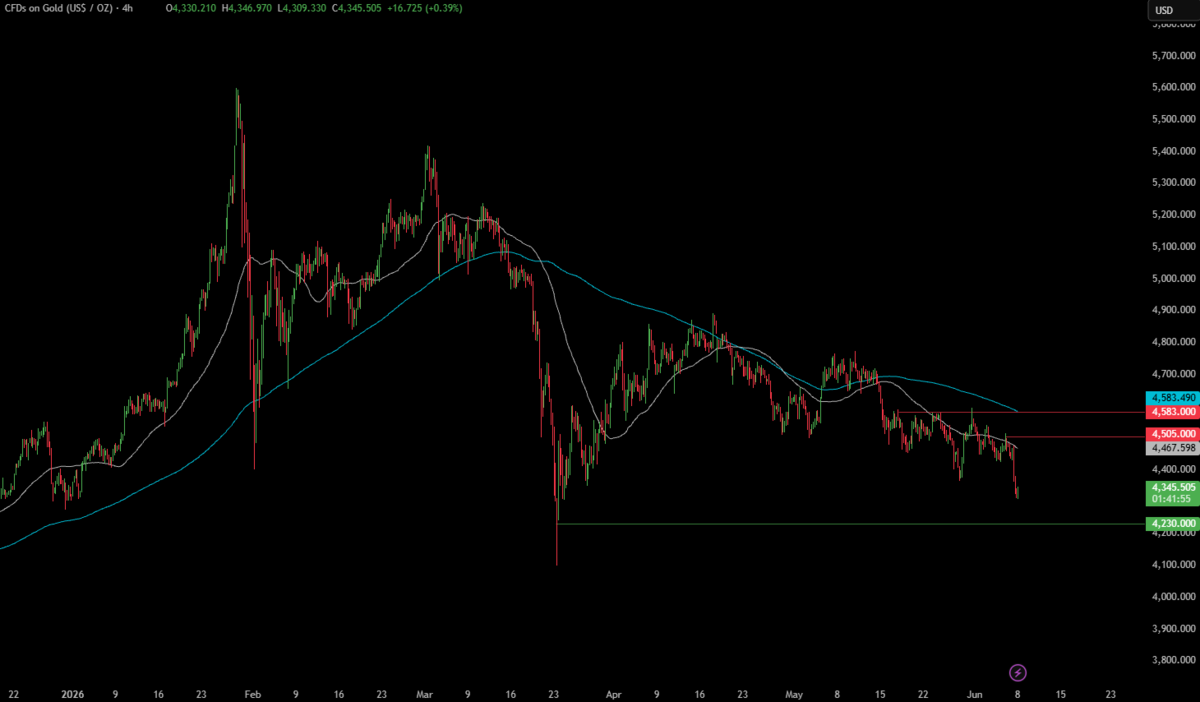
A strong CPI reading, combined with the escalation in Iran, could drive Gold toward $4,583, as inflation-hedge and safe-haven demand reinforce each other. Conversely, a softer reading that offers meaningful disinflation relief would weigh on the metal, pushing it toward $4100.
ECB rate decision (Thursday, 12:15 UTC+0)
The European Central Bank’s Governing Council meets on Thursday, June 11, for its first policy decision since April. The ECB has kept the deposit facility rate at 2.15% since March, with the last cut in April and a hold in early May. Markets are divided on whether the ECB will hold rates again or pivot, given the Fed’s hawkish stance and the eurozone’s softer inflation backdrop.
Thursday’s decision will include updated Eurosystem staff macroeconomic projections, marking the first formal forecast revisions since the conflict in Iran. Eurozone inflation has been closer to the 2% target than in the US, but energy price volatility from the Iran conflict adds significant uncertainty. Lagarde’s press conference will be closely watched for any indication of a possible July cut or an end to the easing cycle.
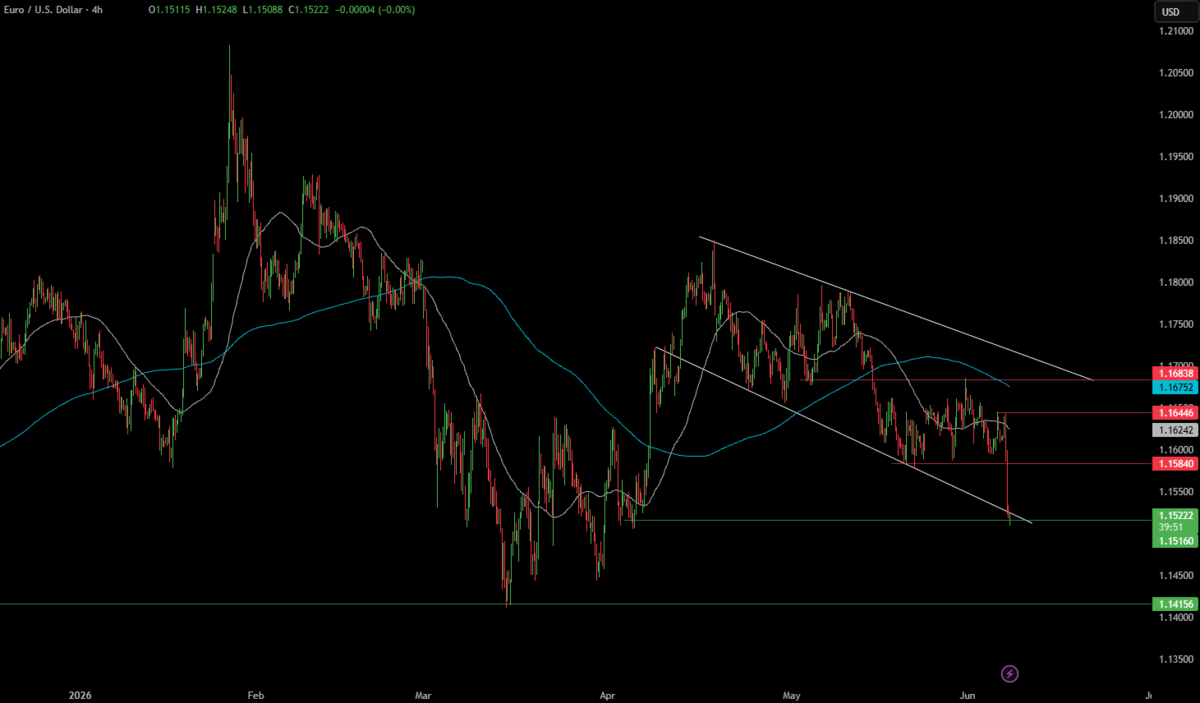
A hawkish ECB hold combined with Lagarde signaling no further cuts could lift EUR/USD toward 1.1584. A dovish surprise or any indication of another cut would weigh on the pair toward the 1.1415 area, particularly if combined with a hot US CPI print earlier in the week.
BoC rate decision (Wednesday, 13:45 UTC+0)
The Bank of Canada will announce its rate decision on Wednesday, June 10, coinciding with the US CPI release. The BoC held its policy rate steady in May, and Governor Tiff Macklem has indicated the bank seeks more data before resuming easing. Canadian inflation is closer to the 2% target than in the US, but the labor market has softened amid ongoing trade uncertainty.
This decision comes amid a complex global environment: the Fed is on hold, the ECB meets Thursday, and the Iran-Israel escalation threatens to reverse May’s oil price relief. Canadian energy producers could benefit from higher oil prices, but rising input costs would also add to inflation pressures that the BoC is working to contain.
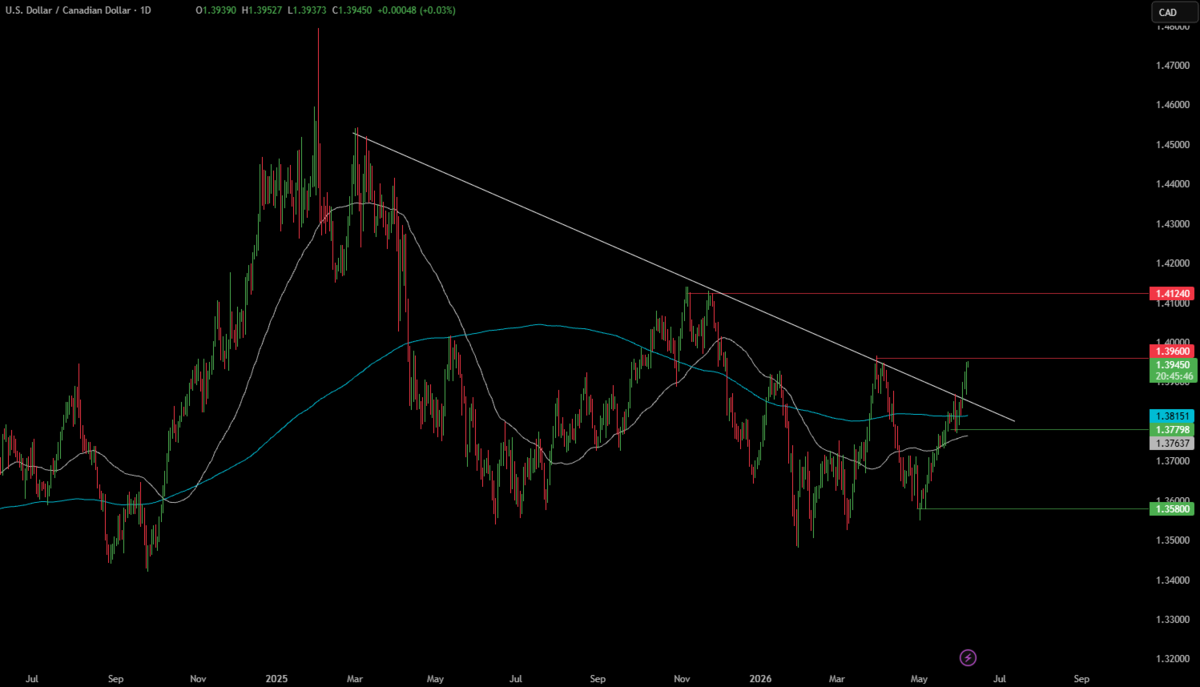
A dovish BoC announcement alongside a strong US CPI could push USD/CAD toward 1.4124. Conversely, a hawkish BoC hold, and softer US data could move the pair toward 1.3780.
India CPI May (Friday, 10:30 UTC+0)
India’s May CPI release on Friday, June 12, will provide a critical reading on whether the rupee’s recent relief rally can be sustained. April CPI came in at 3.48% year-on-year, slightly below the 3.8% consensus, up from 3.40% in March. Food inflation rose to 4.20% from 3.87%, while transport prices remained subdued at -0.01%. The April reading reinforced the RBI’s neutral policy stance and gave the central bank room to focus on growth.
The May print arrives just one week after the RBI held the repo rate unchanged at 5.25% and revised its FY27 inflation forecast to 5.1% — explicitly citing elevated energy prices as the principal upside risk. Sunday’s Iran-Israel escalation has now significantly increased the probability that the inflation projection proves conservative, particularly given India’s heavy dependence on imported oil and persistent FII outflows pressuring the rupee.
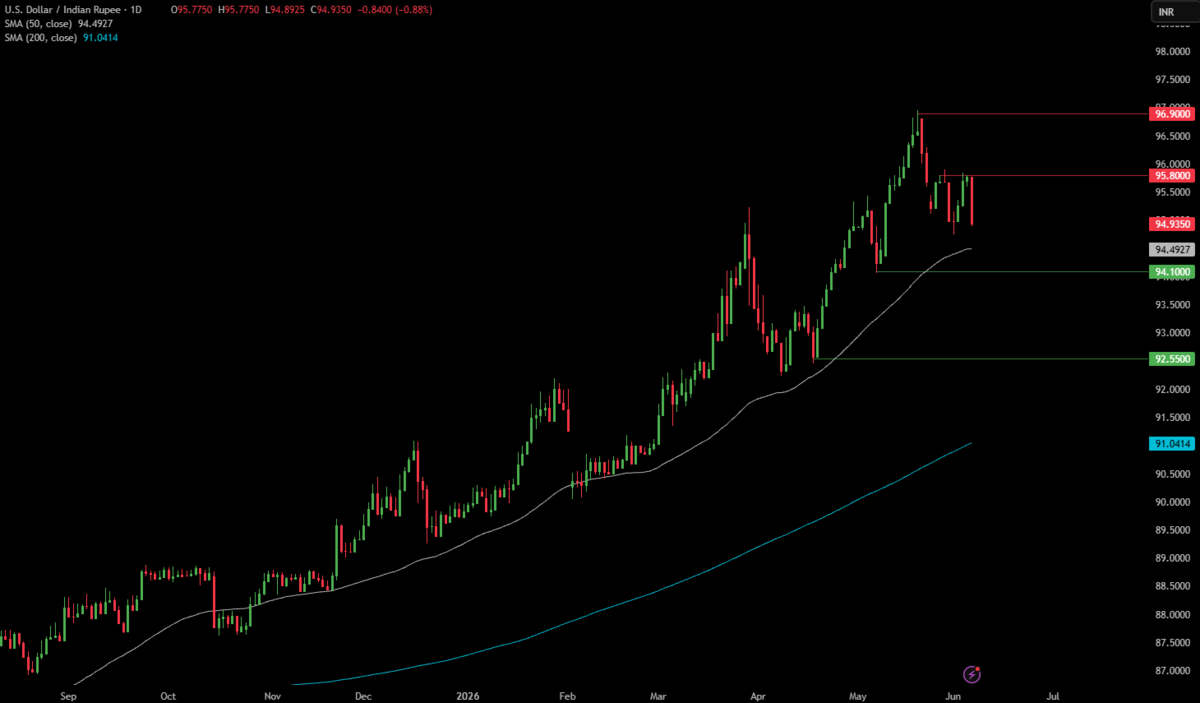
A strong May CPI reading, combined with the ongoing escalation in Iran, could push USD/INR toward the record highs of 95.8 and 96.9. Conversely, a softer reading with clear disinflation and successful diplomatic efforts would support the rupee below 94.1.
Bottom line
Sunday’s Iranian missile strike on Israel has reshaped the outlook for the week, with UK Brent reopening above $95 and safe-haven flows expected to dominate early trading. US CPI on Wednesday will either intensify or ease inflation pressures; a strong reading, combined with renewed geopolitical risk, could push Gold higher and weaken emerging market currencies.
Trading involves risk.
Author



 Risk Disclaimer
The content provided here is for informational purposes only. It is not intended as personal investment advice and does not constitute a solicitation or invitation to engage in any financial transactions, investments, or related activities. Past performance is not a reliable indicator of future results.
The financial products offered by the Company are complex and come with a high risk of losing money rapidly due to leverage. These products may not be suitable for all investors. Before engaging, you should consider whether you understand how these leveraged products work and whether you can afford the high risk of losing your money.
The Company does not accept clients from the Restricted Jurisdictions as indicated in our website/ T&C. Some services or products may not be available in your jurisdiction.
The applicable legal entity and its respective products and services depend on the client’s country of residence and the entity with which the client has established a contractual relationship during registration.