8 min read
 Weekly recap
US stocks ended a volatile week higher. The S&P 500 rose approximately 1% to 7,575.39, the Nasdaq closed near 29,700, and the Dow Jones finished at 52,637.01 after reaching a record above 53,000 on Monday. The USD strengthened as it consolidated ahead of upcoming inflation data.
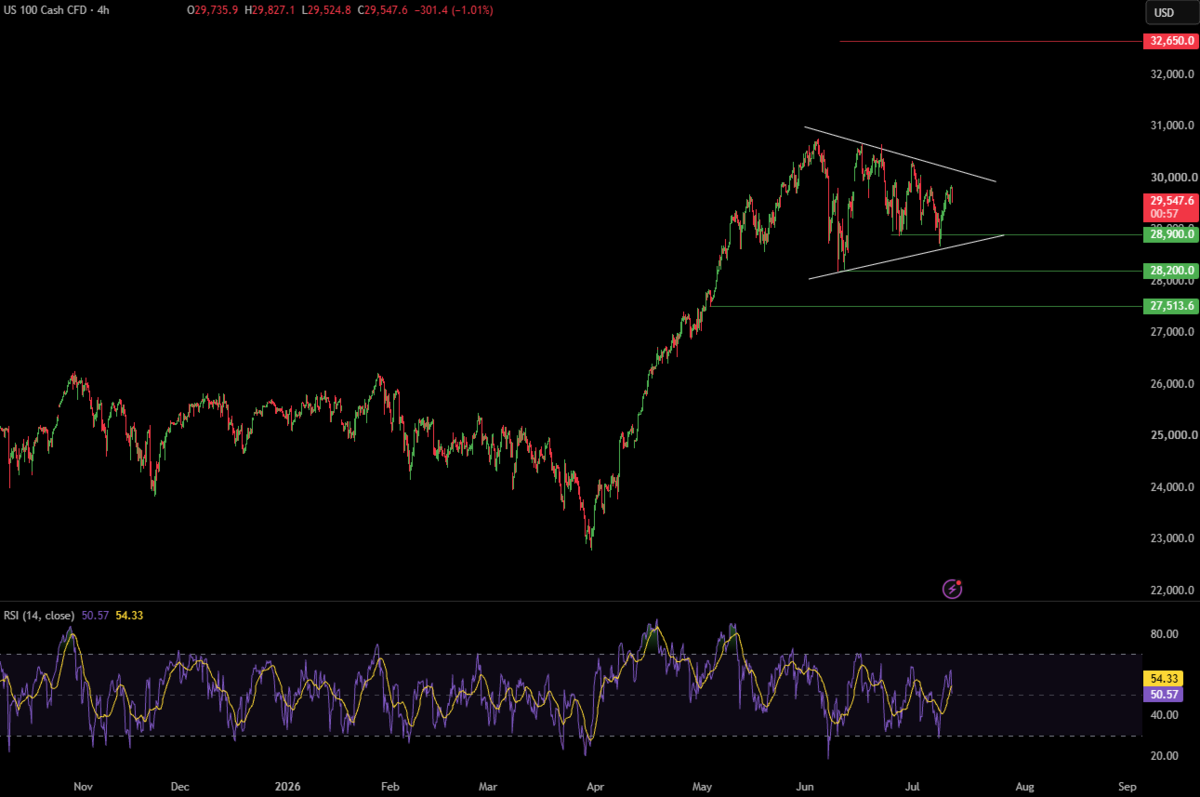
June nonfarm payrolls increased by 57,000, significantly below the expected 110,000 and down from May’s 172,000. The Federal Reserve maintained rates at 3.50%–3.75% at its June meeting, the first under its Chair Kevin Warsh, and signaled a hawkish stance by removing the 2026 rate-cut projection and indicating that rate hikes are now possible.
Iran further war re-escalation & Strait of Hormuz closure
The interim US–Iran ceasefire ended on 8 July, with President Trump declaring the truce “over”. Over the weekend, the US conducted a third round of strikes in a week, targeting approximately 140 sites overnight and more than 300 throughout the week, following an Iranian attack on a Cyprus-flagged container ship in the strait. Iran responded by declaring the Strait of Hormuz closed “until further notice”, a claim the US disputes, maintaining the waterway remains open.
Iran also targeted Gulf states, including Kuwait, Oman, Jordan, the UAE, and Qatar, with several missiles reportedly intercepted. The UN warned that renewed hostilities could have catastrophic consequences for the global economy. Brent crude closed Friday near $76.50 as markets discounted the worst-case scenario for the Strait of Hormuz. The weekend escalation and the disputed closure of the strait, which handles nearly a fifth of global oil flows, are likely to prompt higher prices at Monday’s open.
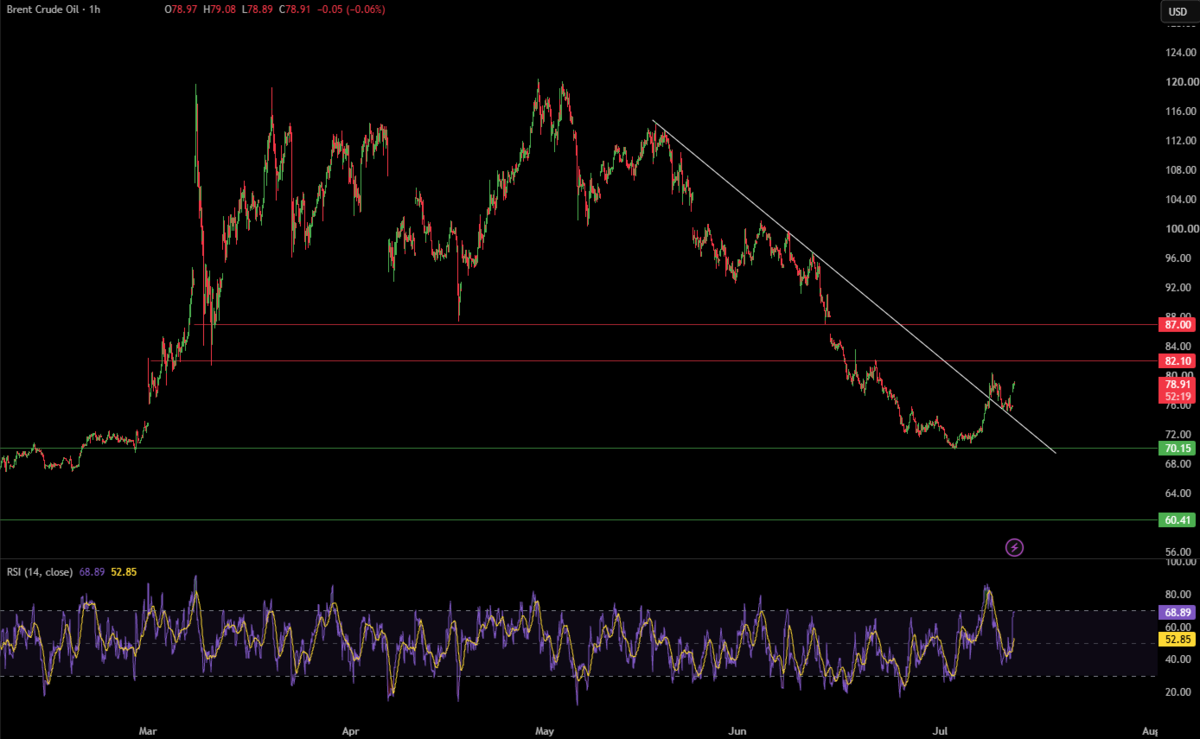
Developments in the Strait remain the key factor for inflation, interest rates, and risk sentiment. A confirmed disruption to tanker traffic or an expanded conflict could push Brent higher, while progress toward negotiations would likely return Brent to the mid-$70s.
US CPI & PPI (Tuesday & Wednesday)
June CPI, released Tuesday at 8:30 ET, is expected to show headline inflation easing to approximately 3.8% year-on-year, down from May’s 4.2% peak, supported by a 10% decline in retail gasoline prices. Core CPI is projected at 2.9% year-on-year or 0.3% month-on-month. June PPI will be released on Wednesday, following May’s strong readings of 1.1% month-on-month and 6.5% year-on-year.
This year’s inflation spike has been driven primarily by energy and the conflict in Iran, so a softer June reading would indicate that the energy shock is peaking. However, the recent escalation and threat of a Hormuz closure could renew price pressures just as they begin to moderate. The Fed’s June projections raised core PCE to 3.3% for 2026, highlighting policymakers’ expectations for persistent inflation.
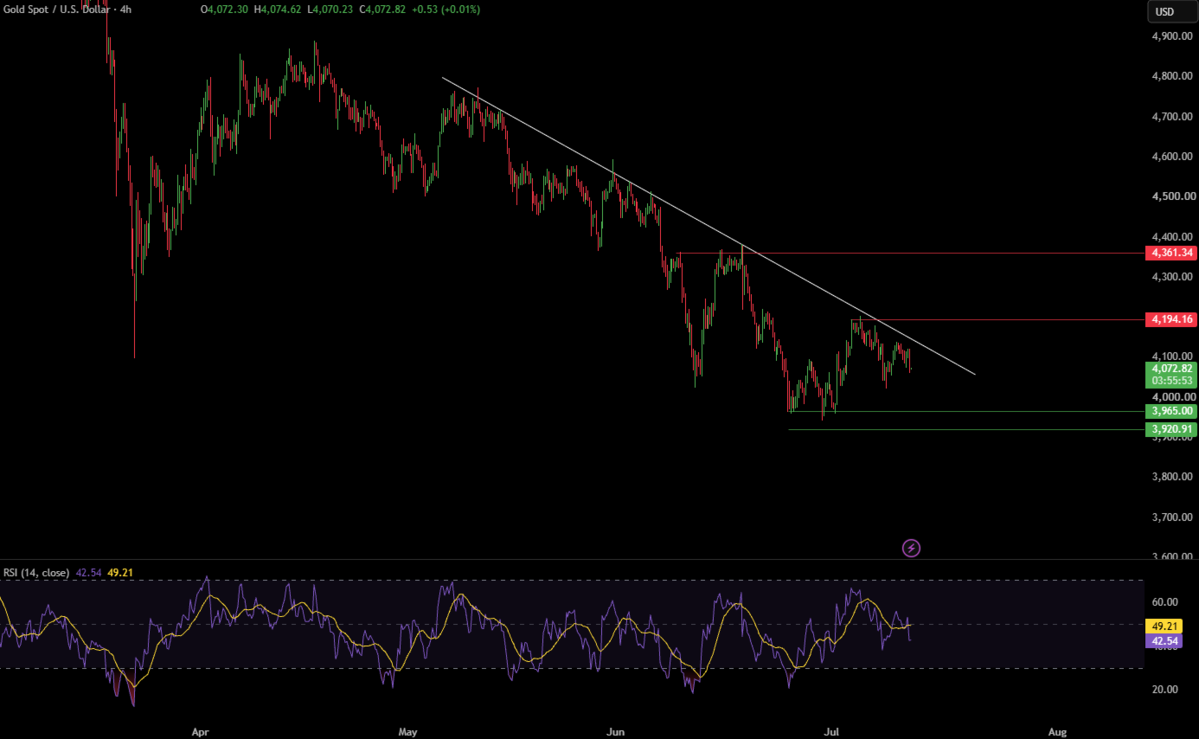
Stronger-than-expected data would reinforce the higher-for-longer outlook, support the USD, and could push Gold lower due to firmer real-rate expectations. Softer data would reduce rate hike expectations, though the renewed war premium may continue to support Gold.
Fed Chair Warsh’s congressional testimony (Tuesday–Wednesday)
Fed Chair Kevin Warsh will deliver his first congressional testimony this week, appearing before the House Financial Services Committee on Tuesday and the Senate Banking Committee on Wednesday, both at 10 a.m. ET. The federal funds rate remains at 3.50%–3.75% for the fourth consecutive meeting, with the next decision scheduled for 29 July.
Warsh has already changed Fed communication by removing traditional forward guidance and significantly shortening the policy statement. The June dot plot eliminated the 2026 rate-cut projection, with 9 of 18 officials expecting at least one hike. Meeting minutes showed a nearly even split on raising rates this year. Markets currently price a one-in-five chance of a July hike and about 60% by September. The yen is trading near 40-year lows at 161.7 per dollar, with Japan’s PPI up 7.1% and intervention risk elevated.
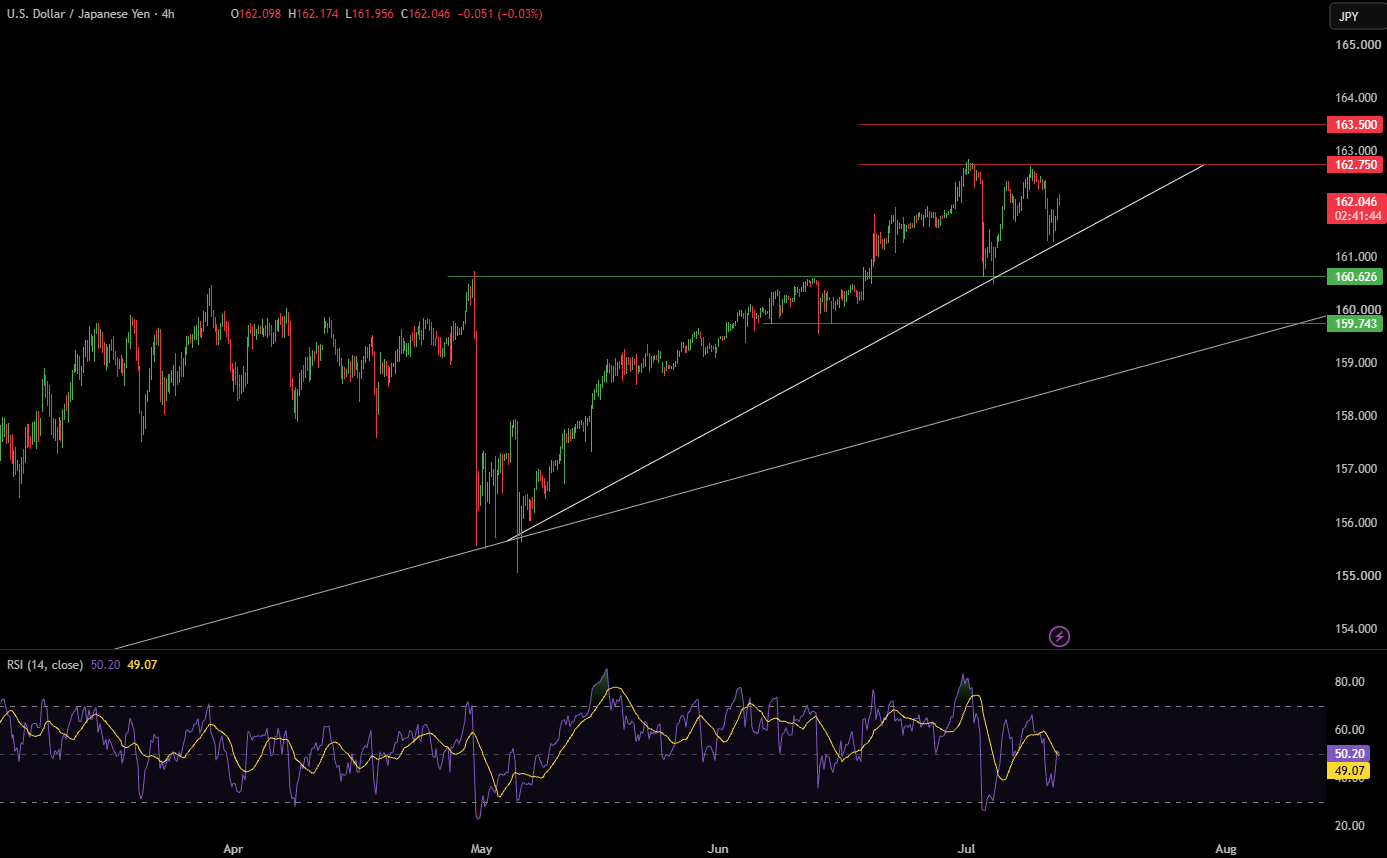
Hawkish testimony that maintains rate-hike risks could strengthen the USD and push USD/JPY higher, potentially prompting Japanese intervention. A more balanced, data-dependent approach, consistent with Warsh’s recent comment that inflation risks have eased, could reduce pressure on USD/JPY.
Bank of Canada decision (Wednesday)
The Bank of Canada is expected to maintain its policy rate at 2.25% for a sixth consecutive meeting on Wednesday at 9:45 ET, accompanied by a new Monetary Policy Report. Markets assign only a 9% probability to a rate hike.
Governor Tiff Macklem’s dilemma between oil-driven inflation and weak growth has eased as oil prices have returned to the $70s. Canadian CPI reached 3.2% in May, the first reading above 3% since late 2023, while core inflation remained near 2%. Recent data show GDP rebounded 0.5% in April and unemployment fell to 6.5% in June. A 25bp hike is partially priced for December, while Washington’s 1 July refusal to extend USMCA maintains trade uncertainty.
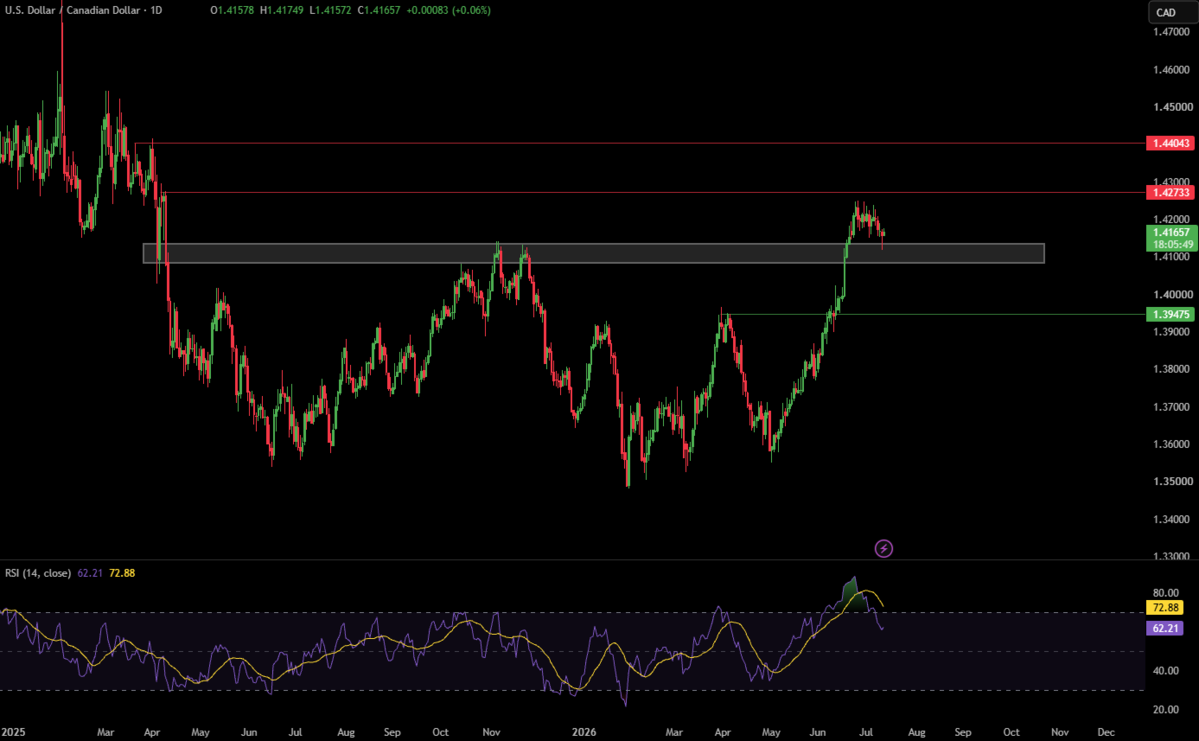
A cautious hold that highlights the risk of persistent energy prices could support USD/CAD, though renewed conflict complicates the outlook by boosting oil prices while weighing on growth. A more hawkish stance or a Monetary Policy Report emphasizing upside inflation risks could push USD/CAD lower.
US retail sales (Thursday)
June retail sales, released Thursday at 8:30 ET, will serve as the week’s primary indicator of consumer resilience amid persistently high inflation.
Consumer spending has remained stable, but the sharp slowdown in June jobs growth to 57,000 and continued high prices raise concerns about its sustainability. Strong retail sales would support the resilient-economy narrative and the Fed’s shift toward possible hikes, while weak data would renew growth concerns and challenge the higher-for-longer outlook. The Dow Jones starts the week at 52,637, just below its midweek record above 53,000.
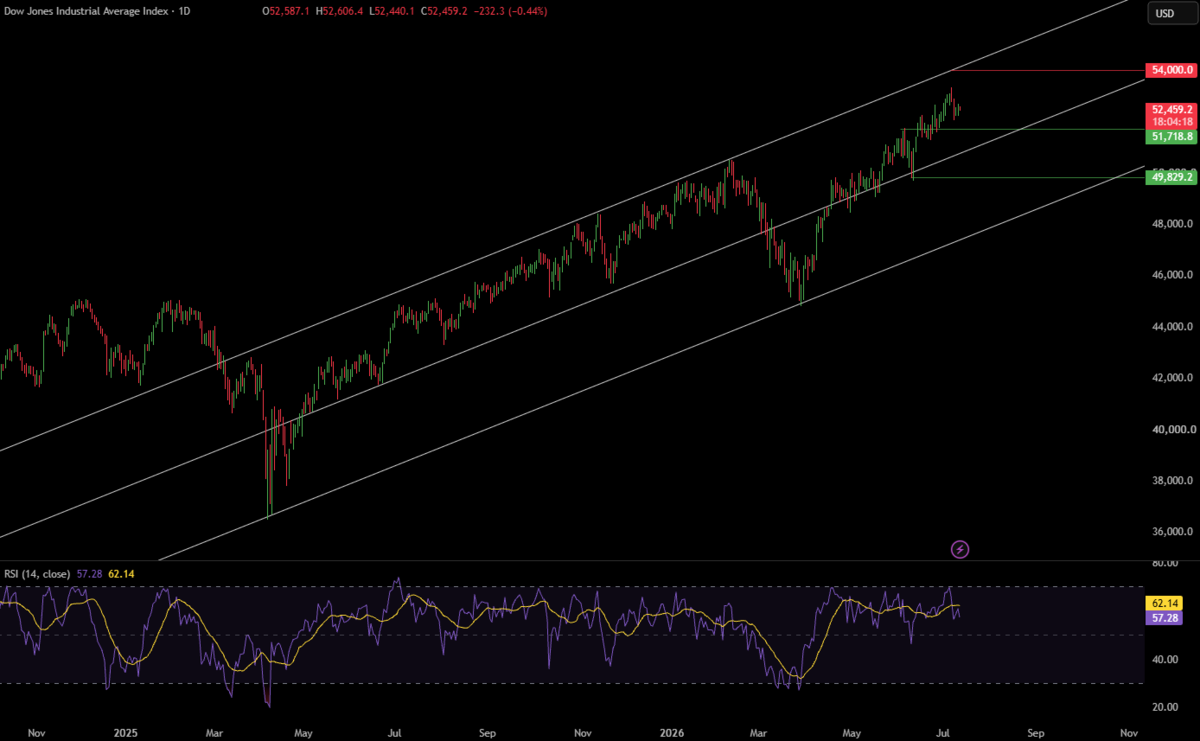
Strong sales could support cyclical stocks and the Dow Jones, but would also reinforce expectations for rate hikes. Weak sales, indicating a decline in consumer strength, could weigh on the Dow Jones.
China Q2 GDP (Thursday)
China’s second-quarter GDP, due Thursday, is expected to show growth easing to around 4.5% year-on-year, moderating from a forecast-beating 5.0% in the first quarter. June activity data — retail sales, industrial production, and fixed-asset investment — are released alongside.
Exports, particularly in AI and autos, along with strong manufacturing, continue to support China’s economic activity. However, a prolonged property slump and weak domestic consumption remain significant challenges, with higher energy costs from the conflict adding external risk. Hong Kong’s Hang Seng Index closed near 24,175, marking its best week in over a year amid the AI rally and SK Hynix’s successful listing.
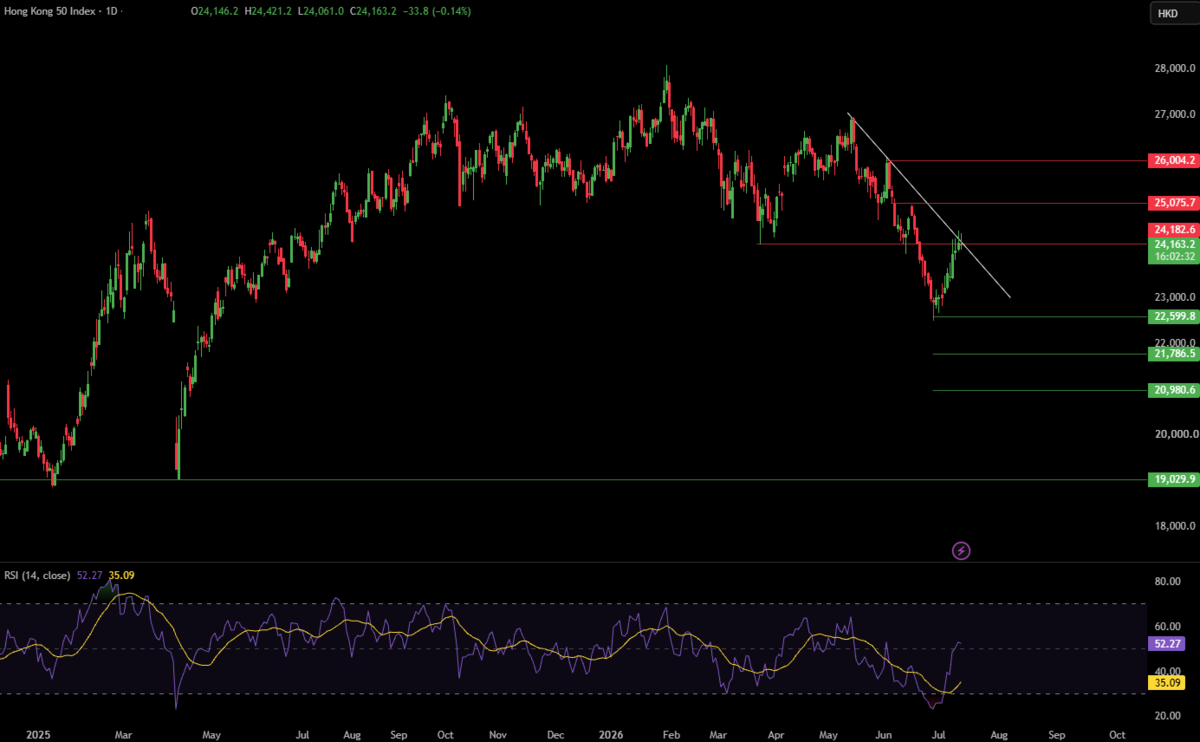
Strong data could boost regional sentiment and the Hang Seng, especially if exports continue to exceed expectations. Weaker results, highlighting property sector challenges and soft demand, could weigh on the Hang Seng.
Bottom line
The main driver this week is the renewed US–Iran conflict and the disputed closure of the Strait of Hormuz, which could push oil prices higher and reignite energy-driven inflation. In this context, key US data releases—CPI, PPI, and retail sales—and Fed Chair Warsh’s first congressional testimony will determine whether markets expect a July hold or increased risk of rate hikes. While bank earnings and China’s Q2 GDP provide additional context, developments in the Middle East are likely to have the greatest impact. Monitor Brent and Gold for war and inflation premiums, USD/JPY and USD/CAD for rate divergence, and the S&P 500, Dow Jones, and Hang Seng for overall risk sentiment.
Trading involves risk.
Author



 Risk Disclaimer
The content provided here is for informational purposes only. It is not intended as personal investment advice and does not constitute a solicitation or invitation to engage in any financial transactions, investments, or related activities. Past performance is not a reliable indicator of future results.
The financial products offered by the Company are complex and come with a high risk of losing money rapidly due to leverage. These products may not be suitable for all investors. Before engaging, you should consider whether you understand how these leveraged products work and whether you can afford the high risk of losing your money.
The Company does not accept clients from the Restricted Jurisdictions as indicated in our website/ T&C. Some services or products may not be available in your jurisdiction.
The applicable legal entity and its respective products and services depend on the client’s country of residence and the entity with which the client has established a contractual relationship during registration.