10 min read
 Weekly recap
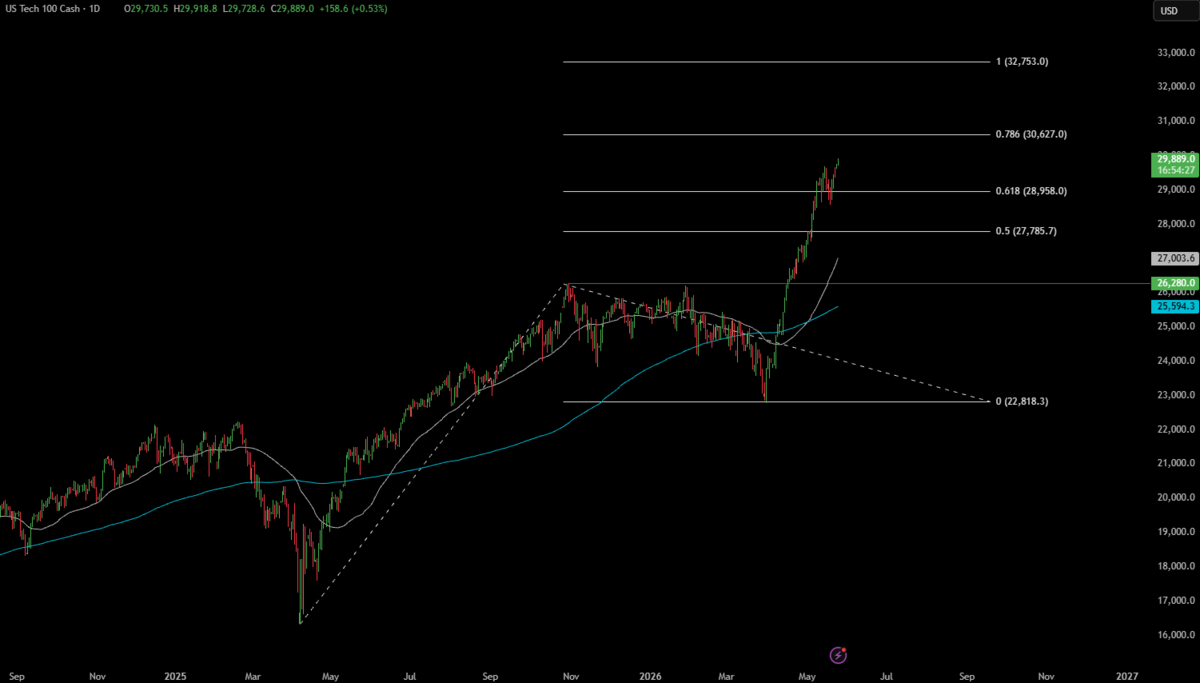
US stocks ended the week mixed. The Dow Jones rose 294 points on Friday to a record close of 50,579.70 (+0.58%) amid optimism over a potential Iran peace deal. The S&P 500 posted its eighth consecutive weekly gain (+0.4%) to close at 7,473.47. The Nasdaq advanced 1.32% to 29,459, marking its seventh weekly gain in eight weeks.
The main macro theme was persistent inflation, which weighed on Gold. Spot Gold fell to around $4,502 on Friday, marking a second consecutive weekly loss of about 0.8%. A stronger dollar and rising oil prices renewed inflation concerns and increased expectations for rate hikes.
The FOMC minutes from the 28–29 April meeting, released on Wednesday, were notably hawkish: many participants supported removing the easing bias from the post-meeting statement, “almost all” flagged that higher energy and input costs could persist, and dissent was at multi-decade highs. CME FedWatch showed the probability of a December rate hike rising above 40%, while Polymarket’s 2026 rate-hike contract increased to 34% from 10–12% in April.
This week’s major events
US Conference Board consumer confidence
Tuesday, 26 May, 14:00 UTC
The Conference Board’s Consumer Confidence Index for May is the first significant US data release of the week. It follows a record low in the University of Michigan sentiment earlier this month, driven by rising gasoline prices and higher inflation expectations over the 1- to 5-year horizon. With April CPI at 3.8% year-on-year and April PPI recording its largest monthly increase in four years, the key question is how quickly inflation is affecting household expectations.
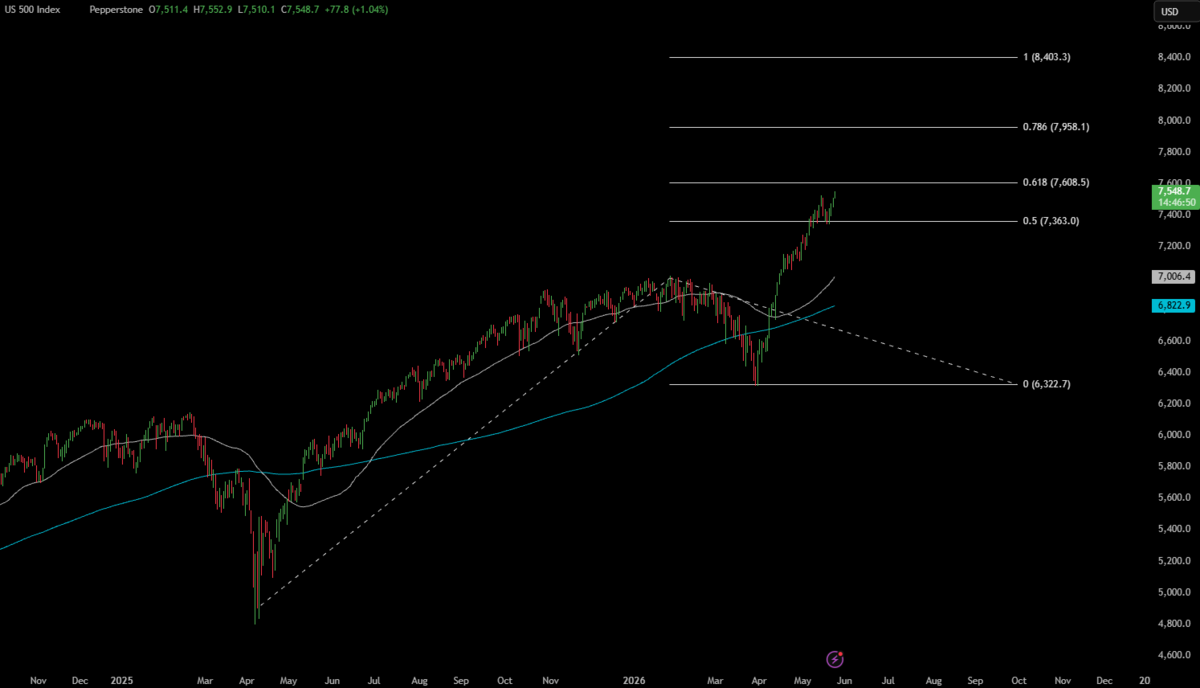
A sharp decline, especially in the present-situation index, would reinforce the stagflation narrative that has weighed on equities since the FOMC minutes and could prompt the S&P 500 to retreat from record highs and decline toward 7360. Conversely, a stable or improving result would suggest consumers are absorbing the energy shock and could help the S&P 500 extend its eight-week winning streak.
Australia’s monthly CPI
Wednesday, 27 May, 01:30 UTC
Australia’s April monthly CPI will provide the first inflation reading since the federal government’s fuel excise cut took effect on 1 April, partially offsetting the surge in retail petrol prices that pushed March headline CPI to 4.6% year-on-year.
Consensus expects headline CPI to ease slightly to about 4.4% year-on-year. The trimmed mean, the RBA’s primary core measure, is the key figure to watch. A reading above 3.5% would highlight divergence from other central banks and could renew the case for a near-term rate hike. Retail petrol prices in Australia dropped from about $2.19 to $1.69 per liter after the excise cut, so much of the March increase should reverse.
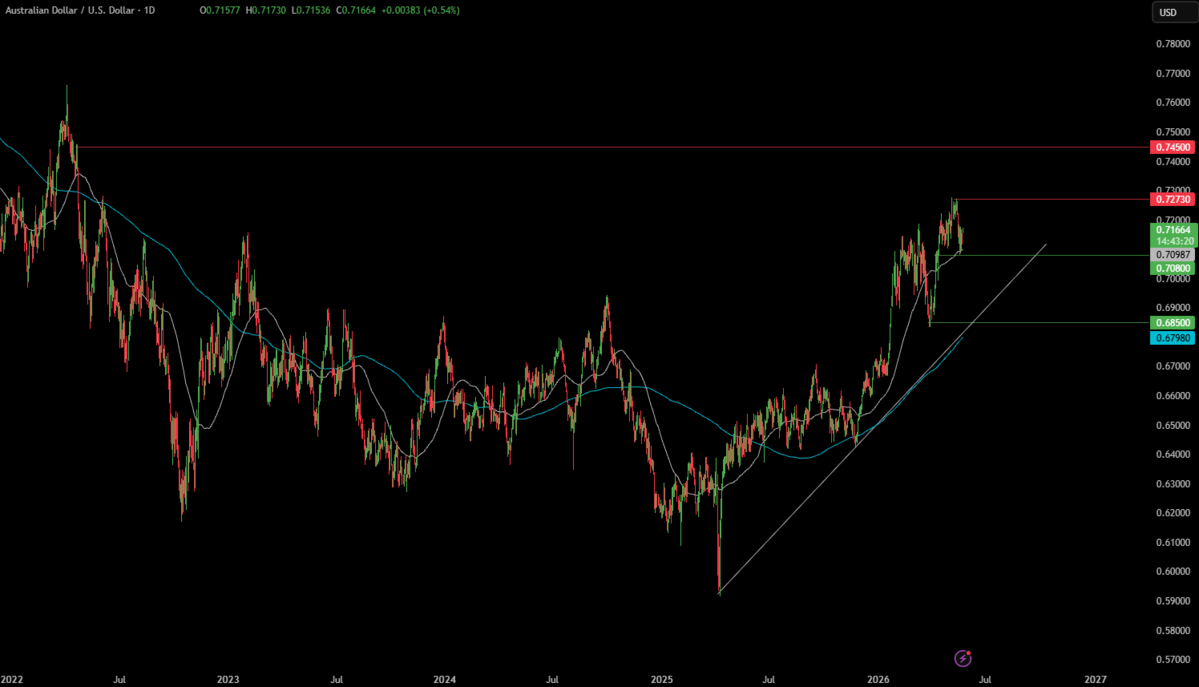
A higher-than-expected trimmed mean would likely lift AUD/USD toward 0.7273. Conversely, a clear cooling in the core measure would weaken the RBA’s stance and leave AUD/USD vulnerable to a stronger US dollar following the Friday Core PCE release.
RBNZ rate decision
Wednesday, 27 May, 02:00 UTC
The Reserve Bank of New Zealand is expected to keep the Official Cash Rate at 2.25% for a third consecutive meeting. All five major New Zealand bank economists anticipate a hold, and prediction markets assign a 76% probability of no change. The OCR has remained at 2.25% since November 2025, following an easing cycle that reduced rates from a peak of 5.50% during 2024–2025.
The setup is unusually two-sided. Q1 CPI came in at 2.7%, above the 2% midpoint of the 1–3% target band for the second straight quarter, and the RBNZ board members all agreed that rates must rise at some point over the coming year, with the OCR expected to be in a 2.75–3.75% range in twelve months. Governor Anna Breman said after the April meeting that the committee was “not close” to raising rates, but the Iran-war-driven energy shock has shifted the inflation outlook. The accompanying Monetary Policy Statement, with updated OCR and inflation projections, will matter more than the decision itself.
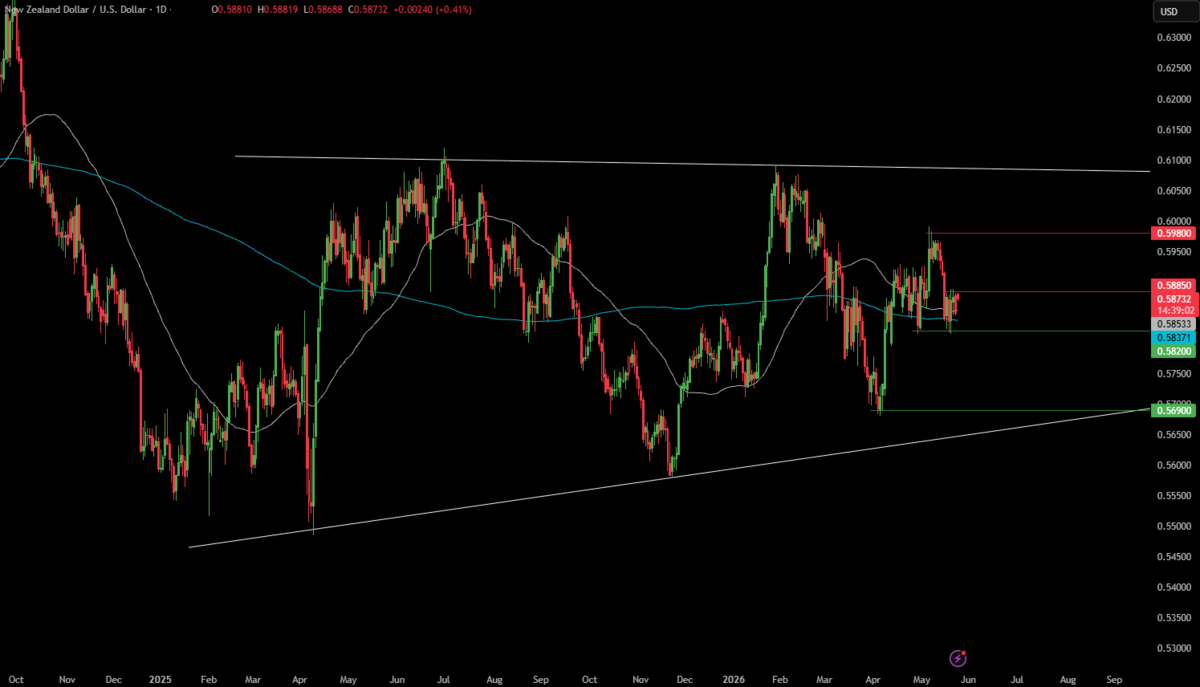
A hawkish hold, particularly an upward revision to the OCR track, would send NZD/USD toward 0.5980. A more cautious tone or any explicit acknowledgment of growth risks would leave NZD/USD vulnerable, especially with US Core PCE due the following day.
US Q1 GDP revised & jobless claims
Thursday, 28 May, 12:30 UTC
The second estimate of Q1 GDP will provide a clearer view of the inflation-versus-growth dynamic ahead of the Core PCE release. The initial reading was approximately 1.2% in late April, significantly lower than the 4.4% pace in Q3 2025, reflecting the early effects of the Iran-related energy shock. The revised estimate will include more complete trade and inventory data and will be closely monitored alongside initial jobless claims, which rose to 211,000 last week from a revised 199,000.
This combination is important because the FOMC minutes indicated that risks to GDP and employment forecasts are now tilted downward, while inflation risks remain elevated. A significant upward revision to Q1 growth, especially from consumption, would support the resilient-economy narrative and strengthen the case for the Fed to hold or raise rates. A downward revision would reinforce stagflation concerns and complicate expectations for rate hikes.
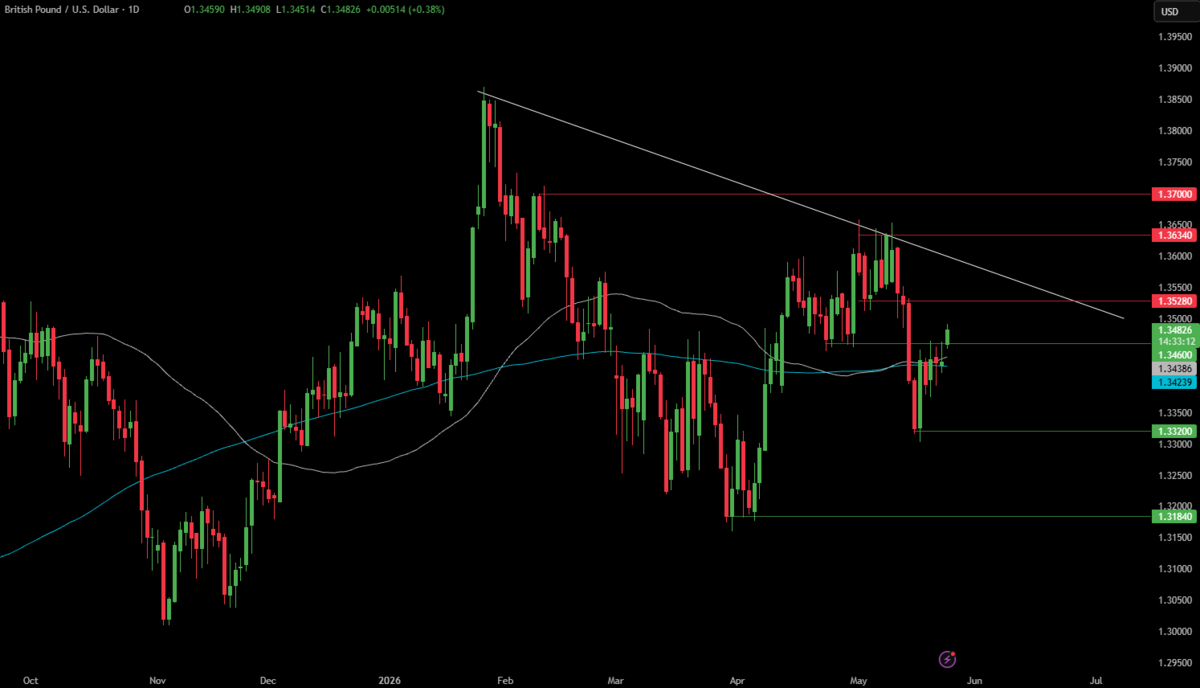
GBP/USD continues to reflect movements in the US rate differential. The pair gained 0.8% over the past week and is now targeting 1.3528. A strong revision to GDP, combined with low jobless claims, would likely push GBP/USD toward 1.3320. A weaker print would provide some boost for the pair toward 1.3634.
US Core PCE inflation
Thursday, 28 May, 12:30 UTC
The Federal Reserve’s preferred inflation gauge, released alongside the GDP revision, is the main event of the week. Consensus expects headline PCE to rise 0.3% month-on-month and Core PCE to increase 0.3% month-on-month, resulting in an annual rate of about 3.8%. If realized, this would be the highest annual core reading since 2022. The previous annual core PCE was 3.2% in March.
The April FOMC minutes stated that “almost all” participants now see a risk that higher energy and input costs could become more persistent, a view reinforced by recent CPI and PPI data. Most members would support rate hikes if inflation stays above target. Currently, Fed funds futures price about a 70% chance of a 25-basis-point increase by year-end, with December and January contracts both above 50% on CME FedWatch. The Core PCE release will determine whether this pricing holds.
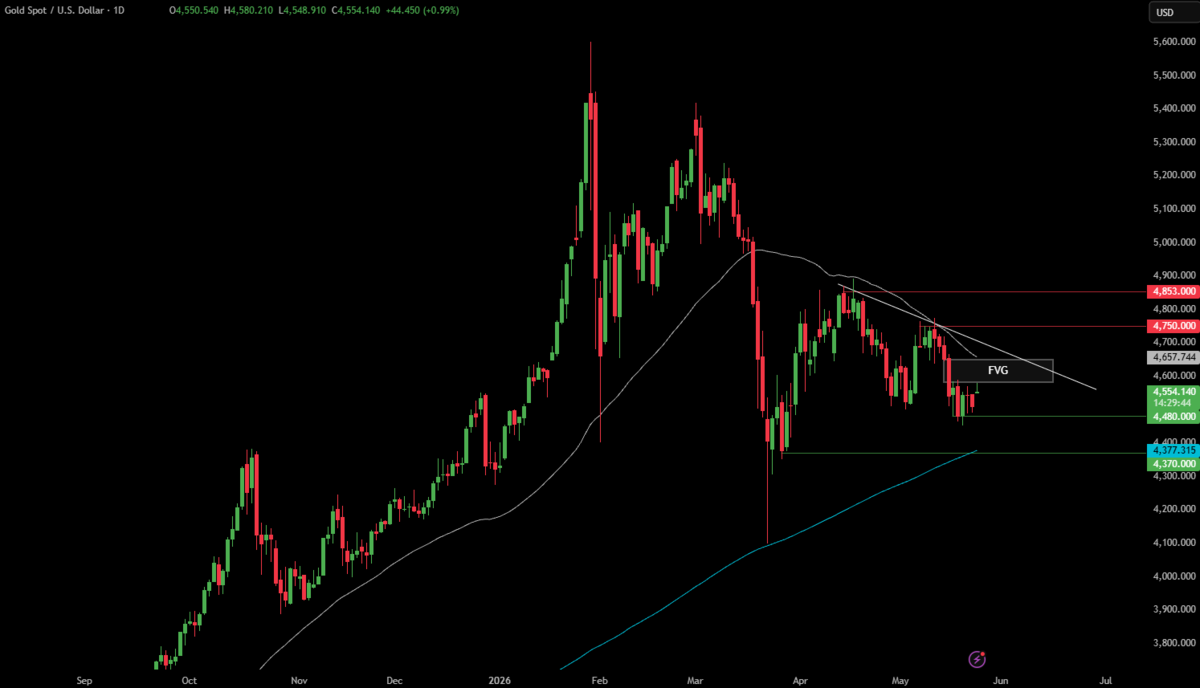
A strong reading, especially a monthly increase of 0.3% or 0.4% that brings the annual rate near 3.8%, would further support the dollar and put additional pressure on Gold, which is already down about 14% from January’s all-time high.
Tokyo CPI
Thursday, 28 May, 23:30 UTC
Tokyo CPI for May serves as a leading indicator of the national figure and is the most important domestic Japanese data this week. The April Tokyo CPI was below expectations, with headline inflation at 1.5% and core at 1.9% versus 2.3% expected. Fuel subsidies kept the headline figure low despite rising raw material costs from the Iran conflict. The National April CPI, released on 23 May, confirmed this moderation, with the headline at 1.5% and the core excluding fresh food at 1.8%.
This context is important for the BoJ. At the April meeting, three of nine board members dissented in favor of a 1.0% hike, and the summary of opinions indicated that some members want to raise rates “without long intervals” and reach the neutral rate sooner if oil disruptions continue. A Reuters poll shows nearly two-thirds of economists expect a 25-basis-point hike to 1.0% at the 16–17 June meeting, but each soft Tokyo CPI reading reduces the probability. BoJ Governor Ueda is also scheduled to speak earlier in the week, and markets will watch for any direct signals regarding the June decision.
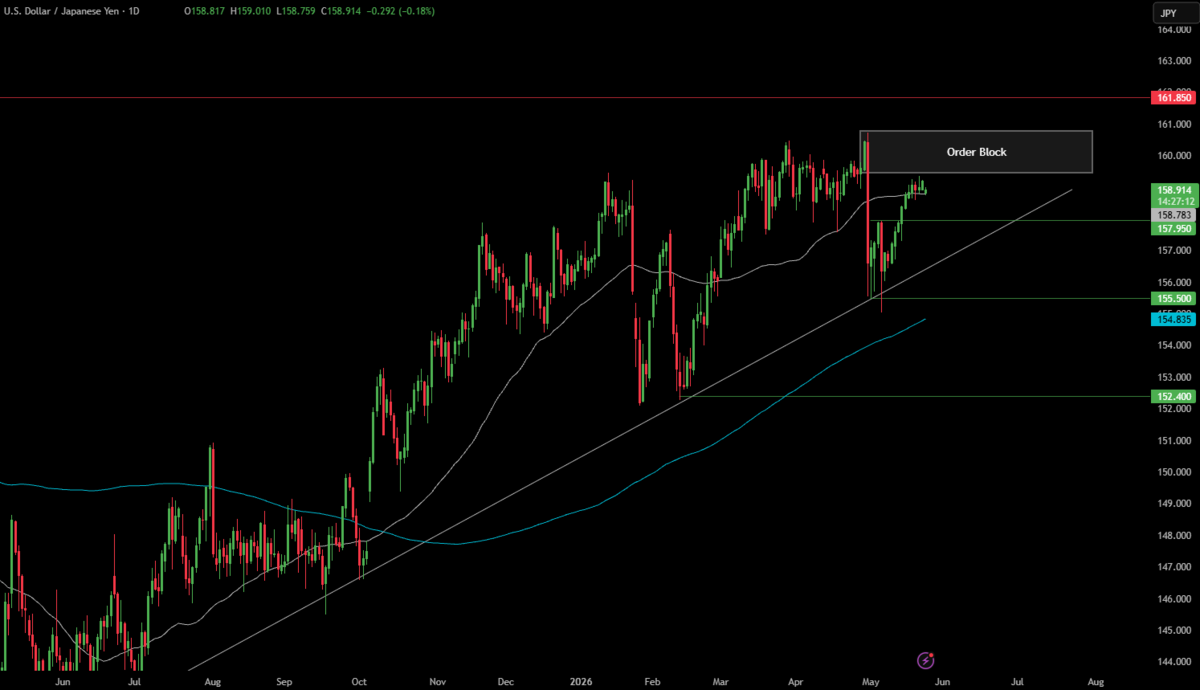
A stronger Tokyo CPI reading, especially if core returns near 2.3%, would solidify expectations for a June rate hike and strengthen the yen, pushing USD/JPY lower. Another weak result would give the BoJ justification to delay action and could extend the USD/JPY rally toward the 160 level, where the risk of Ministry of Finance intervention increases.
German preliminary CPI
Friday, 29 May, 12:00 UTC
Germany’s preliminary May CPI is the key Eurozone inflation release ahead of the full Eurozone flash CPI on Tuesday, 2 June, and the ECB meeting on 11 June. In April, Eurozone headline CPI rose to 2.5%, driven entirely by energy, while core inflation eased. However, Thursday’s flash PMI indicated the Iran energy shock is broadening: Eurozone services output prices reached a multi-year high, and France’s composite PMI fell to 43.5, its sharpest contraction since the November 2020 Covid lockdowns.
The German CPI release is the first concrete indication of whether second-round effects are emerging in the Eurozone’s largest economy. The ECB is currently pricing about 50 basis points of tightening for 2026, and Christine Lagarde indicated this week that the ECB’s inflation forecast will need to be revised before the June meeting. A strong German CPI, especially in services, would reinforce the ECB’s hawkish stance and support EUR/USD after its recent drop below 1.16.
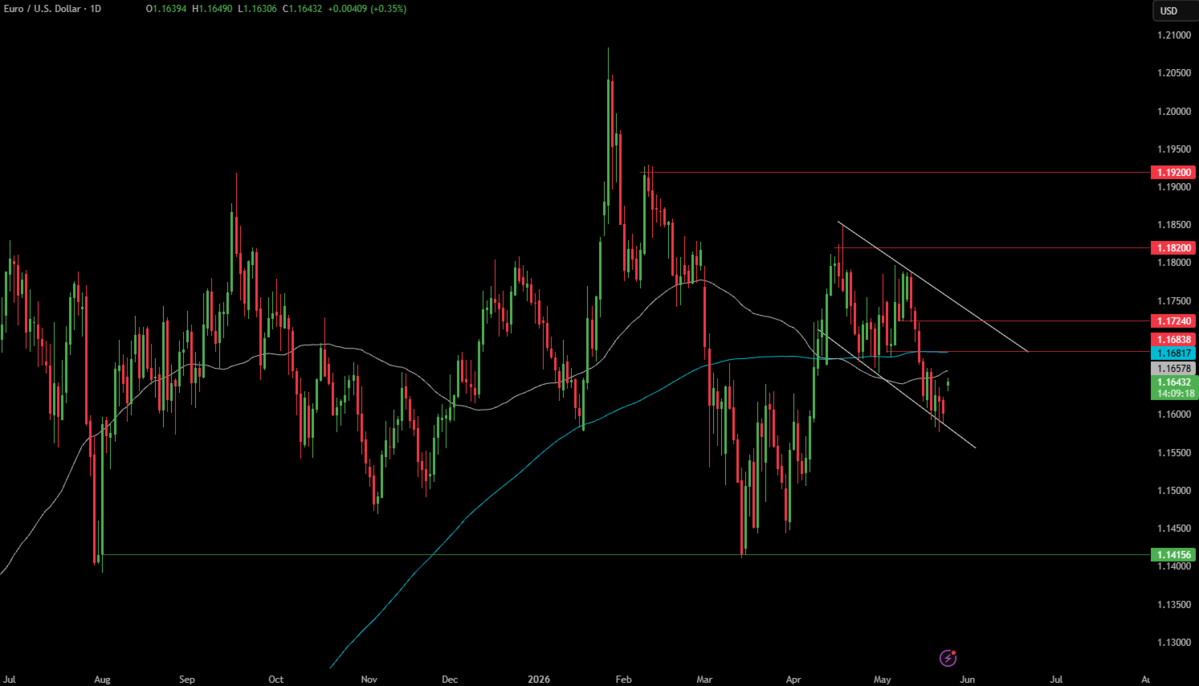
A weaker-than-expected reading would suggest the energy shock remains primarily fuel-driven and reversible, leaving EUR/USD exposed to a stronger dollar heading into the weekend. The cross-asset response will likely be influenced by the previous day’s Core PCE release.
Bottom line
Core PCE on Thursday is the week’s key data release. Gold and the S&P 500 are likely to react directly to Thursday morning’s data. The combination of the Q1 GDP revision and Core PCE will shape the ongoing stagflation-versus-resilience debate, which has influenced cross-asset positioning for two months.
Trading involves risk.
Author



 Risk Disclaimer
The content provided here is for informational purposes only. It is not intended as personal investment advice and does not constitute a solicitation or invitation to engage in any financial transactions, investments, or related activities. Past performance is not a reliable indicator of future results.
The financial products offered by the Company are complex and come with a high risk of losing money rapidly due to leverage. These products may not be suitable for all investors. Before engaging, you should consider whether you understand how these leveraged products work and whether you can afford the high risk of losing your money.
The Company does not accept clients from the Restricted Jurisdictions as indicated in our website/ T&C. Some services or products may not be available in your jurisdiction.
The applicable legal entity and its respective products and services depend on the client’s country of residence and the entity with which the client has established a contractual relationship during registration.