9 min read
 Weekly recap
OPEC+ & geopolitical escalation
Tensions in the Middle East escalated significantly over the weekend. The US intercepted six Iranian attack drones near the Strait of Hormuz and largely blocked seven ballistic missiles targeting Kuwait and Bahrain. In response, the US struck Iranian coastal surveillance radar sites in Goruk and on Qeshm Island. An adviser to Iran’s supreme leader stated that negotiations are now “at a deadlock.”
Sunday marked the most significant escalation since the April ceasefire. Israel conducted an unannounced strike on Beirut’s southern suburbs, resulting in two deaths and twenty injuries, in response to Hezbollah missile attacks on northern Israel. Iran then launched its first missile barrage on Israel since the ceasefire, with the IRGC claiming it targeted the Ramat David airbase. Israel reported identifying and intercepting the missiles.
OPEC+ concluded its 41st ministerial meeting over the weekend. The seven core voluntary-cut producers (Saudi Arabia, Russia, Iraq, Kuwait, Kazakhstan, Algeria, and Oman) agreed to a fourth consecutive monthly target increase of 188,000 barrels per day starting in July. The group reaffirmed its overall policy through the end of 2026. This increase is largely symbolic, as Saudi production in March was 7.76 million bpd compared to a June quota of 10.291 million bpd, and the Strait of Hormuz has remained effectively closed since 28 February. Brent is expected to open significantly higher following the escalation over the weekend.
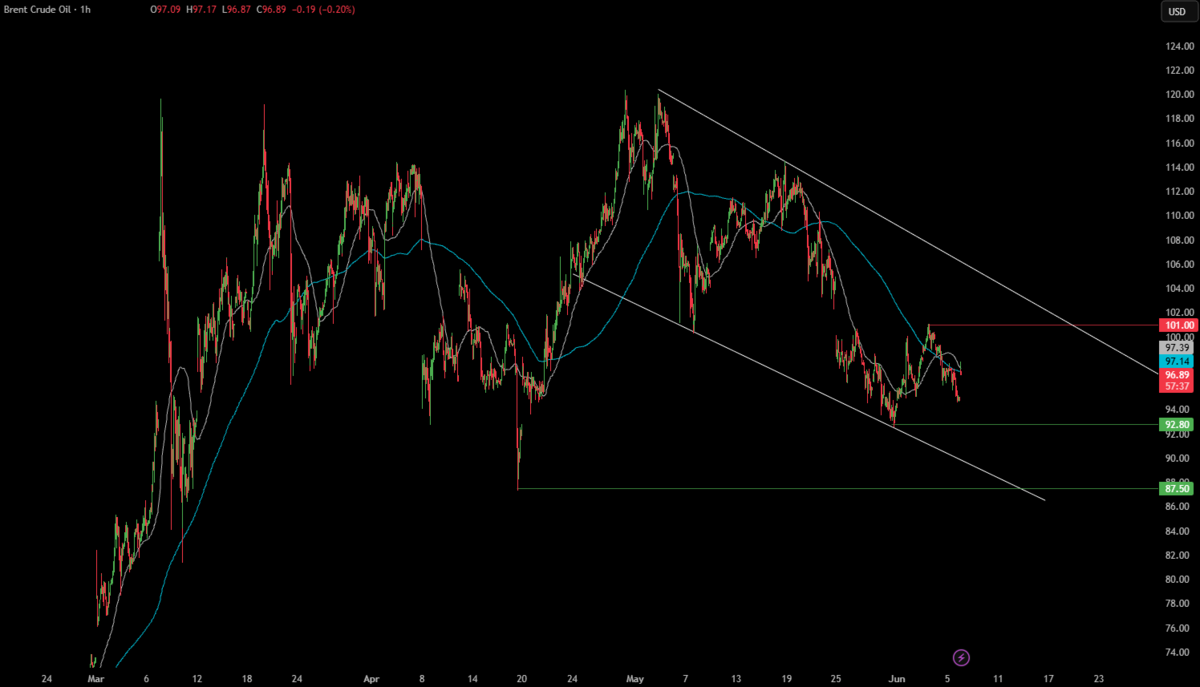
Brent opened Monday with a 2.5% gap and continues to trade within the 92.80 to 101.00 range.
US indices & NFP shock
US indices closed the week lower, ending the S&P 500‘s nine-week winning streak. The S&P 500 fell 2.89%, the Nasdaq dropped 4.99%, and the Dow Jones declined 0.51%. All three benchmarks reached new intraday highs early in the week before selling intensified on Friday.
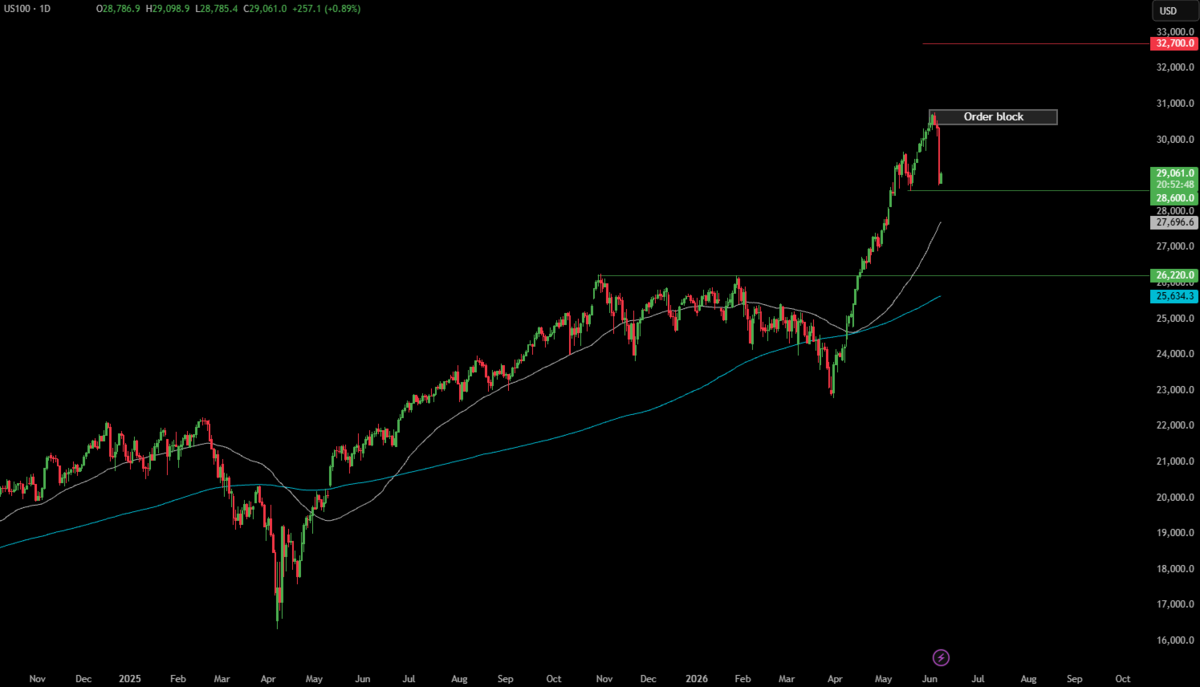
The main driver was the May Non-Farm Payrolls report. Employment rose by 172,000, surpassing the consensus estimate of 80,000–85,000. The unemployment rate held at 4.3%, and average hourly earnings increased 0.3% month-on-month. March and April figures were revised up by a total of 93,000 jobs, indicating a stronger-than-expected labor market.
Markets reacted sharply. The 10-year Treasury yield rose above 4.54%, and 20- and 30-year yields exceeded 5%. The VIX jumped 39.7% to 21.51. NVIDIA declined 5%, Broadcom 5.7%, Micron 9.4%, and Lululemon 8.6%. Meta announced a secondary equity offering. Only consumer staples ended higher.
Markets quickly adjusted expectations. Kalshi now assigns a 52% probability to a Federal Reserve rate hike, up from 25% before the jobs report. Expectations for 2026 rate cuts have been removed, shifting focus to the possibility of a hike.
Week Ahead
China CPI (Tuesday, 01:30 UTC+0)
China’s National Bureau of Statistics will release May CPI data on Tuesday. In April, headline inflation accelerated to 1.2% year-on-year from 1.0% in March, surpassing the consensus of 0.8%. Non-food inflation increased to 1.8% from 1.2%, driven by a 4.6% rise in transport costs linked to the Middle East energy shock.
Core inflation remained at 1.2% year-on-year, indicating that underlying pressures are contained for now. Food prices declined by 1.6%, led by lower pork and fresh produce prices. The May data will reveal whether stronger services and higher import costs are broadening inflation beyond energy, or if weak domestic demand continues to limit headline inflation.
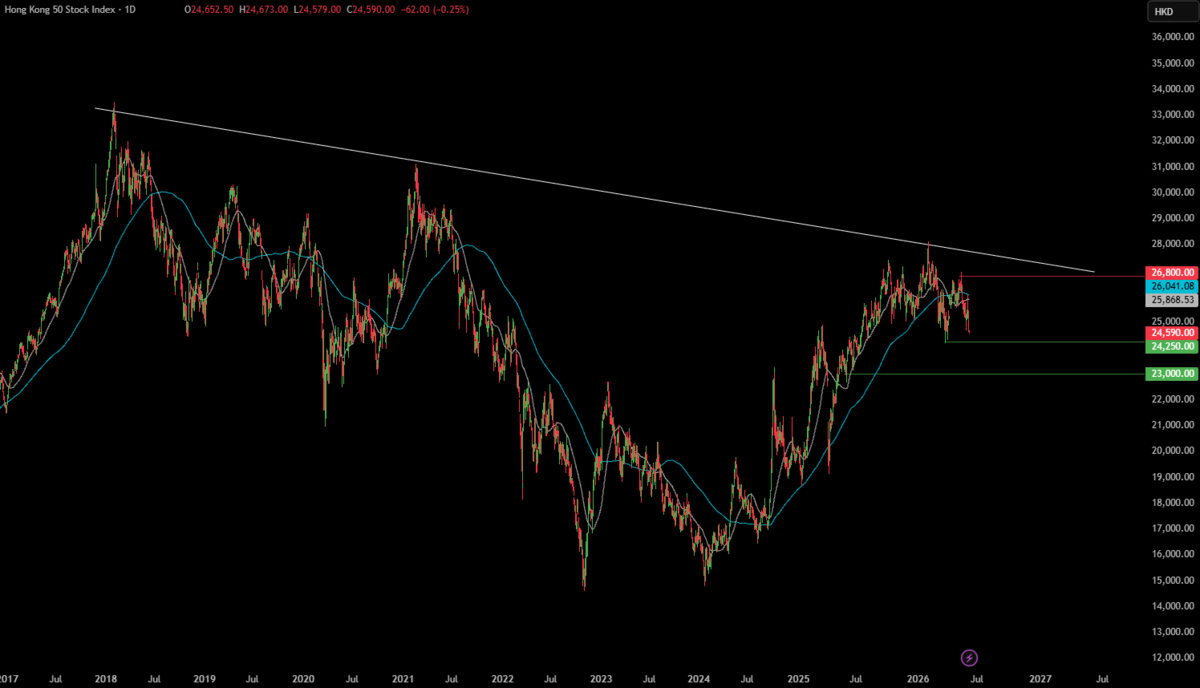
A stronger CPI reading would reduce the urgency for further PBoC easing and could challenge the policy-support narrative supporting Chinese equities. A weaker result would renew calls for stimulus. The Hang Seng has been more responsive to upside inflation surprises than mainland benchmarks and is likely to react to this release.
US CPI (Wednesday, 12:30 UTC+0)
The May US CPI release is the key data point this week. In April, headline CPI rose 0.9% month-on-month and 3.8% year-on-year, the highest annual rate since 2023. Core CPI reached 2.8%. The impact of the disruption to the Hormuz disruption on energy prices is now clearly reflected in the data.
Friday’s strong NFP report has reset market positioning. Rate cuts for 2026 have been fully priced out. A hot CPI confirming persistent inflation would reinforce the hawkish outlook, especially with Kevin Warsh chairing his first FOMC on 16–17 June. A softer print may provide some relief for equities but is unlikely to revive expectations for cuts.
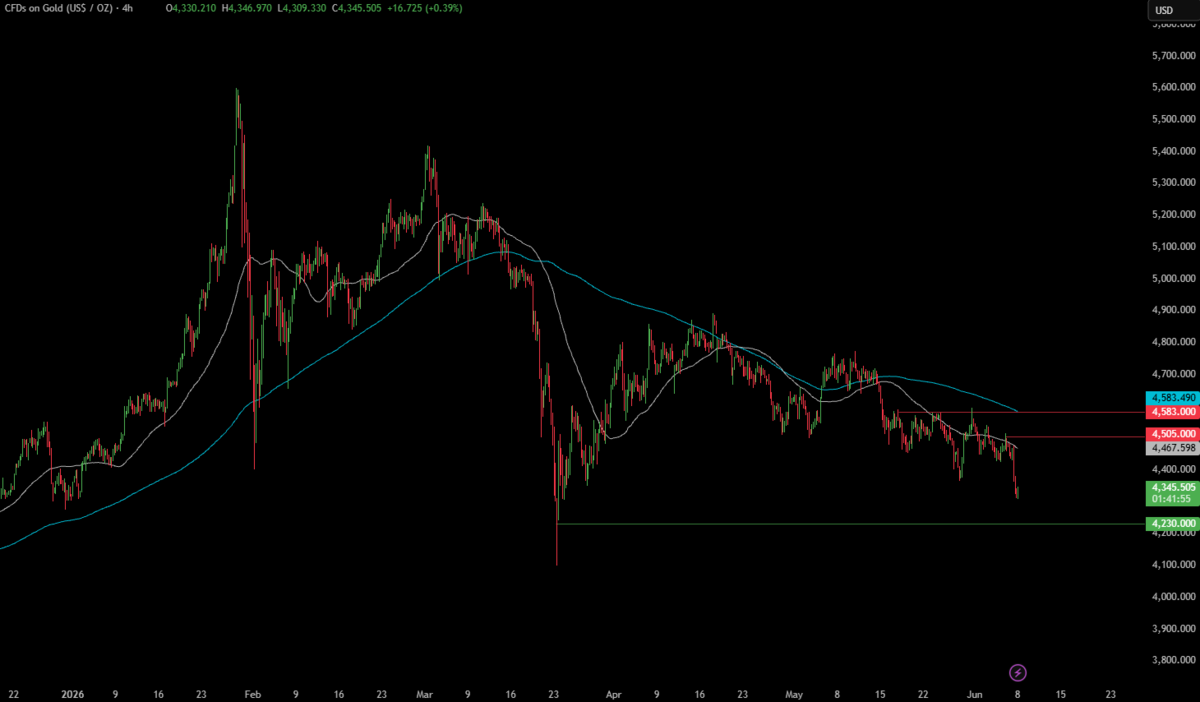
Gold has consolidated around $4,400. A strong CPI would pressure gold as real yields rise and the dollar strengthens, while a softer reading would provide some support. Gold continues to serve as the most direct indicator of how higher-for-longer rate expectations interact with geopolitical risk.
BoC rate decision (Wednesday, 13:45 UTC+0)
The Bank of Canada is expected to hold rates at 2.25% on Wednesday. All 34 economists in the 2–5 June Reuters poll forecast no change, and over 80% expect the rate to remain at 2.25% through year-end. Market pricing assigns only a 4% probability to a hike at this meeting.
The April CPI report showed easing core inflation, Q1 GDP contracted, and the labor market has softened in recent months. However, the Bank noted at its April meeting that a hike “may be needed” to address energy-driven inflation. Policymakers are likely to emphasize two-sided risks while maintaining flexibility.
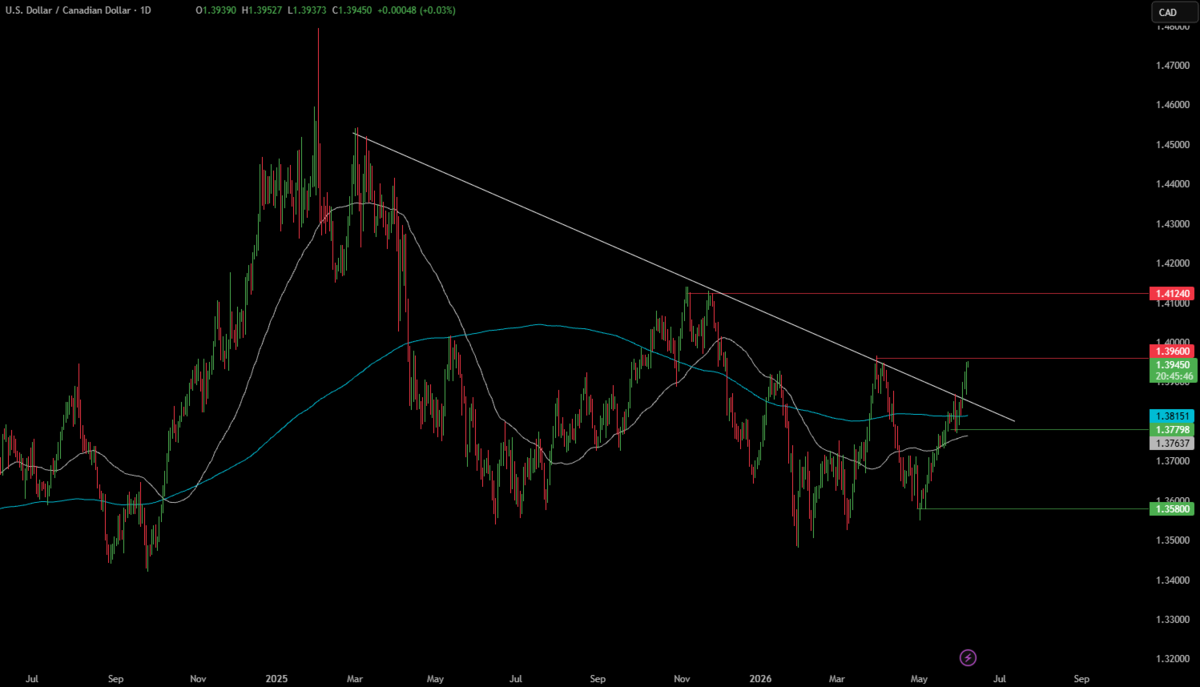
A more hawkish statement that flags persistent energy passthrough would support the Canadian dollar and pull USD/CAD lower. A cautious hold confirming the wait-and-see stance would keep the cross range-bound, with US-side flows around the next day’s PPI print likely to dominate the directional move.
ECB rate decision (Thursday, 12:15 UTC+0)
The ECB is almost certain to raise rates by 25 basis points on Thursday, bringing the deposit rate to 2.25%, marking the first hike of the cycle. ECB-Watch assigns a 99% probability, and Polymarket 91%. The decision will be followed by updated staff projections and Lagarde’s press conference.
The Hormuz-driven energy shock pushed the Eurozone CPI to 3.2% in May, up from 3.0% in April, the highest since September 2023. Core inflation rose to 2.5% from 2.2%. Energy prices increased 10.9% year-on-year, and services inflation accelerated to 3.5%. Lagarde highlighted the upward revision to inflation forecasts in late May, and Schnabel has noted the risk of de-anchoring expectations.
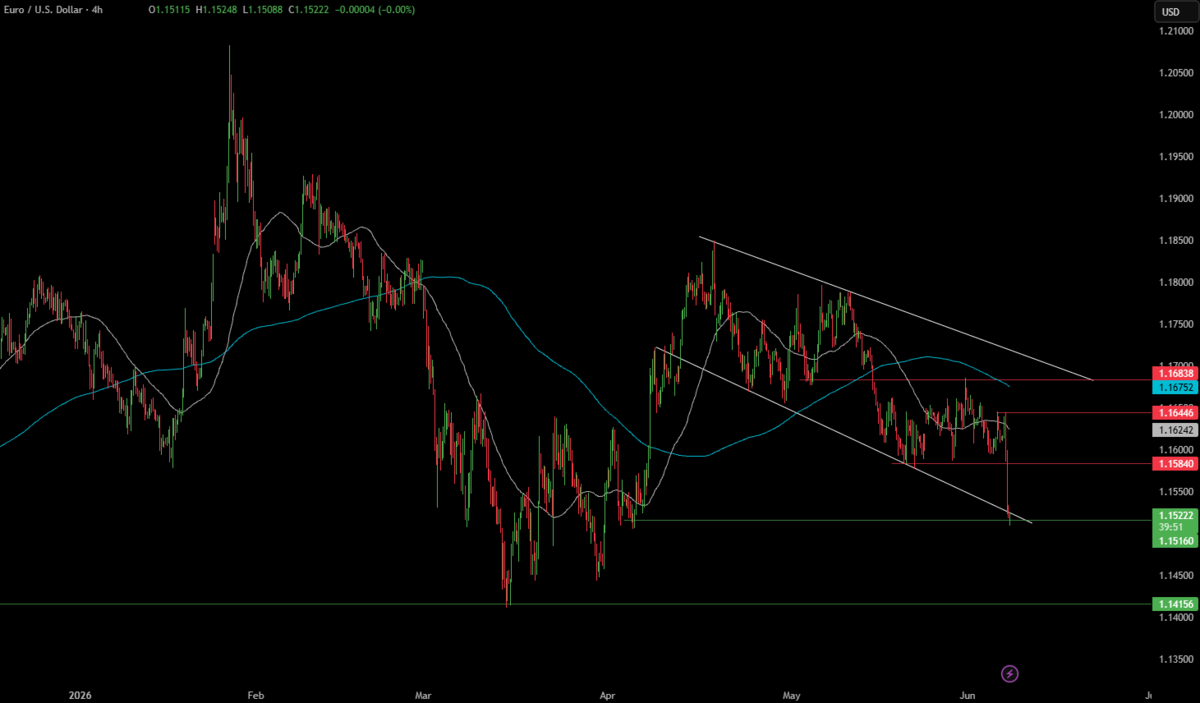
Markets are pricing in about 50 basis points of further tightening by year-end after Thursday’s move. The key question for EUR/USD is whether Lagarde presents this as the start of a tightening cycle or a single “insurance” hike. Hawkish guidance would support the euro, while a cautious tone would weigh on EUR/USD.
US PPI (Thursday, 12:30 UTC+0)
US PPI for May will be released on Thursday, along with the weekly Initial Jobless Claims report. April PPI posted its largest monthly increase in four years as the Hormuz energy shock impacted wholesale prices. May is expected to continue this trend, with a focus on how much of the increase in input costs is being passed through to final goods.
PPI measures pipeline-level costs and typically leads CPI in signaling input-cost pressures. Together with the previous day’s CPI release, Thursday’s data will either confirm or challenge the stagflation narrative revived by strong NFP and high inflation. Jobless Claims have remained near the 203,000 four-week average and are unlikely to alter the strong labor market outlook.
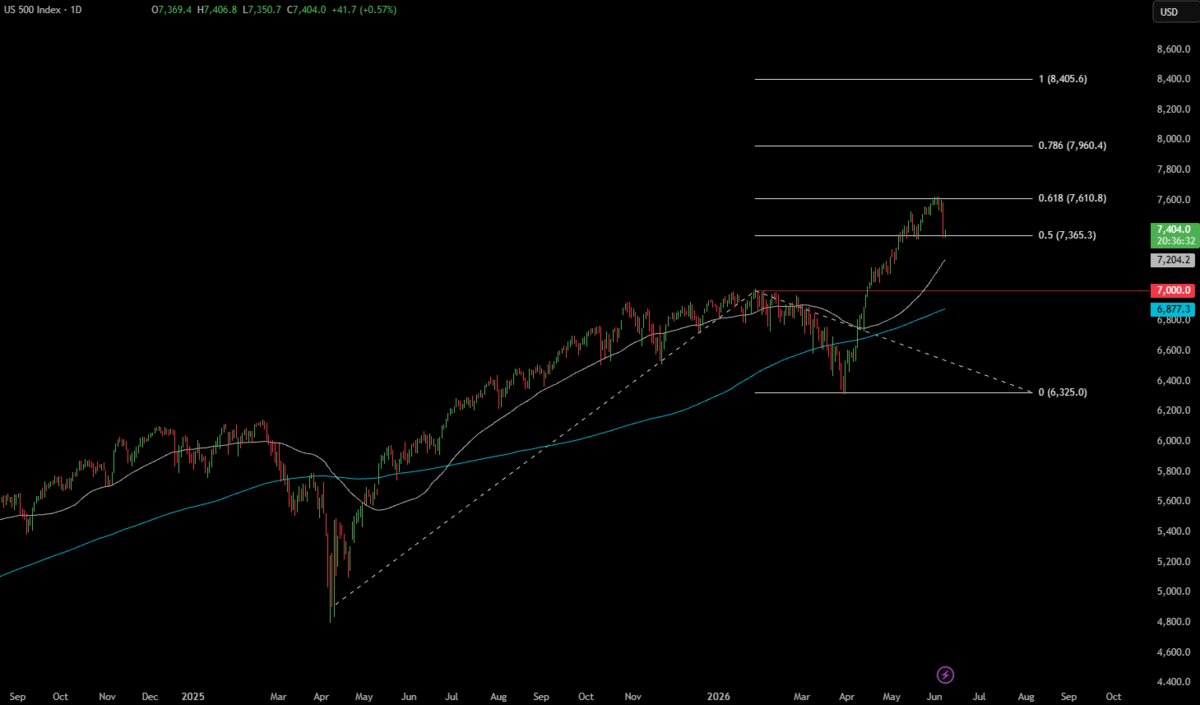
The S&P 500 ended its nine-week winning streak with a 2.99% weekly decline. A hot PPI confirming persistent pipeline inflation would further pressure the index as discount rates rise. A softer print and stable claims could offer some relief and slow the rotation from growth to defensive sectors.
UK GDP April monthly (Friday, 06:00 UTC+0)
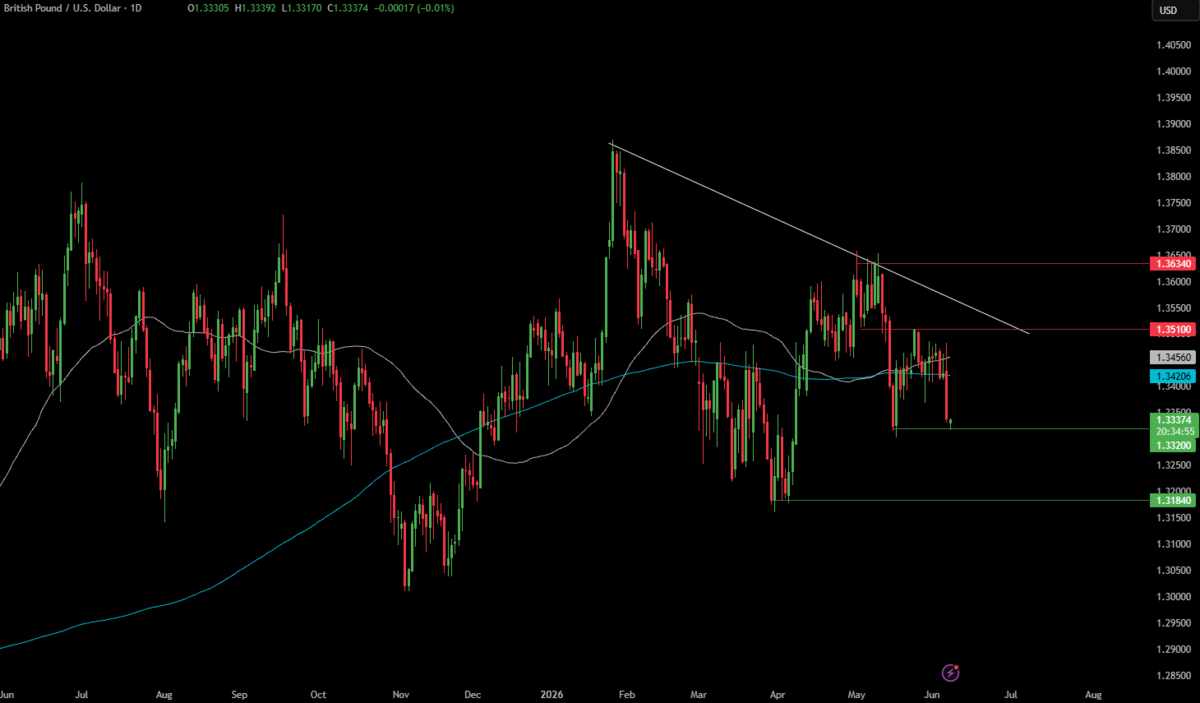
The ONS will release the UK monthly GDP estimate for April on Friday. The economy grew 0.6% quarter-on-quarter in Q1 2026, with services contributing 0.8% over the three months to March. April’s data will be the first to fully reflect the impact of the energy shock on consumption.
The BoE remains caught between persistent inflation and growth risks. April CPI was softer at 2.8% year-on-year versus 3.0% expected, and services inflation eased to 3.2%. The Bank held rates at 3.75% in May, and markets now lean toward cuts later in the year, depending on April’s data.
A weak April GDP, especially if services contract, would heighten concerns about the slowdown and pressure GBP/USD. Resilient services would support BoE patience and strengthen the pair. With the ECB hiking the previous day, the cross-Channel rate spread will be the main secondary driver for GBP/USD into the weekend.
Bottom line
Three forces define the week: oil’s reaction to the weekend Iran-Israel escalation, the US CPI print on Wednesday landing into a market that has just priced out 2026 rate cuts, and the ECB’s first hike of the cycle on Thursday. The equity-market stress signal is already visible in Friday’s VIX spike.
Trading involves risk.
Author



 Risk Disclaimer
The content provided here is for informational purposes only. It is not intended as personal investment advice and does not constitute a solicitation or invitation to engage in any financial transactions, investments, or related activities. Past performance is not a reliable indicator of future results.
The financial products offered by the Company are complex and come with a high risk of losing money rapidly due to leverage. These products may not be suitable for all investors. Before engaging, you should consider whether you understand how these leveraged products work and whether you can afford the high risk of losing your money.
The Company does not accept clients from the Restricted Jurisdictions as indicated in our website/ T&C. Some services or products may not be available in your jurisdiction.
The applicable legal entity and its respective products and services depend on the client’s country of residence and the entity with which the client has established a contractual relationship during registration.