9 min read
 Weekly Recap
Major US data: A surprising jobs report drives stocks to record highs
The week’s key event was a surprising US employment report. Nonfarm payrolls declined by 23,000 in July, the first monthly decrease since February, compared to expectations for an 80,000 gain. May and June figures were also revised down by a total of 103,000. The unemployment rate fell to 4.1%, driven by a drop in the labor force participation rate to 61.4%, the lowest in over five years.
Despite the weak data, markets rallied. With a Federal Reserve rate hike now unlikely in September and money markets shifting expectations to December, Treasury yields and the dollar declined while risk appetite increased. The Nasdaq rose about 5% for the week, its best performance since May, led by a rebound in chip stocks that lifted a key semiconductor index by over 7%. Palantir surged 29% after reporting 93% revenue growth. The S&P 500 gained 3.6% to a record 7,757.64, marking its strongest week since April.
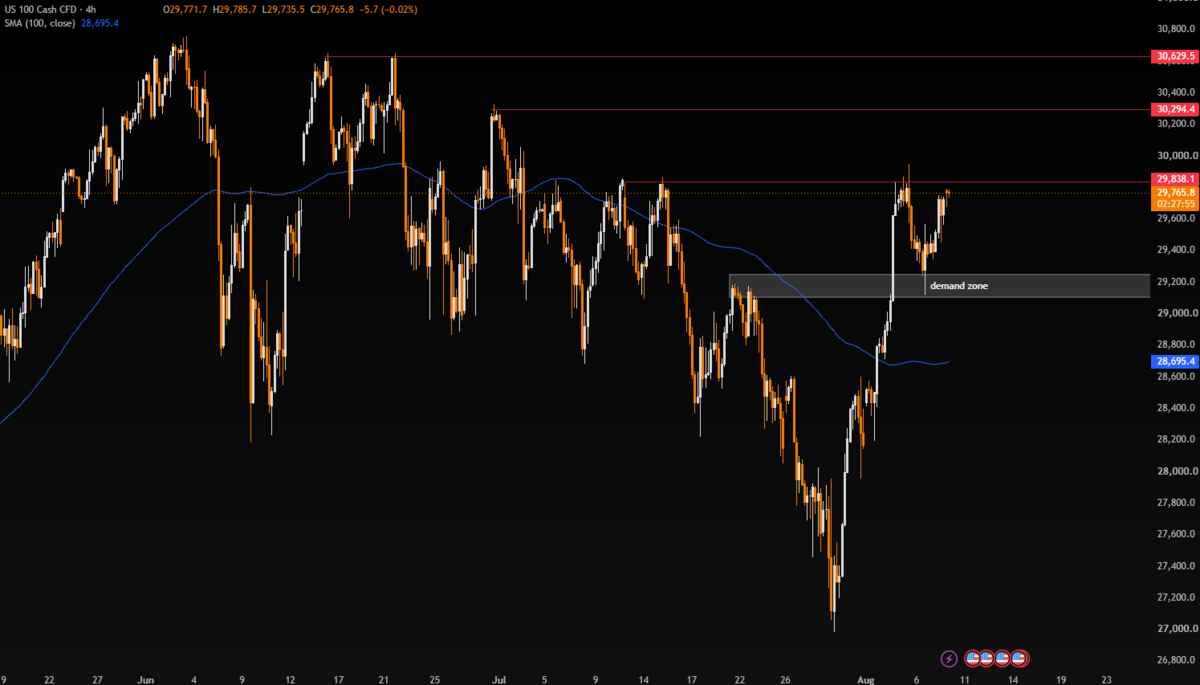
This reversal marked a sharp shift from the previous week’s concerns about the Federal Reserve to renewed optimism. For the US 100, the focus now turns to this week’s inflation data. A moderate July CPI would reinforce expectations for a dovish Fed, while a higher reading could revive the debate over a September rate hike.
Gold: Weak jobs data drive the strongest week in seven months
Gold surged to $4,347.70 an ounce, jumping 2.4% on Friday alone to a seven-week high and capping a weekly advance of around 7.5% — its strongest week in seven months. The metal rode the same wave that lifted equities, as the shockingly weak payrolls report reshaped the interest-rate outlook.
The mechanics were straightforward. A softer labor market pulled Treasury yields and the dollar lower and revived expectations that the Fed will stay on hold, a supportive combination for a non-yielding asset that had spent much of 2026 pressured by high real yields. Safe-haven demand tied to the still-unresolved Middle East conflict added further bid support, even as oil prices retreated.
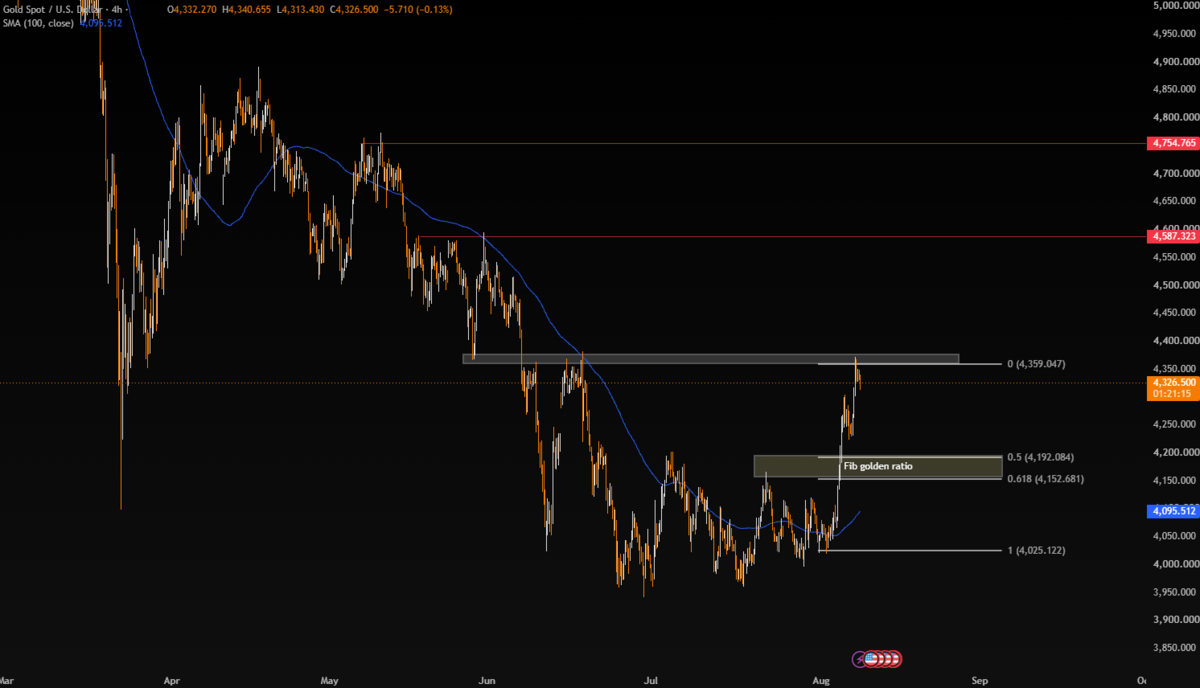
After its rapid recovery, gold now faces an important test with upcoming inflation data. A lower US CPI would support the current outlook and keep gold prices elevated, while a higher reading could increase yields and the dollar, limiting further gains.
Oil: UK Brent declines as Trump cancels planned strikes
Brent tumbled around 7% over the week, settling at $83.55 on Friday despite a modest late bounce. The slide was driven by a sharp de-escalation at the start of the week: President Trump called off a planned military strike on Iran over the weekend and signaled that negotiations would resume, unwinding a chunk of the geopolitical premium built up over the previous month.
The decline was marked by volatility. UK Brent dropped nearly 6% on Monday, then fluctuated as optimism for an Iran-Oman-US shipping agreement competed with new reports of tanker attacks. By Friday, prices edged higher after Iran released a draft plan restricting US and Israeli vessels from the Strait of Hormuz, highlighting the uncertainty surrounding a lasting agreement.
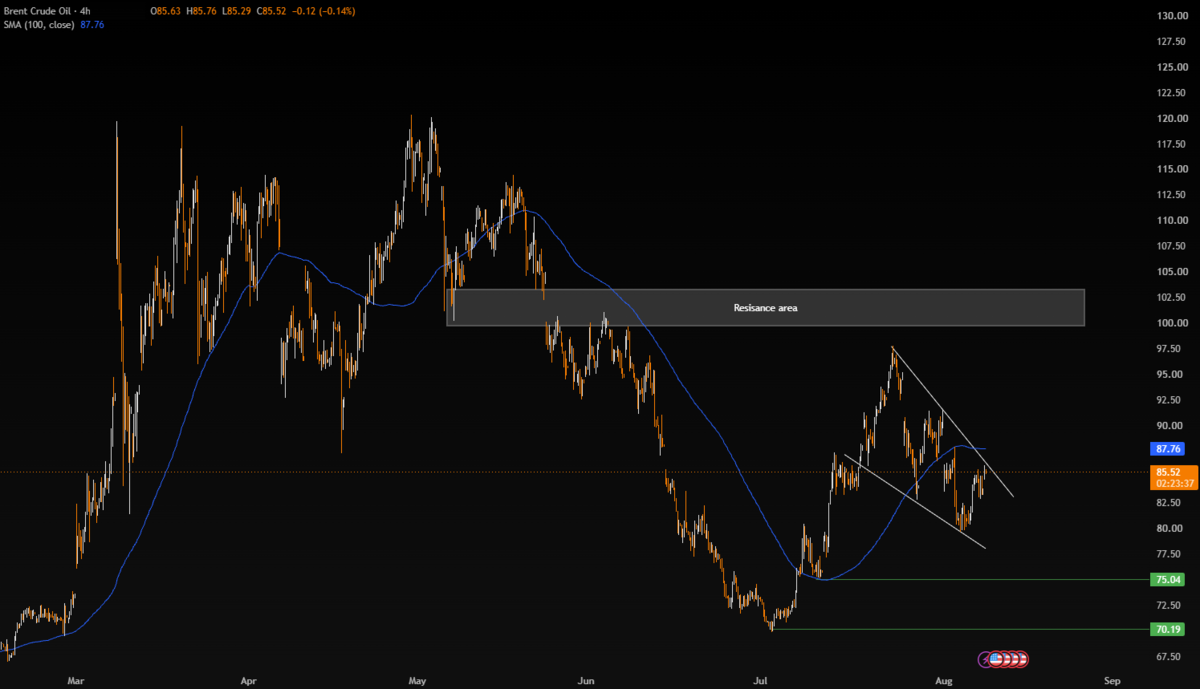
UK Brent’s direction now depends on the outcome of negotiations. A confirmed agreement to reopen the Strait of Hormuz would increase supply and lower prices, while failed talks or renewed attacks on shipping would restore the risk premium.
Pakistan markets: KSE-100 rises on defense agreement and easing inflation
The KSE-100 continued its upward trend, rising 3.03% for the week, or 5,335.90 points, to close at 181,430.02. This marked a second consecutive strong week, with broad-based buying led by commercial banks, cement, and fertilizer sectors, and market capitalization increasing by over Rs150 billion.
Two factors supported the rally. Geopolitically, Pakistan, Saudi Arabia, and Türkiye signed the Makkah Joint Defense Agreement, agreeing to treat an attack on any member as an attack on all, which boosted market confidence. On the economic front, headline inflation eased to 9.2% year-on-year in July from 11.1% in June, returning to single digits and reinforcing the disinflation trend, despite a 1.2% monthly increase. Lower oil prices and optimism for a Hormuz shipping agreement also contributed.
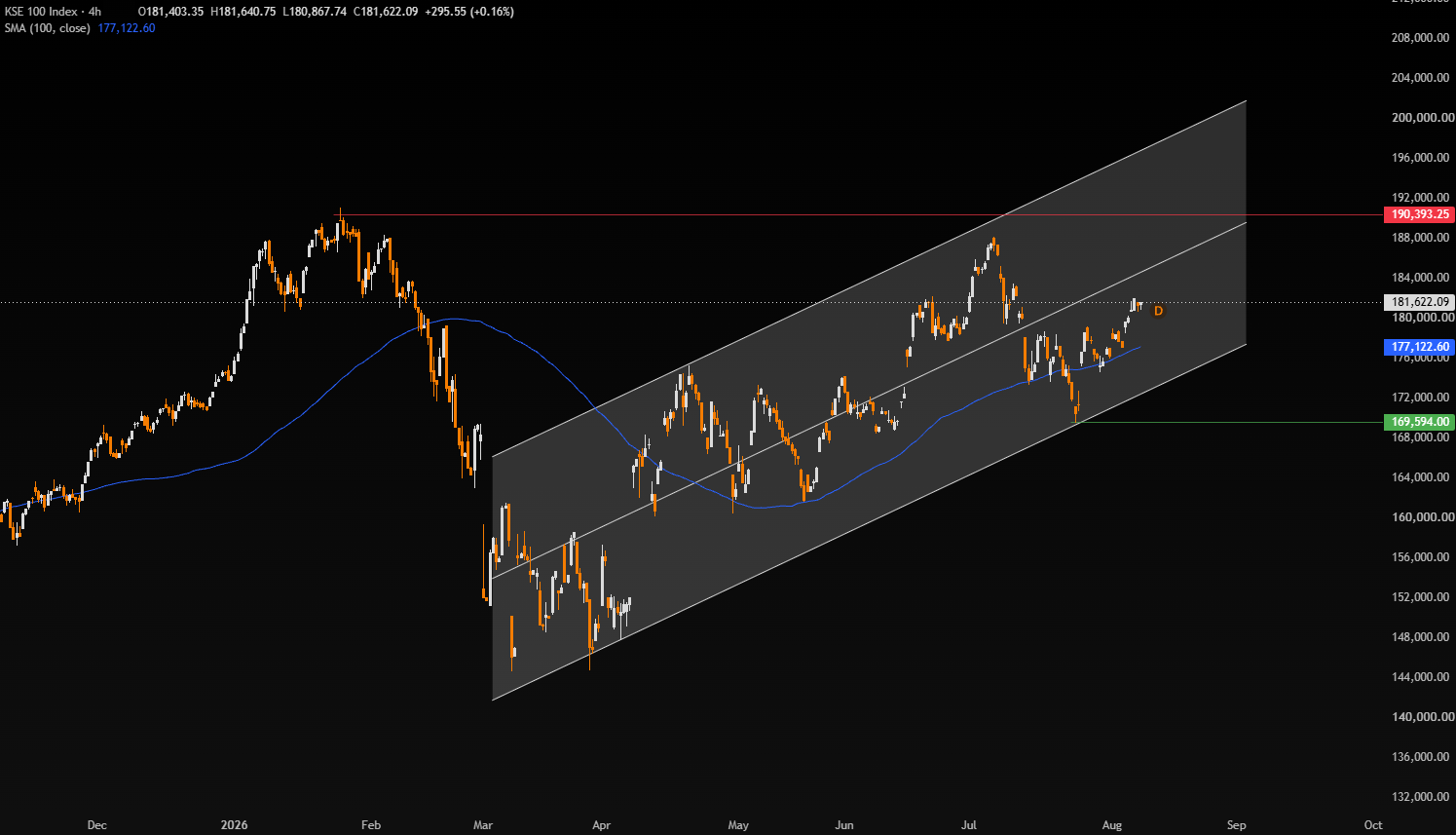
With sentiment supported by the defense agreement and easing inflation, the KSE-100’s near-term outlook depends on external factors such as oil prices, progress in Hormuz negotiations, and upcoming June-quarter corporate results.
Week Ahead
US CPI (July) — Wednesday, 12 August, 12:30 UTC
The US will release July CPI on Wednesday, a key data point following last week’s jobs report, which reduced the likelihood of an imminent rate hike. In June, headline inflation declined 0.4% for the month to 3.5% year-on-year, while core inflation remained steady at 2.6%. Markets are hoping the July data will confirm this trend.
Consensus looks for core CPI to rise around 0.2% on the month, a firmer pace that some analysts warn could surprise to the upside. That matters because the report will settle a live debate: with three Fed officials having dissented in favor of a hike, a hot reading would revive the September tightening case that the weak payrolls had shelved, while a soft one would let the dovish “bad news is good news” narrative run.
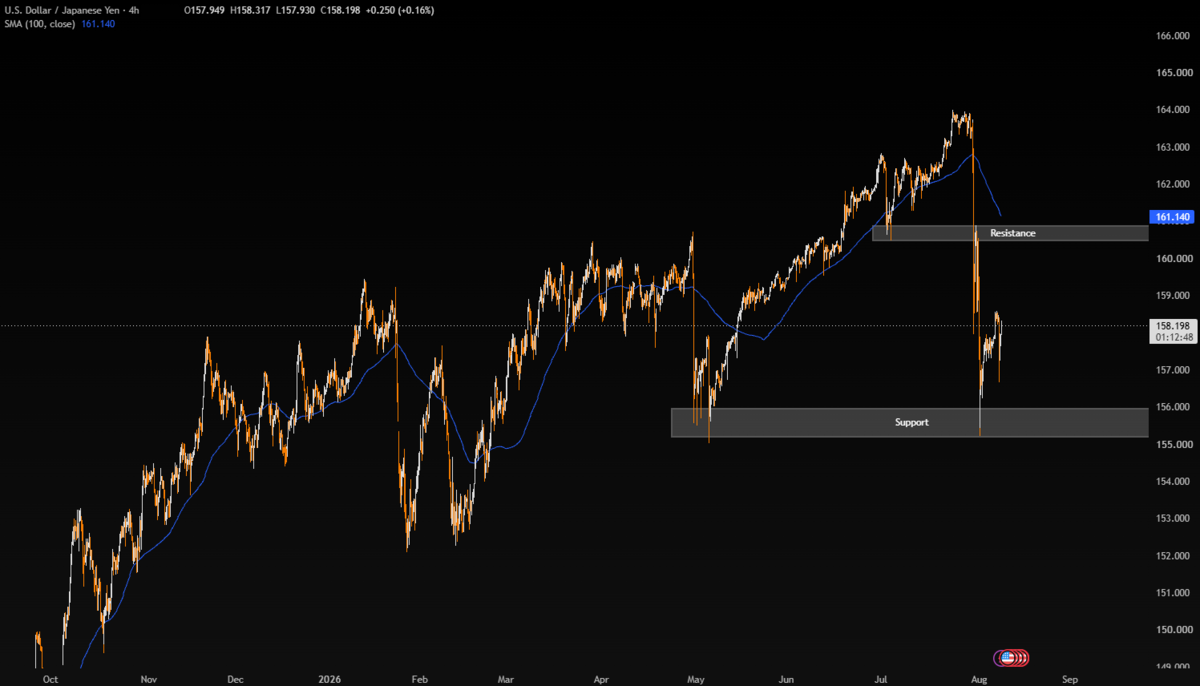
USD/JPY trades near 157.28 after a dramatic week in which the yen surged amid an estimated ¥14 trillion in intervention by Japanese authorities, compounded by a softer dollar. A hot US CPI that lifts yields and revives hike bets would push USD/JPY higher and relieve pressure on the yen; a cool print would reinforce the dollar’s downtrend and could drag USD/JPY lower still.
India CPI (July) — Wednesday, 12 August, 10:30 UTC
India will release July retail inflation data on Wednesday, just hours before the US report. June inflation reached 4.4%, exceeding the Reserve Bank of India’s 4% medium-term target for the first time in over a year, mainly due to higher fuel and food prices.
This release is the first major inflation test since the RBI maintained its repo rate at 5.25% on 5 August, kept a neutral stance, raised its FY27 growth forecast to 6.7%, and lowered its inflation projection to 5.0%. Markets will assess whether July data indicate rising or easing price pressures. The recent decline in oil prices occurred after July, so any impact will appear in future data.
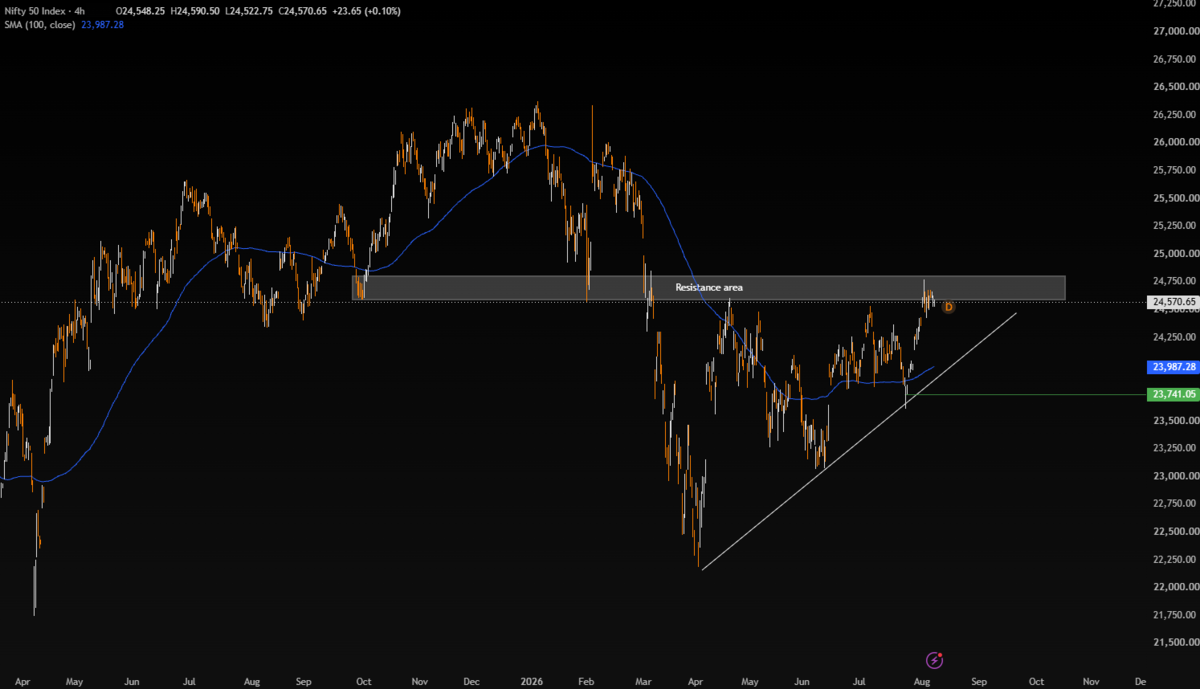
The Nifty 50 starts the week at 24,570.65 after a second consecutive weekly gain, though late-week weakness in financials, triggered by draft RBI guidelines for non-bank lenders, limited further advances. A moderate inflation reading would renew hopes for RBI easing and support the Nifty 50, while a higher figure would reinforce the central bank’s caution and could pressure rate-sensitive banking and auto sectors.
UK GDP (Q2) — Thursday, 13 August, 06:00 UTC
The UK will release its second-quarter GDP estimate on Thursday, providing insight into how the economy has managed the energy shock from the Middle East conflict. This follows the Bank of England’s decision to keep the Bank Rate at 3.75% on 30 July, amid forecasts of continued sluggish growth.
Analysts generally expect the data to show economic activity holding up better than anticipated, despite higher energy costs. This release is the main domestic driver for sterling in a week otherwise focused on US inflation. Traders will also consider the Bank of England’s efforts to balance easing price pressures with the risks that led three policymakers to support a rate hike.
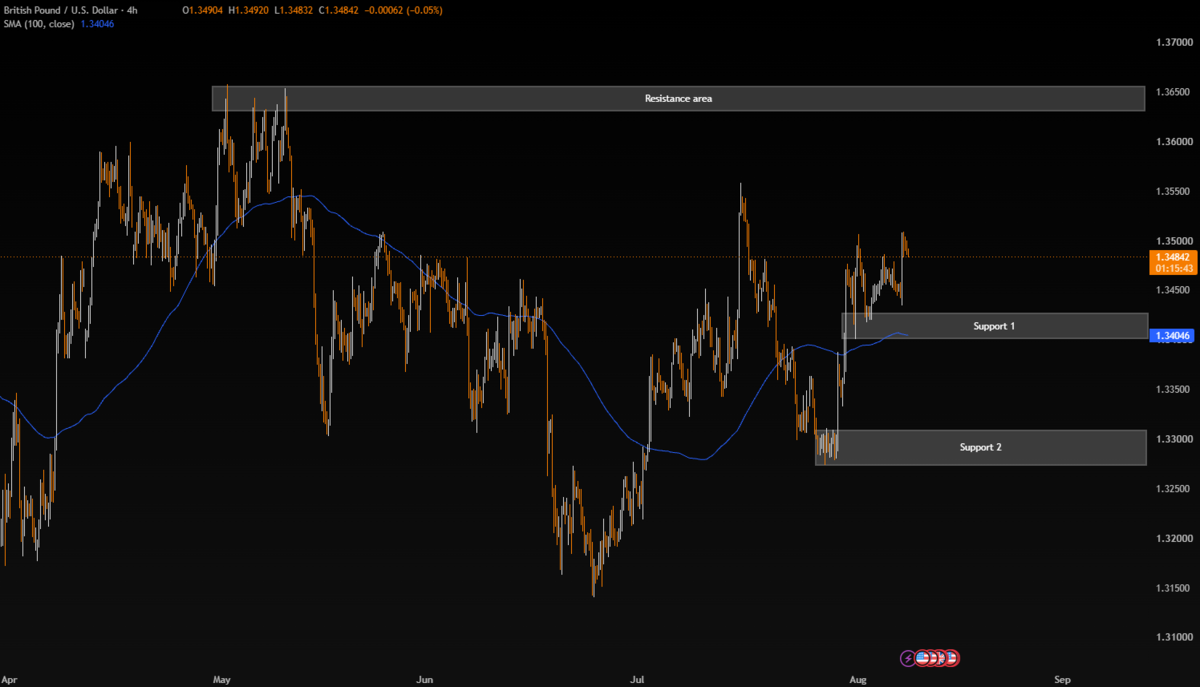
GBP/USD is trading around 1.35, remaining firm after the broad dollar decline following the US jobs report. A strong GDP result would support a cautious stance by the Bank of England and could further boost GBP/USD. Conversely, a weak reading that raises expectations of a September rate cut would weigh on the pair, though much will depend on the dollar’s reaction to the US CPI released the previous day.
Bottom line
The main driver remains the impact of the unexpected US jobs report, which showed a loss of 23,000 payrolls, removed the likelihood of a September Fed rate hike, and pushed equities and gold to record levels—a sharp reversal from the previous week’s inflation concerns. This week’s inflation data from the US and India are crucial. A higher US CPI would reignite the rate hike debate, affecting USD/JPY, gold, and the US 100, while India’s reading will influence the RBI’s policy and the Nifty 50.
Trading involves risk.
Author



 Risk Disclaimer
The content provided here is for informational purposes only. It is not intended as personal investment advice and does not constitute a solicitation or invitation to engage in any financial transactions, investments, or related activities. Past performance is not a reliable indicator of future results.
The financial products offered by the Company are complex and come with a high risk of losing money rapidly due to leverage. These products may not be suitable for all investors. Before engaging, you should consider whether you understand how these leveraged products work and whether you can afford the high risk of losing your money.
The Company does not accept clients from the Restricted Jurisdictions as indicated in our website/ T&C. Some services or products may not be available in your jurisdiction.
The applicable legal entity and its respective products and services depend on the client’s country of residence and the entity with which the client has established a contractual relationship during registration.