9 min read
 Weekly recap
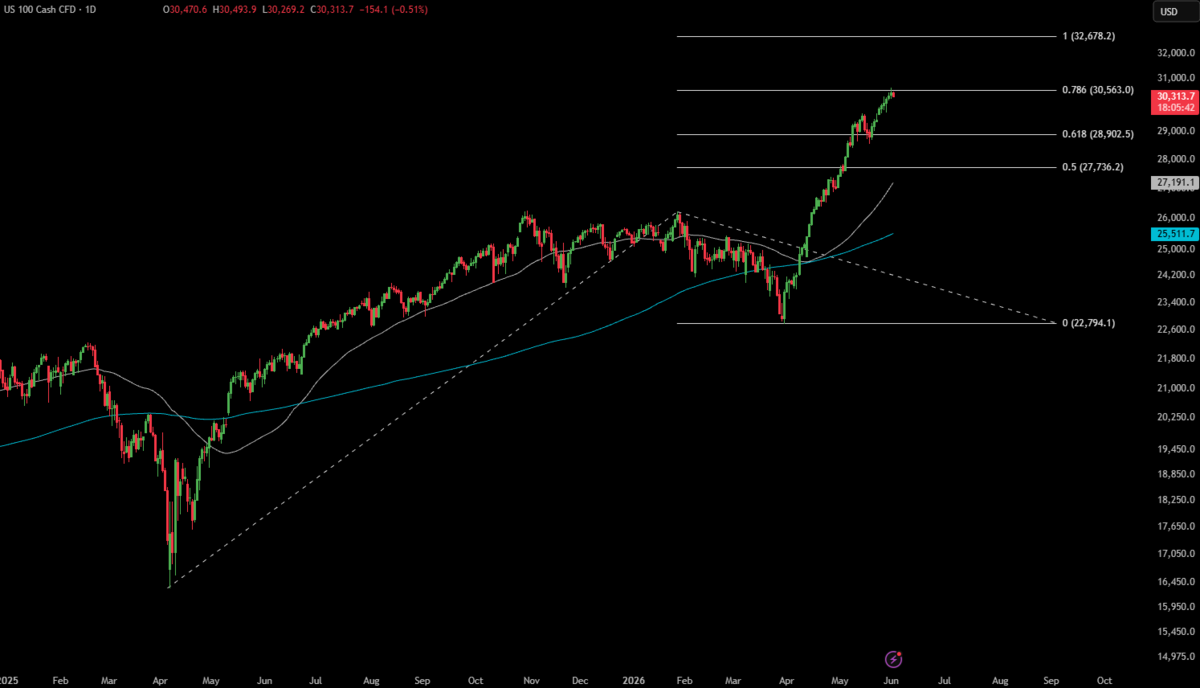
US stocks ended last week at record highs across all major benchmarks. The S&P 500 rose 1.4% to 7,580.06, achieving its ninth consecutive weekly gain, the longest streak since 2023. The Dow Jones increased 0.7% to 51,032.46, and the Nasdaq advanced 2.9% to 30,318. All three indices reached all-time intraday highs on Thursday and Friday.
Thursday’s softer-than-expected April Core PCE set the market tone. The Federal Reserve’s preferred inflation measure increased 0.2% month-on-month, below the 0.3% consensus, with the annual rate at 3.3%. Headline PCE remained at 3.8% year-on-year. The same release revised Q1 GDP down to 1.6% from 2.0%, raising concerns about economic momentum despite a positive market reaction to the inflation data.
Developments regarding Iran remained complex. After Trump’s “largely negotiated” comments and a tentative memorandum of understanding on Thursday, the President demanded changes on Friday concerning the Strait of Hormuz, nuclear commitments, and uranium stockpiles. Over the weekend, the US conducted what it called “defensive strikes” in Iran following the downing of a US MQ-1 drone, and Iran launched ballistic missiles at Kuwait. A suspected naval mine was also sighted in the Strait. Brent crude closed 1.7% lower on Friday, but oil markets opened the week with heightened uncertainty.
Week Ahead
Eurozone CPI flash
Tuesday, 09:00 UTC+0
Eurostat will release the May flash estimate of euro area inflation on Tuesday, the last significant data point before the ECB’s 11 June meeting. April inflation was 3.0% year-on-year, the highest since September 2023, driven by a 10.8% increase in energy prices due to the conflict in Iran and disruptions in the Strait of Hormuz. Core inflation eased to 2.2% from 2.3%.
May inflation is expected to remain near 3.0% or rise slightly as energy pressures from the Strait of Hormuz persist. Christine Lagarde indicated in late May that the ECB’s March forecast of 2.6% for 2026 will likely be revised upward at the June meeting, a view echoed by council member Alexander Demarco. Markets currently assign a 91% probability to a 25-basis-point deposit rate hike to 2.25% on 11 June.
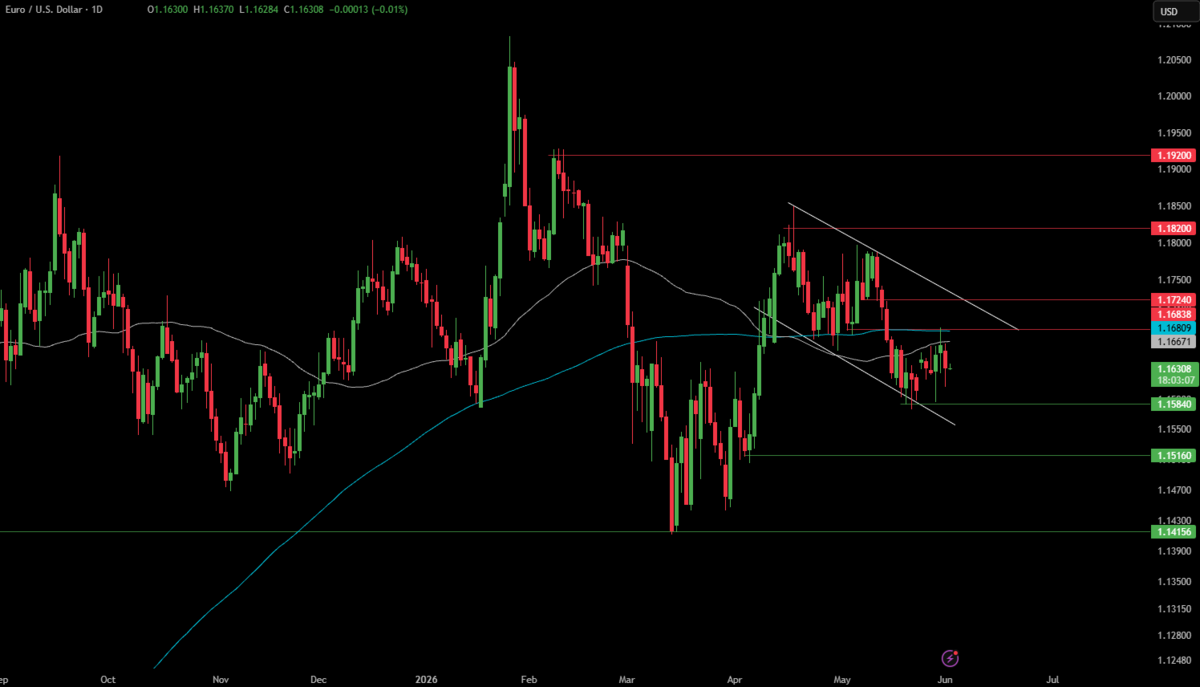
An inflation reading near or above 3.0% would strengthen the case for a hawkish stance at next week’s meeting and could support EUR/USD. A softer result would allow Lagarde to adopt a more cautious approach, likely pressuring the euro.
Australia Q1 GDP
Wednesday, 01:30 UTC+0
The Australian Bureau of Statistics will release the first-quarter National Accounts on Wednesday. The economy grew 0.8% in Q4 2025, marking the fastest annual pace in nearly three years at 2.6%. Westpac forecasts growth to slow to 0.5% quarter-on-quarter in Q1 2026 as the Middle East energy shock impacts the economy, with a potential Q2 contraction identified as a downside risk.
This release is the first comprehensive reading for January to March and will partially reflect the impact of February’s rate hike, the first of three consecutive RBA increases that raised the cash rate from 3.60% to 4.35%. Strong corporate capital expenditure on data centers is expected to provide key support, while productivity is likely to decline 0.3% for the quarter, a concern for an RBA already cautious about persistent services inflation.
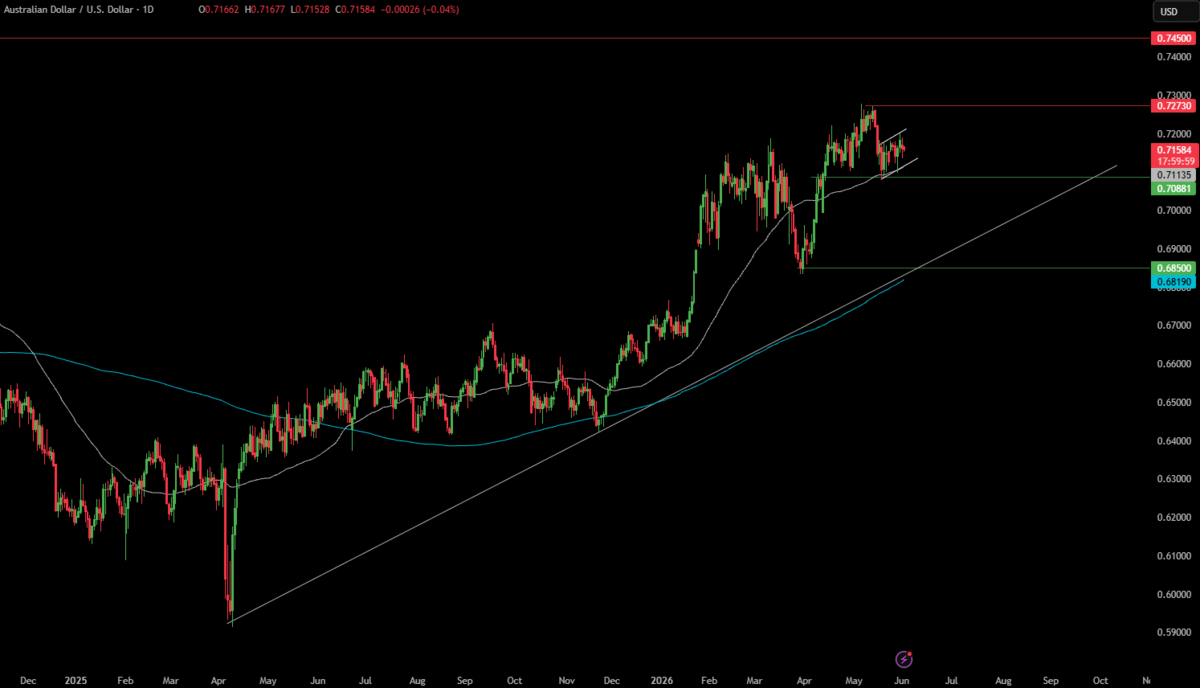
This data will directly inform the 15–16 June RBA meeting, where the Board is considering a fourth consecutive rate hike versus a pause. A stronger GDP result would support AUD/USD, while a sharper slowdown could lead markets to price in a pause more aggressively, weighing on the currency.
US ADP & ISM Services PMI
Wednesday, 12:15 / 14:00 UTC+0
Wednesday will see the release of two key US activity indicators ahead of Friday’s payrolls report. ADP private employment data is scheduled for 12:15 UTC+0, followed by the ISM Services PMI at 14:00 UTC+0. April’s ISM Services reading was 53.6, marking the 22nd consecutive month of expansion, while ISM Manufacturing rose to 54 in May, the strongest since May 2022.
The services data is the more significant of the two releases. Approximately two-thirds of US economic activity is driven by services, and the price-paid component will be closely monitored, especially after May manufacturing data indicated elevated price pressures. A strong services report with persistent price increases would reinforce expectations for prolonged higher rates and could challenge the equity rally’s resilience.
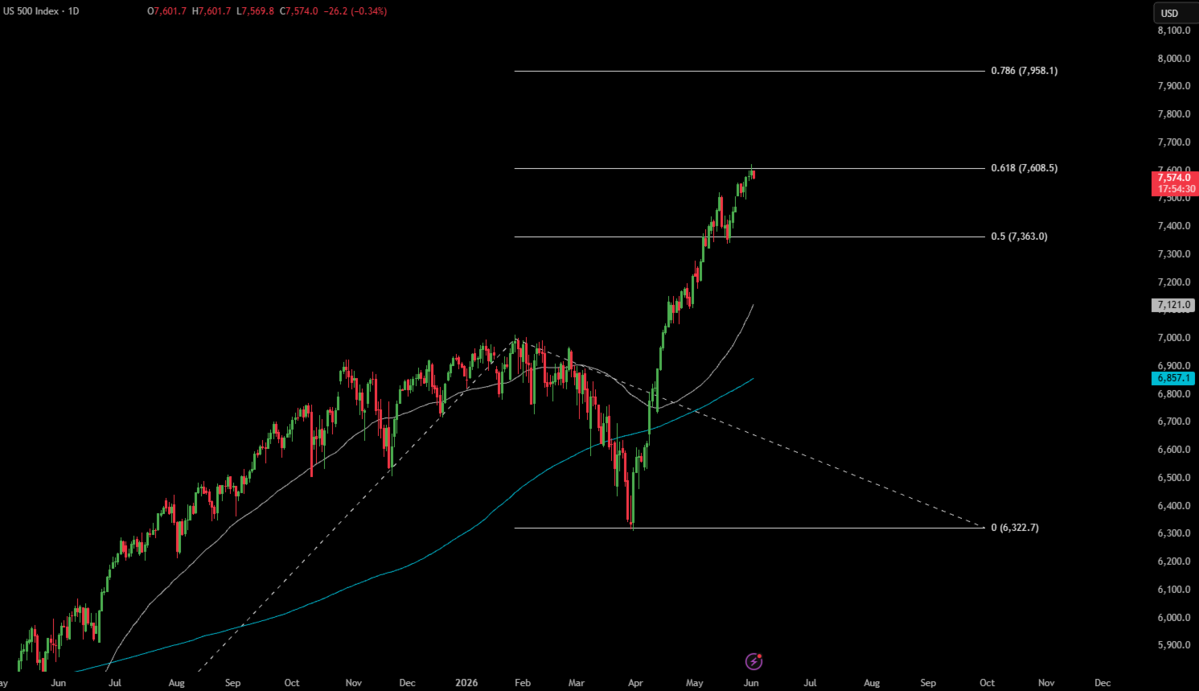
ADP is viewed as a preliminary indicator for Friday’s NFP report. Consensus expects private payrolls to fall within the 45,000-80,000 range. Strong ADP and robust services data would support the S&P 500’s record performance, while weak ADP and rising service prices could revive stagflation concerns and pressure the index.
US Initial Jobless Claims
Thursday, 12:30 UTC+0
Initial Jobless Claims have become a key weekly indicator of labor market health, with the four-week moving average recently near 203,000. The release, which occurs less than 24 hours before the May NFP report, will influence market positioning ahead of Friday’s main event.
Claims have remained stable throughout the Iran conflict, supporting the “low hire, low fire” trend seen since late 2025. A significant increase, such as a print above 230,000, would raise concerns about labor market weakness and could renew expectations for a Federal Reserve rate cut later this year, which markets have currently priced out for 2026.
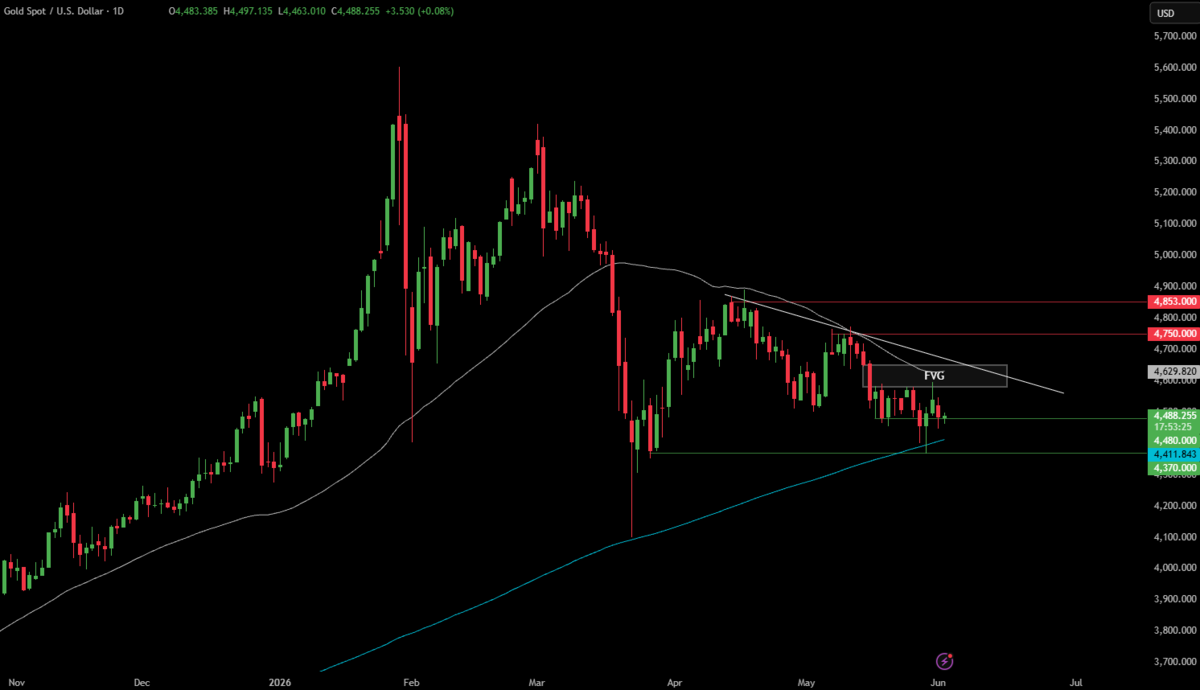
Gold has consolidated around $4,500 following January’s record high near $5,602. A weaker labor report would likely weaken the dollar and support gold, while stable claims would keep gold range-bound ahead of the payrolls release.
US Non-Farm Payrolls
Friday, 12:30 UTC+0
The May employment report is the week’s main event. Consensus expects payrolls of 85,000 to 96,000, slightly below April’s 115,000. The unemployment rate is projected to remain at 4.3%, with average hourly earnings rising 0.3% month-on-month, up from 0.2%. March payrolls were revised up to 185,000 from 178,000.
The next FOMC meeting is scheduled for 16–17 June, with Kevin Warsh presiding as Chair after succeeding Powell on 22 May. Prediction markets assign a 97% probability to a hold at 3.50–3.75%. Markets have largely ruled out rate cuts in 2026 and are increasingly pricing in a potential 2027 hike due to persistent inflation and resilient growth.
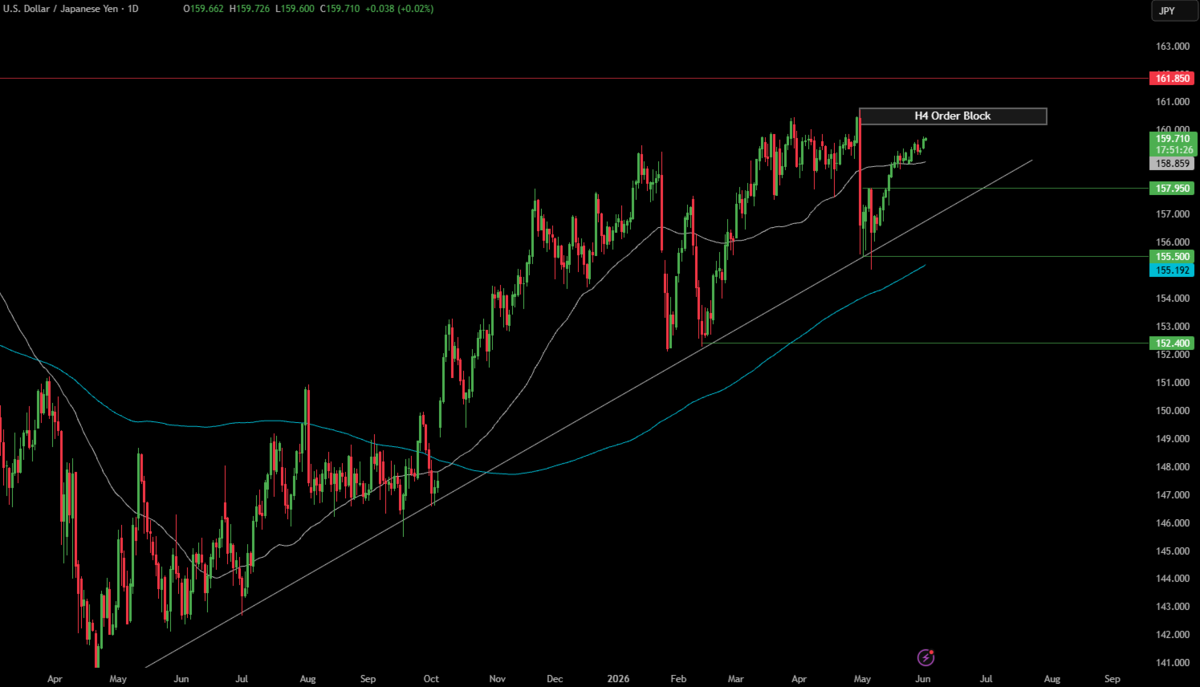
USD/JPY remains the most direct reflection of the US labor report. A strong result would push the pair higher as expectations for rate cuts diminish. Conversely, a result below 50,000 combined with an uptick in unemployment to 4.4% could prompt a dollar decline and lower USD/JPY. The Bank of Japan’s 16–17 June meeting, where about two-thirds of economists expect a hike to 1.00%, introduces additional two-way risk.
OPEC+ ministerial meeting
Sunday, 7 June
The 41st OPEC and non-OPEC Ministerial Meeting concludes the week and is the most significant event on the cartel’s calendar, serving as the main forum for setting long-term production policy. The seven voluntary-cut producers (Saudi Arabia, Russia, Iraq, Kuwait, Kazakhstan, Algeria, and Oman) increased June output by 188,000 barrels per day at their last meeting on 3 May, marking a second consecutive monthly increase, though slower than the 206,000 bpd rise in May. The geopolitical context is highly unusual. The UAE left OPEC+ on 1 May 2026, citing capacity constraints under group quotas, and the Strait of Hormuz remains closed three months into the Iran conflict.
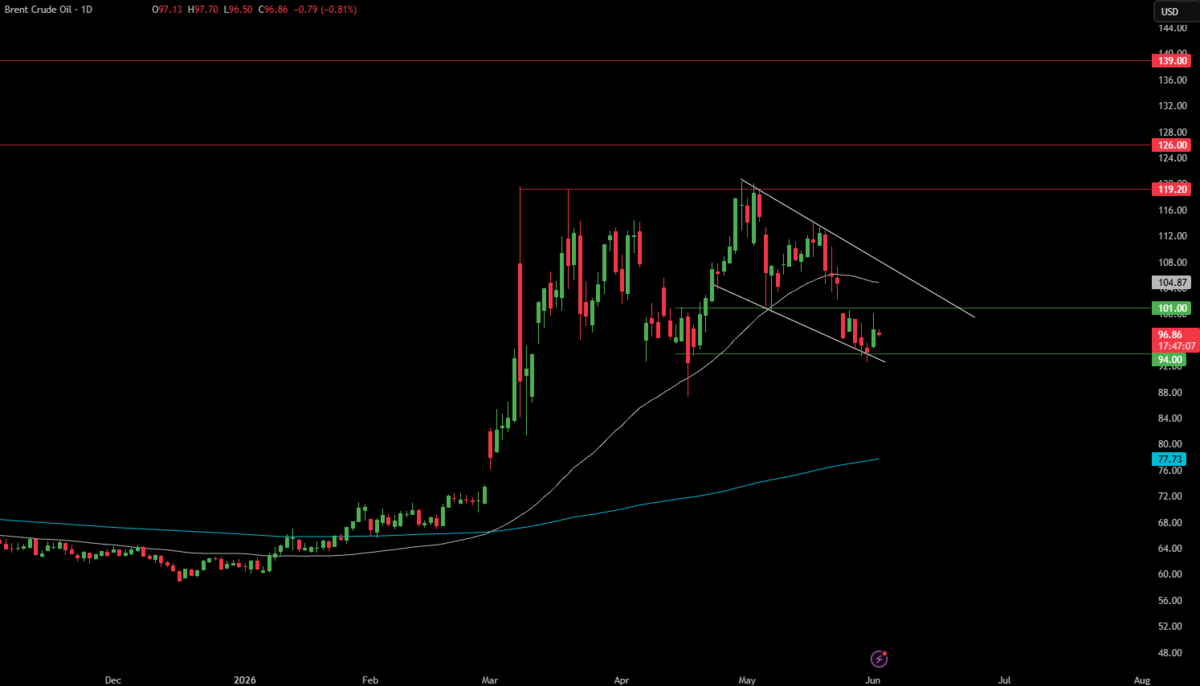
Ministers will establish baselines for 2027 production quotas and review the schedule for unwinding the 1.65 million bpd voluntary cuts implemented since April 2023. An unexpected acceleration of the unwind would likely lower Brent price and ease inflation pressures, while a more cautious approach, especially if the Iran MoU faces further delays, would keep prices elevated.
Bottom line
The primary focus this week is the US jobs report on Friday, alongside the OPEC+ ministerial meeting on Sunday. With Core PCE remaining above the Federal Reserve’s target and 2026 rate-cut expectations removed, the labor report will determine whether the equity rally’s nine-week streak continues or if stagflation concerns return.
Trading involves risk.
Author



 Risk Disclaimer
The content provided here is for informational purposes only. It is not intended as personal investment advice and does not constitute a solicitation or invitation to engage in any financial transactions, investments, or related activities. Past performance is not a reliable indicator of future results.
The financial products offered by the Company are complex and come with a high risk of losing money rapidly due to leverage. These products may not be suitable for all investors. Before engaging, you should consider whether you understand how these leveraged products work and whether you can afford the high risk of losing your money.
The Company does not accept clients from the Restricted Jurisdictions as indicated in our website/ T&C. Some services or products may not be available in your jurisdiction.
The applicable legal entity and its respective products and services depend on the client’s country of residence and the entity with which the client has established a contractual relationship during registration.