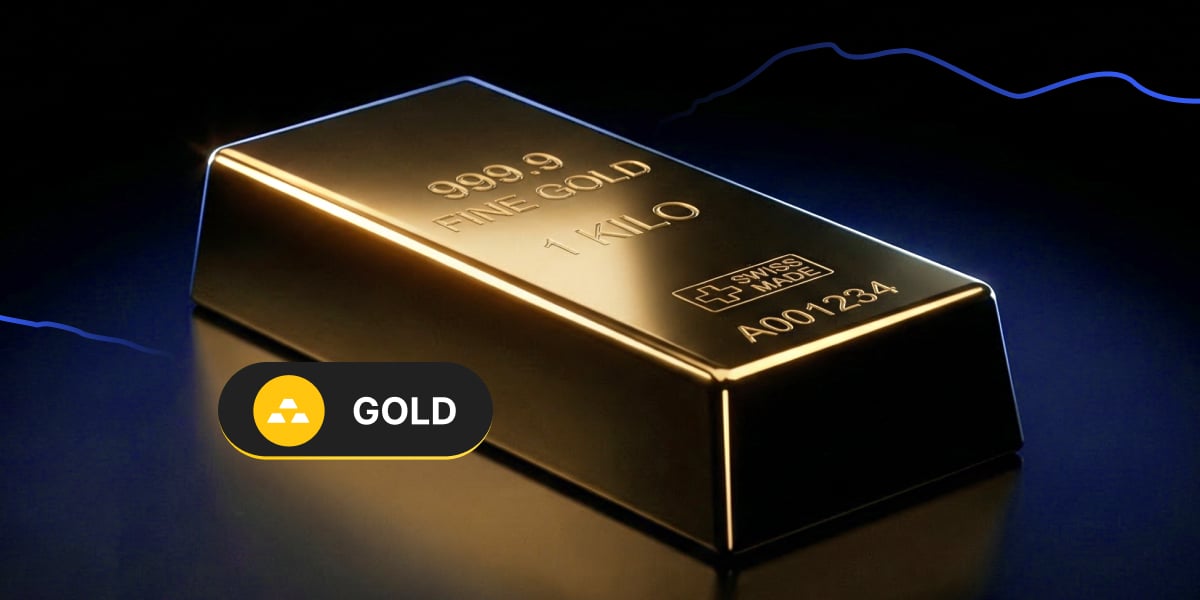

Gold has lost more than 20% since late February even as the Iran war and geopolitical tension persisted, and analysts say its role is shifting from a reactionary crisis trade to a strategic reserve asset. Central bank buying and eastern demand now underpin the metal, while a strong dollar and high rates weigh on the short-term price.
Gold no longer rallies on every crisis. The metal has lost more than 20% since late February, even as the Iran war and wider geopolitical uncertainty dragged on, and analysts told The National that its safe-haven appeal is evolving into something more structural.
Gold sat at about $5,278 an ounce when the Iran war began on February 28 and held largely steady through the first weeks of the conflict. From there it slid, gaining 1.52% on Friday to close at $4,175.07. After record highs in January, the metal posted its steepest monthly drop since 2008.
Why crisis alone no longer lifts gold
Gold tends to perform better when uncertainty pairs with a weaker dollar, monetary easing or fading confidence in financial assets, but it struggles when high interest rates and a strong greenback outweigh geopolitical concerns. According to The National, Noureldeen Al Hammoury of Dubai-based Equiti Group said gold “is not designed to rise during every war, political shock or market sell-off”. He added that in the short term the metal competes with cash and government bonds and stays sensitive to the dollar and real rates.
Analysts eye a possible breakout
Despite the fall, the World Gold Council said in its midyear outlook that gold still ranks among the top performers over the past year. Its analysts flagged a possible breakout that could pull gold back to $4,500, with a range of plus or minus 5% if current levels hold. JPMorgan projected the same $4,500 level for Q4 2026 and $4,300 for Q3.
Central banks and eastern demand form a floor
Ashish Vijay of Tiara Gems and Jewellery said persistent central bank purchases, sovereign-debt worries, inflation and currency diversification have built structural demand that supports gold outside acute stress. Al Hammoury argued that central banks, especially in emerging markets, now buy directly as monetary insurance, creating a longer-term floor even when western investors sell. Demand is also shifting east: the People’s Bank of China raised its reserves for a 19th straight month in May, and Chinese net gold imports rose sharply in the first quarter.
Source: The National
Trading involves risk.





 Risk Disclaimer