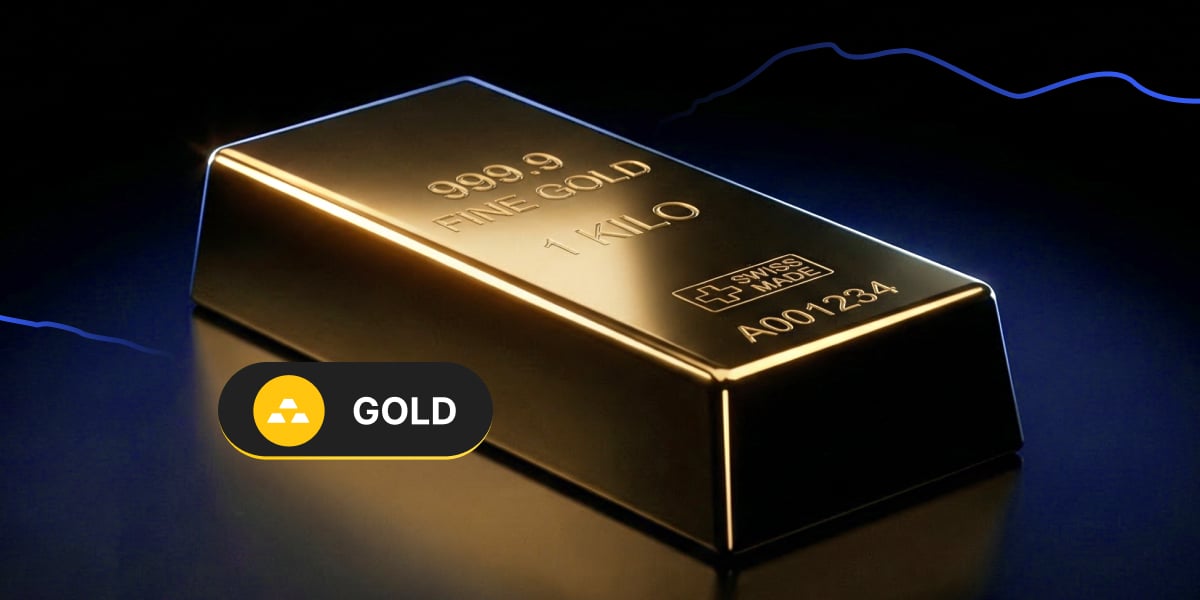

J.P. Morgan's commodity research team has set a $5,000 per ounce price target for gold, but the more useful question for investors is what role the metal plays in a portfolio. Analysts point to dollar weakness, central bank buying, and geopolitical risk as the forces behind gold's strength.
The question worth asking is not whether gold reaches $5,000 — forecasts are uncertain by definition — but what role gold fills in a portfolio and whether it fills that role well given current conditions. Conflating the two leads investors to over-concentrate during rallies or abandon gold entirely once the price climbs.
What is driving gold now
Gold's strength reflects a convergence of structural forces that analysts say are unlikely to reverse quickly. Central banks and sovereign wealth funds in emerging economies keep diversifying away from dollar-denominated reserves, adding gold at rates that have sustained baseline demand regardless of the speculative cycle. Demand through physical ETFs has also widened the accessible buyer base.
J.P. Morgan's commodity research team has set a $5,000 per ounce price target, citing institutional buying, expected Fed rate cuts that reduce the opportunity cost of holding non-yielding assets, and continued geopolitical risk premiums.
Tail-risk hedge, not inflation hedge
Gold plays two distinct roles, and clarity about which one an investor is accessing matters. As an inflation hedge, the metal has a mixed long-term record — it performs well in some inflationary environments but poorly in others, and its correlation with measured inflation over intermediate periods is lower than intuition suggests.
As a tail-risk hedge against financial system stress, currency debasement, and geopolitical crisis, gold's track record is stronger and more consistent. The current environment appears to be activating that tail-risk role more than pure inflation protection. Analysts most consistently cite dollar weakness, concerns about US fiscal trajectory and Federal Reserve independence, and geopolitical tensions as the drivers. Gold, therefore, is likely to be strongest precisely when portfolios need it most.
Implementation and sizing
Investors who decide gold belongs in their portfolio face real implementation choices. Physical gold and physical ETFs give the purest exposure without counterparty risk but carry storage costs and no income. Futures-based strategies offer liquidity and precision but add roll costs and basis risk. Mining equities provide leveraged exposure yet introduce equity-market correlation and operational risk.
Portfolio sizing research generally suggests allocations in the 5% to 15% range for investors seeking meaningful insurance without overwhelming their return profile. At current prices the opportunity cost of holding gold is lower than in a zero-rate environment, because short-duration fixed income now generates real income of its own.
Source: Forbes
Trading involves risk.





 Risk Disclaimer