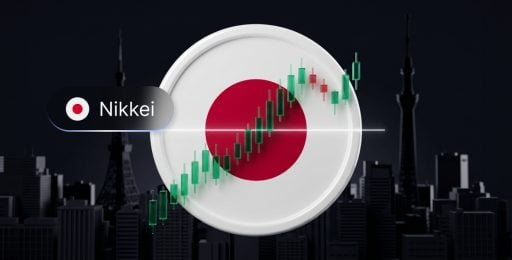

The Nikkei 225 erased a near-1,000-point intraday plunge to close up 0.74% at 67,743.45 on July 14, as bargain-hunting flows rescued Tokyo and Seoul from a sharp sell-off. Semiconductor and tech shares led the recovery, but three US catalysts this week keep the rebound fragile.
The Nikkei 225 clawed back a near-1,000-point intraday drop on July 14, staging a V-shaped rebound that carried the index from a one-month low of 66,268.60 points to a close up 0.74% at 67,743.45. South Korea's KOSPI followed the same arc, closing up 0.73% at 6,856.84 after briefly plummeting more than 5% around midday.
Both markets opened lower and fell further intraday under the shadow of US-Iran tensions and overnight losses in US equities. But late-day bargain-hunting reversed the move, and technically oversold conditions drew in buyers.
Tech and chip shares lead the bounce
Semiconductor and tech names powered the recovery. SoftBank climbed 3.3% to 6,574 yen, and Kioxia rose 2.98% to close at 69,100 yen. In Seoul, Samsung Electronics closed up 3.34% at 263,000 won, while SK Hynix rose 3.69% to 1,913,000 won.
Breadth on the Tokyo Stock Exchange favored the advance, with rising stocks outnumbering decliners 2,458 to 1,035 and 260 unchanged. Shiseido led the Nikkei's gainers, rising 5.11% to 2,943.00, while Yaskawa Electric was the worst performer, falling 8.98% to 5,436.00. The Nikkei Volatility index, which measures implied volatility of Nikkei 225 options, fell 2.36% to 37.23.
Why the rebound stays fragile
The bounce reflects technical support rather than a resolved correction, according to TradingKey. Three US catalysts land in succession this week: ASML earnings, US CPI data, and Fed Chair Warsh's congressional testimony. The primary source cautions that markets could still face severe volatility over the next 48 hours as those events weigh on the near-term direction.
Sources: TradingKey, Investing.com
Trading involves risk.





 Risk Disclaimer