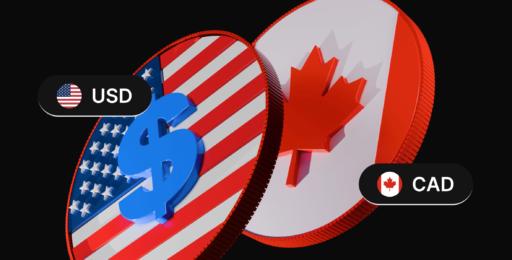

The US-Canada trade war is deepening after Donald Trump threatened new tariffs on cars, trucks, auto parts and steel starting January 1, while Mark Carney rejected a US trade proposal he said would weaken French-language protections. The dispute is intensifying pressure on Washington's borrowing needs, with one MarketWatch opinion piece arguing it raises the odds the Federal Reserve eventually returns to quantitative easing.
Trade talks collapse over tariffs and language rules
Carney walked away from trade talks with the US last week, and tariffs on a range of Canadian products took effect over the weekend, affecting around 5% of Canada's exports to the US. Canada has said it will retaliate in early September.
The prime minister said on Monday that Canada could not accept a proposed deal that would have weakened French-language protections after talks collapsed. Trump showed little interest in retreating from the dispute, posting on social media that Canada had been ripping off the United States for years. He also pledged to raise tariffs on cars, trucks, auto parts and steel beginning January 1. According to the Guardian: "We don't need Canada, they need us!"
Canada's Treasury holdings complicate the standoff
Canada has tripled its holdings of US Treasury bonds over the past five years to $460 billion, largely offsetting Chinese sales of Treasurys, according to a MarketWatch opinion column. The US government is set to borrow $1.9 trillion this year and next, and $2.1 trillion in 2028, per Congressional Budget Office projections cited in the column.
The column argues that if Canada, one of the largest foreign buyers of US debt, is alienated by the trade fight, the Federal Reserve could eventually be left to revive quantitative easing to absorb the borrowing the trade war may drive away, or Washington could let inflation erode the debt's real value instead.
Political fallout spreads across Canada
Quebec's premier, Christine Fréchette, backed Carney's rejection of the deal, while the Quebec Federation of Chambers of Commerce called the tariffs a worst-case scenario for the province's businesses. Ontario's premier, Doug Ford, told local media Trump can go kiss his ass over the dispute.
US trade representative Jamieson Greer dismissed reports that French-language protections were up for debate as a fake story, saying the real issue was Canada requiring US streaming services to fund Canadian content, a position Canada had already dropped.
Sources: MarketWatch, The Guardian
Trading involves risk.





 Risk Disclaimer