7 min read
 Two important pieces of US economic data are coming out at the same time today. At 12:30 UTC on Wednesday, 30 September 2026, the Bureau of Economic Analysis (BEA) will publish the latest core Personal Consumption Expenditures (PCE) price index and the third estimate of second quarter Gross Domestic Product (GDP).
If you’re newer to the markets, don’t worry. Here’s what each one means, why they matter, and what could happen when they’re released.
What is core PCE?
Core PCE measures how fast prices are rising for everyday goods and services in the US. The word “core” means it leaves out food and energy, because those prices jump around a lot from month to month.
PCE is the Federal Reserve’s preferred inflation measure, and the core version is the one it watches most closely to see the underlying trend. The Fed wants inflation at 2%. Right now, core PCE is running at around 3.3% a year, so prices are still rising faster than the Fed would like.
For August, economists expect core PCE to rise 0.3% compared with July.
What is GDP?
GDP measures the total value of everything the US economy produces. In simple terms, it shows whether the economy is growing or slowing down.
The latest estimate shows the US economy grew at a yearly pace of 1.5% between April and June. That’s slower than the 2.1% growth seen in the first three months of the year.
Today’s release is the third and last regular estimate for that period, so the number could still change slightly.
Why they matter together
When prices are rising too fast, the Fed can raise interest rates to cool things down. But higher rates can also slow the economy.
That’s the balance the Fed is trying to strike right now:
- Inflation is still too high, at around 3.3%
- Growth cooled to 1.5% in the second quarter, although the Fed still describes the economy as expanding at a solid pace
- The Fed raised rates in September to 3.75% to 4.00%, and most officials expect one more rise this year
Today’s data could help markets judge whether that next rate rise is coming soon.
Why this release is a bit different
The BEA is also updating its older data today. This happens once a year. It means past inflation and growth numbers could be revised higher or lower.
Sometimes these changes matter more than the new monthly number, so the first market reaction may not be the one that lasts.
How markets could react
- If core PCE comes in higher than 0.3%: traders may expect another rate rise sooner. The US Dollar could get stronger, while Gold (XAU) and Bitcoin (BTC) may come under pressure.
- If core PCE comes in at 0.3%: this is what markets expect, so the reaction may be smaller. Traders may then focus on the revisions and GDP.
- If core PCE comes in lower than 0.3%: traders may think the Fed can hold off on rate rises. This could weaken the dollar and support gold and Bitcoin.
Key levels to watch
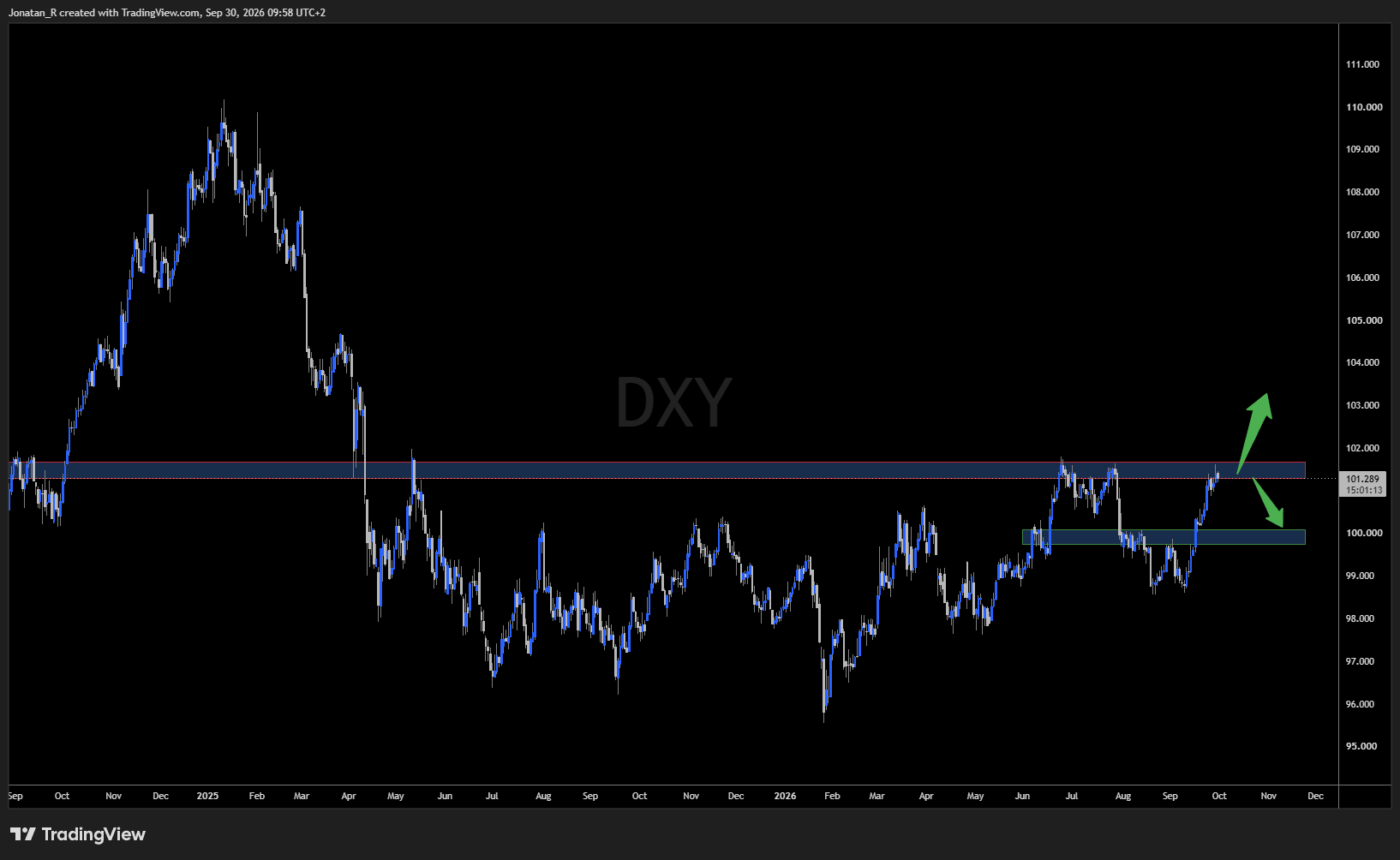
The US Dollar Index (DXY) measures the value of the dollar against a group of major currencies. It’s usually the first market to react to US data.
The dollar has climbed sharply since mid September and is now testing an important resistance zone between 101.30 and 101.65. Price has turned lower from this area twice since June, so it’s a level many traders are watching.
- A hotter PCE reading could give the dollar the push it needs to break above this zone, which may open the way towards 103.
- A softer reading could see the dollar turn lower again, with the support zone around 99.75 to 100.10 the next area to watch.
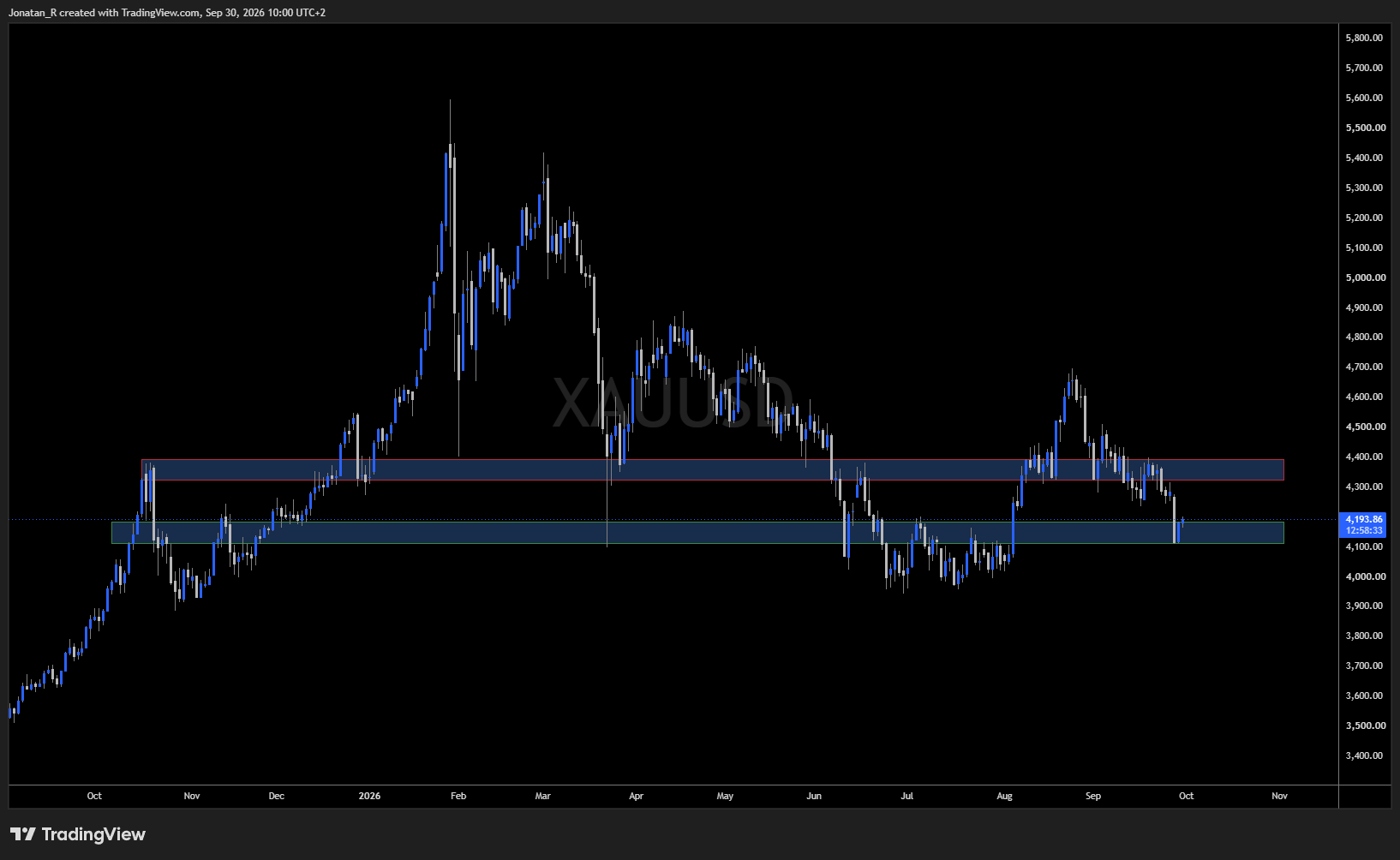
Gold (XAU/USD) often moves in the opposite direction to the dollar. You can see that clearly this month: as the dollar climbed, gold fell from its late August highs.
Gold is now sitting on an important support zone between 4,110 and 4,185, an area where buyers have stepped in several times since last year.
- A hotter PCE reading could strengthen the dollar and put this support under pressure. A clear break lower may bring the July lows around 3,950 to 4,000 into view.
- A softer reading could help gold bounce from support, with the resistance zone around 4,320 to 4,390 the first area to watch above.
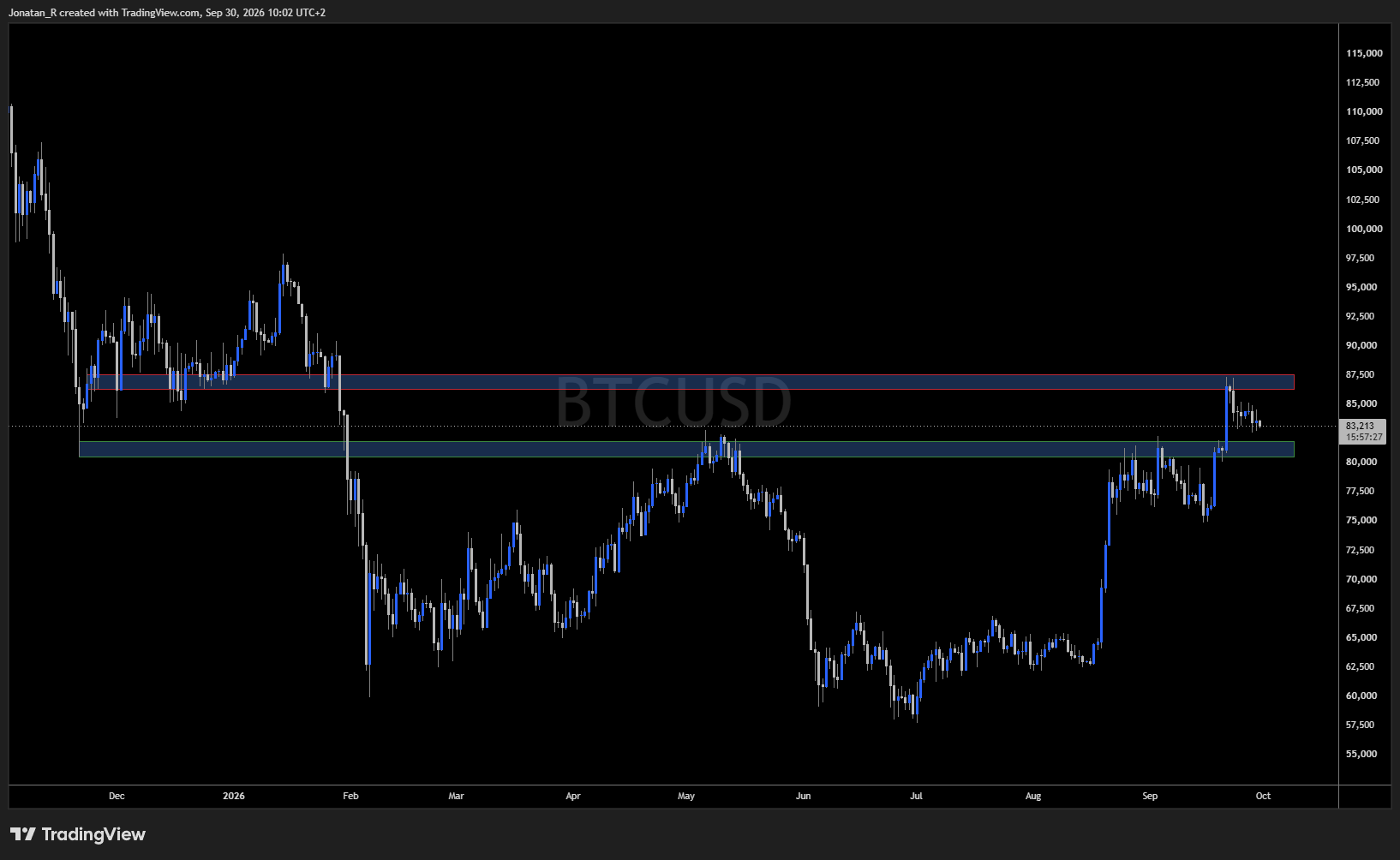
Bitcoin (BTC/USD) is often seen as a measure of how much risk traders are willing to take. When interest rate worries rise, it can come under pressure.
Earlier this month, Bitcoin broke above a zone between 80,500 and 81,700 that had stopped its rally twice this year. When price breaks above a level like this, the old ceiling can sometimes turn into a new floor. Bitcoin then ran into resistance between 86,200 and 87,500 and has pulled back since.
- A hotter PCE reading could put pressure on Bitcoin and send it back to test the 80,500 to 81,700 zone. If that fails to hold, the September low around 75,000 may come into view.
- A softer reading could help Bitcoin make another attempt at 86,200 to 87,500. A clear break above may open the way towards 90,000.
Trading involves risk.
Author



 Risk Disclaimer
The content provided here is for informational purposes only. It is not intended as personal investment advice and does not constitute a solicitation or invitation to engage in any financial transactions, investments, or related activities. Past performance is not a reliable indicator of future results.
The financial products offered by the Company are complex and come with a high risk of losing money rapidly due to leverage. These products may not be suitable for all investors. Before engaging, you should consider whether you understand how these leveraged products work and whether you can afford the high risk of losing your money.
The Company does not accept clients from the Restricted Jurisdictions as indicated in our website/ T&C. Some services or products may not be available in your jurisdiction.
The applicable legal entity and its respective products and services depend on the client’s country of residence and the entity with which the client has established a contractual relationship during registration.