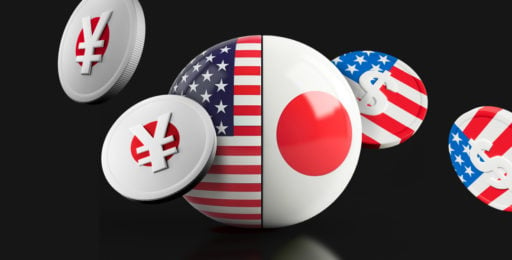

The Bank of Japan is expected to hold rates at 1% this week, but MarketWatch columnist Charlie Garcia argues the Tokyo decision reaches U.S. retirement accounts more directly than the Federal Reserve’s. Japan has flipped from net buyer to net seller of foreign bonds, and its debt bill leaves little room to defend a yen near a 40-year low.
Wall Street is watching the wrong meeting this week, according to MarketWatch columnist Charlie Garcia: the central-bank decision that reaches American 401(k) accounts is set in Tokyo on Thursday night and shows up at Friday’s U.S. market open. The Bank of Japan is expected to hold rates steady at this week’s meeting, and Garcia says the fine print matters more than the headline.
The yen keeps sliding after a hike
In June the Bank of Japan raised interest rates to 1%, the highest since 1995. A rate hike is supposed to lift a currency. Instead, the yen sank to a 40-year low near 164 to the U.S. dollar this week. Tokyo had already spent a record $73.6 billion in a month trying to prop up the currency.
Garcia’s explanation is debt. Japan owes more relative to the size of its economy than any rich country, and its debt payments now eat about a quarter of the national budget. The government just penciled in a 3% borrowing cost, up from 2%.
When the interest bill crowds out everything else, he writes, expensive rates cannot be used to defend the currency — so the currency becomes the pressure valve. Politics pushes the same way: Prime Minister Sanae Takaichi swept to a supermajority in February and opened the spending taps. That included a pledge to suspend the sales tax on food.
America’s quiet lender stopped adding
Japan remains the largest foreign holder of U.S. government debt, and it never sold that pile. Its holdings sit at about $1.19 trillion. What changed is that it stopped adding: Japanese investors flipped from net buyer to net seller of foreign bonds in December 2025.
By February they were selling them off at the fastest monthly pace since 2024. The pull comes from home: with Japan’s 30-year bond yielding near 4%, Garcia writes, a Tokyo insurer can finally earn a decent return in its own currency with no exchange-rate risk. So the marginal dollar that used to fund America goes back into Japan’s own bond market.
What it does to U.S. portfolios
Fewer buyers for more Treasurys pushes long-term rates up, Garcia argues, and when rates rise the price of bonds already held falls. That happened in 2022, when stocks and bonds fell together and some long-term Treasury funds shed close to a third of their value.
He offers the counterweight too: Japan has not sold off its Treasury bondholdings, and no Treasury auction has failed. People have predicted a Japanese debt reckoning for 30 years while being wrong every single time. A single Bank of Japan meeting almost never breaks anything, but Garcia says the direction is set.
According to Garcia, a Tokyo signal of another rate hike would carry one message: “America’s biggest foreign lender wants its money at home.”
Source: MarketWatch
Trading involves risk.





 Risk Disclaimer