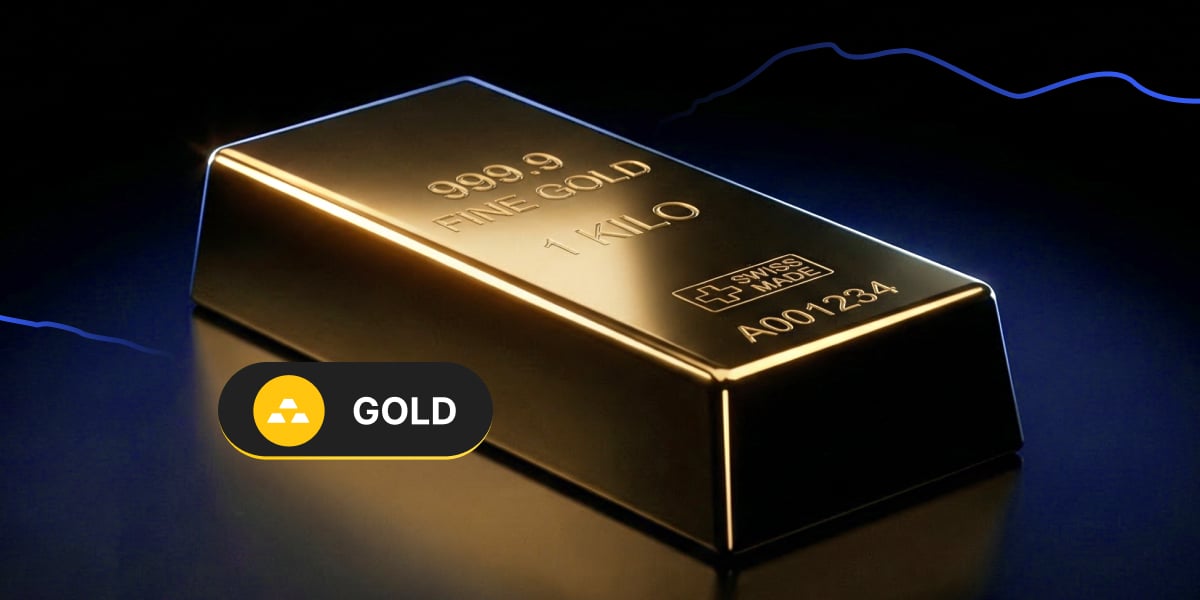

Gold has fallen about 28% from its record highs, yet it still ranks among the best-performing assets of the past year with a gain of around 33%. Analysts argue the correction is normal and the drivers behind gold's run remain in place.
Gold looks like it has tanked in 2026, but the yellow metal was only down about 7% through the first six months of the year. The sharp rally that opened the year magnified the scale of the pullback that followed. Measured from its peak, gold is down about 28% from its record highs.
Even so, the metal has held its ground against nearly everything else. Over the last 12 months gold has gained around 33%, with only emerging market stocks doing better. That gain came despite the drawdown, not before it.
A wild year for prices
Gold opened 2026 with force, hitting 12 all-time highs and pushing above $5,000 an ounce in January. After a brief spike at the start of the U.S.-Iran conflict, it has since traded range-bound between $4,000 and $4,500 an ounce. The swings have been violent: gold's volatility spiked to over 50% early in the year before moderating to around 30%, still far above the 20-year average of 17%.
The pullback has some pundits declaring the bull market over, but corrections are normal during a bull run, and the dynamics that lifted gold to records remain in place. In the near term, though, the metal faces headwinds from expectations that the Federal Reserve keeps monetary policy tighter to fight inflation.
Who is buying, and who is selling
World Gold Council analysts see the current price as consistent with a backdrop of moderate growth and cooling but still elevated inflation, and they expect gold to stay relatively rangebound at roughly plus or minus 5%. They add that the stage is set for a possible breakout, with a shift toward lower rate expectations or a renewed geopolitical shock able to lift gold back toward $4,500 an ounce or higher.
The selling has a clear regional split. North American investors have driven the sell-off, while Asian buyers used the drops to add holdings — the council calls Asia the engine of price support. During the first half, gold rose 12.9% in Asian trading hours and fell 15% in North American hours.
The digital gold angle
The correction also opens a longer runway, according to Kurt Hemecker, CEO of Gold Token SA, the tokenization arm of MKS PAMP. He argues that tokenization could turn bullion from a largely static reserve into a more liquid instrument that trades around the clock and serves as collateral. According to Kitco News: "The thesis for gold hasn't changed," Hemecker said, calling the correction a normal move after the market got ahead of itself.
His biggest caveat is trust, since tokenized gold depends on confidence in the underlying metal, the custodian and the jurisdiction. For now he frames the down market as a chance to build the rails before demand returns.
Sources: FXStreet, Kitco News
Trading involves risk.





 Risk Disclaimer